
At a Glance (China Coffee Network): Riding the zero-tariff policy and the spillover of the CIIE and the Hongqiao International Coffee Port, African coffee beans are accelerating their cross-border journey and industrial build-out into the Chinese market.
Zero tariffs have opened the trade channel, and the CIIE together with the Hongqiao International Coffee Port have built a bridge that lands in Shanghai and links the whole country. As reported by The Youth Daily, Hainan Zhongyu, a resident enterprise, has directly experienced the policy dividend, while the Coffee Port extends the spillover effect of the CIIE—“never-ending 365 days a year”—to channel African coffee into the Chinese market. The full story follows:
In November, the high plateaus of East Africa enter the coffee cherry harvest season. Across the highland soils of Ethiopia, Uganda, Kenya, Tanzania and Burundi, strings of plump coffee cherries gradually ripen to red and weigh down the branches. After picking, meticulous sorting, washing or sun-drying, the green beans—their pulp and pectin removed—are graded and packed, set off from the distant African producing regions and begin their transoceanic journey to Shanghai, China.
From First Encounters at the CIIE to the Zero-Tariff Dividend
The Cost Dividend Is Reshaping the Industry Layout
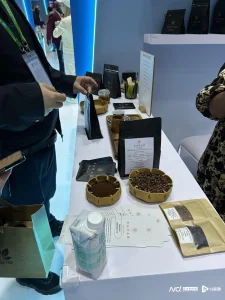
At the food and agricultural products exhibition area of this year’s CIIE, a young Ugandan exhibitor, Kevin, stood by his booth, in front of which he had carefully arranged locally grown coffee beans at three roast levels—light, medium and dark. When talking with reporters, he could even manage some simple Chinese. “Zero tariff is a great opportunity for us; I hope more Chinese friends can taste Ugandan coffee,” said Kevin, who came to the CIIE to ride the momentum of the event and look for new cooperation opportunities.
These Ugandan coffee beans are brought into China via a Beijing trading company, and from there they reach cafés on every street corner. What kind of cross-border chain, customs clearance process and industrial refinement do they go through along the way? What substantive relief and change has the zero-tariff policy actually brought to the entire African coffee supply chain? Through the CIIE, the path of deep China–Africa economic and trade cooperation is also gradually maturing across the whole chain.
On May 1, 2026, China officially implemented the zero-tariff policy on imported goods from 53 African countries with which it has diplomatic relations, with coffee among the covered categories. This landmark policy frees high-quality African coffee from tariff constraints, moving it from “fragmented trade” to a new stage of “scale and industrialization,” and bringing it more quickly to China’s mass consumer market.
Li Ying, head of the strategy and development department at Hainan Zhongyu International Cooperation Co., Ltd. (hereinafter “Hainan Zhongyu”), has been deeply engaged in Africa cross-border coffee trade for years. Her company is a wholly owned subsidiary set up by a large Henan state-owned enterprise in the Hainan Free Trade Port, and is also a resident enterprise of the Shanghai Hongqiao International Coffee Port. Anchored on the front line of China–Africa cross-border trade year-round, she has directly witnessed the industrial transformation brought by the policy’s implementation.
“In recent years, domestic coffee consumption has been shifting—people no longer merely drink coffee, but are learning to appreciate it, with a growing awareness of origin and flavor. Coffees from origins like Ethiopia, Kenya and Uganda, with their pronounced fruity aromas and rich layers, are very popular among specialty cafés and mid-to-high-end consumers,” said Li Ying. She noted that China’s coffee imports from Africa grew substantially in 2025, with increases exceeding 70% in some periods, and African coffee is gradually moving from a niche specialty into the public eye.
The implementation of the zero-tariff policy has further opened up market space. “Before the policy took effect, import tariffs on some African coffee beans were around 8%,” Li Ying acknowledged. Tariff cuts directly ease the burden at the green-bean procurement stage. “Although tariffs are not the largest share of a cup of coffee’s final retail price, their impact on the upstream supply chain is very direct. Once raw-material import costs come down, African coffee gains a cost-performance edge over South American and Southeast Asian origins—leaving more room for both brand margins and consumer discounts.”
“We already cooperate on green-bean trade in Burundi, Kenya and Uganda. After the zero tariff, we will keep expanding our pool of quality estate resources,” said Li Ying. The company is not merely increasing purchase volumes, but also plans to invest in sorting and processing plants in Uganda and Tanzania. “We intend to station Chinese personnel there and hire local staff, so that quality control of the coffee beans happens right at the origin.”
In her view, “Relying on the conditions of the Hainan Free Trade Port, we hope to build a distribution, processing and trading hub for African coffee. Future cooperation will move from one-off trade toward long-term, deep, mutually beneficial industrial co-building.”
A 365-Day Show That Never Closes
The Hongqiao Hub Absorbs the CIIE Spillover Effect
The zero-tariff policy has opened the trade channel, while the CIIE and the Hongqiao International Coffee Port have built the core bridge that lands in Shanghai and links the whole country. As a coffee industry platform adjacent to the National Exhibition and Convention Center, the Hongqiao International Coffee Port in Hongqiao Pinhui is the core platform for turning “exhibits into commodities and exhibitors into investors,” continuously releasing the CIIE’s never-ending 365-day spillover effect, and bringing the new African coffee products and premium origin beans showcased at each CIIE into regular contact with the consumer markets of Shanghai and even the whole country.
Zhu Jing, deputy general manager of Shanghai Hongqiao International Imported Goods Exhibition and Sales Co., Ltd., has long observed the growth path of African coffee in the Chinese market.
She shared: “The zero-tariff policy has expanded from the original 33 least-developed countries to all 53 African countries with diplomatic ties, and the African coffee market has shifted from Ethiopia’s solo breakthrough at a point level to a situation where multiple countries share the stage and blossom across the board.”
Ethiopian coffee had already established a mature pathway in the Chinese market. In the first four months of 2025, the value of African green-coffee imports through the Shanghai port reached 583 million yuan, a year-on-year surge of 129.5%. Ethiopian coffee has maintained an annual 27% growth in exports to China; in just the 2024/2025 fiscal year it exported over 34,000 tonnes of coffee to China, earning more than 218 million US dollars. China is firmly its fourth-largest coffee export market in the world.
“Riding this tariff dividend, beans from origins like Kenya, Uganda, Tanzania and Burundi all have a chance to replicate this path. Kenyan AA beans, Tanzanian Kilimanjaro-origin beans and Burundian champion beans—more distinctive flavors can be discovered by domestic consumers,” said Zhu Jing.
The reporter learned that, to capture the dual dividend of the policy and the CIIE, the Hongqiao International Coffee Port has built a localized incubation system.
“We run the ‘China’s Choice’ Global Specialty Green Coffee Competition. After the zero tariff, green beans from more African countries such as Kenya and Nigeria will participate for the first time. Through a ‘Chinese palate’ jury system, we help Chinese consumers quickly get to know and embrace the flavors of these new origins,” Zhu Jing explained. The platform routinely holds numerous cupping and supply-demand matchmaking events, opens direct-from-origin sourcing channels, and at the same time provides supporting financial, logistics and standards-linkage services for resident enterprises like Hainan Zhongyu that have set up processing plants overseas. “We hope to help domestic enterprises upgrade from ‘traders’ to ‘industry-chain integrators’ and ‘exporters of technology and standards.’”
In Zhu Jing’s eyes, two-way empowerment is the more far-reaching value: “Torch Point Coffee is a typical example. This company has long been rooted in Yunnan coffee and accumulated rich experience in raising the specialty rate of Yunnan coffee. Now they bring this experience to Kenya, personally guiding planting and processing techniques on local estates. After the zero-tariff policy took effect, Torch Point Coffee plans to make good use of the tariff preference and substantially increase its imports of Kenyan coffee. This ‘Chinese technology + African cultivation + zero-tariff import’ model not only ensures a stable supply of high-quality beans, but also drives the upgrading of local African coffee industries. Through cuppings and competitions, it gradually makes ‘Chinese palate’ an undeniable benchmark in the global coffee industry.”
Picked from the branches of the African high plateau, shipped across the ocean and stored in bonded warehouses, it arrives at the Hongqiao International Coffee Port, goes through cupping selection, channel distribution and roasting, and finally enters the cafés large and small on the streets of Shanghai; the journey of one African coffee bean to Shanghai is also a vivid microcosm of the micro-circulation of China–Africa economic and trade cooperation.
Reprint Notice & Disclaimer
- This article has been edited and compiled by China Coffee Network and reprinted from China International Import Expo Bureau, “零关税后,一粒非洲咖啡豆的上海之旅.” The copyright of the original text belongs to China International Import Expo Bureau and the original author. This reprint is intended solely for information sharing within the coffee industry and does not represent the views of this website; all data and opinions are subject to the original article. Our thanks to the original author for creating and sharing it.
- Read the original: China International Import Expo Bureau, “零关税后,一粒非洲咖啡豆的上海之旅”
- For matters concerning content licensing, attribution, copyright or otherwise, please contact us promptly and we will verify and cooperate in handling them as soon as possible. We also welcome coffee origins, brands and industry media to exchange ideas and contribute articles.
- Contact China Coffee Network: Tel 400-0000-641 (+86-18288016826) | Email 405854472@qq.com
Related Reading
 Coffee Buzz Still Rising at the CIIE, but the Market Is Shifting from ‘Scale’ to ‘Scenarios’
- Bean in Short Supply: A Taiwan Youth on Yunnan Coffee as a Shared Cross-Strait Stage
- Five Years, Eight Championships: Lincang Coffee Joins the World Stage
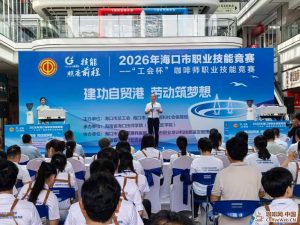
 Haikou ‘Union Cup’ Barista Skills Competition Kicks Off to Empower the Service Sector
 Yunnan Specialty Coffee Beans Deliver an ‘Excellent’ Report: Path to Value Leap
- Cross-Strait Tides Rise: A Taiwan Youth Farms Coffee in Yunnan, a Cup Bridging Both Sides



 Liaoning ICP Security No. 21122402000217