


At a Glance (China Coffee Network): On 20 July, the China finals of the World Brewers Cup concluded in Guiyang, with 40 of the country’s top competitors on stage, and related topics repeatedly trending on Weibo.
On 20 July, the China finals of the World Brewers Cup concluded in Guiyang, with 40 of the country’s top competitors on stage, and related topics repeatedly trending on Weibo. Off the competition floor, Wang Hong, Deputy Secretary of the Guiyang Municipal Party Committee and Mayor, convened a special symposium the same day titled ‘Champions Come to Guiyang, Taste the Qian Flavour in Coffee’, sitting down with international judges and competing coffee curators, sending a clear signal of ‘advancing the coffee industry through whole-chain integration to make it bigger and stronger’.Inside the venue, professionals compete; inside the meeting room, development is planned. A city that does not grow a single coffee bean is embracing coffee with an enthusiasm beyond imagination.A question worth asking: with coffee-producing regions outside Guiyang and coffee culture not native to the city, on what grounds has this inland southwestern city become an unavoidable coordinate on China’s specialty coffee map?
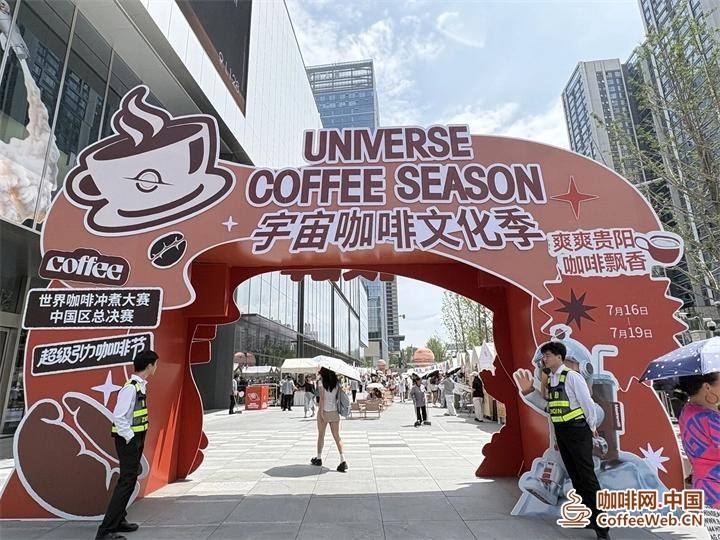
Photo by He Xin
OneGuiyang people’s fondness for coffee seems, at first glance, a bit ‘unreasonable’. The city neither grows coffee beans nor is a port-trading city in the traditional sense. But tracing the historical thread carefully, the answer is in fact hidden in Guiyang’s urban DNA.During the Republican era, though located deep in the southwest inland, Guiyang was active in political thought and culture: from the Reform Movement of 1898 to the Xinhai Revolution, the National Protection Movement and the May Fourth Movement, Guiyang people were present in them all. This gene of progressive thought and openness laid the city’s tolerant attitude toward foreign cultures and new things. After the outbreak of the War of Resistance, the national centre of politics, economy and culture shifted to the southwest; as a rear-area city, Guiyang saw an influx of capital, equipment, technology and talent, and its wartime economy boomed unprecedentedly. Western food, beer, coffee and other imported goods appeared one after another. In 1942, the writer Ye Shengtao, stranded in Guiyang, recorded in his diary a visit to the Meiyuan Coffee Shop: ‘the furnishings are exquisitely refined, like a shop in Shanghai’s French Concession’, evidence that by then Guiyang already had elegant, pricey modern cafes.After the reform and opening up, coffee re-entered Guiyang people’s lives in different forms. In the 1980s, vendors were already selling coffee on both sides of the entrance to Hebin Park; hotels serving foreign guests such as the Guizhou Hotel and Jinqiao Hotel opened coffee lounges for high-end social needs. In 1989, Nestle’s slogan ‘Tastes great’ swept the country and instant coffee entered ordinary homes. In 2005, a cafe named ‘Mojieshi’ appeared on Humen Lane, where several young coffee lovers discussed the future of specialty coffee, inadvertently becoming the source point of Guiyang’s specialty coffee wave. Later ‘Mojieshi’ was renamed ‘Soil Coffee’ and, together with ‘Joyful Reading Time’, gave many Guiyang people their initiation into specialty coffee. It was the shared persistence of that group of young baristas that set off Guiyang’s twenty-year specialty coffee wave.This historical accumulation resonated ingeniously with Guiyang’s unique climatic endowment. Guiyang’s average summer temperature is 23°C and its winters are mild and pleasant, making it a famous summer resort in China. This climate naturally suits one consumption scenario: sitting down and unhurriedly drinking a cup of coffee. Unlike northern cities where winter calls for strong liquor to warm the body, or southern coasts where sweltering heat makes one want only iced drinks, Guiyang’s mild climate offers comfortable, year-round, no-threshold conditions for coffee consumption.More importantly, Guiyang people have a down-to-earth, slow-living temperament in their bones. As of this August, roadside concerts spontaneously organised by Guiyang citizens have exceeded 450, with on-site audiences of over 3 million person-times, and more than 70,000 citizens and visitors have taken the stage. In Guiyang, cultural feasts have never been remote art but everyday life flowing through the streets. This pursuit of a good everyday life fits coffee culture naturally: coffee has never been merely a drink, but a lifestyle, an attitude of ‘stealing half a day of leisure from the fast pace’.In Guiyang, cafes open in lanes, communities, beside caves and next to forests; from Taiping Road to Qingyun Market, from Jiuhua Road to Wenchang Pavilion, coffee has merged into the city’s fabric and become an everyday thing within citizens’ reach. An open, inclusive city character, comfortable conditions created by a cool climate, and a consumption mindset nourished by slow living: the three together form the deep soil of Guiyang’s coffee consumption.
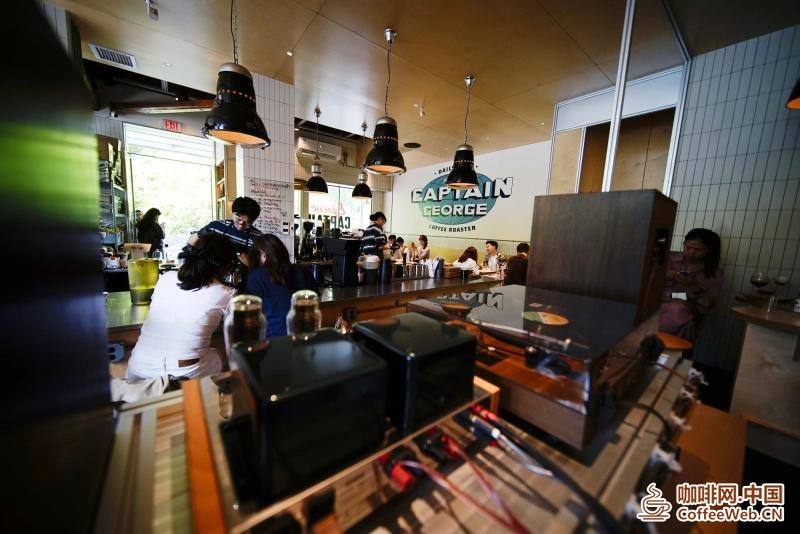
File photo
TwoIf climate and culture are the soil, then a group of leading figures are the seeds that let Guiyang coffee break through the ground.In 2024, Peng Jinyang, founder of Captain George Coffee, won the China Brewers Cup championship, and in 2025 represented China in Jakarta to take the world title, making the national coffee circle see Guiyang anew: it turns out this southwestern city has not only people who drink coffee but top coffee professionals competing on the world stage. The flood of publicity that followed let more people learn of the deep foundations of Guiyang’s coffee industry.At the same time, local coffee people such as Lei Ming of Heishi Coffee, Qiang Hua of Wujie Coffee and Liang Jiachen of Hudou Coffee have put down roots in Guiyang; their persistence and innovation carried the idea of specialty coffee into Guiyang’s streets and lanes. At the 2026 China finals of the World Brewers Cup, Liang Baoyi, a competitor fielded by Guiyang’s Captain George, took the runner-up spot. Champions come out of Guiyang and gather in Guiyang: this is the best footnote to Guiyang’s coffee talent ecosystem.The pull of champions extends beyond the competition floor. Led by top coffee figures, Guiyang’s coffee industry has formed a virtuous cycle: champions raise the industry’s professional benchmark, drawing more young people into specialty coffee, while the growing practitioner community in turn pushes up the overall standard. From ‘champion shops’ to community shops, from creative specials to specialty pour-over, curators of varied styles keep trying new expressions, boldly folding Guizhou local ingredients such as zhe’ergen (Houttuynia), roxburgh rose and litsea into coffee, breaking the taste boundaries of traditional coffee. Guiyang coffee is not one shop dominating, but a hundred flowers blooming.Because of this, Guiyang’s cafes have sprung up like bamboo shoots after rain. According to statistics, Guiyang has a permanent population of about 6.6 million yet more than 3,000 cafes; per capita, its cafe density surpasses Shanghai, famed for coffee culture. Behind these figures is not capital-driven chain expansion but an urban ecosystem watered by a group of coffee lovers with professionalism and passion.On the competition stage there is only one champion, but in Guiyang’s streets and lanes every coffee professional who holds to quality and focuses on innovation is a champion of this city’s lifestyle. Their presence makes Guiyang coffee not a passing wind but a river: with a source, a direction and ceaseless vitality.
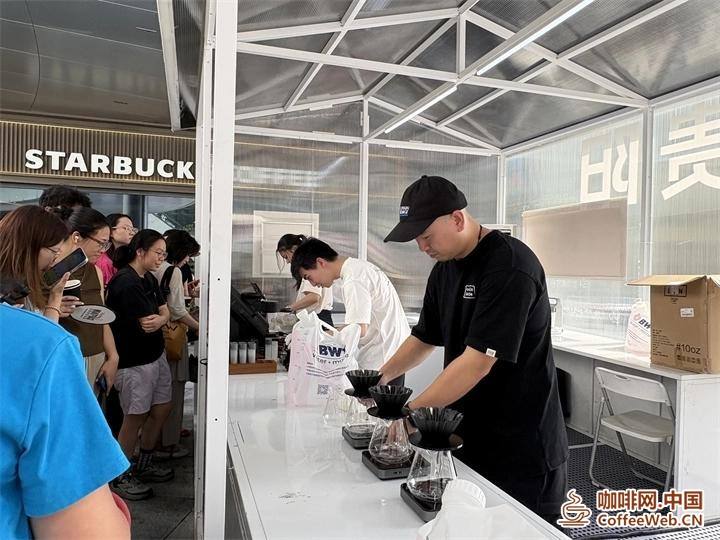
Photo by He Xin
ThreeGuiyang coffee thrives also because the city has a large and constantly growing young consumer group.Data show that over the past five years Guiyang has gained a net population of about 198,000 people each year, ranking second nationally in youth index, behind only Shenzhen. With a permanent population now at 6.6689 million, the city is attracting young people to put down roots at a striking speed.Why do young people choose Guiyang? Low housing prices, a good climate, a rich food culture and constantly emerging new consumption scenes: these factors together make Guiyang a ‘treasure city’ in young people’s eyes. And coffee is precisely one of the most representative consumption symbols of young people’s lifestyle. A cup of specialty coffee at twenty or thirty yuan is not expensive for a young white-collar worker, yet it is enough to support a social gathering, a moment alone, or an afternoon’s work. This high-frequency, low-threshold consumption trait makes coffee naturally part of the ‘infrastructure’ of young people’s daily life.More noteworthy is that the young people pouring into Guiyang are not only coffee consumers but entrepreneurs and innovators. In Guiyang, the threshold to open a cafe is not high: a shop of ten or twenty square metres and a team of three to five people make up a startup story. Starting a business is creating employment: one curator supports three to five families, a real contribution to society.Young people making coffee naturally carry a keen insight into their peers’ consumption psychology. They know what kind of space suits photo check-ins, what flavours trigger social-media sharing, and what experiences turn a customer from ‘having one cup’ into ‘coming often to sit’. From ‘coffee + zhe’ergen’ to ‘coffee + roxburgh rose’, from ‘coffee + litsea’ to ‘coffee + craft brew’, Guiyang’s cafes are becoming test beds for fusion innovation. Behind these seemingly ‘mash-up’ combinations is young people’s confident expression of local culture and an infinite expansion of coffee consumption scenarios.At the same time, Guiyang also receives large numbers of long-stay tourists each year. These visitors and sojourners from across the country arrive already carrying coffee-drinking habits. When they discover quality cafes in Guiyang’s streets and lanes, their willingness to spend is naturally sparked.The just-concluded Super Gravity Coffee Festival drew over 300,000 visits from tourists and citizens inside and outside the province in four days, driving surrounding consumption up 137% year on year. The MixC mall logged 1.45 million customer visits, up 36% year on year. Behind these figures lie both local young people’s everyday spending and the incremental contribution of outside tourists and sojourners.Where young people are, consumption is and the future is. The vitality of Guiyang’s coffee industry comes, at root, from the city’s appeal to young people and from young people’s power to shape the city’s consumption ecosystem.
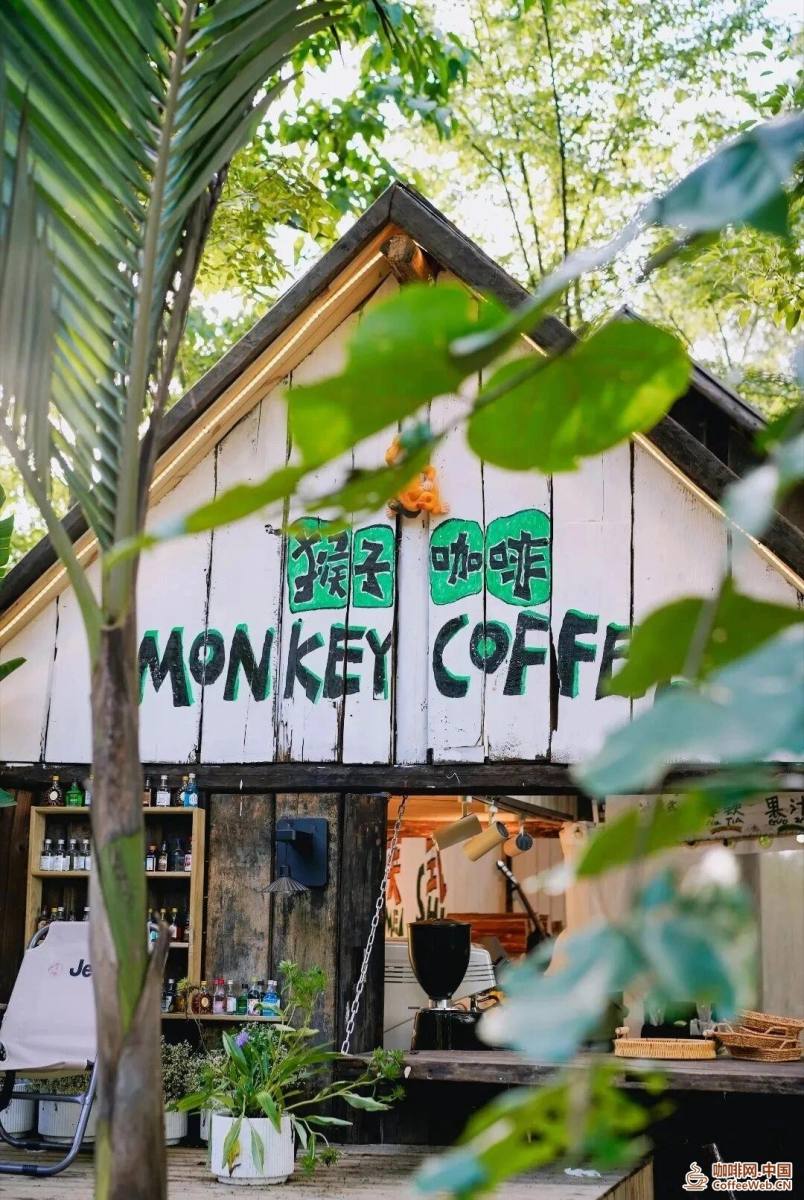
Image source: Xiaohongshu user @cherry_
FourGuiyang coffee’s arrival at today also has a factor that cannot be overlooked: systemic synergy.At the municipal level, Guiyang issued the ‘Implementation Opinions on Promoting the Development of the Coffee Industry in Guiyang and Guian’, known in the industry as the ‘Nine Coffee Measures’. This policy document makes systematic arrangements across multiple dimensions including standards-system building, brand-event creation, industry-chain integration, talent cultivation and financial support, drawing a clear roadmap for the industry’s development.Three clear positionings are anchored: ‘Come to Guiyang for a cup of coffee’, ‘Cool Guiyang, coffee aroma drifting’ and ‘From seed to cup’, pointing the way for the industry. At the same time, Guiyang launched the ‘Five Helps’ special action: delivering policies, solving problems, finding orders, assisting financing and lowering costs, giving coffee practitioners tangible service support. It set up the Guiyang Coffee Industry Association to build an industry exchange platform; designated the cultural-tourism department as the lead unit for the coffee industry chain to advance ‘coffee-tourism integration’; and established a cross-departmental coordination mechanism linking commerce, agriculture, market regulation and districts and counties to pool efforts.A policy’s vitality lies in implementation. After the ‘Nine Coffee Measures’ came out, Guiyang quickly built a coordinated promotion mechanism covering every link of the chain: the commerce department coordinates consumption-scene building and brand-event attraction, the cultural-tourism department leads the layout of coffee outlets in scenic areas, homestays and characteristic streets, the agriculture and rural affairs department promotes local coffee planting bases, and the market-regulation department leads the drafting of Guiyang specialty coffee group standards to underpin industry quality.Since its founding, the Guiyang Coffee Industry Association has grown into an important bridge connecting government and practitioners, organising a series of events and advancing industry exchange and technical upgrading. State-owned enterprises have also stepped in to guide planting, processing and trade.The ‘Five Helps’ special action takes service right to practitioners’ doorsteps: policies delivered to the door, problems solved on the spot, orders helped found, financing channels provided, costs pressed down, letting coffee curators large and small make coffee with peace of mind and focus on quality.This systemic linkage, from policy design to market response, from government push to association bridging, from state-owned-enterprise guidance to private-enterprise innovation, means Guiyang’s coffee industry is no longer just a scale expansion of ‘many outlets’ but has formed a full industry chain covering ‘seed to cup’.Coffee beans grown in the fields are one layer, roasting and processing a second, and tasting in the cup a third. Coffee is not merely the drink itself: roasting, latte art, flavour, mouthfeel, even the cup and coaster, every link is a niche industry. Combined with competitions, exhibitions and cultural tourism, it further expands the industry’s boundaries and imaginative space.The warmth of a cup of coffee reflects a city’s governance precision, industrial depth and humanistic richness. The reason Guiyang coffee works is not one person’s or one firm’s solo fight but the overall presentation of a city’s systemic capability. Here are the gift of climate, the nourishment of culture, the support of talent and, above all, the lift of systemic synergy. Guiyang coffee is right on time.Tianyan News reporter Wu BingEditor: Luo ChangSecond review: Shen AnyongThird review: Hu Lihua
Photo by He Xin
One
file photo
two
Photo by He Xin
three
Image source: Xiaohongshu user @ cherry_
Four
Tianyan News reporter Wu Bing
Editor Luo Chang
Second instance Shen Ernst&Young
Third instance trial of Hu Lihua
Reprint Notice and Disclaimer
- Compiled and edited by Coffee Network coffeeyo.com — the materials and images in this article come from public sources and the copyright belongs to the original authors. This reprint is solely for sharing coffee-industry information and does not represent this site’s position; all data and views follow the original. Our thanks to the original authors for creating and sharing this work.
- For matters concerning content authorization, attribution, copyright or other issues, please contact us promptly and we will verify and assist at the earliest opportunity; coffee-producing regions, brands and industry media are also welcome to contact us to exchange contributions.
- Coffee Network contact: Tel 400-0000-641 (+86-18288016826) | Email 478203668@qq.com | Address: Jinghong, Xishuangbanna, Yunnan / Tieling, Liaoning
Related Reading
 Tim Hortons China Q3: System Sales Up 6.3% Quarter on Quarter
- CRH Plans OATLY Exit, Nayuki Leaves Wenzhou | Tea & Coffee Weekly
 The 2026 Asian Coffee Association Annual Meeting will be held in Dehong, Yunnan, and the Asia ABODY Coffee System Standard will be officially released
 The President of Brazil's Victoria Coffee Business Center (CCCV) led a delegation of four people to Pu'er, Yunnan to conduct a special inspection of the coffee industry
 Behind the 1836 yuan "King of Brands": The Full Industry Chain and Offline Layout of Xinlu Coffee
 From a raw bean to a fragrant cup, Xiamen International Coffee Exhibition unlocks a new picture of the entire industry chain


 Liaoning ICP Security No. 21122402000217