


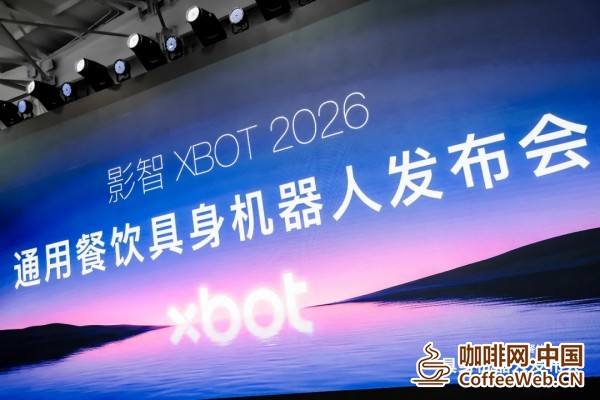
At a Glance (China Coffee Network): On June 30, the ‘2026 XBOT General Catering Embodied Robot Launch Event’ by Yingzhi XBOT was held in Beijing.
On June 30, the ‘2026 XBOT General Catering Embodied Robot Launch Event’ by Yingzhi XBOT was held in Beijing. Beyond debuting the XOS 3.0 embodied operating system and three brand-new catering robots, Yingzhi XBOT officially launched its self-operated chain coffee brand XBOT COFFEE and its first flagship experience store, XBOT Lab.
Unlike the expansion logic of traditional coffee brands, XBOT COFFEE has carried a dual identity from birth: it is both the end-consumer scenario for Yingzhi XBOT’s coffee robot technology and the ‘last mile’ for embodied intelligence to move from technical parameters to real business and complete closed-loop validation.
From Technology to Terminal: Stepping In to Build a New Coffee Brand
As the C-end fruit of four years of coffee robot technology accumulated by Yingzhi XBOT, the debut of XBOT COFFEE marks the extension of its identity from equipment supplier to consumption-scenario operator.
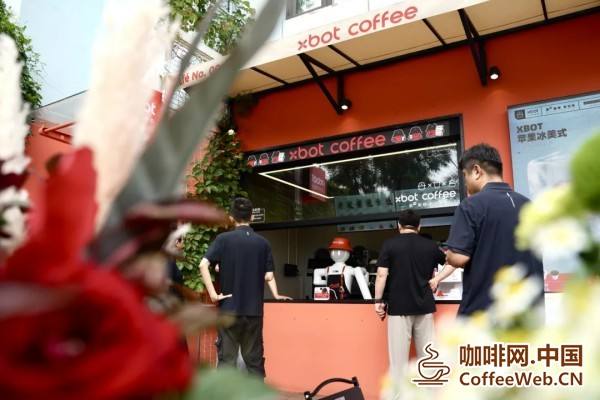
XBOT COFFEE's first flagship experience store, XBOT Lab, is positioned as an experimental store featuring 'human-robot collaboration'.
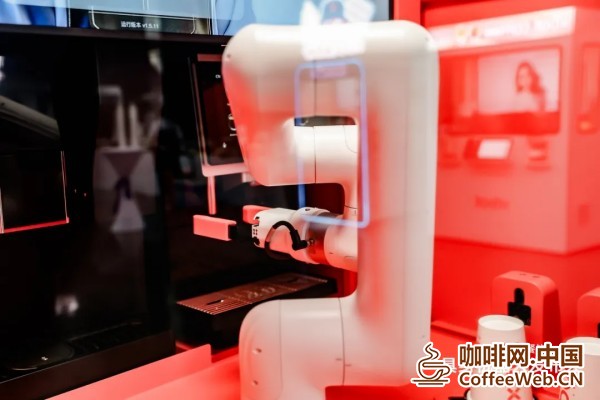
Here, 'human-robot collaboration' means robots and human staff each perform their own duties and operate in coordination: a six-axis dual-arm collaborative robot handles stable output and store operation, completing processes such as extraction, milk frothing and pattern printing with industrial-grade precision, and also taking on drink management and operation planning, making standardized, repetitive work 'ten thousand cups as one' — this is precisely the concrete application of XOS 3.0's 'one brain, many forms' concept in a real store.
Human staff, meanwhile, focus on collaborative links such as product packaging, restocking operations and routine maintenance, devoting more energy to emotional interaction with customers.
The machine is responsible for 'stability and efficiency', the human for 'warmth and flexibility'; consumers can thus both fully experience the whole process from ordering and smart production to pickup, and turn every cup of AI-printed coffee into a shareable social medium — while enhancing the value of consumers' emotional experience, it also significantly optimizes store operating efficiency and improves sales per unit area.
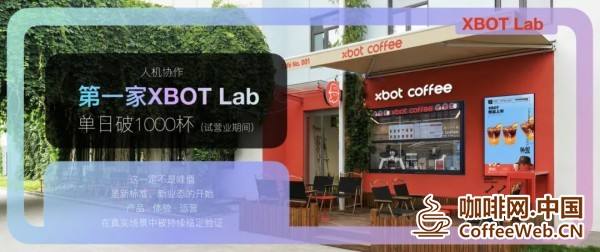
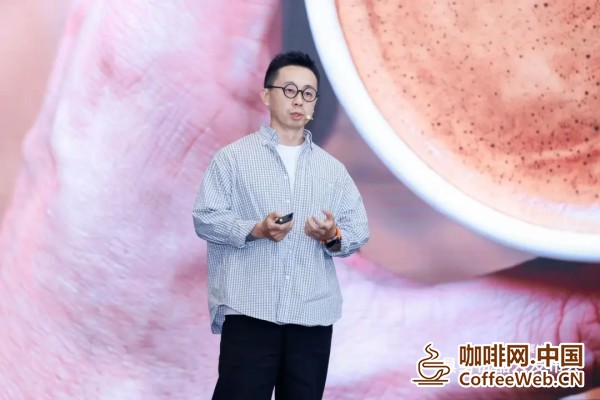
During trial operation, XBOT Lab already achieved single-day output exceeding 1,000 cups, fully validating the carrying capacity and operational stability of the robot meal-preparation model in high-footfall scenarios. Yingzhi XBOT Chief Design Officer Jiang Hao believes, ‘This is certainly not the peak, but the beginning of a new standard and a new business format.’
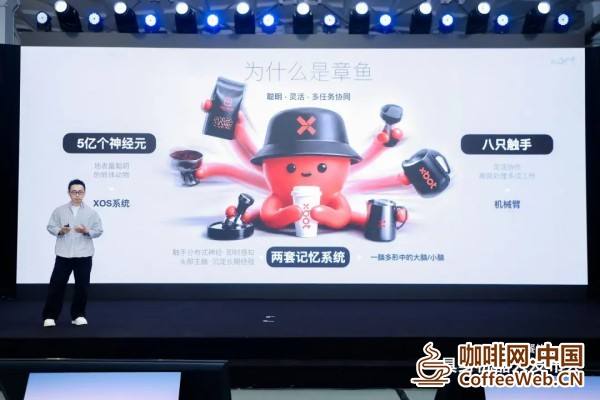
Supporting XBOT COFFEE’s completion of commercial practice is Yingzhi XBOT’s full-stack technology system. The XOS 3.0 embodied operating system debuted at this launch event uses a ‘one brain, many forms’ architecture to let a unified brain drive multi-form robots, providing a system foundation for scaled store replication. Hardware such as the XBOT Coffee Robot C3, XBOT Ice Cream Robot I3 and XBOT General Catering Humanoid Robot X1, with advantages like minimal footprint and efficient cup output, become the core carriers of standardized stores. From the underlying system to terminal hardware to the front-end brand, Yingzhi XBOT has completed the full landing of technology into consumption scenarios.
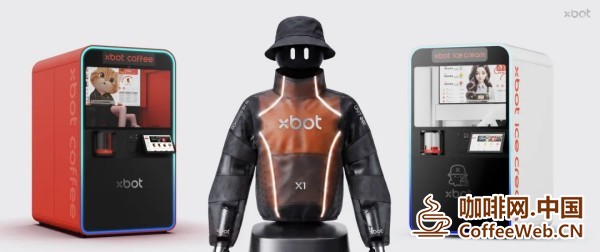
Since focusing on the coffee robot track in 2022, Yingzhi XBOT has iterated and upgraded multiple products, deployed over 1,000 devices globally and stably produced over 4 million cups of specialty coffee. The choice to launch a self-operated chain coffee brand in 2026 was not a cross-border experiment either, but the inevitable result jointly driven by industry pain points, changes in users and industrial development.
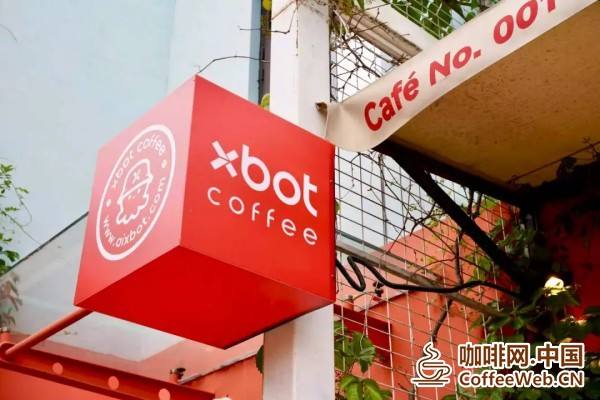
On one hand, in recent years traditional specialty coffee brands have repeatedly met with difficulties — such as Tims changing leadership due to losses and Seesaw going into bankruptcy liquidation — rooted in the high rent and high labor costs brought by the heavy-asset big-store model, as well as the difficulty of quality standardization caused by reliance on manual labor.
But at the same time, consumer demand for specialty coffee has always existed. Public data show that China’s coffee industry scale reached 354.9 billion yuan in 2025 and is expected to grow 16% in 2026 to surpass 400 billion yuan. Coffee’s value anchor is migrating from ‘space and brand premium’ toward ‘quality, efficiency and emotional value’. With robot meal preparation at its core, XBOT COFFEE uses a lightweight store model to lower operating costs and standardized meal preparation to guarantee output consistency, precisely answering the industry’s two core pain points.
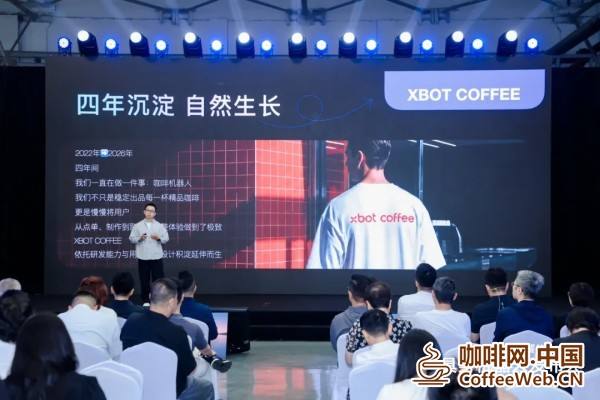
On the other hand, when consumers drink coffee today it is no longer merely for a pick-me-up; state switching, aesthetic identity, emotional value and lifestyle attributes are becoming key factors in consumption decisions. Yet traditional coffee stores are either trapped by efficiency and unable to offer personalized experiences, or burdened by heavy-asset operation and unable to carry diverse emotional value.
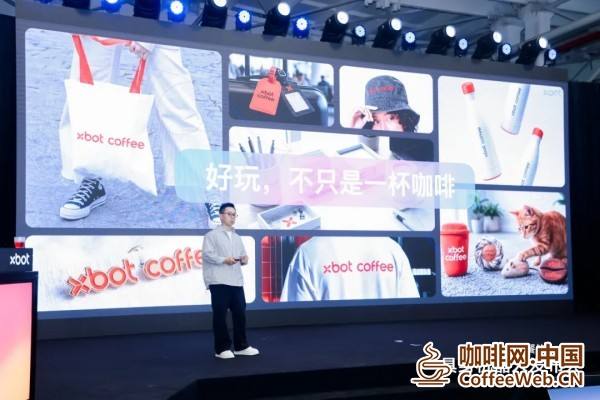
With ‘tasty plus fun’ as its core, XBOT COFFEE layers AI interaction, customized content and IP-based operation on top of stable output, fitting exactly the compound needs of the new generation of consumers.
A deeper reason lies in the fact that the embodied intelligence industry is at the critical point of moving from ‘technology validation’ to ‘scale commercialization’, and real business scenarios are key to crossing the ‘last mile’ of landing. For a long time, the catering robot industry has widely had the problem of ‘valuing hardware, neglecting scenarios’, with many products only able to complete laboratory demonstrations and unable to run a profitable model in real operations.
Yingzhi XBOT’s choice to self-operate coffee stores is precisely to put technology into the ‘examination room’ of real consumption, honing products and validating the model in daily operations, ultimately forming a replicable business model. Therefore, the launch of XBOT COFFEE is a key step in extending Yingzhi XBOT’s technical capabilities toward the consumer end.
As Jiang Hao emphasized: opening a store is not empty talk about a concept but solid work on the ground; only when users truly stand before the robot and complete the full-process experience can the value of the technology be genuinely perceived.
More Than Coffee: The Industrial Value Behind XBOT Lab (Experimental Store)
XBOT COFFEE’s brand proposition can be summed up as ‘love coffee, have fun with it’. In Yingzhi XBOT’s view, a cup of specialty coffee, besides being tasty, must also build a longer-term, deeper relationship with users in this era. Persistence in a good cup of coffee means making the coffee sufficiently ‘tasty’ and the experience sufficiently ‘fun’.
Behind ‘tasty’ is a three-layer capability system built by Yingzhi XBOT. The first layer is a foundation of quality raw materials — selecting specialty coffee beans and high-quality milk sources, following the health-oriented consumption trend, and laying a taste foundation from the source.
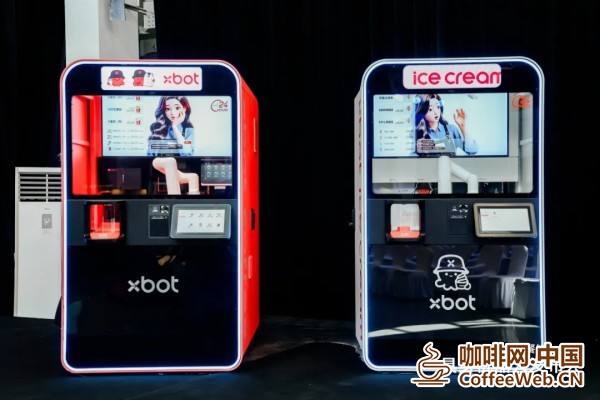
The second layer is stable output capability. Relying on three core technologies — visual simulation training, generative motion planning and force-position hybrid control algorithms — it achieves millimeter-level motion replication and precise parameter control, making ‘ten thousand cups as one’. Real-store test data show that the XBOT coffee robot once achieved an operating record of 5,000 cups cumulatively over 43 days with a user repurchase rate of 75%, turning ‘tasty’ from an occasional delight into long-term stability.
The third layer is personalized customization capability. The system can remember user preferences — low caffeine, mellow body, acidity and other personalized needs are directly replicated next time, and can automatically become the private-custom default.
‘Tasty’ is the foundation, while ‘fun’ is XBOT COFFEE’s gene. Yingzhi XBOT believes fun is not a flashy gimmick but a just-right experience design that offers a sense of participation without being intrusive.
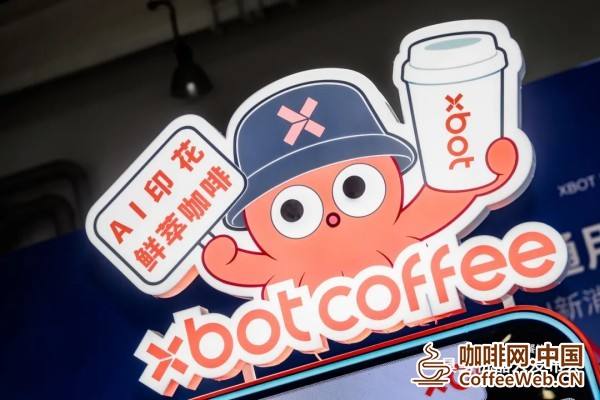
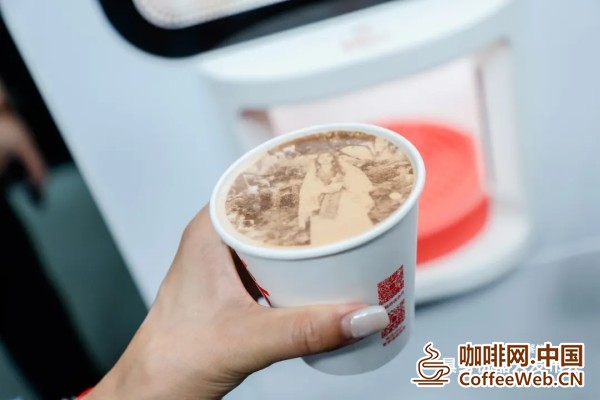
A highly representative innovation is AI-printed coffee, which supports users custom-uploading portraits, pets, festive elements and other patterns to be printed directly onto the coffee, making the coffee a content medium worth recording and sharing before it even reaches the lips. This ‘product as traffic’ design stimulates emotion and the desire to share, giving every cup of coffee its own social-communication attribute and getting users to repeatedly pay for ‘being different’.
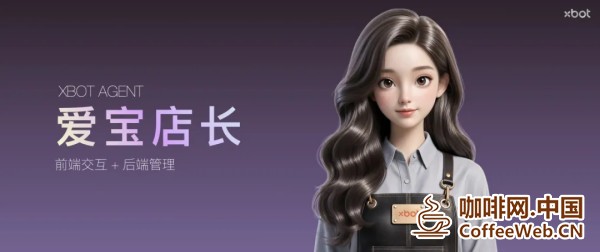
On the interaction level, the XBOT Aibao Store Manager achieves full-process proactive companionship for customers, able to remember taste preferences, precisely recommend products and answer all kinds of coffee-related questions. The Aibao Store Manager series has launched diverse personas such as ‘Dong Xiaowan’, ‘Duck Alexander’ and ‘Big Orange’, and AI managers with different personalities and communication styles can provide users with more natural companionship that has warmth and emotional value. At the same time, every key node of meal preparation is accompanied by synchronized voice broadcasts, turning ‘waiting time’ into ‘brand experience time’. The three defects common to traditional unattended devices — ‘the cold machine’, ‘the anxiety of waiting’ and ‘the identical interface’ — are broken one by one here.
In addition, IP-based operation is also a feature of XBOT COFFEE. The octopus IP named ‘Moyuzai’ is both a concrete expression of Yingzhi XBOT’s ‘one brain, many forms’ technical concept and a carrier of contemporary young people’s relaxed attitude toward resisting high pressure. It does not encourage laziness, but allows oneself to briefly zone out and proactively adjust the rhythm of life; it is not merely a cute plush toy, but a professional barista and a ‘lie-flat philosopher’.
XBOT COFFEE has also launched ‘Moyuzai’ series merchandise such as ‘Coffee Talk’ and plush toys, interpreting life states in coffee language and becoming a bridge connecting the brand with users’ emotions. From today on, this ‘Moyuzai’ will accompany everyone who wants to occasionally catch their breath amid the torrent of the times, as they gather strength and set out again.
Overall, XBOT COFFEE is not simply a chain coffee brand but an ‘experimental field’ and ‘model room’ for Yingzhi XBOT to validate its embodied intelligence commercialization model, with industrial value far exceeding coffee sales itself.
For a long time, the catering retail robot industry has lacked a reusable, complete business solution. In the past most equipment vendors only handled hardware delivery without providing full-chain support such as site selection, operation and customer acquisition, making it hard for clients to run a profitable model after purchasing equipment.
Through self-operated stores, Yingzhi XBOT has run through every operating link — site selection, output, customer acquisition, maintenance and data closed loop — forming a replicable single-store profit model, and then outputs a one-stop business solution to clients, so that partners receive not isolated equipment but a business system that can be landed directly.
For the catering retail robot industry, XBOT COFFEE provides a referenceable commercialization template, breaking the industry prejudice that ‘the technology looks good but makes no money’ and pushing embodied intelligence truly from the exhibition hall into everyday consumption. At the same time, this digital-productivity-driven store model offers a new path for the catering industry to cut costs, raise efficiency and upgrade experiences, validating the commercial value of embodied intelligence in consumption scenarios.
On scaled layout, XBOT COFFEE plans to land 3,000 stores by the end of 2026, with a long-term target of 100,000 nationwide.
Conclusion
From deeply cultivating coffee robot technology four years ago to stepping in to build a self-operated coffee brand, Yingzhi XBOT is using solid work to explore the landing path of embodied intelligence. XBOT COFFEE is not merely a cross-border attempt, but an extension of technology into scenarios and the penetration of industry into consumption.
Using a cup of coffee as its carrier, Yingzhi XBOT turns embodied intelligence technology into an everyday experience consumers can perceive and touch, and also provides the industry with a replicable, verifiable business paradigm. As stores keep landing and data keeps accumulating, this new consumption model supported by digital productivity may redefine the form of catering services and open up brand-new possibilities for the AI new-consumption era.
Responsible editor: Han Lu (EN053)
Conclusion
Responsible Editor: Han Lu (EN053)
Reprint Notice & Disclaimer
- This article has been edited and compiled by China Coffee Network. The information and images therein come from public sources and the copyright belongs to the original author. This reprint is intended solely for information sharing within the coffee industry and does not represent the views of this website; all data and opinions are subject to the original article. Our thanks to the original author for creating and sharing it.
- For matters concerning content licensing, attribution, copyright or otherwise, please contact us promptly and we will verify and cooperate in handling them as soon as possible. We also welcome coffee origins, brands and industry media to exchange ideas and contribute articles.
- Contact China Coffee Network: Tel 400-0000-641 (+86-18288016826) | Email 478203668@qq.com
Related Reading
 Asia Pacific Connection in a Cup of Coffee
- A Cup of Coffee Connecting Asia-Pacific
 ICE agricultural futures main contracts mostly closed higher, while coffee futures rose 1.84%
 The coffee market is experiencing two extremes! Arabica inventory drops to 27 year low, but Robusta plummets to two-week low
 Financial Observation: Why is Generation Z from the United States flocking to coffee and tea shops in China
 ‘All-Ice’ Coffee Goes Viral! Will the Next Hit Be Your Personal Favorite?


 Liaoning ICP Security No. 21122402000217