
At a Glance (China Coffee Network): In 2025 China's coffee industry reached RMB 354.9 billion, up 13.3% year on year, yet over the past year 53,000 new coffee stores opened nationwide with net growth of just 1,065; competition among coffees at the CIIE is shifting from store scale to upstream raw materials, processing capacity and per-store efficiency.
Imported coffee brands have turned out in force at the CIIE, reflecting the continued rise in coffee’s market momentum in China.
At the recently held ninth China International Import Expo (CIIE), coffee remained one of the most frequently seen elements. A Nandu Bay Finance reporter learned during visits to the expo that this year’s coffee presence was not merely about promoting a single brand or product, but emphasised the industrial chain and consumption scenarios.
Saturnbird was invited to showcase its Airship intelligent coffee brewing system and set up a coffee-making area at its booth; the CP Group booth brought coffee from Hainan and Yunnan producing regions to the exhibition floor; as a ‘nine-time CIIE veteran’, Warrenfen presented a range of original-packaging imported Jamaican coffees; notably, at the same time, Luckin Coffee appeared as the ‘designated coffee brand of the ninth China International Import Expo’ and took up residence in several national pavilions, including those of Brazil and Indonesia.
Beyond individual brands, well-known coffee-producing regions drew attention at this year’s CIIE.
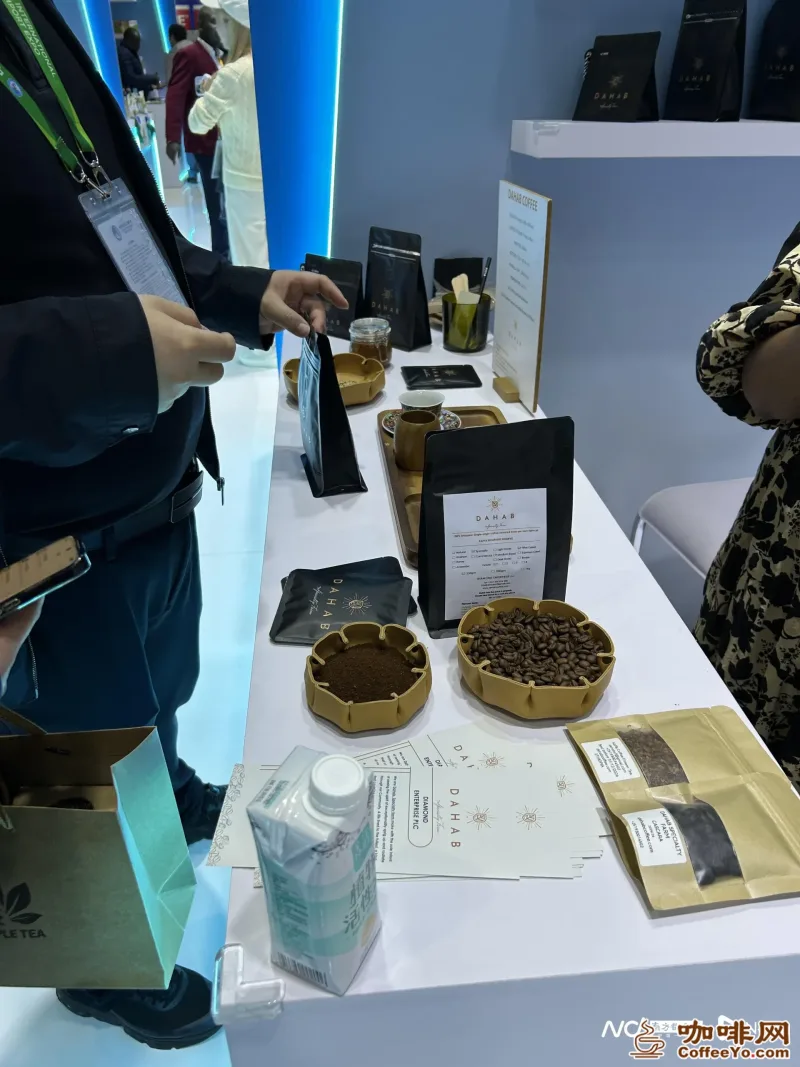
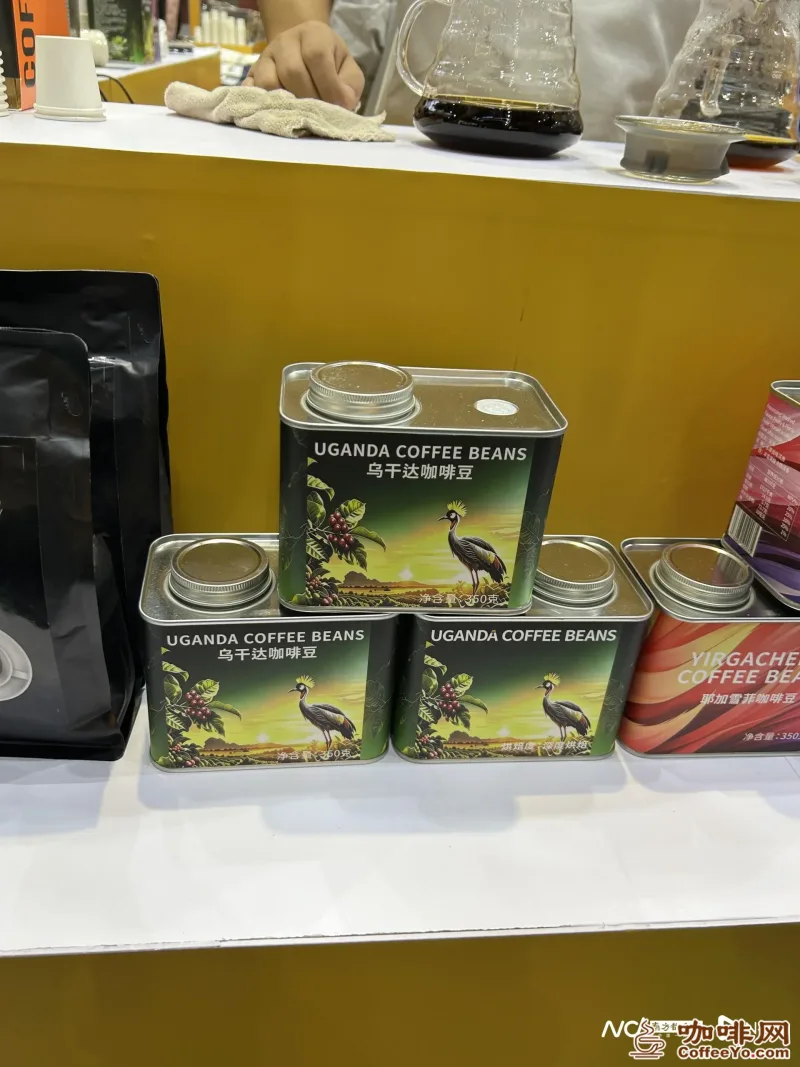
The Nandu Bay Finance reporter noted that African coffee, exhibiting as a group for the first time, became the core highlight of the African exhibition area at this year’s CIIE. Ethiopia’s AWO Coffee Company, building on the sell-out of 100 kg of coffee beans on site at the previous edition, continued to expand into the Chinese market this year; Chamarel coffee, handcrafted locally in Mauritius, made its debut in the hope of connecting with Chinese specialty cafes and roasters; Cameroonian exhibitors brought distinctive ‘Robusta’ beans, hoping to find Chinese partners in areas such as product processing. In addition, Kenya and other countries also brought their own local specialty coffee products.
From designated supply to smart equipment, from flavour labels to origin imports, the coffee industry’s showing at the CIIE points to a new direction: competition in China’s coffee market is no longer simply about ‘who has more stores’, but is extending simultaneously into upstream raw materials, processing capacity and consumption scenarios.
China’s Coffee Market Is Still Expanding, but the Scenarios Are Changing Too
By the numbers, China’s coffee market is still expanding and maintains ‘double-digit’ growth within the consumer sector. The Nandu Bay Finance reporter checked multiple data sets and learned that in 2025 the scale of China’s coffee industry reached RMB 354.9 billion, up 13.3% year on year.
Against this backdrop, certain niche segments have also flourished.
According to Hongcan Big Data, the freshly prepared coffee drink market reached RMB 140.5 billion in 2025, up 19.4% year on year; it is projected to reach RMB 159 billion in 2026, with growth over the next three years expected to stay above 10%. Annual per-capita coffee consumption rose from 16.7 cups in 2023 to 28.6 cups in 2025, a 1.7-fold increase in two years, as coffee shifts from an optional beverage to a high-frequency necessity. The store network is also continuing to sink into lower-tier markets: China now has 254,600 freshly prepared coffee stores in operation, covering 1,889 counties. In terms of both total volume and penetration, China’s coffee market is far from ‘peaking’.
The Nandu Bay Finance reporter noted that coffee’s consumer base and consumption scenarios are changing as well.
Industry analysis holds that within freshly prepared coffee consumption scenarios, business socialising has gradually come to account for a larger share than daytime work. The consumer base is also broadening, with university students and young people in small towns penetrating at an accelerating pace, while blue-collar and silver-haired consumers have become new growth points. This means coffee’s incremental growth no longer comes solely from white-collar workers in first-tier cities, but from more dispersed groups and more fragmented moments.
At the same time, as consumers’ understanding of coffee continues to deepen, coffee consumption is becoming increasingly ‘refined’.

At the ‘Coffee Stories of the CIIE’ session held during this year’s expo, Xu Yang, general manager of the Guangzhou Commodity Exchange, said in his remarks that through trade exchanges they had found Chinese consumers no longer seek caffeine alone, but place greater weight on origin stories, sustainability and traceability.
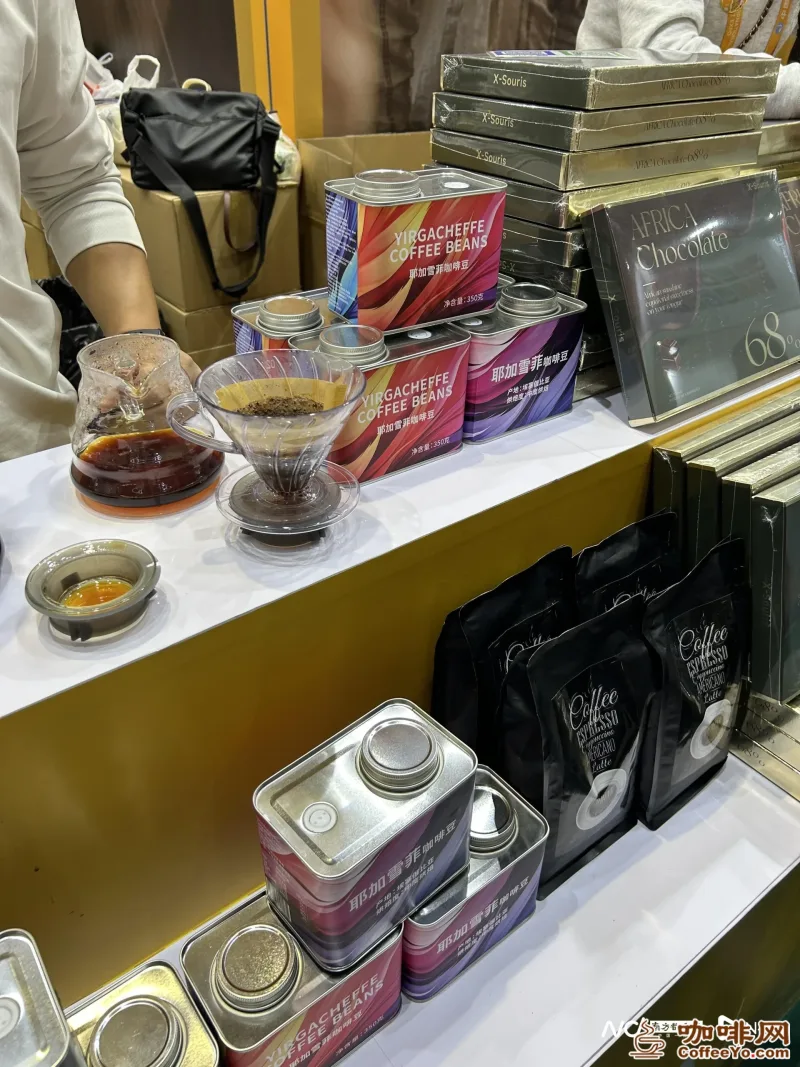
‘Take Ethiopia as an example: two years ago China was its seventh-largest coffee buyer, and this year it has jumped to third. In one year it imported 47,000 tonnes of coffee from the country, worth USD 347 million, with volume up about 40% and value up about 60%,’ Xu Yang said. The string of figures shows that China is not only the coffee consumer market with the greatest growth potential worldwide, but also the most important incremental buyer for the global coffee industry.
Coffee Giants Are Shifting from ‘Store Scale’ to ‘Per-Store Efficiency’
The Nandu Bay Finance reporter observed that, in step with the market changes, the operating metrics of leading coffee companies have also shifted.
Luckin Coffee’s total net revenue in the third quarter of 2026 was RMB 17.891 billion, up 17% year on year; its global store count reached 38,909 and monthly transacting customers reached 123 million, both record highs. Yet same-store sales at its self-operated stores fell 11.1% year on year in the same period, against growth of 14.3% a year earlier. Cotti, for its part, has applied the brakes after rapid expansion: it opened 1,674 stores in the first half of 2026 but closed 2,484, turning net growth negative; since March, Cotti has suspended applications for joint-operation partnerships in provincial capitals and other key cities, shifting instead to directly operated model stores, which the industry sees as a ‘correction’ of its earlier extensive expansion.
For Starbucks China, after the joint-venture deal with Boyu Capital was completed in April 2026, Starbucks Global turned its China business into an ‘asset-light’ operation that collects licensing fees; in the last quarter before the deal closed, Starbucks China’s same-store sales rose only 0.5% year on year, while average ticket size fell 1.6%.
Judging from the above figures, although the three coffee companies occupy different competitive positions, their performance data reflect the same signal: growth in store numbers no longer automatically translates into growth in per-store output.
It is understood that over the past decade, competition in the coffee industry achieved growth mainly through ‘scale’ and ‘price wars’, and some brands benefited from this; but when the store count approaches a ‘critical point’, those returns shrink rapidly. The Nandu Bay Finance reporter checked the data and learned that in the past year 53,000 new coffee stores opened nationwide, yet net growth was only 1,065.
In the industry’s view, China’s coffee market is undergoing a shift in competitive logic, moving from ‘brand premium’ to ‘efficiency and scale’.
Naturally, in response to changes in the market environment, the coffee giants have their own corresponding explorations. The supply-chain depth displayed by Luckin Coffee during the CIIE includes procurement on the order of RMB 10 billion in Brazil, a dedicated coconut island in Indonesia, and four roasting bases with planned annual capacity of 155,000 tonnes; Starbucks, after the joint venture was completed, has pushed its ‘a thousand stores, a thousand faces’ strategy, tying store-scenario differentiation to localised decision-making authority. These changes all indicate that the coffee giants are seeking new growth room by controlling costs upstream, stabilising quality and improving per-store efficiency.
How will China’s coffee market grow in the future? And what major changes will take place alongside that? The Nandu Bay Finance reporter will continue to follow these questions.
Nandu Bay Finance reporter Bei Bei, reporting from Shanghai
Reprint Notice & Disclaimer
- This article has been edited and compiled by China Coffee Network and reprinted from Nanfang+, “进博会上咖啡热度依然提升,但市场已从“规模”转向“场景”.” The copyright of the original text belongs to Nanfang+ and the original author. This reprint is intended solely for information sharing within the coffee industry and does not represent the views of this website; all data and opinions are subject to the original article. Our thanks to the original author for creating and sharing it.
- Read the original: Nanfang+, “进博会上咖啡热度依然提升,但市场已从“规模”转向“场景””
- For matters concerning content licensing, attribution, copyright or otherwise, please contact us promptly and we will verify and cooperate in handling them as soon as possible. We also welcome coffee origins, brands and industry media to exchange ideas and contribute articles.
- Contact China Coffee Network: Tel 400-0000-641 (+86-18288016826) | Email 405854472@qq.com
Related Reading
- After Zero Tariffs: One African Coffee Bean’s Journey to Shanghai
- Bean in Short Supply: A Taiwan Youth on Yunnan Coffee as a Shared Cross-Strait Stage
- Five Years, Eight Championships: Lincang Coffee Joins the World Stage
 Haikou ‘Union Cup’ Barista Skills Competition Kicks Off to Empower the Service Sector
 Yunnan Specialty Coffee Beans Deliver an ‘Excellent’ Report: Path to Value Leap
- Cross-Strait Tides Rise: A Taiwan Youth Farms Coffee in Yunnan, a Cup Bridging Both Sides




 Liaoning ICP Security No. 21122402000217