
Brief (coffeeyo.com): As Yunnan launches a Coffee Culture Center under the banner “World Coffee, Chinese Expression,” the question of what makes a cup of coffee distinctly Chinese — rooted in Yunnan’s century-old, uniquely home-grown coffee heritage — is moving from café novelty to an industry-wide quest.
How can a cup of coffee taste Chinese?
One might add local ingredients such as Pu’er tea, osmanthus or dried tangerine peel; swap the vessel for a lidded bowl, blue-and-white porcelain or Jianshui purple clay; or decorate the café with more Eastern charm — all of these are ways of expressing Chinese-style coffee.
But what exactly is Chinese-style coffee? The answer may not be a recipe sheet, but a new way of thinking about how Chinese people understand, grow, drink and express coffee.
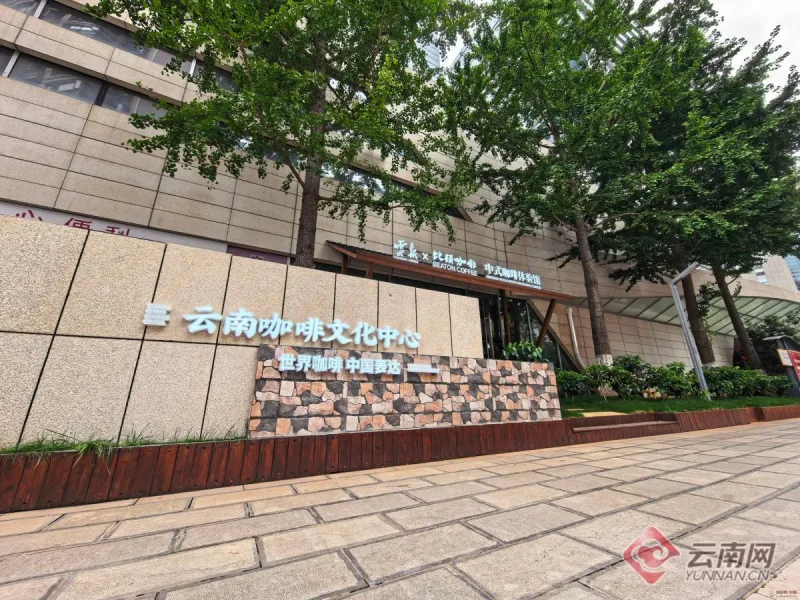
On August 19, the Yunnan Coffee Culture Center — jointly initiated by the Yunnan Daily Press Group together with Yunnan Agricultural University, Yunnan Net, Baoshan Biton Coffee Co., Ltd. and other units — will officially open. Centered on the theme “World Coffee, Chinese Expression,” the center will develop a Chinese-style coffee that represents China’s quality, style, character and cultural attributes, strengthening the Yunnan coffee consumption brand through cultural empowerment, consumption leadership, trade promotion and market expansion, and helping Yunnan coffee reach the whole country and the world.
What kind of coffee can, in a single cup, let one taste the Chinese people’s zest for life, aesthetic sensibility and cultural temperament will become a new proposition for the Yunnan coffee industry.
What Has Coffee Become in China?
Coffee is a global beverage, and it does not have only a single mode of expression.
Italians built their coffee culture around espresso; Turkish coffee has preserved a unique brewing tradition; and Japan’s kissaten (coffee houses) have formed another delicate, quiet coffee aesthetic.
The same coffee bean, entering different regions, always collides with local eating habits and ways of life, eventually growing into different forms.
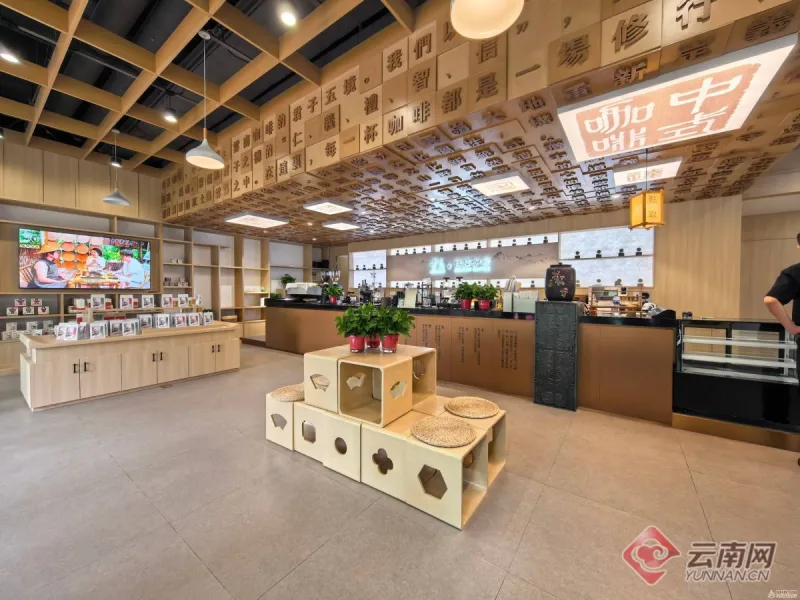
So, what should Chinese coffee be like?
In Yunnan, coffee’s encounter with local life goes back more than a century. In 1893, coffee was introduced at Nongxian Village in Ruili, Dehong, and spread naturally through border trade among residents; in 1904, the French brought coffee seedlings to Zhukula in Binchuan, Dali, leaving behind the only intact century-old coffee forest in the country.
“Most of the world’s major coffee-producing regions were introduced through colonial planting, but looking at Yunnan’s coffee development history, there are two major early independent introduction sources: Nongxian Village in Ruili, Dehong, and Zhukula in Binchuan, Dali,” explained Li Shouling, director of the Dehong Tropical Agricultural Science Research Institute of Yunnan Province. The former is an introduction path through cross-border ethnic folk exchange, while the latter is the product of foreign culture merging with southwestern local soil; both are the fruits of spontaneous civilizational exchange. This history of spontaneous folk dissemination is a Chinese historical bedrock that no other coffee region possesses.
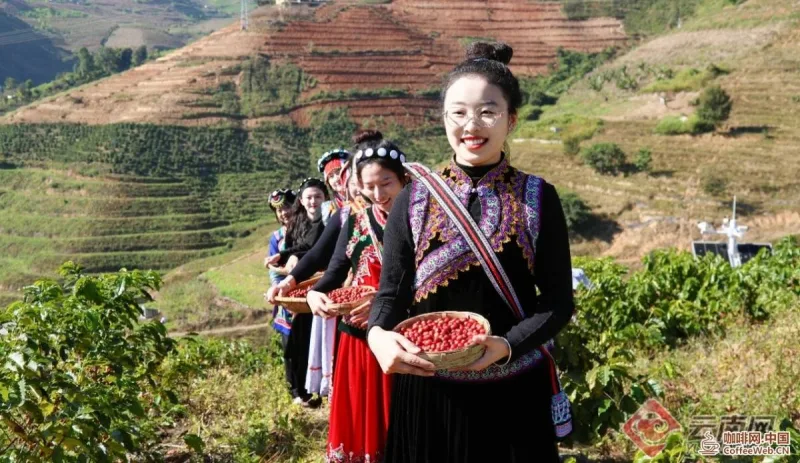
Yunnan’s coffee-producing areas are home to more than ten resident ethnic groups including the Jingpo, Dai, De’ang, Yi, Lahu and Wa. Each ethnic group has woven millennia of mountain farming wisdom into coffee production, forming a pluralistic and integrated industry culture.
On the cultivation side, various ethnic groups have developed distinctive three-dimensional under-forest intercropping models such as forest-coffee, tea-coffee and grain-coffee, forming ecologically sustainable local cultivation forms.
On the processing side, Yunnan coffee draws on traditional food-processing techniques such as Pu’er tea, red wine and pickled foods to develop coffee products that meet market demand and carry regional character.
In terms of culture, the Jingpo and Dai peoples have developed coffee-flavored ethnic cuisine, while the Wa people use coffee cherry husks to develop intangible-cultural-heritage brocade creative products — coffee has become a material carrier of exchange and integration among borderland ethnic groups.
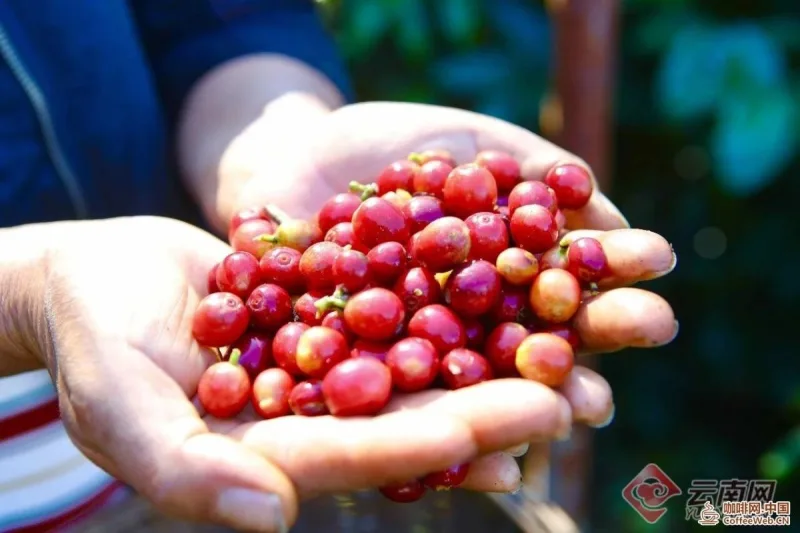
Li Shouling believes that to understand Chinese-style coffee, one must first return to the unique historical bedrock that distinguishes Yunnan coffee from other producing regions worldwide. Yunnan coffee has formed a one-of-a-kind complete development chain: dual-source folk introduction — state-farm pioneering — autonomous local scientific research varieties and technology — multi-ethnic coexistence.
Today, Yunnan’s coffee planting area is about 1.5 million mu (around 100,000 hectares), with an annual output of about 170,000 tons of green beans, accounting for over 95% of the national total, and its products are exported to more than 40 countries and regions. This deep industrial accumulation provides a solid foundation for Chinese-style coffee.
In Yunnan, coffee has long since entered villages and merged with ethnic culture, acquiring local ways of drinking and memories over a long stretch of time.
Chinese-Style Coffee Should Come Closer to Chinese Life
On today’s coffee menus, Chinese elements are hardly absent.
Osmanthus, tea, fermented rice wine, fruit, spices — more and more local flavors are entering the coffee cup. At the same time, guofeng (national-style) spaces and Chinese vessels are increasingly common. But if one merely stacks Chinese elements on top of each other, Chinese-style coffee easily becomes a superficial visual symbol. A true Chinese-style coffee expression should come closer to Chinese people’s lives.
Spring has blossoms, summer has green, autumn has fruit, winter has warmth. Chinese cuisine has always valued terroir and seasonality — so it is with tea, so with food, and so it can be with coffee.
Yunnan happens to be an exceptionally rich testing ground. Here there are coffee, tea, flowers, fruit, spices and traditional Chinese medicine, as well as the rich culinary traditions of many ethnic groups. All of these can become entry points for coffee to connect with Chinese life.
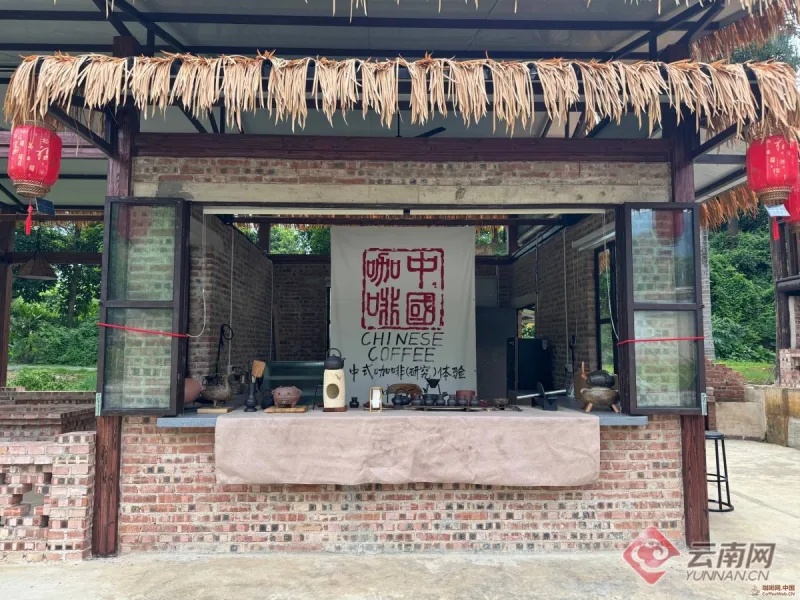
In Baoshan, Biton Coffee still preserves ancient coffee-making craft — grinding beans with traditional tools, boiling water over charcoal, then blending in Yunnan brown sugar and crushed nuts. This way of drinking differs from the lattes and americanos familiar today, yet it preserves the taste memory of local Yunnan people.
To let more people understand traditional Chinese coffee-making and savor a century-steeped coffee culture, the Yunnan Coffee Culture Center has also placed the intangible-cultural-heritage ancient-processing craft in the most prominent position. The center’s proposed “guofeng coffee-drink” concept also hopes to forge a deeper link between coffee and Chinese consumers’ eating habits, so that Chinese-style coffee can hold even more possibilities.
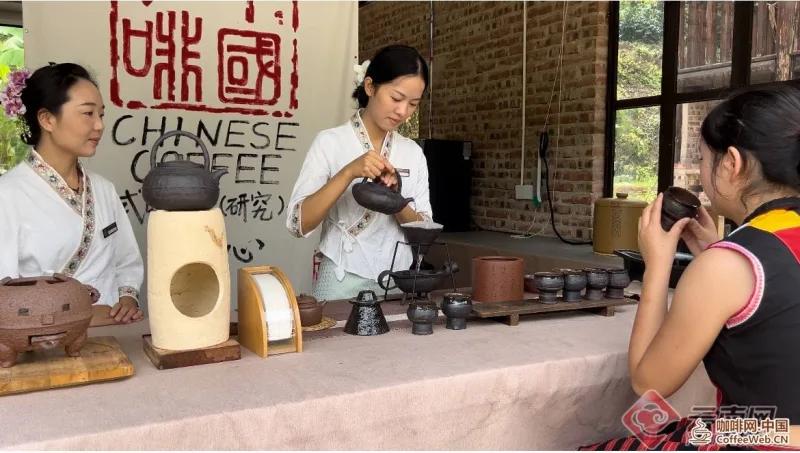
“Yunnan coffee has a planting and drinking history of over a hundred years,” believes Fang Mingfeng, general manager of Baoshan Biton Coffee Co., Ltd. He argues that Chinese-style coffee is not inventing a new concept out of thin air, but rediscovering the coffee culture that has already grown in China’s land and life. Coffee is of the world, but when Chinese coffee goes global, it should also carry its own character.
Building a Chinese Coffee Culture System
In the past, Yunnan coffee long relied mainly on exporting raw beans, and the dilemma of good beans failing to fetch good prices plagued the industry for decades. Today, the shift from raw-material output to brand and cultural output has become a trend.
In 2025, Yunnan’s coffee specialty rate jumped from 8% in 2021 to 41.7%, and its deep-processing rate rose from 20% to 85%. From standards established at the cultivation end, to product R&D at the processing end, to scenario innovation at the consumption end, Yunnan coffee is systematically taking root.
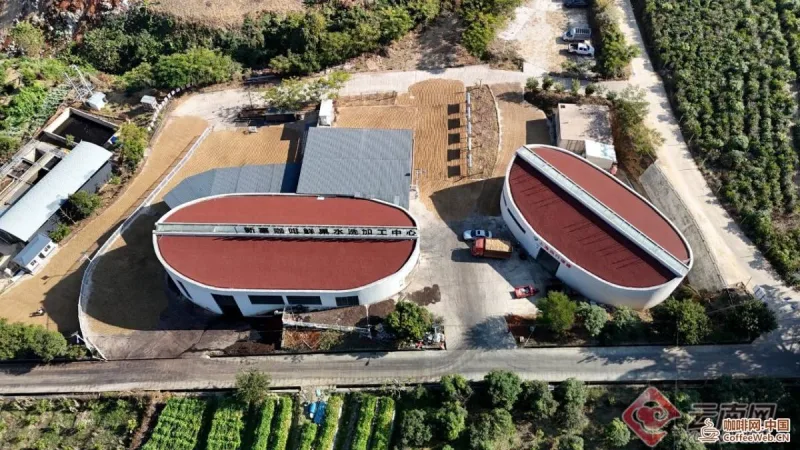
When people used to talk about coffee, they mostly thought of Western-style café spaces. Now, that boundary is gradually being broken. In Yunnan, coffee can appear on a city street corner or in a mountain manor; it can sit on the bar of a specialty café or on a wooden table in a village courtyard. Coffee is blending into a more authentic and diverse Chinese life.
The Yunnan Coffee Culture Center’s proposal to build a “Yunnan coffee culture parlor” is likewise seeking a new possibility — a space that is both a coffee-consumption venue and a cultural-exchange venue. People can drink coffee and talk about it, and can also experience, taste and exchange, letting a cup of coffee become a medium for people to meet.
At present, is there really a cup of coffee suited to Chinese people’s palates? What everyone is truly asking is not merely a flavor, but a cultural subjectivity — and that is precisely what the Yunnan Coffee Culture Center hopes to help advance.
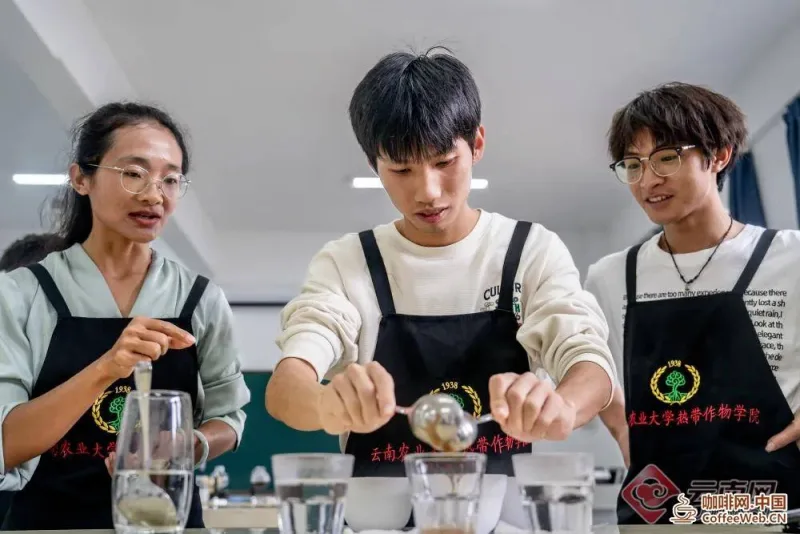
According to the plan, the center will connect universities, enterprises, research institutions, industry organizations and media, building an open platform where more people can jointly discuss, enrich and shape the concept of “Chinese-style coffee.”
Li Shouling believes Yunnan coffee is the crystallization of Chinese-foreign civilizational exchange, the coexistence of borderland ethnic groups, and China’s scientific and technological self-reliance. Taking the four local narrative cores — the Nongxian and Zhukula introductions, state-farm pioneering, independent scientific research and seed breeding, and multi-ethnic coexistence — a unique coffee culture system can be established.
Looking back on Yunnan coffee’s century-long journey, this bean is no longer an imported good, but a local specialty rooted in the mountains and waters of southwestern China.
When a cup of coffee from Yunnan lets one taste both the sunshine and rain of distant mountains and the warmth and intimacy of a neighbor’s hearth, perhaps this is the most touching answer that world coffee has written on Chinese soil. May this cup of coffee, with composure, brew an Eastern aftertaste in the world’s cups.
Source: Yunnan Net, reporter Zhang Qimin.
Reprint Note & Disclaimer
- This article is reprinted from Chinese media for information and cultural exchange. The views expressed are those of the original author and do not necessarily reflect the position of coffeeyo.com.
- All trademarks, brand names and logos mentioned belong to their respective owners.
- For cooperation, reprint or correction requests, please contact coffeeyo.com.
Reprint Notice & Disclaimer
- This article has been edited and compiled by China Coffee Network. The information and images therein come from public sources and the copyright belongs to the original author. This reprint is intended solely for information sharing within the coffee industry and does not represent the views of this website; all data and opinions are subject to the original article. Our thanks to the original author for creating and sharing it.
- For matters concerning content licensing, attribution, copyright or otherwise, please contact us promptly and we will verify and cooperate in handling them as soon as possible. We also welcome coffee origins, brands and industry media to exchange ideas and contribute articles.
- Contact China Coffee Network: Tel 400-0000-641 (+86-18288016826) | Email 405854472@qq.com | Address: Jinghong, Xishuangbanna, Yunnan Province / Tieling, Liaoning Province
Related Reading
- Bean in Short Supply: A Taiwan Youth on Yunnan Coffee as a Shared Cross-Strait Stage
- Five Years, Eight Championships: Lincang Coffee Joins the World Stage
 Haikou ‘Union Cup’ Barista Skills Competition Kicks Off to Empower the Service Sector
 Yunnan Specialty Coffee Beans Deliver an ‘Excellent’ Report: Path to Value Leap
- Cross-Strait Tides Rise: A Taiwan Youth Farms Coffee in Yunnan, a Cup Bridging Both Sides
 2026 2nd Yunnan Treasure Coffee Green Bean Competition (Cup of Excellence Pilot) Concludes



 Liaoning ICP Security No. 21122402000217