
Brief (coffeeyo.com): After seven years roaming China in an RV, a Beijing “snowbird” family has parked for good at a Yunnan highway service area, turning their vehicle into “Road Coffee” and putting down new roots beside Xingyun Lake.
The Paper – Spring City Evening News
Opening remarks
As midsummer heat waves persist across much of China and record highs keep being set, Yunnan—blessed with a naturally cool endowment—has become a popular summer refuge for sojourners this year. Spring City Evening News – Kaiping News has launched the series “Yunnan’s Opportunities Below 22°C,” decoding the causes of its cool climate and observing the industrial pulse of the “summer-escape economy.” And the “snowbirds” who have traveled across mountains and seas to arrive are the warmest human footnote to this “cool productivity.” As an important part of the project, “Snowbirds Arrive in Yunnan” turns its pen to groups who met through the coolness and took root in Yunnan’s mountains, telling, through individual stories, the two-way journey of climate and life, recording their transformation from hurried summer visitors to deeply rooted new residents, and glimpsing, in vivid everyday life, the growth energy that the cool economy injects into Yunnan’s mountain villages.
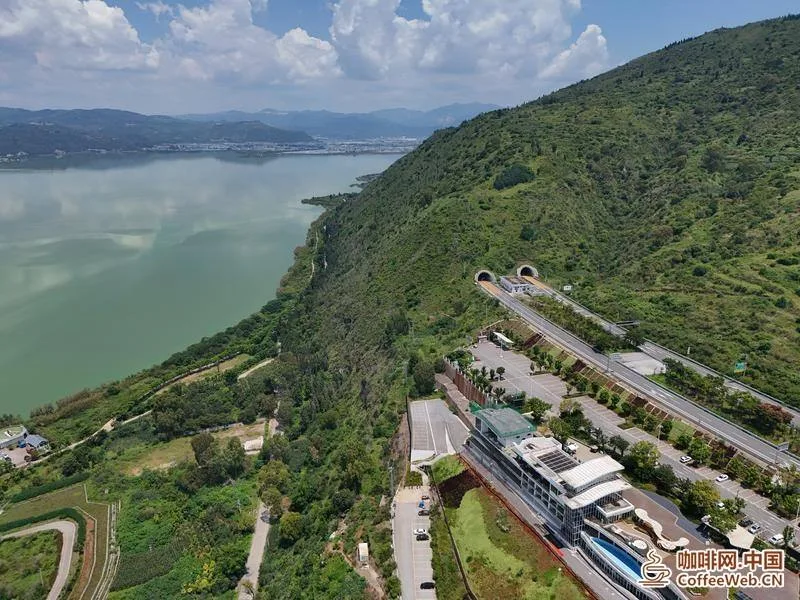
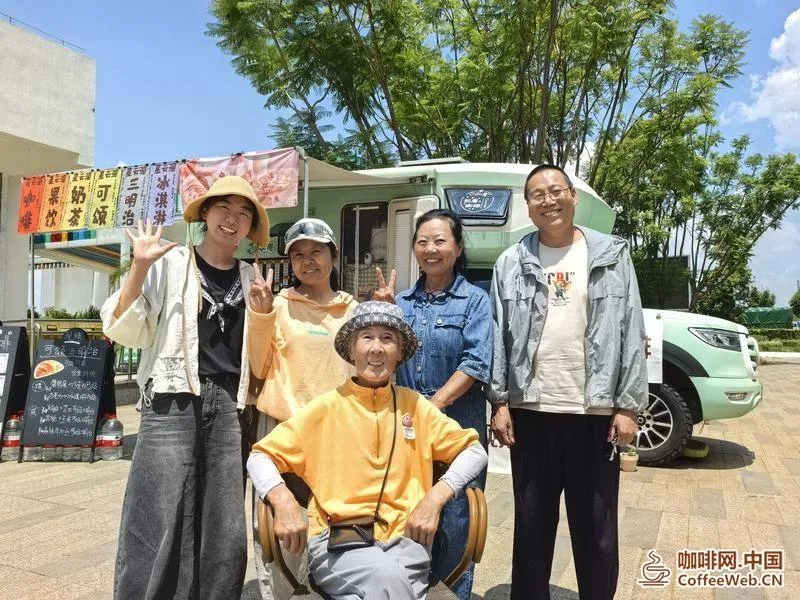
In early autumn, Yunnan’s Xingyun Lake ripples with blue waves. On the lake’s east shore, at the Xingyun Service Area, lives a “snowbird” family that migrated from Beijing. Three generations: the youngest is Du Meize, born in 1988, and the oldest is her 83-year-old grandmother; between them are Meize’s father, mother and aunt. They drove an RV for seven years, traveling all over the country, and finally stopped here. The reason is simple—no need for air conditioning in summer, sunsets too beautiful to walk away from, and the locals never treated them as outsiders.
The milk-green RV in the service area
August 15, Saturday. Following the Chengyuan Expressway toward Yuanyang, the reporter turned in at the Xingyun Service Area and walked about a kilometer inward before seeing that milk-green RV. The vehicle had been converted into a coffee-making space named “Road Coffee.”
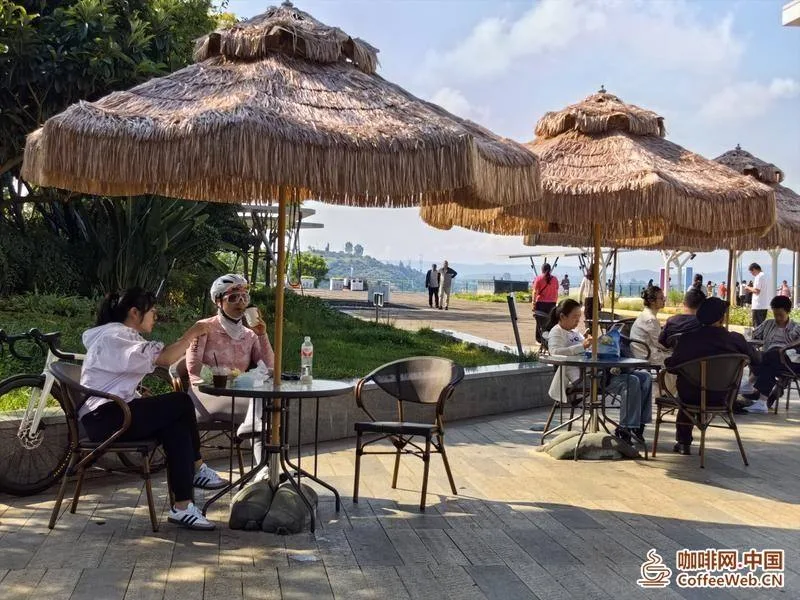
In the afternoon the service area was bustling. On the leisure stools under the sunshade, some slowly sipped coffee while others gathered around the coffee cart to photograph and film it. After this vehicle parked at the service area, it gradually became an internet-famous check-in spot. “Da Ju,” the cat Meize has raised for seven years, also became famous; regulars come and casually pick it up for a cuddle.
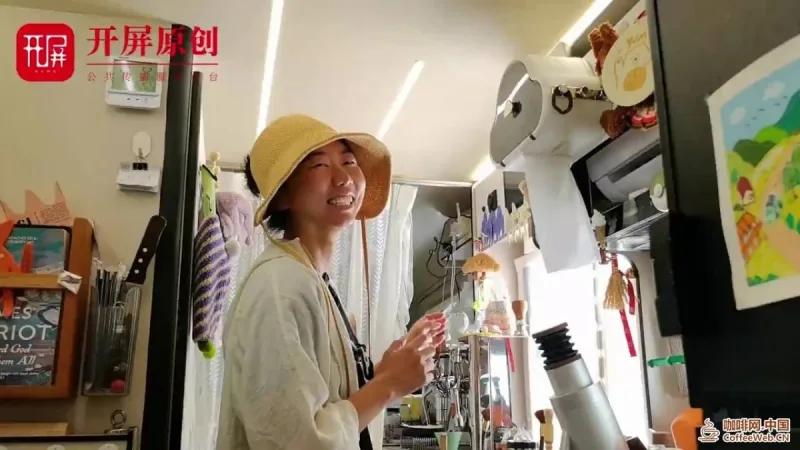
Meize’s mother handles greeting guests, placing orders and then notifying everyone by walkie-talkie. Meize and her father make coffee and fruit tea, her aunt and mother make snacks, and her grandmother is in charge of cuddling the cat and sunbathing—and when things get busy, helping deliver food.
Seven years, traveling across the country
Meize told the reporter that after graduate school she worked in Beijing at a foreign company developing English-education content. The pay was high and the benefits good, but so was the pressure; her lower back and legs often ached. For the half-year before she quit, she was practically living at the hospital, cycling through acupuncture and massage. The signals from her body made her start wondering whether she should change her way of living. In 2019, she quit without a backup plan.
“At first my mom couldn’t understand it either—thought giving up such a good job was a pity,” Meize said.
But by the end of that year, her mom bought the family’s first RV.
At first they only roamed around Beijing, then went to Xinjiang. The family went and stopped as they pleased, staying longer wherever they liked. Meize later bought an RV of her own and had it painted milk-green. The two vehicles sometimes set off together, sometimes went their separate ways. In seven years they traveled almost everywhere in the country.
Yunnan was a place they especially loved. Three Spring Festivals were spent in Jianshui.
The RV became a coffee cart because of Luoping’s rapeseed flowers in 2024. At the time Meize made coffee for a few friends, and a friend said, “You might as well sell it while you play.” With just that one remark, “Road Coffee” hit the road.
Gone, came back again
In January 2025, Meize’s family was circling Fuxian Lake; on the return they passed the Xingyun Service Area and stopped to rest. Someone came over and asked if they could make a few cups of coffee, so they did. A service-area staff member came over and said selling was not allowed per regulations, but kept Meize’s contact information.
A few days later, the call came—the management wanted to cooperate with them, bringing the coffee business in.
The staff took Meize’s family to see the lakefront service area across the way. “That day the sunset was especially beautiful,” Meize said, pulling up a photo on her phone. “That feeling was just ‘wow’—so pretty, feeling very close to the lake, with a great angle too.”
They decided to stay a while longer. Back then the service area’s facilities were still simple—only hot water and a toilet—and Meize’s parking spot was nearly a kilometer from the entrance, so few cars turned in. They sold three to five cups a day; ten counted as a lot. But life was free and easy; when idle they’d wander the surroundings and browse the markets, and five months slipped by.
Summer came, and the family packed up and went to Arxan in Inner Mongolia to soak in cold springs.
They left, but the WeChat didn’t break. Guests who had come for coffee and the service-area staff all asked: “Will you come back?”
They decided: “We’ll be back right after National Day.”
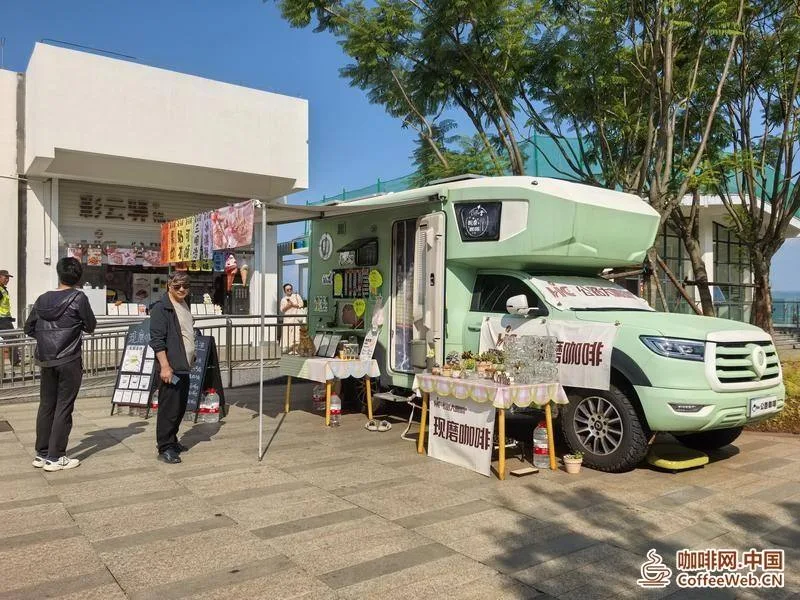
In November, the family returned to the Xingyun Service Area.
The service area had changed—rest pavilions, sunshades, tables and chairs had all appeared, a supermarket had opened, and a roughly 10-square-meter stall was left beside it.
After returning, they kept making coffee in the vehicle, refreshing passing drivers. After staying a while, Yunnan Communications Investment and departments such as Jiangchuan District’s culture-tourism, women’s federation and communist youth league successively gave a lot of support. The Jiangchuan District Culture and Tourism Bureau helped coordinate many specifics and also took the family to experience local intangible heritage and visit the museum, letting them understand Jiangchuan’s culture more deeply.
Meize and her parents have many social-media followers; when they stopped elsewhere before, they were often invited to events. But Meize said the feeling in Jiangchuan is different—”like family!” They wanted to stay long-term.
Later, Meize’s family rented the stall next to the supermarket, on a two-year lease. The menu added more than 20 snacks such as fried chicken, fries and sandwiches, and the variety of coffee and fruit tea grew to more than 40 types.
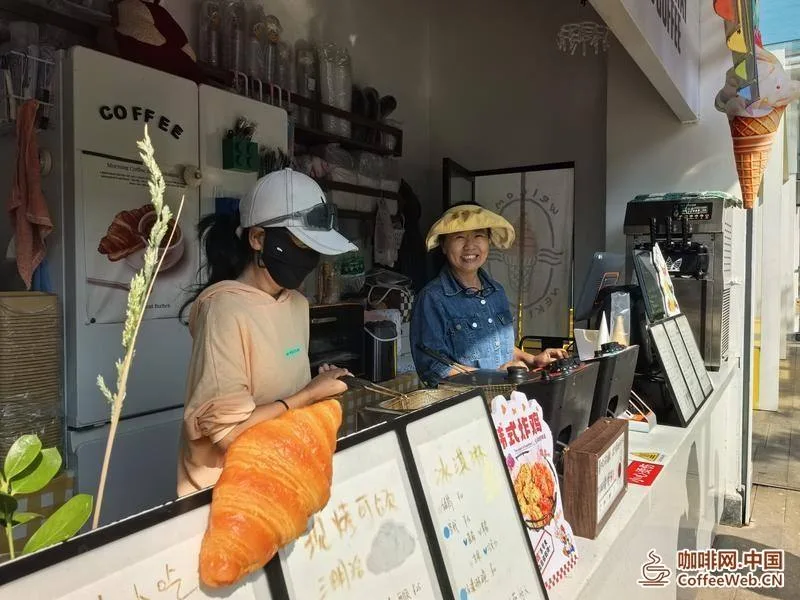
At first the scenery kept people, then the people kept people
“It used to be very quiet here with very few people,” Meize said. “Now more people know about it; guests who’ve been here stop by whenever they pass, and they bring others. The buzz is gradually building.”
Now they sell an average of twenty to thirty cups of coffee a day, more on holidays, with daily revenue reaching over a thousand yuan.
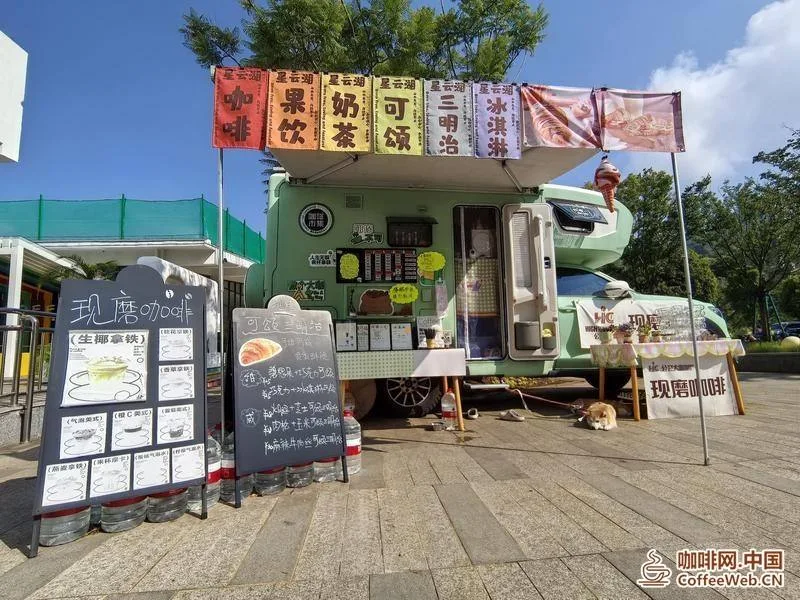
She said the scenery is good, the environment is good, and the culture, climate and produce are all nice—the vegetables and fruit also taste better than in the north.
“Before, we’d look for high-altitude places to escape the heat; when many places were over thirty degrees, here the high was only about twenty-seven or twenty-eight. This is our first summer in Yunnan, super comfortable—no air conditioning at night, and we even need a blanket.”
The Xingyun Service Area is the longest they’ve stayed in seven years of travel, and the family plans to stay even longer. “At first the scenery kept people, then the people kept people,” Meize’s family said.
Source: Kaiping News, reporter Li Chunli (photos by the reporter).
Reprint Note & Disclaimer
- This article is reprinted from Chinese media for information and cultural exchange. The views expressed are those of the original author and do not necessarily reflect the position of coffeeyo.com.
- All trademarks, brand names and logos mentioned belong to their respective owners.
- For cooperation, reprint or correction requests, please contact coffeeyo.com.
Reprint Notice & Disclaimer
- This article has been edited and compiled by China Coffee Network. The information and images therein come from public sources and the copyright belongs to the original author. This reprint is intended solely for information sharing within the coffee industry and does not represent the views of this website; all data and opinions are subject to the original article. Our thanks to the original author for creating and sharing it.
- For matters concerning content licensing, attribution, copyright or otherwise, please contact us promptly and we will verify and cooperate in handling them as soon as possible. We also welcome coffee origins, brands and industry media to exchange ideas and contribute articles.
- Contact China Coffee Network: Tel 400-0000-641 (+86-18288016826) | Email 405854472@qq.com | Address: Jinghong, Xishuangbanna, Yunnan Province / Tieling, Liaoning Province
Related Reading
 Three Decades of Shanghai-Yunnan Collaboration: A Coffee Bean ‘Ferments’ at the Import Expo
 Why Yongde’s Coffee Beans Won Gold in Shanghai – A Taste of ‘Life in Yunnan: 365 Days’
- Yunling Commentary: Yunnan Coffee Turnaround Hinges on Autonomous Pricing
 A ‘Travel Pack’ Reveals Another Possibility for Pu’er Baristas
- Bean in Short Supply: A Taiwan Youth on Yunnan Coffee as a Shared Cross-Strait Stage
- Five Years, Eight Championships: Lincang Coffee Joins the World Stage





 Liaoning ICP Security No. 21122402000217