
Brief (coffeeyo.com): Blending Chinese and Western flavors and reinventing scenes and formats, Quanzhou’s coffee shops have become a new carrier of urban culture—from red-brick courtyards to coastal villages, and from Tieguanyin lattes to hairpin-flower latte art.
Blending Chinese and Western flavors and reinventing scenes and formats, Quanzhou’s coffee shops have become a new carrier of urban culture.
Quanzhou’s Coffee Variations
Quanzhou Net, August 21 — (Converged-media reporter Wei Jinglin / text, interviewees / photos) Coffee has always been a vivid footnote to a city’s literary temperament. As Quanzhou’s dividends as a UNESCO World Heritage city keep being released, its city card as a “City of Gastronomy” keeps being polished, its cultural-tourism industry is booming, and waves of young people keep flowing into the old city. Foreign coffee culture has taken root in the fertile soil of Zayton (Quanzhou), constantly growing, transforming and innovating. As the rich, fragrant aroma of coffee lingers among ancient alleys, qilou arcades, mountains, seas and villages, a flavor variation spanning ancient and modern, East and West, is gently playing out across Quanzhou.
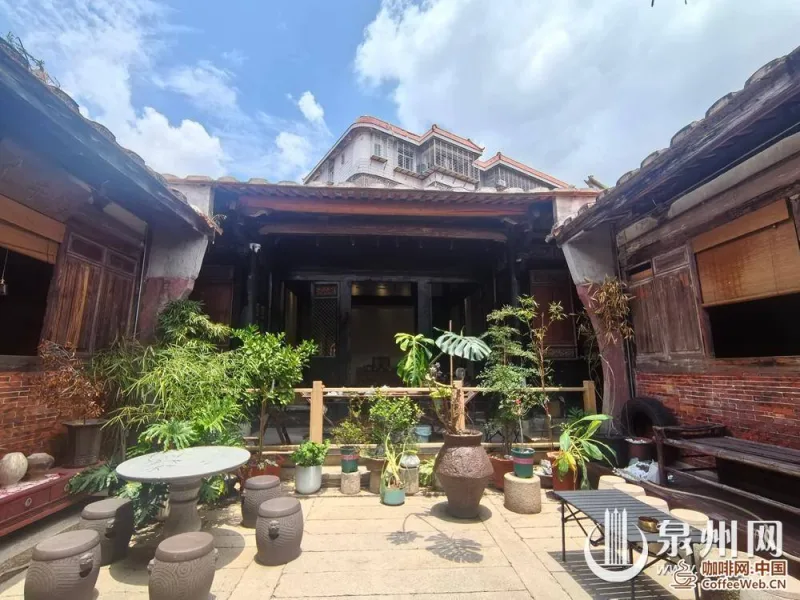
Quanzhou’s coffee business has long broken out of the rigid framework of standardized chain stores; the picture shows a cafe converted from an old residence.
In just a few years, Quanzhou’s coffee business has long broken out of the rigid framework of standardized chain stores, completing an all-around renewal. From the spaces that hold coffee, to thoughtfully designed cups and vessels; from the look of the drinks, to flavor ingredients and recipes—Southern Fujian (Minnan) antiquity and new-wave creativity keep colliding and blending.
Strolling the crisscrossing stone-paved streets of Quanzhou’s old town, one ancient building after another, dormant for years, is revived amid the drifting coffee aroma. Countless young entrepreneurs have taken root in the old city, exploring new paths to activate and reuse historic buildings. Red-brick old residences, abandoned factories, Nanyang-style qilou arcades and old stone houses have all been transformed into distinctive cafes that combine leisure aesthetics, cultural exhibitions and social functions.
Local brands represented by Barlangyu Coffee have become a vivid microcosm of this crossover fusion. They no longer simply chase traffic, but try to break commercial boundaries—curating art exhibitions in the old city’s temples and holding humanities salons, guiding citizens and tourists through a complete roam from taste-leisure to cultural experience in the streets and alleys.
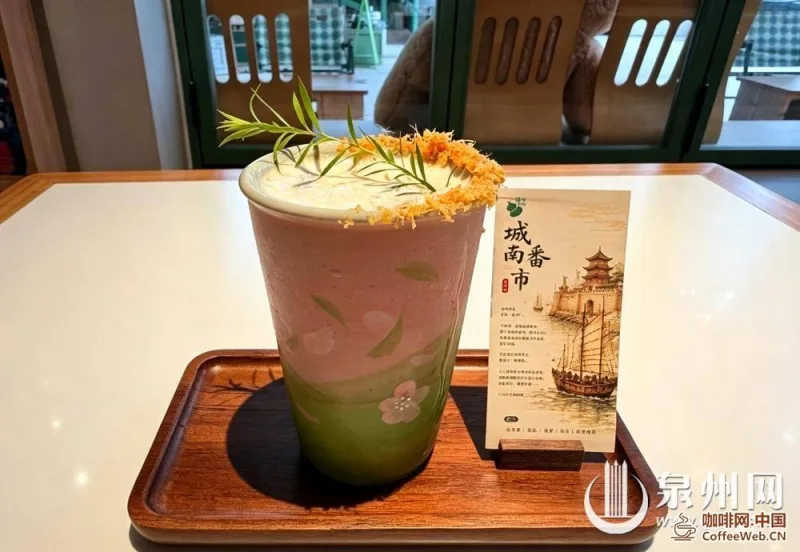
South City Element Coffee
Coffee is no longer just a simple drink; it is a cultural bond linking the old city’s history with contemporary life, a gentle window through which outside visitors read Quanzhou, and a spiritual enclave where locals ease their relaxed emotions and exchange ideas and inspiration. Around Chengtian Lane, cafes and independent bookstores coexist, regularly hosting reading clubs, photo-sharing sessions and humanities salons; cafes in the South City area and elsewhere keep collaborating with local creators, letting art, coffee and old-town streets empower one another. Among the alleys and between mountains and seas, coffee shops, cultural-creative stores, courtyard homestays and specialty snack shops form a mature business cluster; touring the old city, tasting coffee, seeing exhibitions and hunting for creative goods make a one-stop cultural-tourism experience that grows ever more complete. Today, the cafes scattered through the streets, like tiny cultural waystations, weave together the weighty heritage of the World Heritage, the vivid everyday life of the neighborhoods, and new-wave youth culture. Sitting in a courtyard residence, a seaside terrace or a mountain shop, people lift a cup of coffee and gaze at the East and West Pagodas, Luoyang Bridge and the vast blue sea, feeling, amid the rising aroma, Quanzhou’s unique urban character of old and new coexisting.
Under the wave of culture-tourism integration, coffee keeps empowering the city’s high-quality development. In the old town, cafes revitalize large numbers of idle old residences, promoting the protective, living reuse of historic buildings; in towns and villages, rural cafes activate rural tourism, drawing visitors into mountain and village hamlets; various coffee festivals and coffee markets pull crowds to the blocks, driving growth in diversified consumption such as dining, photo-tours and cultural products. A small cup of coffee leverages the vigorous growth of new cultural-tourism formats, becoming an important handle for stimulating consumption, reviving old streets and spreading the city’s image. That small cup carries the vivid practice of the old city’s organic renewal, the burning ideals of young entrepreneurs, and the infinite possibilities of local culture’s continuous innovation—becoming an important carrier of Quanzhou’s urban-culture communication and continuously injecting youthful vitality into the World Heritage old city.
A thousand years ago, this place teemed with sails—an international trading port where “ten continents of people mingled in the marketplace,” where goods, ideas and cultures from around the world met. A thousand years later, coffee culture from overseas meets the local Minnan cultural vein once again. Openness and inclusiveness have always flowed in Quanzhou’s urban bloodline. The free, diverse and relaxed philosophy of life that coffee carries resonates with Quanzhou’s long-standing, all-embracing urban character.
Using coffee culture as a carrier to light up the landscape, local products and young people, Quanzhou—
The City’s Vitality in a Cup of Coffee
(Converged-media reporter Wei Jinglin / text, interviewees / photos)
The recently concluded Quanzhou Old Town Coffee Art Week gathered global specialty-coffee brands, international professional competitions, intangible-heritage interactive experiences and musical performances, creating a fashionable consumption venue in the core area of World Heritage Quanzhou that blends international vision with old-town character, further promoting the clustering of young talent, coffee-industry exchange and the integrated development of culture, commerce and tourism. Multiple trending hashtags from the Coffee Art Week topped the top five of Douyin charts, with over 17 million exposures on the Douyin platform alone and a surging topic volume. A small cup of coffee has created Quanzhou’s new literary calling card.
Looking back to the Song and Yuan periods, Quanzhou was an international grand port where “ten continents of people mingled in the marketplace,” where exotic goods and diverse civilizations met and collided; a thousand years later, coffee from overseas meets the generationally inherited Minnan culture once again in this inclusive, open city. Today those who come to the old city in search of coffee flavors include young entrepreneurs with dreams, tourists heading for mountains and seas, and local citizens who love life.
In City and Countryside: “Coffee+” Activates Cross-Border Play
Quanzhou native Wang Xiaoying spent more than ten years away, long working in Shanghai, where she personally witnessed the booming, diverse coffee ecosystem of the metropolis and opened more than ten coffee shops. The homesick bond she could never cut finally drew her back to Quanzhou. Rooted in Houcheng in Quanzhou’s city center, she created HOU Coffee. Throughout the restoration and renovation of the old residence, Wang insisted on preserving the original fabric of the old house to the greatest extent—not casually damaging the original walls, wooden carvings, old floor tiles or the courtyard’s old trees. After renovation, the long-dormant old residence is no longer idle and cold, but has introduced coffee, light meals and cultural products, transforming into a composite cultural space. Visitors sit in the old residence’s hall, savoring coffee while feeling the thousand-year everyday life of West Street. The protection of historic architecture and commercial activation have found a perfect balance here, and the century-old residence keeps being reborn.
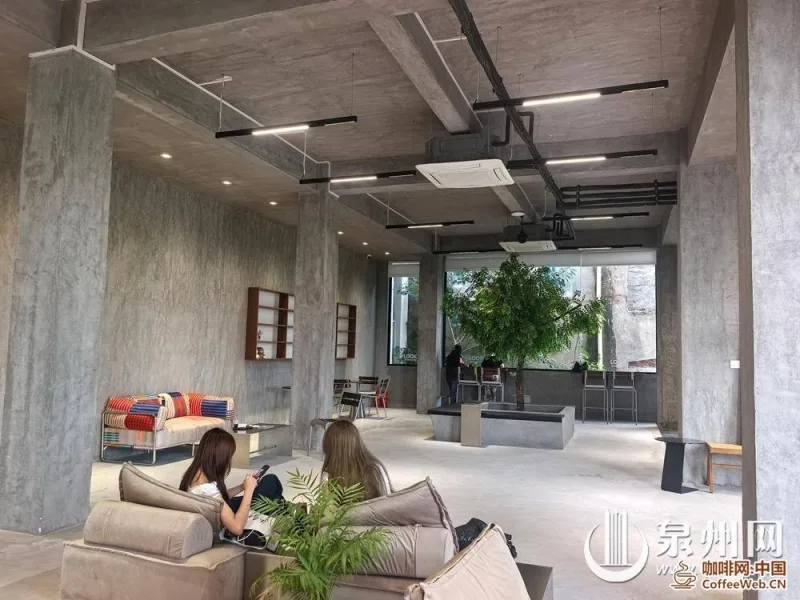
The cafe converted from a factory offers an open, spacious space and a new experience.
If courtyard cafes continue the cultural vein of Minnan dwellings, then cafes converted from old factories give industrial heritage new life. The Zhihui Lane Southward Cafe was renovated under the direction of Quanzhou-born artist Wu Daxin. This stone old building, weathered by time, has shed its old factory’s industrial memory and been replanned into a two-story space: the first floor serves coffee for citizens and tourists to sit and relax; the second floor is a professional art exhibition hall, periodically showing contemporary works such as paintings and installations. Everyday life and avant-garde art collide wonderfully here, adding a literary landmark to the old streets and completing a gorgeous cultural turn for the old industrial building.
Quanzhou’s coffee map is not limited to the old town’s core streets; it keeps extending outward along the foothills, lakeshores, coast, countryside and rooftops—between mountains and seas, the aroma of coffee is everywhere. At the foot of Qingyuan Mountain, Luke Coffee recently opened its doors. Its manager Gina has years of experience in the apparel industry. With a shared pursuit of aesthetics, she and her partners created this cafe hidden at the mountain’s foot. The minimalist, elegant spatial design, paired with the mountain-and-forest view outside the window, quickly went viral on social platforms, becoming a popular destination for young people to escape the city’s noise and check in for rest. The mountain-cafes of Xiangong Mountain hide in the woods like a paradise on earth; ascending to taste coffee, one enjoys complete tranquility. The forest-style cafe inside West Lake Park is embraced by plants and trees; open the window to lake light and greenery, creating a rare, quiet sanctuary in the city.
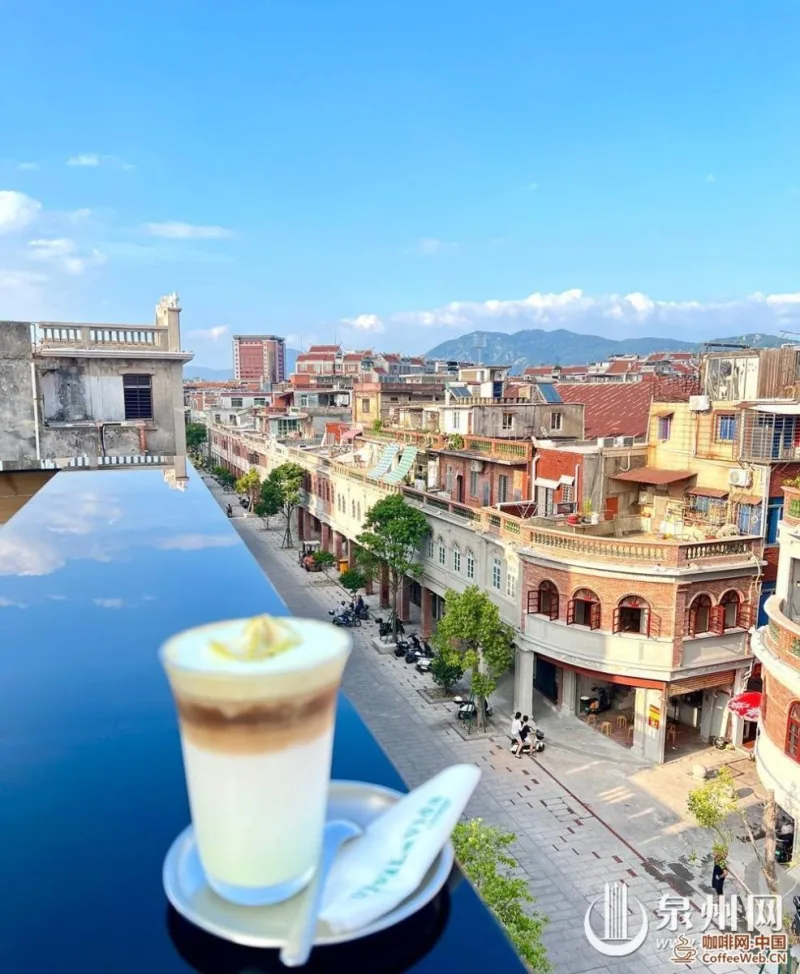
A rooftop cafe overlooks the old town’s ancient streets
The rooftop cafes hidden among the old city’s buildings are especially distinctive—looking up you see the East and West Pagodas of Kaiyuan Temple, or the continuous qilou arcades of Zhongshan Road; the full panorama of the old city unfolds before your eyes, making it a perfect vantage point to view the urban landscape.
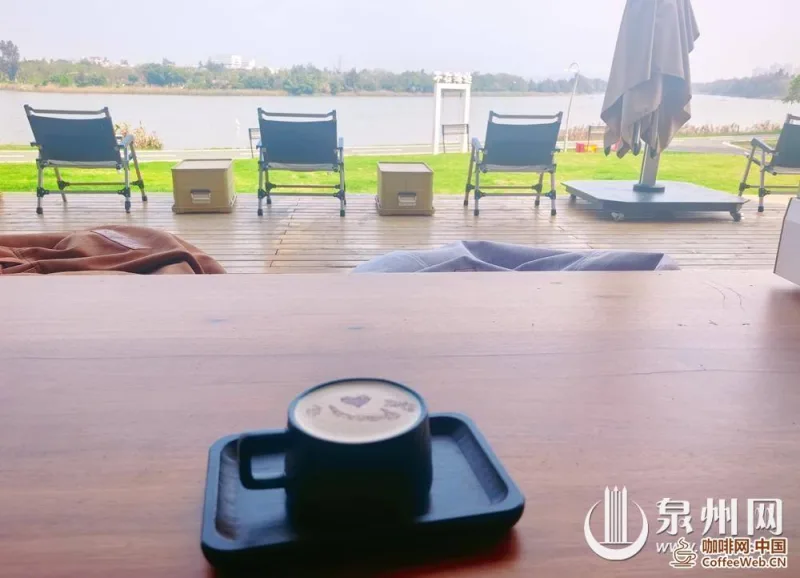
A waterside cafe takes in the full lake view
Toward the mountains and toward the sea. At Luoyang Bridge, a mobile bicycle coffee shop has gone viral with the wind; a simple little cart carries coffee dreams, and passers-by stop to buy a cup and gaze at the bridge’s thousand-year-old stone embankment. The riverside cafe in the Taiwanese Investment Zone stands by the sea, taking in the vast seascape; sipping coffee against the sea breeze, the poetic feeling of mountains and seas comes rushing in. In Dehua’s villages, cafes are quietly emerging; the “village coffee” craze is sweeping the porcelain capital, as city dwellers drive to the countryside to feel the slow, idyllic rural life.
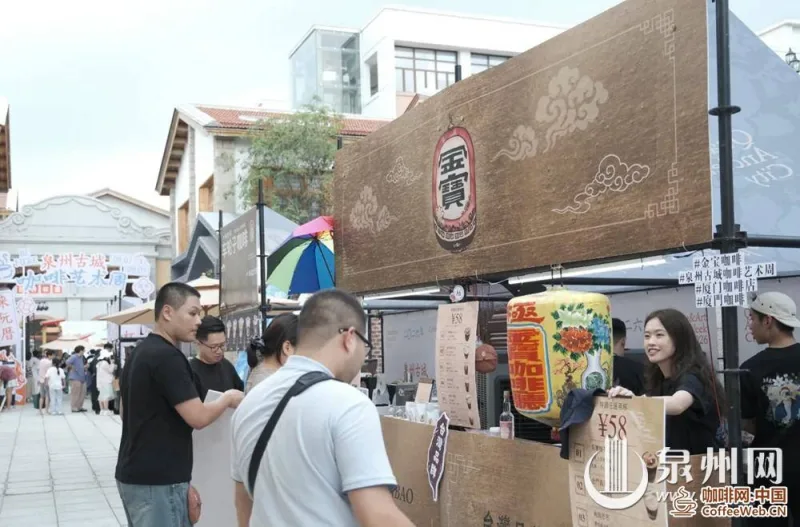
Coffee Art Week event site
The diverse, rich coffee spaces connect Quanzhou’s complete cultural-tourism thread from old town to countryside, from mountains to coast. At the same time, urban coffee-cultural events take turns on stage. The Quanzhou Old Town Coffee Art Week opened in early August, with markets, salons, brewing competitions and urban roams in succession. A coffee cart threaded through the old town’s streets—from Chengtian Temple to the Bell Tower, from the Confucian Temple to the Tianhou Temple—wherever you met it was luck. At the cupping table, Geishas from Panama’s La Esmeralda estate lined up; from Ethiopia’s new season to Panama’s new season, the aroma drifted beneath the red-brick residences. Ms. Chen, a citizen and coffee lover, said: “Quanzhou is becoming more and more literary; there are more and more coffee shops and all kinds of coffee festivals. A small cup of coffee reflects the old town’s full developmental vitality.” It is not only consumers’ sigh; at the Coffee Art Week’s booths, the various shop managers, using coffee as a medium, exchanged creativity and collided with inspiration. They said, one after another, that in the future they hope to have the chance to open a specialty coffee shop in the old town and carve out a new world in the old streets.
Earlier, the Fengze Coffee Festival and the Jinjiang Wudianshi Coffee Art Festival were held successively, gathering quality coffee brands from across the country and attracting huge numbers of citizens and tourists. One coffee carnival after another keeps amplifying Quanzhou’s coffee influence, letting coffee culture deeply blend into the city’s everyday fabric.
Local Innovation: Minnan Specialty Coffee Arrives
While the spatial map keeps expanding, Quanzhou coffee is also boldly breaking through and innovating at the level of ingredients and flavors. Rooted in the rich culinary soil of the “City of Gastronomy,” local coffee managers keep digging out Minnan’s distinctive local products, cleverly blending generationally inherited traditional ingredients with modern coffee craft, incubating multiple creative specialty drinks that fill a cup with the fresh, rich taste of Quanzhou.
The “Hui’an Women Sweet-Potato Coffee” launched by Hui’an County is eye-opening. Relying on Tuzhai’s quality local sweet-potato resources in Hui’an, the soft, sweet roasted sweet-potato mash blends with espresso; the warm, long sweet-potato aroma gently moderates the coffee’s slight bitterness, turning a rural farm product into a trendy drink and opening a brand-new path for the integrated development of rural agriculture, culture and tourism.
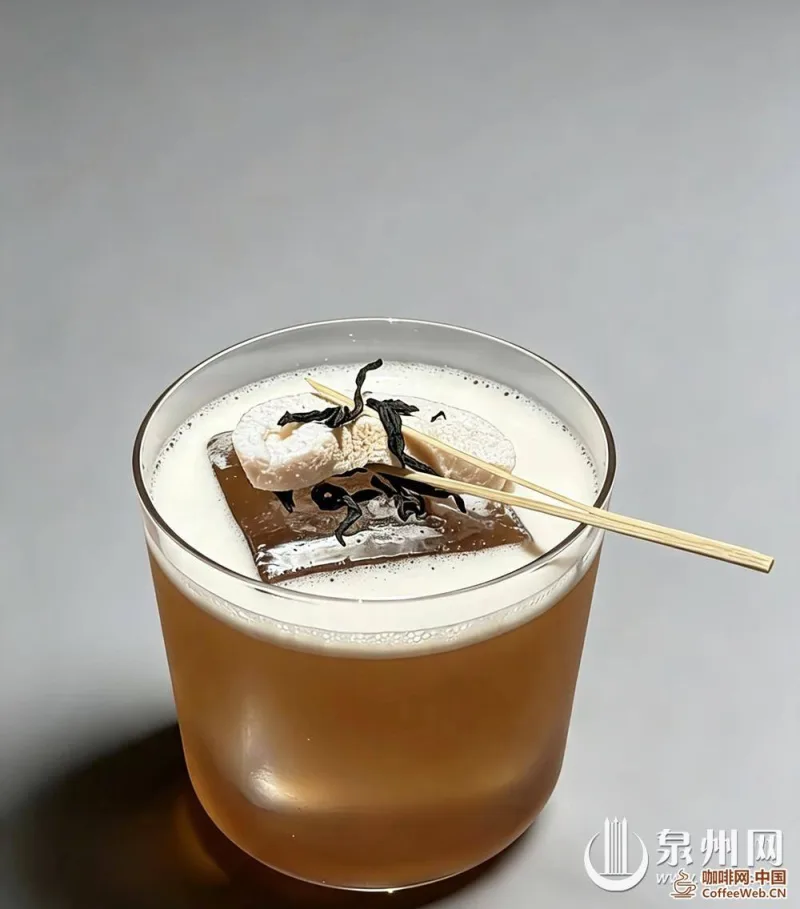
Tieguanyin coffee carries its local flavor
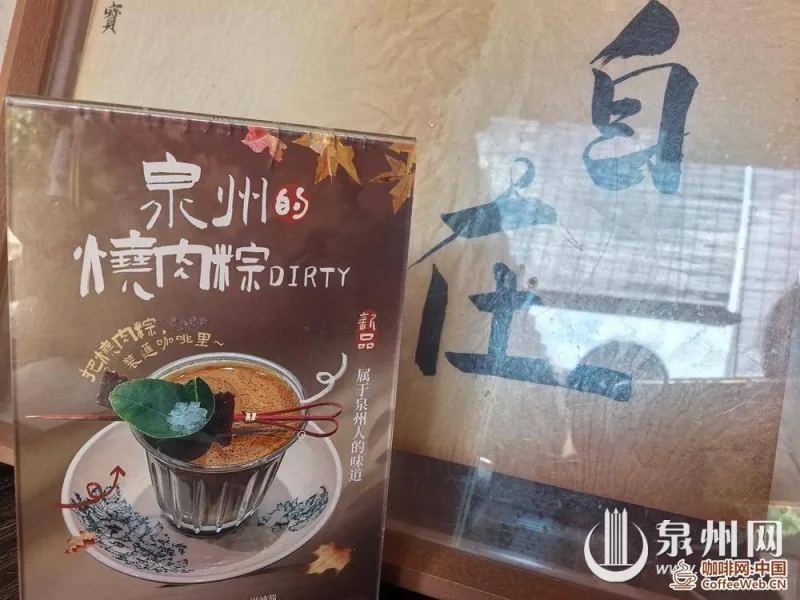
Rouzong coffee is an ingenious creation
Local creative specialties go far beyond this. The “seaweed-jelly coffee” blends the seaweed jelly Quanzhou people love most in summer into a latte; the Q-bouncy, smooth jelly paired with silky milk coffee lets you taste the coolness gifted by the sea in one sip. The Tieguanyin coffee extracts the elegant tea aroma of Anxi’s Tieguanyin, with tea fragrance and coffee aroma interweaving layer upon layer, fully displaying Minnan’s thousand-year tea charm. There are even rouzong coffee and runbing-vegetable coffee that break conventional drink pairings, moving Quanzhou’s classic table flavors into the coffee cup, as traditional food culture and foreign coffee culture spark a wonderful fire.
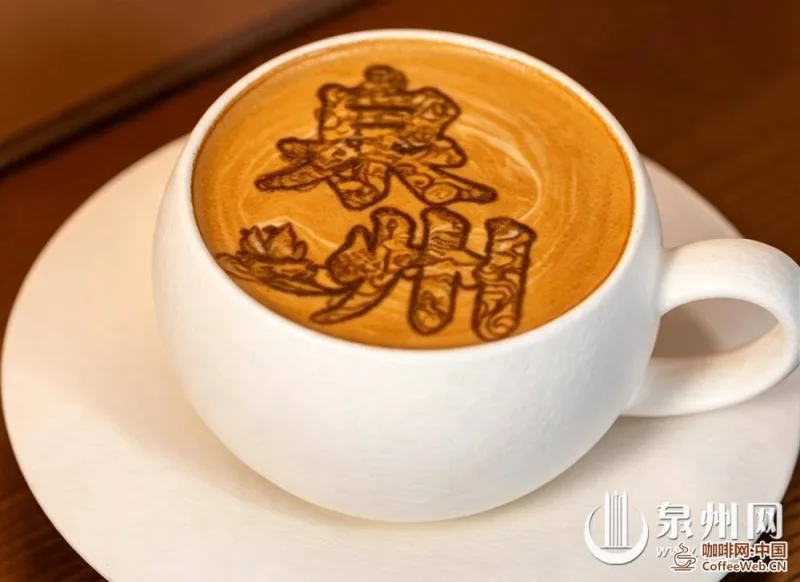
“Hidden in the characters, a city”: the two characters “Quanzhou” are presented on the milk foam.
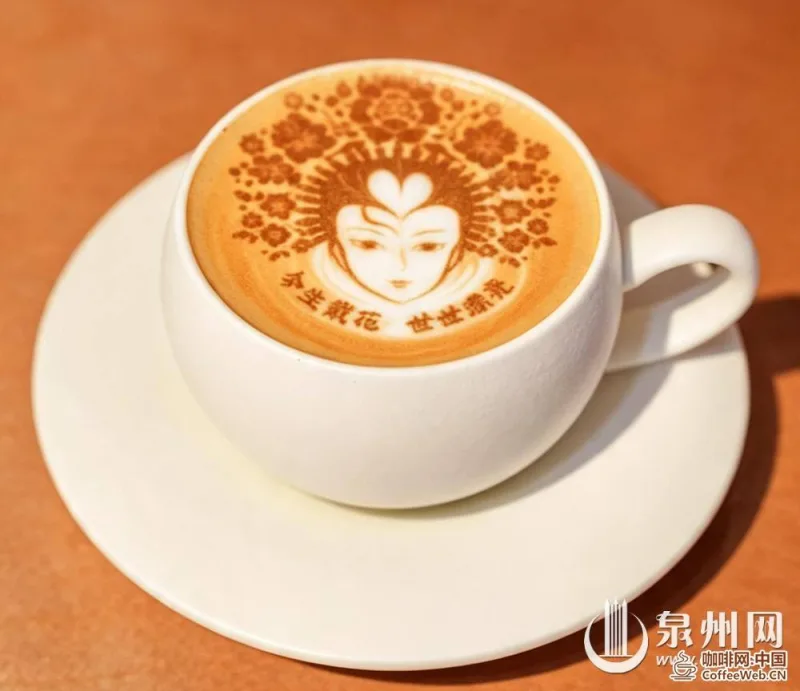
Hairpin-flower element enters the coffee
What is delightful is that a small coffee cup has become a lively canvas for displaying local cultural creativity. Yesong Coffee, inspired by Quanzhou’s urban culture, has created a series of poetic latte-art coffees. “Hidden in the characters, a city” delicately presents the two characters “Quanzhou” on the milk foam, with hidden silhouettes of old residences and lucky ships within the pattern—a cup full of Zayton’s cultural vein. “Hairpin-flower into coffee” draws on the intangible cultural heritage of Xunpu’s hairpin-flower headdress; a hairpin-flower woman’s portrait surrounded by flowers, and the fishing-village charm of Xunpu, are frozen on the coffee’s surface. In addition, iconic urban elements such as the Zayton flower, the East and West Pagodas and the Bell Tower have all become exquisite coffee latte-art patterns.

The “Zayton flower” coffee
Not only the drinks themselves, but also the vessels and surrounding designs are engraved with Quanzhou’s marks. Special cultural-creative paper cups print cartoon images of the Bell Tower and the East and West Pagodas; cute kittens and the Zayton-flower IP leap onto the cup body; drinks are paired with bamboo-skewer decorations and Minnan specialty snacks; every detail conveys the city’s character. When tourists walk the old town holding a specialty coffee printed with Quanzhou elements, the flowing coffee becomes a vivid, living city business card.
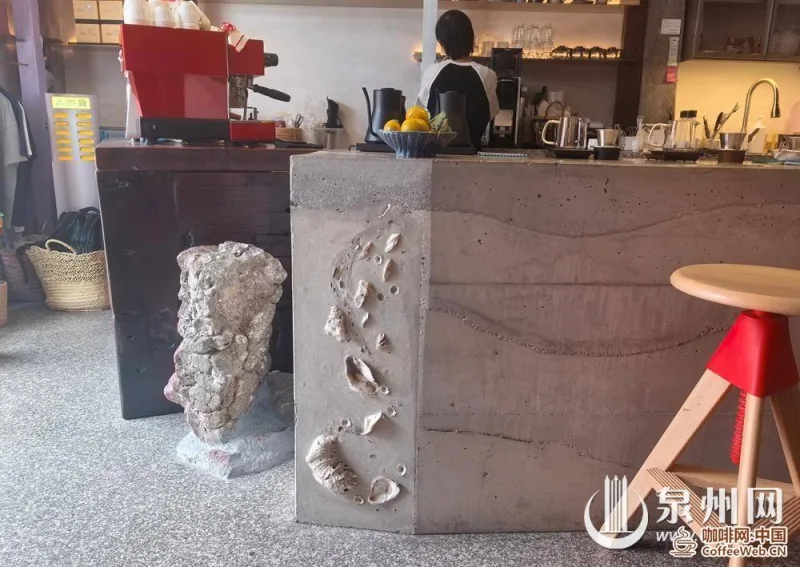
The cafe environment incorporates marine elements such as oyster shells
From a single traditional espresso to a hundred-flowers bloom of Minnan creative specialties, Quanzhou coffee has completed a profound localization of flavor. It is no longer a purely foreign drink symbol, but fully absorbs the nourishment of Minnan food culture and grows a unique flavor system belonging to the Zayton old city. The urban character of ancient-modern fusion and mountain-sea coexistence is entirely condensed into a single cup of coffee.
Youth Economy: Coffee Connects Young People at the “Production-Consumption” End
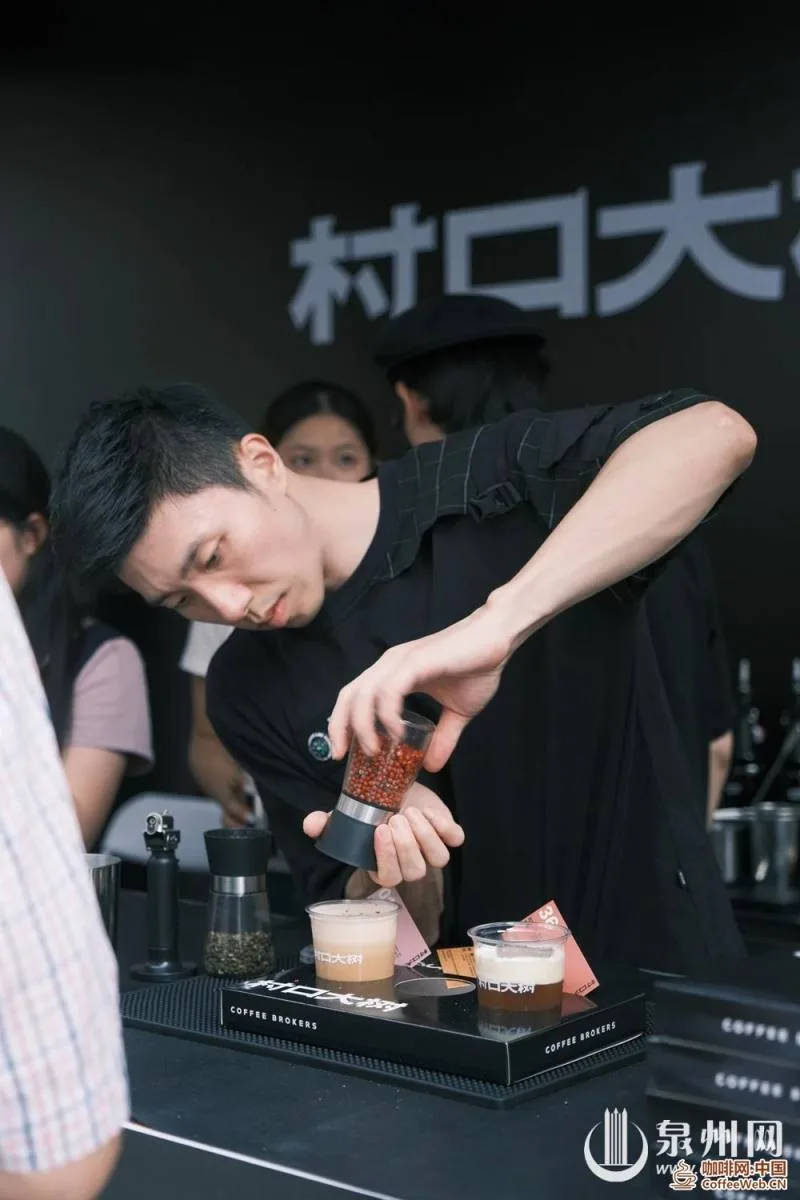
Behind the booming coffee industry lies the endless creativity and consumption power of young people.
Behind the booming coffee industry lies the endless creativity and consumption power of young people. Large numbers of Quanzhou young people who studied or worked away have chosen to return home to start businesses, and many out-of-town youth have come to Quanzhou to take root and open shops. They love the old town’s profound heritage, are good at catching trends, and use coffee as a carrier to deeply mine urban culture and continuously produce innovative content. Young people bring new aesthetics and new ideas that interact with Quanzhou’s profound traditional culture, keeping the thousand-year-old city always vibrantly alive; at the same time, they attract young consumers to develop more cultural and aesthetic identification with Quanzhou within coffee’s composite consumption scenarios.
Among the many foreign coffee entrepreneurs, Ms. Zhang, a post-85 Sichuan woman, has years of solid industry accumulation. She worked deeply in Chengdu’s coffee industry for twenty-two years, familiar with specialty-coffee craft and having accumulated rich store-operation experience. Because her family settled in Quanzhou, she chose to leave the familiar Chengdu market and came to Quanzhou to start a new entrepreneurial path. She finally selected a location near Zhonghui World City and opened a specialty coffee shop. Relying on years of industry experience, Ms. Zhang, on the basis of traditional coffee, blended in the flavor characteristics of Sichuan drinks and developed multiple Sichuan-style specialty coffees. Different from the locally common Minnan-style creative coffees, her products have a clean, refreshing taste and unique flavor, bringing a different taste experience. Since opening, with stable quality and novel flavors, the shop has won recognition from many citizens and young consumers; office workers around the business district and shopping tourists often come to check in, and the foreign flavors are slowly blending into the local market.
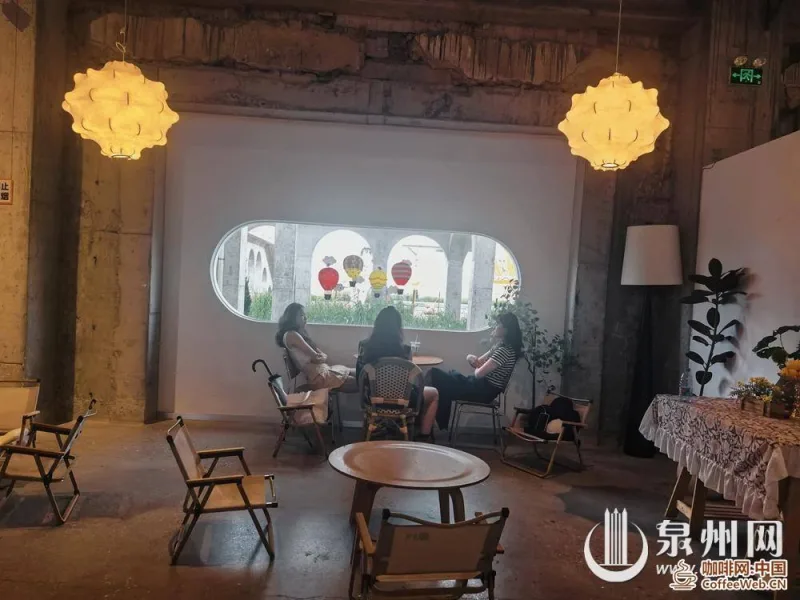
Cafes have become the top choice for young people’s small gatherings
The booming urban coffee business has also attracted foreign entrepreneurs to take root in Quanzhou. In the Fengze Architecture Industrial Park, Max, a young man from India, opened a day-coffee-night-bar fusion restaurant, combining coffee culture with the leisure night economy. In his view, coffee is an important part of a city’s atmosphere. He admitted that a vibrant city cannot be without coffee; a restaurant blending in coffee business becomes more literary and relaxed in atmosphere and better fits young people’s consumption habits. During the day, the store focuses on specialty coffee and light meals, serving park workers and nearby residents. After nightfall, it switches to a leisure night-drinks mode, creating a relaxed social space. One store, two formats, enriches the park’s commercial amenities and also offers Quanzhou’s young groups a new leisure choice, adding international, diversified fresh vitality to the urban coffee-leisure business.
Many of Quanzhou’s low-cost, lively old streets and alleys have also become gathering places for young coffee entrepreneurs. The Qiaoxiang Small Commodities Street has affordable rents and a quiet street atmosphere, suited to small-budget startups, attracting a large group of youth to cluster and open niche coffee shops. Young entrepreneur You Changfu’s Beaver Coffee is rooted in this street. The store has been open for nearly a year; without deliberately building a viral-traffic model, it keeps customers through solid management and sincere service. Beyond daily operations, You Changfu insists on updating his public account every day with opening-day routines, work tidbits and life reflections, recording the shop’s growth and the street’s everyday life. Plain, sincere words and a quiet, healing shop atmosphere have slowly built a good reputation; many tourists, having seen his posts, come specifically to check in, feeling a different Quanzhou coffee aroma in the old alleys.
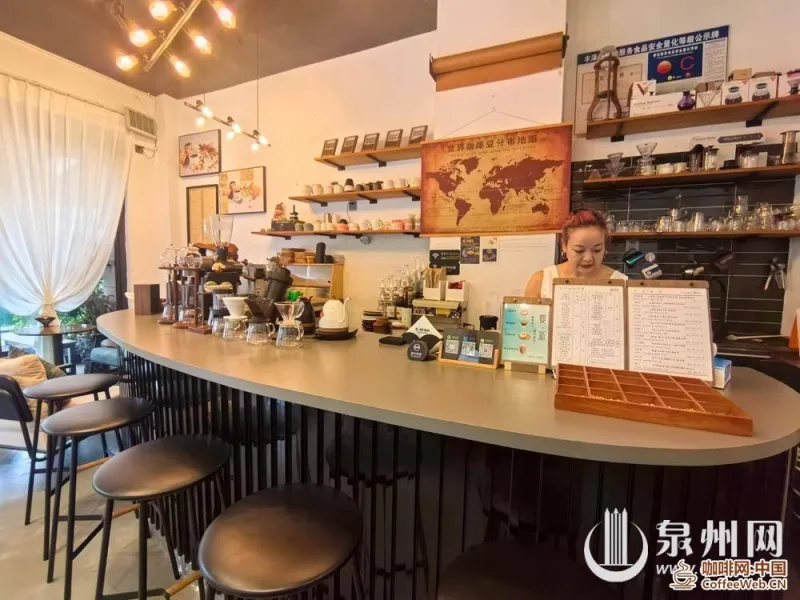
A specialty coffee shop
Beyond freezing the street’s everyday life, there is also the advanced exploration of deeply integrating local culture and art. Amei, manager of the local brand Barlangyu Coffee, has moved ship-wood furniture, fishing floats and other Maritime-Silk-Road memories into her shop. She also opened a branch next to Tianhou Temple and curated art exhibitions at the South City’s Huangdi Palace. Many people, after touring the old streets and having a coffee, stop by the temple to see an exhibition, completing a cultural roam.
Amid vigorous development, Quanzhou coffee has won full recognition and also faces industry scrutiny. Wu Yang, initiator of the WCBC World Coffee Blending Competition, said: “Quanzhou not only possesses profound historical and cultural resources, but also has the natural advantage of developing a specialty-coffee industry and a manager economy.” Chen Siyi, Quanzhou champion of the China Coffee Brewing Competition, said the launch of the old-town Coffee Art Week let him truly feel a city’s proactive exploration and open posture toward young talent, new consumption formats and the manager economy. But he also admitted that the current industry still has hidden worries such as uneven quality and serious homogenization. He hopes that future Quanzhou, using coffee as a carrier, can promote the resonance of industrial upgrading, cultural communication and talent clustering, and truly become an influential specialty-coffee city.
Reporter’s Notes: The Zayton Code in the Coffee Aroma
From the first few scattered independent cafes, to today’s vast coffee map spread across the old town, mountains, seas and villages; from simply replicating standardized coffee flavors, to deeply blending Minnan local products and World Heritage culture to create exclusive specialties; from a mere leisure-consumption venue, to a composite cultural space integrating leisure, socializing, art exhibitions and cultural exchange—Quanzhou coffee has grown and kept transforming along the way. Behind this lies the inclusiveness and diverse innovation of Quanzhou as a city across thousands of years.
Red-brick old residences send out long trails of coffee aroma; the intangible-heritage hairpin-flower, the lucky-ship and Zayton elements slowly bloom on the milk foam; the Minnan local products of ancient sweet potato, seaweed jelly and Tieguanyin meet coffee beans in a wonderful encounter. Coffee builds a bridge for Quanzhou between tradition and modernity. Tourists walk the old town with coffee in hand, reading Quanzhou’s everyday life amid the rising aroma; citizens find a favorite cafe to settle their daily relaxation and poetry.
As more and more young entrepreneurs take root in the old town, continuously mining local culture and creating aesthetic spaces, this coffee variation belonging to Quanzhou will continue. We look forward to more creativity sprouting here, more youth pursuing dreams here, so that the thousand-year World Heritage Quanzhou always combines ancient elegance with fresh newness, telling the Zayton story to the broad world in a cup of coffee whose aroma forever lingers. (Wei Jinglin)
Source: Quanzhou Net, by reporter Wei Jinglin.
Reprint Note & Disclaimer
- This article is reprinted from Chinese media for information and cultural exchange. The views expressed are those of the original author and do not necessarily reflect the position of coffeeyo.com.
- All trademarks, brand names and logos mentioned belong to their respective owners.
- For cooperation, reprint or correction requests, please contact coffeeyo.com.
Reprint Notice & Disclaimer
- This article has been edited and compiled by China Coffee Network. The information and images therein come from public sources and the copyright belongs to the original author. This reprint is intended solely for information sharing within the coffee industry and does not represent the views of this website; all data and opinions are subject to the original article. Our thanks to the original author for creating and sharing it.
- For matters concerning content licensing, attribution, copyright or otherwise, please contact us promptly and we will verify and cooperate in handling them as soon as possible. We also welcome coffee origins, brands and industry media to exchange ideas and contribute articles.
- Contact China Coffee Network: Tel 400-0000-641 (+86-18288016826) | Email 405854472@qq.com | Address: Jinghong, Xishuangbanna, Yunnan Province / Tieling, Liaoning Province
Related Reading
 How ‘Sea-Flavored’ Coffee Blooms Across Dongtou
- Health Guide: How to Enjoy Your Coffee the Healthy Way
 Study: Regular Coffee and Tea May Lower Dementia Risk, but More Is Not Better
 Frontline Story: A ‘Mobile City Coffee Bar’ Arrives by the Grand Canal
 Yantai’s Wind Tastes of Coffee
 In Zhenyuan, a Cup of Coffee and a Waiting Train







 Liaoning ICP Security No. 21122402000217