
Brief (coffeeyo.com): From Aug. 1–9, 2026, at the Dianchi International Coffee Culture Carnival in Kunming, high schooler Liu Mingchen debuted his “Low-Carbon Coffee Supply Chain Research,” walking visitors through the carbon footprint of a single coffee bean.
From Aug. 1 to 9, 2026, the Dianchi International Coffee Culture Carnival was held in Kunming, Yunnan. Among the dazzling array of coffee booths, one stood out as rather special—it had no coffee machine, only display boards and brochures. High school student Liu Mingchen appeared there with his “Low-Carbon Coffee Supply Chain Research” project, telling passing visitors about “the carbon footprint of a coffee bean.”
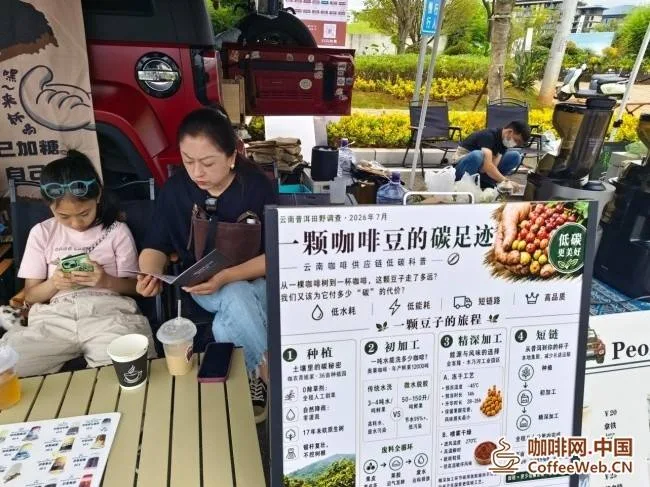
Liu Mingchen is an 11th-grade student at Shanghai Qingpu World Foreign Language School and the operator of the school’s coffee club. Supported by the GSI (Global STEAM Innovator) program, he turned his interest in coffee into a solid research project: exactly how much water, energy, and carbon emissions does a cup of coffee consume from farm to cup? With that question in mind, this July he went deep into Pu’er, Yunnan—a major coffee-growing region in China—and spent seven days walking through every link of the coffee supply chain.
At the farming stage, he visited a grower’s 36-mu plantation and saw a picture of “low intervention”: manual weeding throughout, no herbicides, zero irrigation relying on natural rainfall, and native trees left uncut for 17 years to shade and protect the soil. At the primary processing stage, he visited a coffee factory producing over 10,000 tons of fresh fruit annually and recorded a striking contrast: traditional washed processing uses 3 to 4 tons of water per ton of fresh fruit, while the factory’s low-water depulping technology needs only 50 to 150 liters—saving over 95% of water. Coffee pulp is made into pulp tea, pectin is used for biogas fermentation, and wastewater is discharged meeting standards, achieving full recycling of waste. At the deep-processing stage, he toured a freeze-drying line, where a low-temperature process at minus 45°C locks in flavor while minimizing loss. On completing the final leg, he made an unexpected discovery: Pu’er’s 730,000 mu of coffee plantations and processing factories are highly clustered, completing the entire journey from farming to deep processing within just a few dozen kilometers—this “short chain” is itself Yunnan coffee’s lowest-carbon advantage.
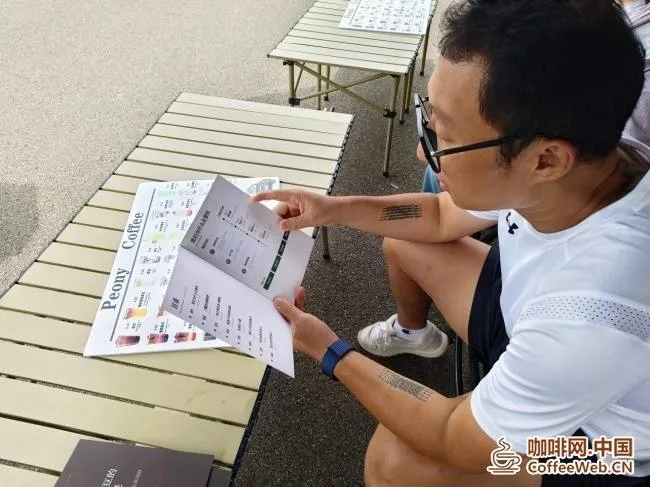
“Before going, I wanted to find the carbon-emission problems in the coffee industry, but after the visit I found that Yunnan coffee beans are actually doing quite well,” Liu said. He compiled his findings into an accessible popular-science brochure, “The Carbon Footprint of a Coffee Bean,” using questions like “how much coffee can one ton of water wash” and “how far did this bean travel” to explain professional supply-chain knowledge to ordinary consumers.
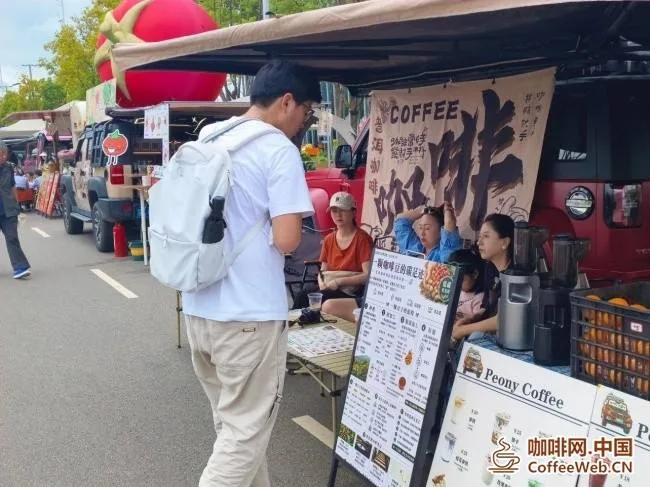
Over the two days of the coffee festival, the brochure was continuously handed out at the booth, and many visitors paused at the display boards to hear him explain the difference between washed and low-water depulping and the significance of short-chain supply. “Many people realized for the first time that the cup of coffee in their hand has a ‘carbon ledger’ behind it,” said one on-site visitor.
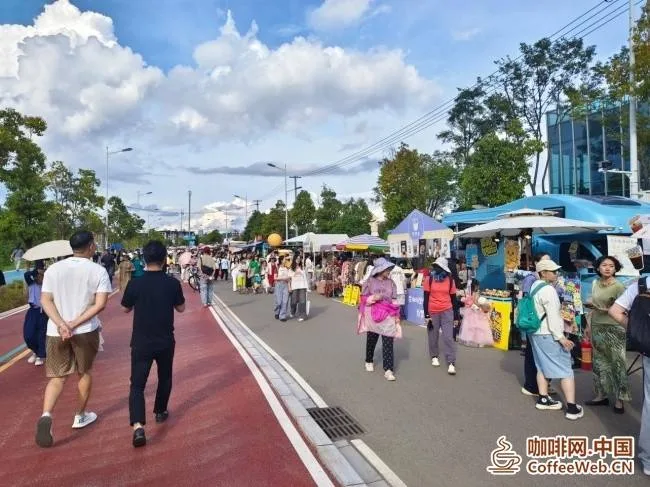
From the classroom to the fields, and then to the exhibition stage of an industry event, this high schooler’s project shows people that the younger generation is paying attention to sustainability in its own way. And Yunnan coffee’s low-carbon practices are being seen by more consumers through the eyes of a student. As the line on the brochure’s cover reads—the low-carbon path, the coffee future; every choice is reducing carbon for the planet.
About the project: “Low-Carbon Coffee Supply Chain Research” was initiated by high school student Liu Mingchen. It is a youth research project focused on the carbon footprint of Yunnan’s coffee industry. Through field research, the project records the low-carbon practices at every stage—from coffee farming and primary processing to deep processing and short-chain supply—and communicates them to the public in the form of popular science content.
Source: coffeeyo.com (China Coffee Network).
Reprint Note & Disclaimer
- This article is reprinted from Chinese media for information and cultural exchange. The views expressed are those of the original author and do not necessarily reflect the position of coffeeyo.com.
- All trademarks, brand names and logos mentioned belong to their respective owners.
- For cooperation, reprint or correction requests, please contact coffeeyo.com.
Reprint Notice & Disclaimer
- This article has been edited and compiled by China Coffee Network. The information and images therein come from public sources and the copyright belongs to the original author. This reprint is intended solely for information sharing within the coffee industry and does not represent the views of this website; all data and opinions are subject to the original article. Our thanks to the original author for creating and sharing it.
- For matters concerning content licensing, attribution, copyright or otherwise, please contact us promptly and we will verify and cooperate in handling them as soon as possible. We also welcome coffee origins, brands and industry media to exchange ideas and contribute articles.
- Contact China Coffee Network: Tel 400-0000-641 (+86-18288016826) | Email 405854472@qq.com | Address: Jinghong, Xishuangbanna, Yunnan Province / Tieling, Liaoning Province
Related Reading
 Three Decades of Shanghai-Yunnan Collaboration: A Coffee Bean ‘Ferments’ at the Import Expo
 Why Yongde’s Coffee Beans Won Gold in Shanghai – A Taste of ‘Life in Yunnan: 365 Days’
- Yunling Commentary: Yunnan Coffee Turnaround Hinges on Autonomous Pricing
 A ‘Travel Pack’ Reveals Another Possibility for Pu’er Baristas
- Bean in Short Supply: A Taiwan Youth on Yunnan Coffee as a Shared Cross-Strait Stage
- Five Years, Eight Championships: Lincang Coffee Joins the World Stage







 Liaoning ICP Security No. 21122402000217