
Brief (coffeeyo.com): In a 3,000-year-old village in Chengwu County, a post-2000s returnee sells more than 300 drinks a day at Gaoding Coffee. Its owner argues a village café’s staying power has to run deeper than photo ops.
Drive eight kilometres out of the county seat of Chengwu, Heze, along National Highway 518 and a village with more than 3,000 years of history comes into view: Gaoding Ancient Village. An old bridge lies quiet at its entrance, and the rammed-earth houses typical of southwestern Shandong scatter across it. Yet walk into the lanes and what greets you is not only the everyday warmth of history, but wave after wave of rich coffee aroma.
The little shop, Gaoding Coffee, sells more than 300 drinks a day on average and tops 400 orders on holidays. Its owner, Li Ruoshi, a returnee entrepreneur born after 2000, has used a cup of coffee to break the stereotype that coffee is a trend confined to cities — and to carve out a sustainable path between a thousand-year-old village and new forms of county-level consumption.
Step inside and the old house’s rammed-earth walls and timber beams have been kept just as they were, a simple coffee counter set off by period-style furnishings. Rather than copying the business-like look of a city café, it recreates a distinctive scene where old and new meet.
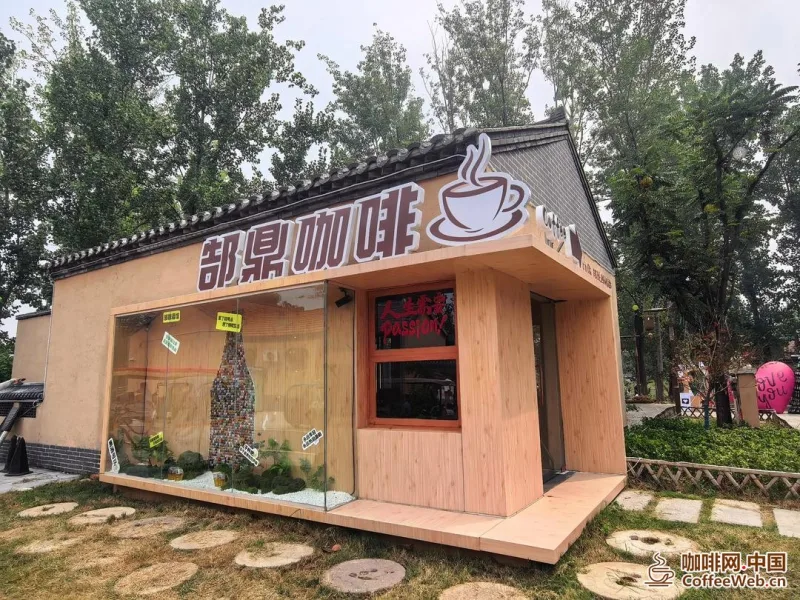
“Plenty of people say nobody in the countryside drinks coffee, but I think rural areas aren’t short of potential — they’re short of the kind of trendy, younger-friendly businesses that fit,” Li Ruoshi told the reporter. She had worked in coffee elsewhere for years, and was won over by Gaoding’s deep history and solid support for start-ups, so she chose to come home.
For a village café to put down roots, policy is the reassurance. Under the “rural revitalisation partner” scheme run by the Gaoding Rural Revitalisation Demonstration Zone, Li Ruoshi enjoyed tangible benefits such as a rent reduction on her shop. “Saving 7,000 yuan a year on rent is the first cornerstone for levering a dream into reality for a shop just starting out,” she says.
Change has come quietly. “When we first opened, the older folk in the village said, ‘This foreign stuff is bitter as anything — who’s going to buy it?'” Li Ruoshi says with a laugh. Today the little shop not only draws young people from the county seat and nearby towns who make a special trip to snap photos, it has become a resting spot for villagers themselves.
Many new rural businesses start with a flourish but fade once the buzz dies down, and Gaoding Coffee faces the same question. Li Ruoshi is candid: the opening rush of customers was no surprise; the real test is whether, after the hype, there is anything that keeps people coming back.
On this point, her thinking happens to move in step with the wider plan for the Gaoding Rural Revitalisation Demonstration Zone. Gaoding Coffee is not just a new place to spend, but a gateway for putting idle rural assets to work and linking up the whole local industry chain.
Behind the village lies the demonstration zone that Chengwu County has built to a high standard. Crossing administrative village boundaries, it strings 22 square kilometres of old houses, intangible-heritage workshops and modern farms together like beads on a chain, and Li Ruoshi’s café is a key link in it. “The zone has dug into the village’s history and culture and set up the rural revitalisation partner scheme specifically to give young returnees one-stop help with premises, policy guidance and contacts, so no one has to go it alone,” says Han Jun, Party secretary of Yongchang Subdistrict.
“The zone’s festivals and events bring customers to the café; when the café takes off, it brings the zone buzz in return,” Li Ruoshi says — a kind of mutual success. Visitors drawn by the coffee tour the old village, look at heritage black pottery and paper-cutting and eat farmhouse meals, lifting nearby farm stays and sales of local produce. By the figures, the Gaoding zone has received more than 300,000 visitor trips this year, and the collective revenues of all ten villages are expected to pass 200,000 yuan each.
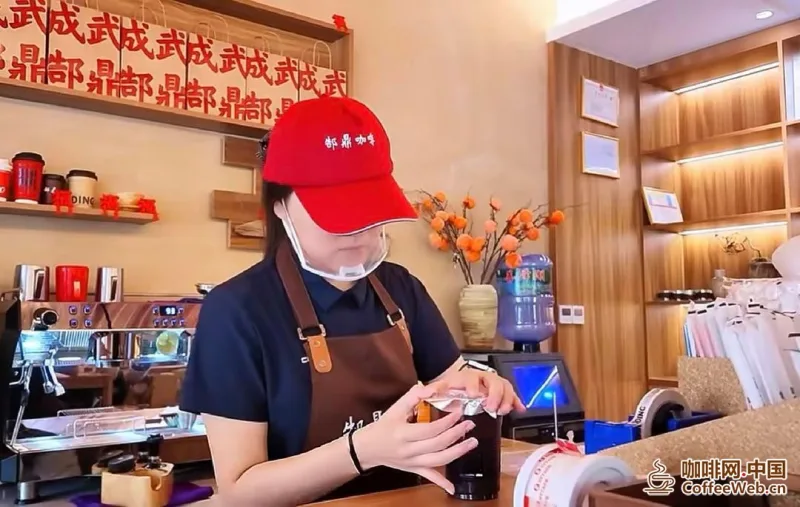
The reporter learned that Gaoding Coffee has not fallen into a dependence on photo-op traffic: its core business is not simply selling coffee but weaving itself into local industry. Its lasting popularity comes from a deep bond with a home-grown identity. Unlike internet-famous shops that live on a filter-driven markup, everything here bears the Gaoding imprint. The shop displays Gaoding-branded cultural products and old objects, letting customers sip their coffee while touching the legacy of the Western Zhou state of Gaoding. “This ‘village café + local culture’ model neatly sidesteps the trap of lookalike products,” Han Jun says. “If coffee is the medium, what sits behind it is intangible-heritage experiences, homestays and sales of local produce — a healthy loop of ‘tourism + business + livelihoods’.”
“A village café’s long life can’t rest on one cup of coffee and a moment of traffic; it has to keep deepening its product, its organisation, its brand and its culture to make the leap from an internet sensation to a lasting fixture,” Li Ruoshi says. She is well aware that the village-café track is going through a shake-out, and that simply copying the idea of moving a café to the countryside rarely lasts. Her next plan is to team up with other young entrepreneurs to add desserts, cultural merchandise and other supporting businesses, turning single-spot visits into area-wide tours.
Reprint Note & Disclaimer
- This article is reprinted from Chinese media for information and cultural exchange. The views expressed are those of the original author and do not necessarily reflect the position of coffeeyo.com.
- All trademarks, brand names and logos mentioned belong to their respective owners.
- For cooperation, reprint or correction requests, please contact coffeeyo.com.
Reprint Notice & Disclaimer
- This article has been edited and compiled by China Coffee Network. The information and images therein come from public sources and the copyright belongs to the original author. This reprint is intended solely for information sharing within the coffee industry and does not represent the views of this website; all data and opinions are subject to the original article. Our thanks to the original author for creating and sharing it.
- For matters concerning content licensing, attribution, copyright or otherwise, please contact us promptly and we will verify and cooperate in handling them as soon as possible. We also welcome coffee origins, brands and industry media to exchange ideas and contribute articles.
- Contact China Coffee Network: Tel 400-0000-641 (+86-18288016826) | Email 405854472@qq.com
Related Reading
 How ‘Sea-Flavored’ Coffee Blooms Across Dongtou
- Health Guide: How to Enjoy Your Coffee the Healthy Way
 Study: Regular Coffee and Tea May Lower Dementia Risk, but More Is Not Better
 Frontline Story: A ‘Mobile City Coffee Bar’ Arrives by the Grand Canal
 Yantai’s Wind Tastes of Coffee
 In Zhenyuan, a Cup of Coffee and a Waiting Train






 Liaoning ICP Security No. 21122402000217