
Brief (coffeeyo.com): As China’s coffee market grows ever more crowded, Starbucks is betting on a third growth curve built not on new stores or efficiency gains but on its “partners” — the staff whose everyday exchanges with customers quietly accumulate into a cultural capital no algorithm can replicate.
Over the past decade China’s coffee market has expanded at a breakneck pace. According to the Coffee Drinks Category Development Report 2026, published by the Hongcan Industry Research Institute together with Xintianli, per-capita consumption climbed from 16.7 cups in 2023 to 28.6 cups in 2025, the country now counts more than 550 million coffee drinkers, and the market for freshly made coffee drinks is expected to reach RMB 159 billion in 2026. Cafés have followed, thick on the ground, and players have piled in. Shanghai — nicknamed China’s “coffee capital” — is home to more than 10,000 cafés, the most of any city in the world, while coffee culture has also taken root in Beijing, Hangzhou, Chengdu and beyond. As competition has turned white-hot, price wars, product churn and digital efficiency have become the levers nearly every player reaches for.
Starbucks, which entered China in 1999 as one of the market’s early pioneers, has held on to unusually high public recognition and customer loyalty through all the cutthroat competition. Commercially it has pushed steadily downward into second- and third-tier cities and county markets, extending its store network; at the same time it has proposed the “A Thousand Stores, a Thousand Faces” plan, in search of a third growth curve beyond openings and efficiency.
Outsiders tend to credit Starbucks’ competitiveness to the “third place” — the consumption setting. But at the commercial foundation, that setting is only the outcome. What has actually carried the company through repeated industry cycles is sustained investment in a core factor of production, its “partners” (that is, its employees), together with the “cultural capital” that settles out of the daily interactions between those partners and their customers.
Breaking the mould: putting partners centre stage
The growth logic of China’s coffee industry is changing. In the early years, scale came from adding stores and tightening the supply chain, but store density is nearing its threshold and gains in per-store efficiency have hit a ceiling. A model resting purely on “open more stores, cut costs, raise efficiency” is running out of road. Many brands have accordingly shifted their weight towards new product launches, traffic-driven marketing and cost-cutting digital tools.
Starbucks has chosen a different answer — it has anchored its third growth curve in people. The first Partner Growth Day, held in September, was the clearest expression of that strategy.
Under the theme “A Thousand Ways to Grow, One Journey Together”, the event gathered partner representatives from stores across the country to exchange experience about growth. No new products were unveiled and no store-opening plans announced; it set out a single idea instead: partners are not a cost line. Their growth becomes the brand’s cultural capital, a core asset worth investing in for the long term.
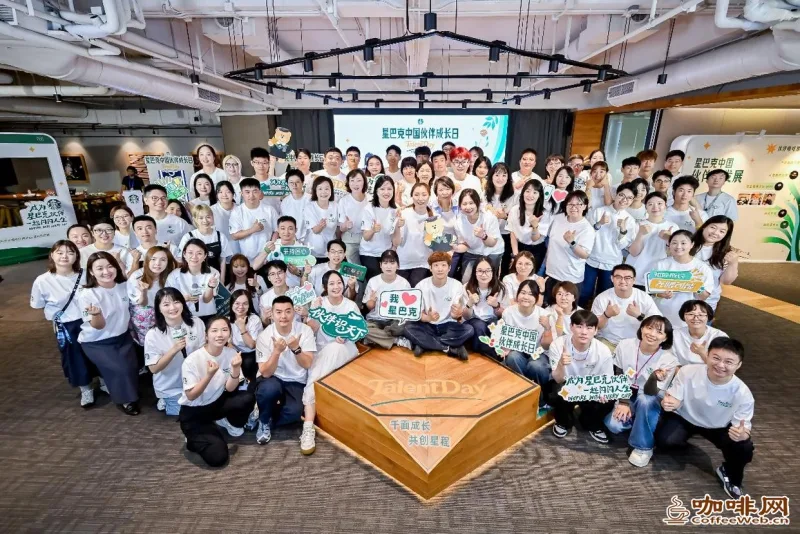
The scene at the Starbucks China Partner Growth Day event.
What this echoes is a full-cycle talent-development matrix Starbucks has built for partners, covering every level from the front line to company-wide strategic management. “Rising Star → Starlight Launch → Starlight Plus → Polaris → Star Leap” — each stage builds on the one before, the whole ladder interlocking. Rising Star helps shift supervisors accumulate management skills and prepare to become store managers; Starlight Launch supports store managers in sharpening store operations and team leadership; Starlight Plus helps senior store managers extend into multi-store operations and team leadership, readying them for broader responsibility; and programmes such as Polaris and Star Leap go further, widening strategic perspective and leadership so partners can take on wider management roles.
Alongside the management track, Starbucks has also laid out a professional coffee path. Partners can deepen their craft along the route of Green Apron Coffee Explorer, Black Apron Coffee Master and District Coffee Master, and then compete in the national barista championship for the highest honour of all, “Coffee Ambassador”.
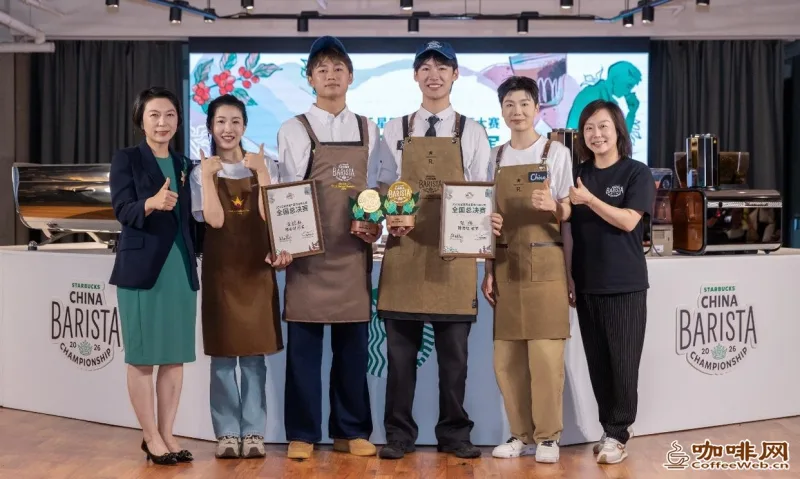
Competing for the national Coffee Ambassador crown at the Starbucks China Barista Championship.
Beyond management and coffee specialism, Starbucks also widens partners’ room to grow through on-the-job study and experience in other cities. The “Star Voyage” programme, run with Yunnan Agricultural University, supports partners in raising their qualifications and deepening their coffee expertise while still working, backed by welfare points and dedicated study credits — giving concrete shape to the wish to “go to university at Starbucks”. “Partners See the World”, for its part, offers partners the chance to work and live in different cities, broadening their horizons in new stores and communities and bringing what they learn back to their teams.
Tiffanie Feng’s career is a case in point. In 2015, two years after joining Starbucks, she moved from Chengdu to Xi’an through “Partners See the World” to gain experience at the city’s first Starbucks Reserve store. The posting made the young barista realise she did not only love making coffee — she wanted to pass its stories and warmth on to more people. Back in Chengdu, Feng worked her way up to store manager, kept honing her coffee skills, became one of the first District Coffee Masters, and has since supported the growth of more than 400 Coffee Masters.
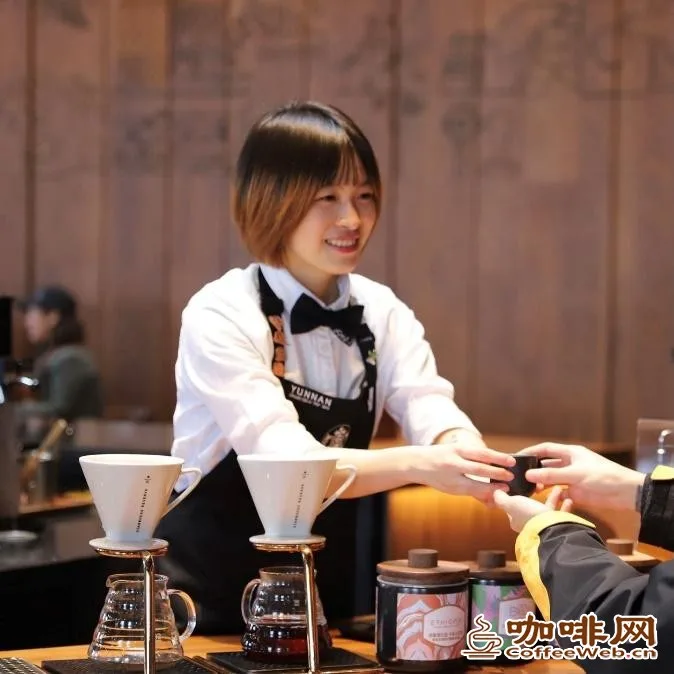
Partner Tiffanie Feng, now one of Starbucks’ first District Coffee Masters.
A Thousand Stores, a Thousand Faces: differentiation through local roots
After years of development, sameness has become an increasingly sharp problem in China’s coffee market. In 2025 the country had 277,000 coffee-drink outlets, up 22.7 per cent year on year, while chained coffee brands passed 83,000 stores in total, with density climbing fast. Alongside that, recipes and décor have converged, price bands have slid steadily downward, and many brands are caught in a loop of competing on new releases and paid traffic, unable to build a distinct impression in customers’ minds.
For mature brands long embedded in the market, two further challenges loom: how to keep innovating while holding on to the brand’s core, and — as Starbucks reaches into lower-tier cities and counties and its store count keeps rising — how to stop new stores from becoming mere copies of a standard template, and instead shape experiences tuned to local habits and community culture.
Against this background Starbucks put forward its “A Thousand Stores, a Thousand Faces” strategy, one of whose concrete expressions is “One Store, One Community” — an attempt to break the deadlock through local roots.
By “A Thousand Stores, a Thousand Faces” Starbucks does not mean a simple stylistic makeover of store hardware. Décor and fittings can be designed top-down by headquarters, but the community experiences that genuinely move local customers have to be sensed, unearthed and delivered by front-line staff rooted in the place. Partners’ understanding of local culture and of the people in a community is the very wellspring of a distinctive experience.
The Yongqing Fang intangible-heritage store in Guangzhou sits in a Lingnan cultural district and is Starbucks’ sixth heritage-concept store nationwide. Lion dances, painted opera masks and hand-embroidered details are woven into the store’s narrative. In this singular space steeped in Lingnan culture, partner Anthony Wang recreated a Cantonese classic from red bean and double-skin milk, devising the bespoke drink “Lingnan Duet”. Here customers are not buying a cup of coffee so much as an encounter with living heritage. Through cues of flavour and visual detail, Anthony tells visitors and locals alike the heritage stories of Lingnan. The store is no longer simply a standardised point of sale: it draws tourists who come to take photographs, and earns the approval of the community as well.
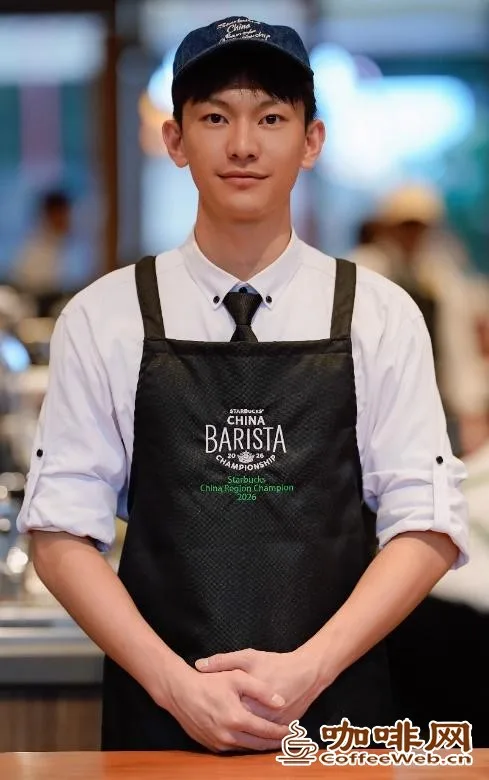
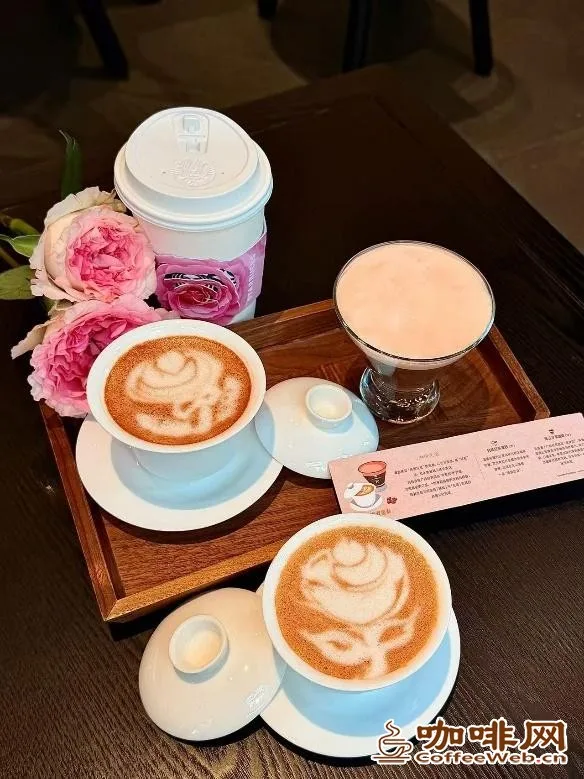
Guangzhou partner Anthony Wang offering customers a distinctive local experience with the Lingnan Duet.
At the Alibaba Center store in Shenzhen, a partner named Persian uncovered more possibilities in an office-building location. The store bustles on weekdays but stands quiet at weekends. Noticing a running club that trained regularly nearby, Persian joined in and linked the store to the running community. The store became a “running-friendly space” — a base where the group could rest, refuel, stretch and talk. A store once empty at weekends quickly came alive, and has even hosted running events with more than a hundred participants. For Persian, “A Thousand Stores, a Thousand Faces” means finding a shared language between a store and its customers, letting the store weave itself into the everyday life of the neighbourhood.
The commercial aim is clear: differentiated in-store experiences that deepen a store’s bond with its community and lift repeat visits and goodwill.
But the precondition is a front-line workforce empowered by a system and able to take initiative — precisely the sore point for many brands. For a chained coffee brand, steadily producing stable, creative community experiences means first solving talent retention and building a pipeline, which is where the value of Starbucks’ partner development stands out most clearly. The training system turns out partners with ideas and ability; those partners pour their creativity into store operations; and internal talent-building and front-end business strategy close into a complete loop.
What the case teaches: people at the centre, cultural capital co-created
As one of the earliest pioneers in China’s coffee market, Starbucks has been in the country for nearly thirty years. From the instant-coffee era to freshly made chains, from the “third place” to a new phase in which price wars and digital competition run side by side, Starbucks has taken part in and witnessed the whole journey of Chinese coffee consumption from first awakening to the mainstream. Brands have risen and fallen with the tides; what has kept Starbucks vital is not any single product innovation or marketing move, but its refusal to treat efficiency as the only measure and its insistence on putting people at the centre.
Chinese coffee consumption is now undergoing a profound shift. Among coffee-drinking occasions, business and socialising account for 32.7 per cent and daytime work for 30.1 per cent, followed closely by everyday moments such as afternoon tea and a coffee with breakfast; 65.9 per cent of dine-in customers drink coffee at least once a week. In other words, consumption has become highly scenario-based and routine, and a store’s community character and its value as an emotional connection keep rising. What customers want is not the coffee alone, but the experience, the cultural atmosphere and the human bond behind it.
Starbucks read this early, which is why what it offers in China has never been coffee alone but a lifestyle and a social symbol. That symbol is built up through countless real interactions between partners and customers, forming cultural capital unique to the brand and a sturdy moat around it. There is much to learn here.
Standardisation may help a brand hold its operating base, and digital tools and efficiency can scale a business quickly, but community feeling, local innovation and the connection between people — the core elements of cultural capital — cannot be generated by process and algorithm alone. Many chains are used to treating front-line staff as an operating cost; Starbucks’ practice offers another reference: sustained investment in partners is, in essence, investment in an intangible asset that is hard to copy.
Competition in coffee will continue, and supply-chain upgrades, product innovation and digitalisation will remain the main battlegrounds. Yet the underlying logic of offline consumption always comes back to people. Efficiency decides how fast a company can run; the real bonds between people decide how far a brand can go.
Source:
(This article is from The Paper. For more original reporting, download The Paper app.)
Reprint Note & Disclaimer
- This article is reprinted from Chinese media for information and cultural exchange. The views expressed are those of the original author and do not necessarily reflect the position of coffeeyo.com.
- All trademarks, brand names and logos mentioned belong to their respective owners.
- For cooperation, reprint or correction requests, please contact coffeeyo.com.
Reprint Notice & Disclaimer
- This article has been edited and compiled by China Coffee Network. The information and images therein come from public sources and the copyright belongs to the original author. This reprint is intended solely for information sharing within the coffee industry and does not represent the views of this website; all data and opinions are subject to the original article. Our thanks to the original author for creating and sharing it.
- For matters concerning content licensing, attribution, copyright or otherwise, please contact us promptly and we will verify and cooperate in handling them as soon as possible. We also welcome coffee origins, brands and industry media to exchange ideas and contribute articles.
- Contact China Coffee Network: Tel 400-0000-641 (+86-18288016826) | Email 405854472@qq.com | Address: Jinghong, Xishuangbanna, Yunnan Province / Tieling, Liaoning Province
Related Reading
- Bean in Short Supply: A Taiwan Youth on Yunnan Coffee as a Shared Cross-Strait Stage
- Five Years, Eight Championships: Lincang Coffee Joins the World Stage
 Haikou ‘Union Cup’ Barista Skills Competition Kicks Off to Empower the Service Sector
 Yunnan Specialty Coffee Beans Deliver an ‘Excellent’ Report: Path to Value Leap
- Cross-Strait Tides Rise: A Taiwan Youth Farms Coffee in Yunnan, a Cup Bridging Both Sides
 2026 2nd Yunnan Treasure Coffee Green Bean Competition (Cup of Excellence Pilot) Concludes


 Liaoning ICP Security No. 21122402000217