
Brief (coffeeyo.com): Over the past 30 years, Yunnan coffee has fought a remarkable comeback. Once an “exotic import” planted for foreign buyers and sold at a discount, it now commands its own price as domestic demand surges. How did Yunnan turn the tables — and what challenges remain?
30 Years, a Quiet Comeback
In recent years, Yunnan coffee has changed. Prices have shifted from “couldn’t care less” to something closer to “can’t quite afford it.” At the start of the 2023/24 season, Yunnan’s market transaction price (33 yuan/kg) sat above both the international futures price (26.56 yuan/kg) and the procurement quotes from international traders (around 23.9 yuan/kg).
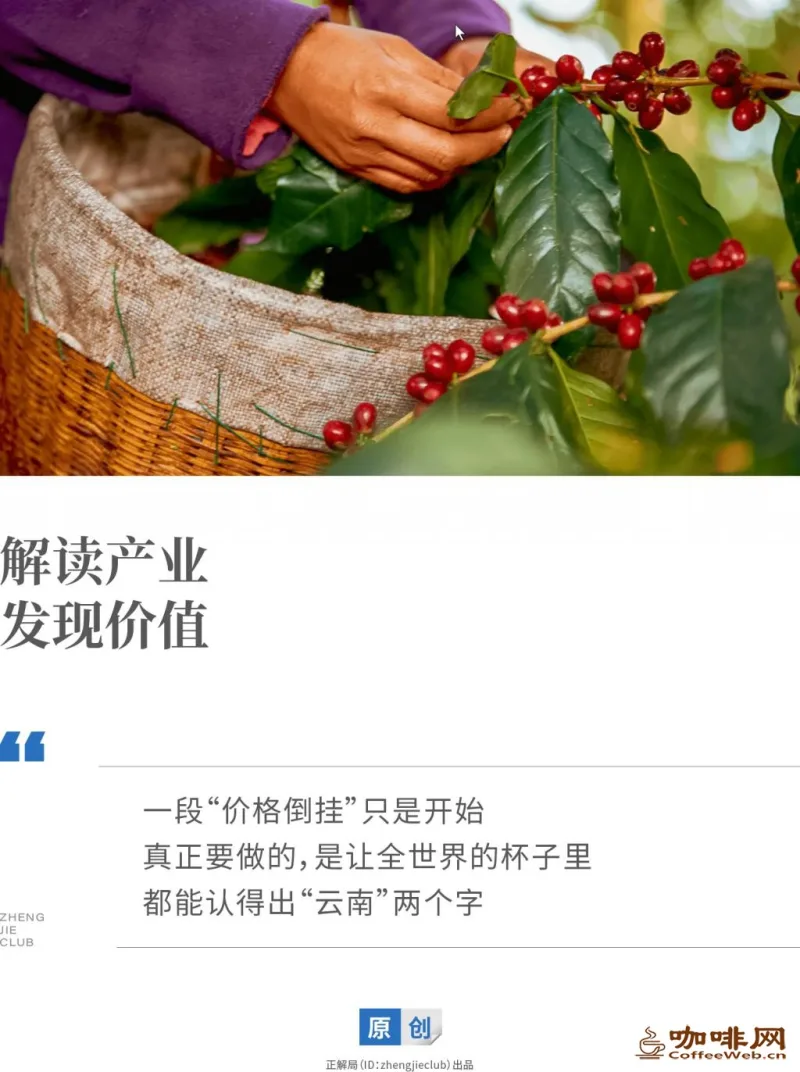
In 2024, Yunnan’s coffee planting area grew 4% year on year and output rose 3% year on year. Yet as production climbed, prices did not fall.
That same year, the average price of green beans reached 41.02 yuan/kg, up 10.3% year on year and more than 14% above the international price for mild arabica.
Early this year, a “price inversion” appeared in Yunnan’s bulk coffee trade — domestic purchase prices rose above export prices, prompting many companies to adjust their strategies and shift from export to domestic sales.
Three decades on, from “the wrong side of the river” to “the right side,” what exactly happened to Yunnan’s coffee industry?

This year, domestic buyers began camping out in the producing regions one or two months ahead of schedule to grab supplies. At the time, the closing price of New York arabica futures worked out to roughly 45 yuan/kg. Yet the average purchase price at domestic origins ran 10 to 20 yuan/kg higher than export prices.
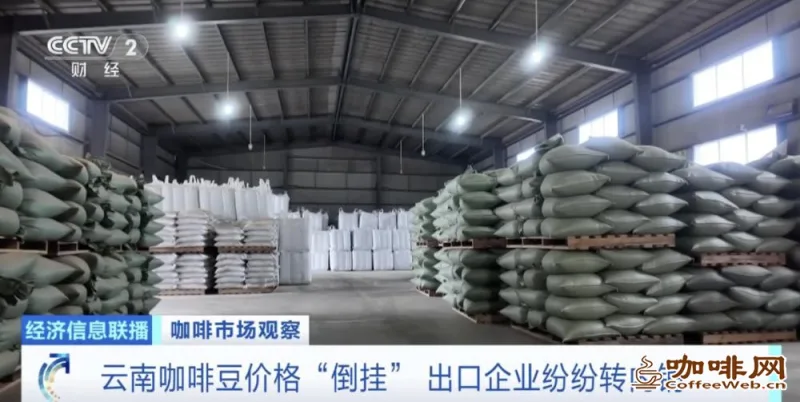
For decades, in many industries, earning dollars was more profitable than earning yuan. In Yunnan, however, the same batch of coffee beans sells for more to domestic buyers.
It is worth remembering that Yunnan’s coffee industry was, from the very beginning, cultivated by foreigners. In 1892, the French missionary Tian Deneng brought a few coffee seedlings from Vietnam and planted them in Zhukula Village, Binchuan County, Dali. The first coffee plant on the Chinese mainland took root there.
This was the earliest spark. Real scale had to wait until the 1950s. To repay Soviet loans and supply the Soviet and Eastern European markets, Baoshan’s Lujiangba and Dehong began planting coffee on a large scale. But when Sino-Soviet relations broke down, coffee lost its market, and coupled with the spread of leaf rust, the trees were cut down to almost nothing.

What the Three Decades of Discount Really Discounted
To understand the reversal, you must first understand the discount. In international coffee trade there is a universal yardstick called the “C price.” In 1914, the New York Coffee Exchange (NYBOT, merged into the Intercontinental Exchange in 2007) launched the Arabica Coffee Standard Contract — the “Coffee C” — quoted in US cents per pound, laying the foundation for over a century of international coffee futures trading.
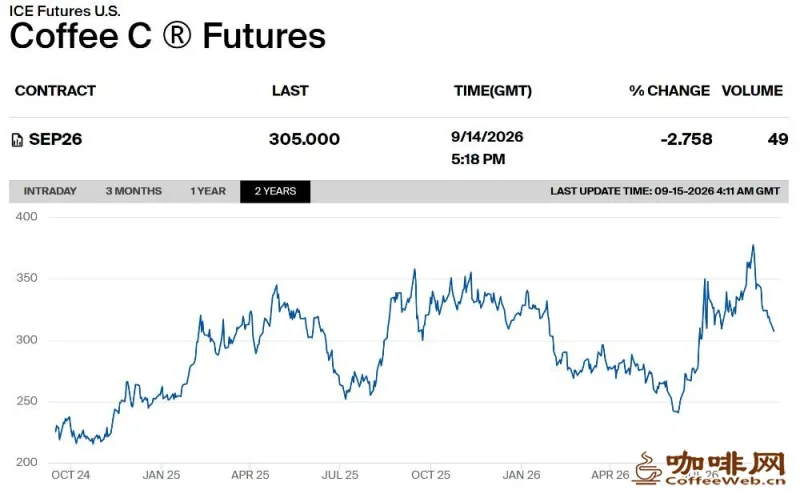
This ICE Coffee C price is a key global benchmark for washed arabica. The vast majority of arabica trades worldwide anchor their pricing to it. Specifically, the ICE C contract’s benchmark (par delivery) grade is washed arabica from Central American and African origins such as Mexico, El Salvador, Nicaragua, and Peru.
Most other origins anchor to this benchmark through “differential pricing”:
Actual transaction price = C price (futures benchmark) ± differential (in US cents per pound)
For example, origins like Colombia, Costa Rica, and Kenya can command a premium of up to 1,000 points, while the Dominican Republic, Ecuador, and Brazil carry discounts of 400 and 600 points respectively.
Yunnan’s differential was, for a long time, negative. A discount of 10 to 20 cents a pound — that was Yunnan beans’ position for the past three decades.
So what exactly was being discounted? First, the quality account. Yunnan’s dominant variety is Catimor — disease-resistant, high-yielding, easy to grow. After its introduction in the 1980s it once covered over 95% of the province’s planting area. But the trade-off was flavor. Catimor carries a touch of Robusta genetics; grown at conventional altitudes it tends to develop a grassy, earthy off-note. Combined with inconsistent processing standards, defect rates once ran as high as 15%. Such beans were mainly used for instant coffee and blending. Yunnan’s washed beans naturally could not capture the specialty premium.
But the second reason was deliberate on the part of the buyers. Yunnan’s planting area, output, and agricultural output value each account for roughly 98% of China’s total, yet globally it holds only about a 1% share — easy to overlook. Nestlé, Starbucks, Volcafe, Louis Dreyfus (LDC), and ECOM all run globally distributed supply chains; Yunnan was merely one procurement point. Yet Yunnan’s coffee buyers in the past were mainly these players — there was no alternative.
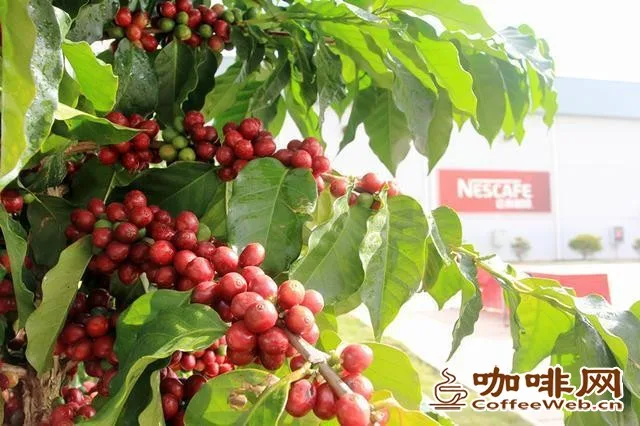
Before 2015, Nestlé’s purchase of Yunnan coffee beans used a flat price. Beans cupping around 78 points with no obvious defects all fetched one price. Good beans and ordinary beans sold for the same money — the industry called it the “Nestlé price.” It was even the pricing benchmark for the entire region: whatever Nestlé quoted, others followed.
There was no price channel for quality differences. As one trader put it bluntly: “Yunnan is just one of their procurement points; if the price is high they buy less, if low they buy more.” The Yunnan Institute of Innovative Finance estimated that every ton of Yunnan coffee beans was sold for at least 3,000 yuan below equivalent international products.
Easy to understand: with only one buyer, or one overwhelmingly influential buyer, the price is inevitably a one-man show. Yunnan was “too small”; the buyers were “too big.”

The Turn Begins on the Buyer’s Side
The inflection point first appeared on the buyer’s side. On its Q1 2026 earnings call, Luckin confirmed it procured over 30,000 tons of Yunnan beans this season, worth nearly 2 billion yuan. That volume accounted for half of the province’s top-grade bean output. Luckin built a fresh-fruit processing plant in Baoshan capable of handling 5,000 tons of fresh fruit a year, covering 20,000 coffee farmers. It set up a local procurement company in Yunnan, and this January even ran a “Luckin Express” dedicated rail train: departing from Ning’er toward Xiamen, with Qingdao and Kunshan planned in subsequent transport schedules. The cycle from Yunnan to storefront can be further compressed.
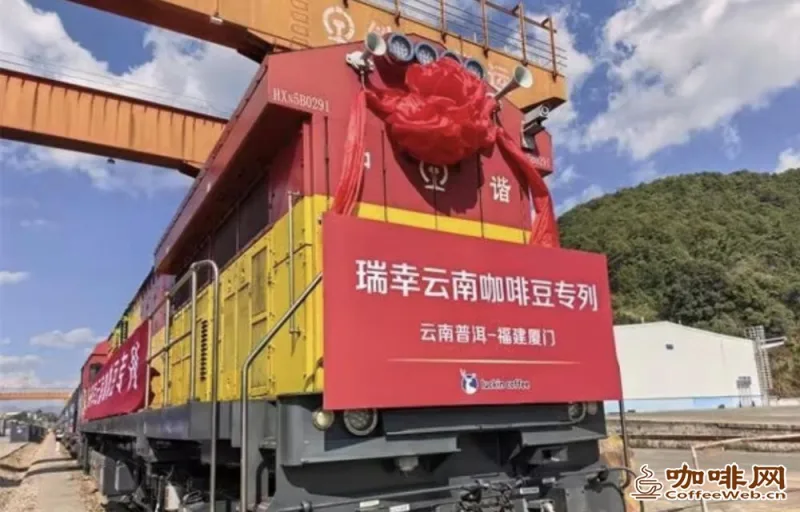
A string of similar moves followed. Cotti plans to invest 500 million yuan in an industrial park in Lincang. Manner set up a procurement station in Menglian. San Dun Ban (Three and a Half) signed an agreement to purchase over 10,000 tons a year at 5 to 8 yuan above the market average. Mixue Bingcheng signed a floor-price purchase agreement with Yunnan coffee cooperatives. This new cohort of buyers brought their factories, dedicated trains, and stores straight into the producing regions.
Traders found that once more buyers entered, if quotes were too low, farmers simply would not sell to them. Looking closely, Luckin’s coffee sells at just 9.9 yuan a cup at the terminal — hardly enough to support 60 yuan/kg raw beans. But with a footprint of 35,000 stores, to keep costs relatively stable it must have a stable, controllable, nearby bean source. So Yunnan was the natural choice; these domestic chains had to plant their feet here.
Bargaining power has never depended only on how good you are, but on how much your counterpart needs you. The expansion of China’s coffee consumption market turned Yunnan from an optional choice into a necessary one. From around 2010 to 2024, per-capita annual coffee consumption in China grew from two or three cups to 22.24 cups. Coffee went from an office pick-me-up to an everyday drink on county-town street corners.
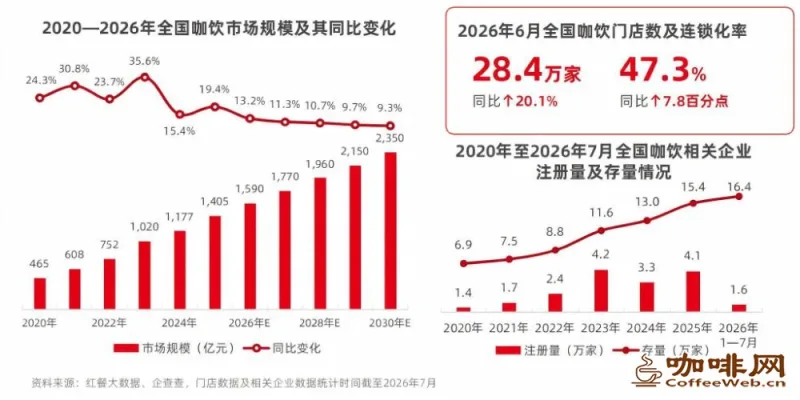
Correspondingly, Yunnan beans are no longer reliant on export; sales shifted from 90% export six or seven years ago to 90% domestic sales today. The support of domestic demand gave Yunnan beans their first taste of local pricing power — prices tripled in three years. That is where the room to squeeze prices disappeared.

Supply-Side Upgrades: Four Fronts
But customers alone are not enough; in the end quality must speak. So beyond the demand side, the second variable lies on the supply side. Over these five years, Yunnan coffee has made substantial moves on four core fronts.
Front one: varieties. Catimor’s share fell from over 95% to around 80%. The planting area of premium varieties reached 162,000 mu, and Yunnan has bred 22 of its own varieties. “Yunka No.1” scored 86.25 points in cupping and its transfer fee of 2 million yuan set a domestic record for a coffee variety transfer. “Yunka No.2” scored 86.75, raising the ceiling for domestic specialty coffee. High-end varieties are also taking root — Geisha has been successfully trial-planted in high-altitude estates in Lincang and Baoshan.
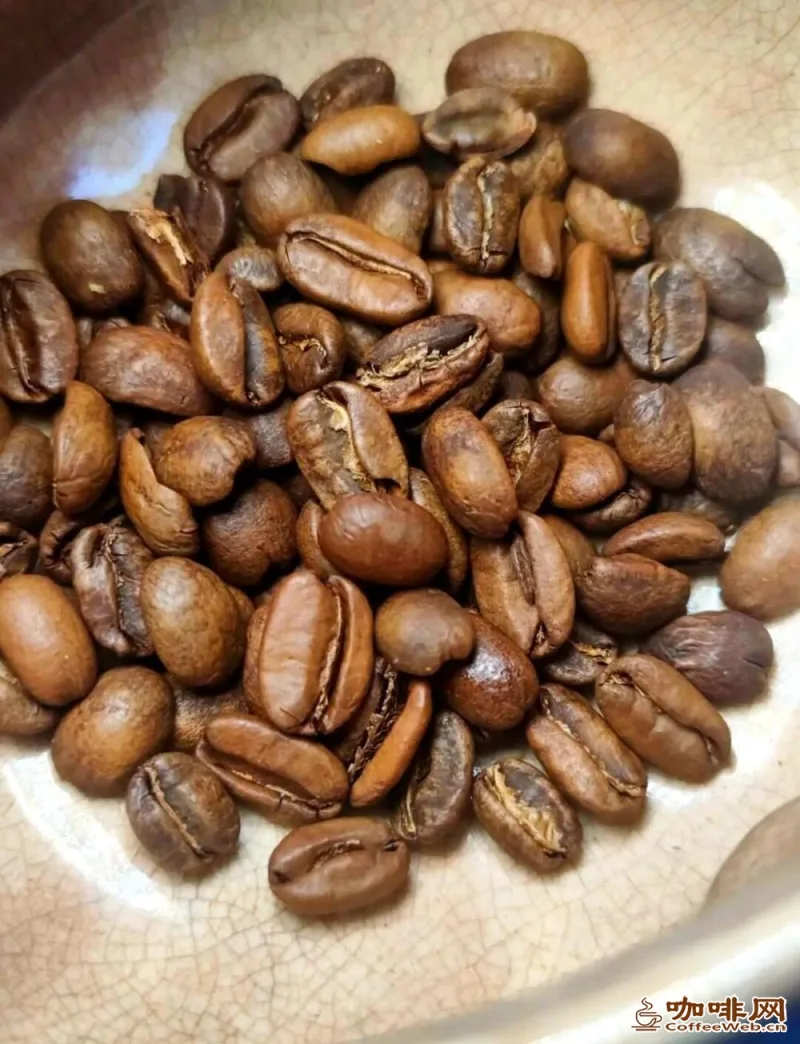
How wide is the price gap varieties create? Ordinary Catimor fresh fruit is 6 to 6.5 yuan/kg; Geisha fresh fruit is 200 yuan/kg. At the green-bean stage, Catimor is 60 to 90 yuan, while Geisha can sell for 800 to 1,600 yuan/kg.
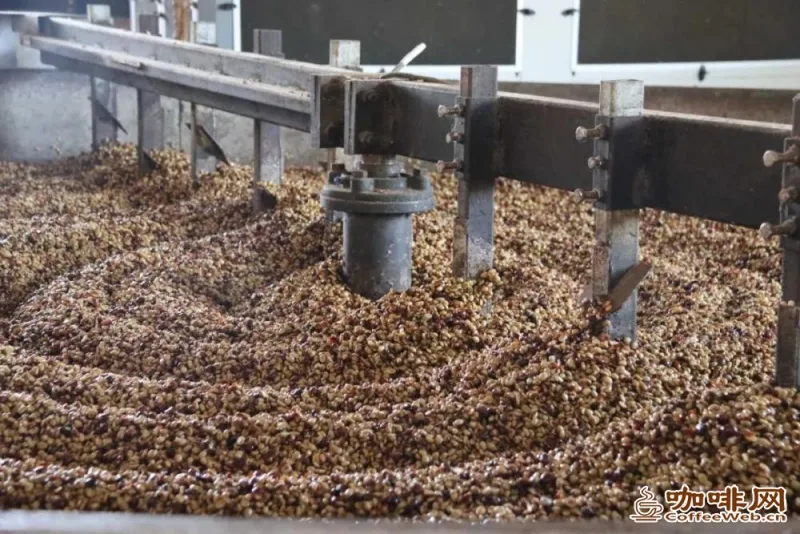
Front two: processing. After years of development, Yunnan coffee has formed a full industry chain spanning breeding, planting, processing, and sales, with a specialty rate of 41.7%. Its deep-processing rate rose from 20% in 2021 to 85% in 2025. What does that mean? Five years ago, most of Yunnan’s beans were sold by the bag. Now the product forms are roasted beans, concentrates, cold brew, freeze-dried powder, and drip bags. The province’s deep-processing capacity is nearly 100,000 tons — a third of the national total — forming four processing clusters in Kunming, Baoshan, Pu’er, and Dehong. A neat technical detail: the micro-water processing technology promoted in Pu’er cut the water used to process one ton of fresh coffee fruit from 6 tons to 45 kg.
Front three: standards. This is the most critical and the most easily overlooked in the past. Standards decide what counts as good coffee. In 2025, Yunnan formally implemented the “Geographical Indication Product Quality Requirements — Pu’er Coffee,” filling the national-standard gap for geographically indicated coffee products in China. A comprehensive coffee industry standards system has been built up: 10 currently valid national standards, 46 industry standards, 39 Yunnan provincial local standards, and 34 group standards — 129 in total. The most crucial step was connecting quality standards to the international system.
The Cup of Excellence, regarded as the Olympics of green coffee, has run pilot competitions in Yunnan for two consecutive years. In its first edition in 2025, the champion bean scored 89.96 and auctioned for 13,150 yuan/kg. In the second edition in 2026, the champion was a traditional washed Geisha from Gengxia Estate in Lincang, scoring 91.78, with three beans breaking 90 points.

This champion bean was purchased by Luckin at 14,000 yuan/kg, setting a new record for Chinese green coffee auction prices. A German judge who returned to Yunnan after a 15-year gap said plainly: “I found the quality of Yunnan coffee improving by leaps and bounds. In the competition, I could clearly feel the layers and flavor of Yunnan coffee.”
Front four: brands and people. Local brand matrices have emerged — Hougu, Zhongka, Sinloy, Aini, Biton. Sinloy has ranked first in sales of freshly ground coffee on major e-commerce platforms for five consecutive years. Li Hong of Gengxia Estate in Lincang won this year’s Cup of Excellence. In her words: “In the past we grew coffee more by experience — letting it grow naturally, harvesting and processing routinely. But specialty coffee competes on details measured in millimeters.”
What did she do? She spent six years adjusting the variety structure. In the process, she voluntarily gave up chasing yield, switching to small-scale, multi-altitude trial planting, and only expanded after repeated evaluation. In her words, she prioritized securing the flavor base of the variety. The estate uses zero herbicides, little chemical fertilizer, manual weeding, and proactive thinning and branch control to concentrate nutrients into the fruit. That 5-point leap from 86 to 91 was earned this way.

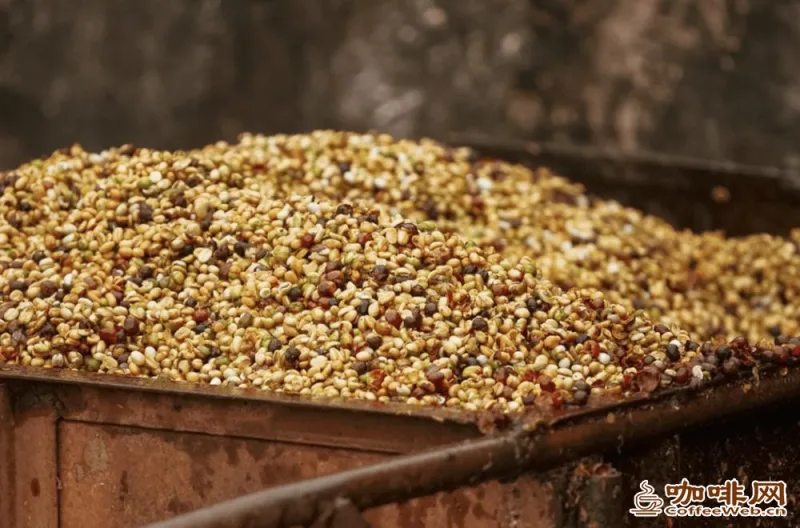
In 2025, Yunnan’s coffee planting area reached 1.463 million mu, green-bean output 138,900 tons, and full-chain output value 99.5 billion yuan. Yet the positive signals have not made Yunnan’s coffee people lose their composure. After winning the championship, Li Hong said in an interview: “Yunnan’s specialty coffee industry still has obvious shortcomings — insufficient standardization, uneven specialty stability, and weak terminal-brand voice.” A typical manifestation: Yunnan’s specialty beans price above the KC (ICE Coffee C price), but its commercial beans still generally price below it.
Local green-coffee hunter Yang Yu made the same point: a mature coffee origin usually has a strong brand that represents the entire region, but Yunnan still lacks such a brand that can comprehensively represent Yunnan coffee. This, first and foremost, is the core task for Yunnan coffee over the next five to ten years.
The Bigger Challenges: Three External Variables
The first variable is abroad. The USDA projects Brazil’s 2026/27 coffee output will hit 72 million bags. Rabobank expects New York arabica futures to fall back to 2.5–3.0 dollars per pound by the end of 2026 — more than 30% below 2025’s peak. Once international prices retreat, the inversion between domestic purchase and export prices will be erased at once.
The second variable is domestic. A coffee tree takes five years from planting to stable yield; the new capacity won’t be released in force until after 2028. If domestic consumption growth slows over the same period, whether the slope of the demand line oscillates is impossible to predict now.
The third variable is institutional. The Guangzhou Futures Exchange has included coffee futures in its product reserve and is still in the R&D and preparation stage. Until it lands, Yunnan lacks its own hedging tools — the financial instruments companies use to hedge price, exchange-rate, and interest-rate volatility. Among these three variables, if any one goes wrong, the inversion could shrink back. The road remains long, and must be walked step by step.
On this matter, the people of Yunnan are clearer-headed than anyone. Looking back at these three decades, Yunnan coffee has already walked a unique path of Chinese coffee. A “price inversion” is only the beginning; what it truly aims to do is make the word “Yunnan” recognizable in coffee cups around the world. The burden is heavy, and the road is long.
Reprint Note & Disclaimer
- This article is compiled and edited by coffeeyo.com. The materials and images herein are sourced from public channels and the copyright belongs to the original authors. This site reprints them solely for information sharing within the coffee industry and does not represent our stance; all data and views are subject to the original source. We thank the original authors for their work and sharing.
- For matters concerning content authorization, attribution, copyright, or any other issues, please contact us promptly. We will verify and cooperate in handling them without delay. We also welcome coffee-growing regions, brands, and industry media to exchange and contribute articles with us.
- Contact coffeeyo.com — Tel: 400-0000-641 (+86-18288016826) | Email: 405854472@qq.com | Address: Jinghong City, Xishuangbanna, Yunnan / Tieling City, Liaoning
Reprint Notice & Disclaimer
- This article has been edited and compiled by China Coffee Network. The information and images therein come from public sources and the copyright belongs to the original author. This reprint is intended solely for information sharing within the coffee industry and does not represent the views of this website; all data and opinions are subject to the original article. Our thanks to the original author for creating and sharing it.
- For matters concerning content licensing, attribution, copyright or otherwise, please contact us promptly and we will verify and cooperate in handling them as soon as possible. We also welcome coffee origins, brands and industry media to exchange ideas and contribute articles.
- Contact China Coffee Network: Tel 400-0000-641 (+86-18288016826) | Email 405854472@qq.com | Address: Jinghong, Xishuangbanna, Yunnan Province / Tieling, Liaoning Province
Related Reading
 Three Decades of Shanghai-Yunnan Collaboration: A Coffee Bean ‘Ferments’ at the Import Expo
 Why Yongde’s Coffee Beans Won Gold in Shanghai – A Taste of ‘Life in Yunnan: 365 Days’
- Yunling Commentary: Yunnan Coffee Turnaround Hinges on Autonomous Pricing
 A ‘Travel Pack’ Reveals Another Possibility for Pu’er Baristas
- Bean in Short Supply: A Taiwan Youth on Yunnan Coffee as a Shared Cross-Strait Stage
- Five Years, Eight Championships: Lincang Coffee Joins the World Stage






 Liaoning ICP Security No. 21122402000217