
At a Glance (China Coffee Network): Once known mainly for commodity beans, Yunnan coffee is now pushing into the global specialty system—through variety upgrades, the Cup of Excellence pilot, and pioneers like Qiupo Estate and Blue Bottle—even as challenges of consistency and transparency remain.
Editor’s Note: We interpret the coffee business from three angles—this beverage, which since the 15th century has gradually conquered human taste buds, now inspires new commercial imagination. Reporter: Wen Simin | Editor: Ni Ni
In January, the mountain air of Yunnan mixes with the sweet smell of ripe coffee cherries. On the slopes of Menglian, Baoshan and Nujiang, farmers carry bamboo baskets through the trees, quickly pinching off red fruit. These two or three months are their busiest time of the year—Yunnan’s coffee harvest season has begun.
Nearly a year has passed since Yunnan’s first Cup of Excellence (CoE) pilot concluded—the CoE, with a 27-year history, is currently the world’s most renowned and authoritative premium green-bean competition. At last year’s event, the champion was a washed Batian from Yunnan’s Qiupo Estate.
That batch of green beans was later purchased at a live auction for over 10,000 yuan per kilogram by judges and domestic roasters, and quickly appeared on the bean menus of Shanghai’s specialty cafés. This pilot was thus seen by the industry as a landmark event—Yunnan coffee is entering the global premium coffee evaluation system.
In the past, the narrative of Yunnan coffee mostly revolved around international giants such as Nestlé and Starbucks. That was an era of bulk trade, where Yunnan growers focused more on supplying cost-effective coffee-bean raw materials, with single and conservative varieties.
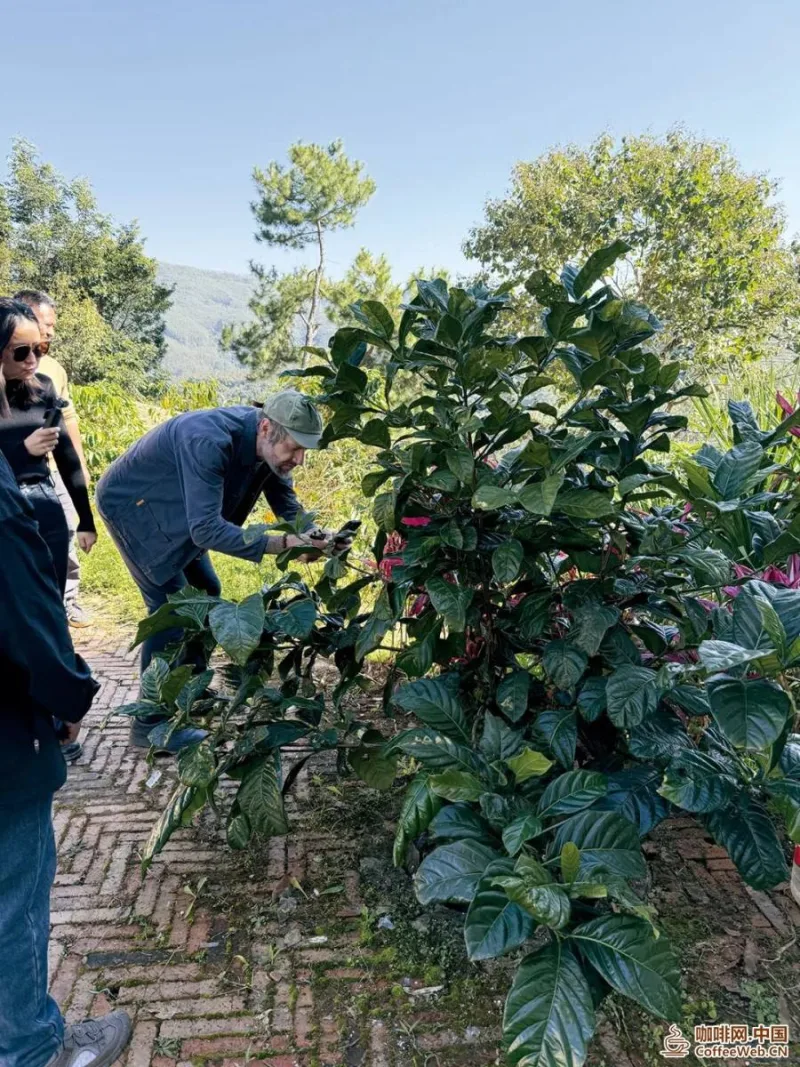
Yu Qing, chief roaster of premium coffee brand Blue Bottle, visits Yunnan producing regions almost every year. “Now we see Yunnan introducing more and more quality varieties such as Bourbon, the SL series and Sachimor, and the cultivation is very fast,” Yu Qing told Yicai YiMagazine. “At the same time, Yunnan farmers have increased investment in precision hardware such as moisture meters and gained a deeper understanding of processing methods like natural, honey and anaerobic fermentation.”
01 · Saying Goodbye to the Era of Raw Materials
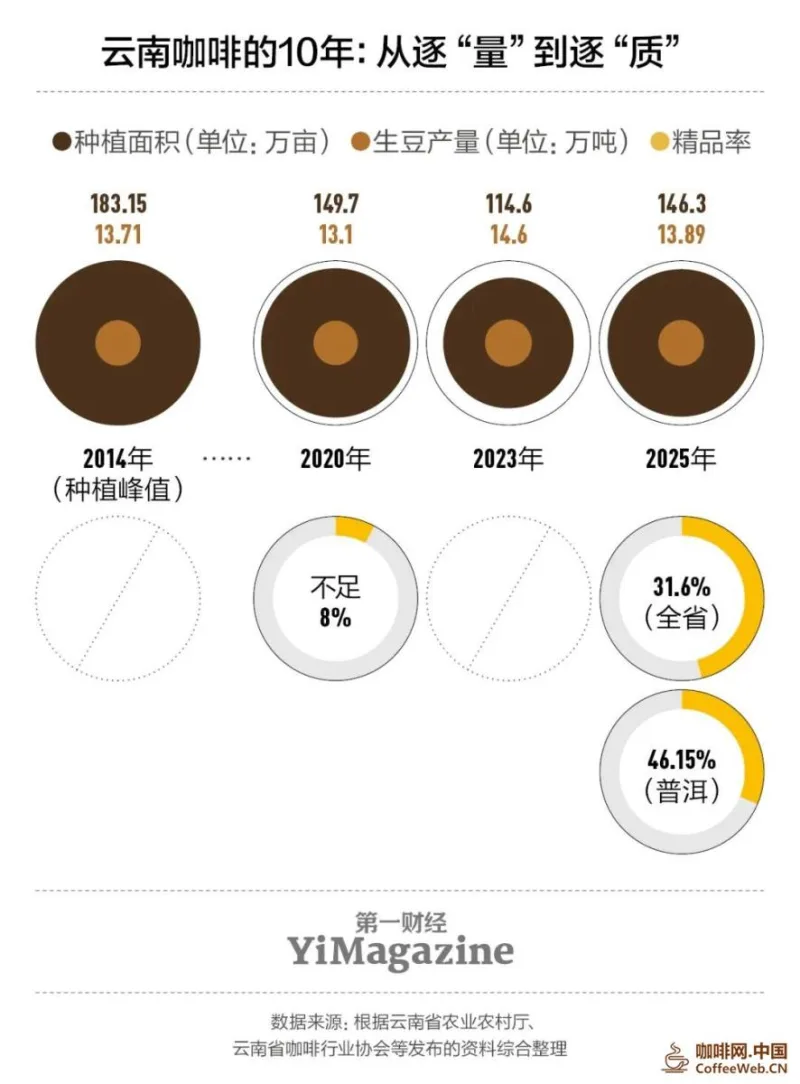
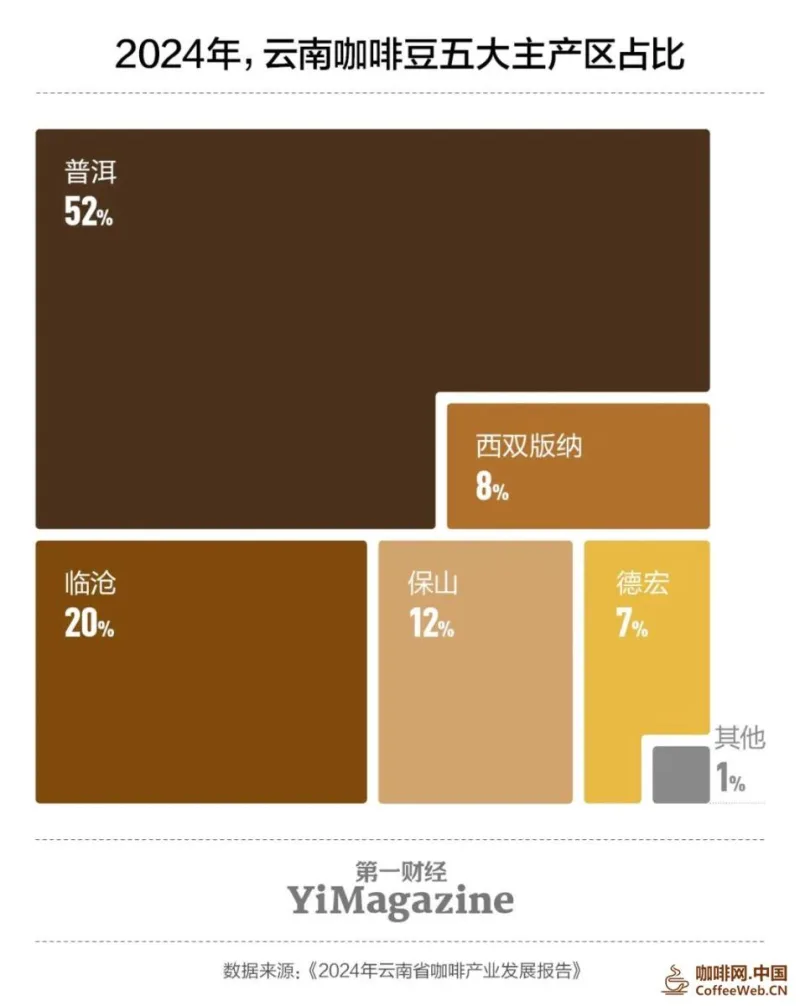
According to the “2024 Yunnan Province Coffee Industry Development Report,” in the 2023/2024 producing season, Yunnan’s total coffee output reached 150,200 tonnes, and the premium rate jumped from less than 8% in 2021 to 31.6%.
Actually, in the winter of 2019, Qiupo Estate’s principal Sai Min realized that the old path of relying on New York exchange pricing no longer worked. That year, the trough price of international coffee futures fell to 86.35 cents per pound, equivalent to less than 15 yuan per kilogram.
After entering the coffee industry, Sai Min first did the export of Yunnan coffee. Those years she saw the market grow colder year by year. From 2014, international futures prices kept declining, while domestically there were neither futures instruments nor hedging mechanisms, so bean exporters could only passively watch the market and at times prices fell so low they barely covered costs. Facing losses, a large number of farmers chose to cut down coffee trees and switch to tea, corn and other cash crops.
This wave of “abandoning cultivation” also spurred the awakening of local estates’ and enterprises’ premium awareness. In Sai Min’s view, to escape the fate of bulk futures, one way out for Yunnan coffee is premiumization—not merely changing a label to tell a story, but entering a new value system defined by flavor and standards.
She decided no longer to be just a middleman, but to become someone who truly “understands coffee.” In 2018, Sai Min obtained the international coffee taster certificate (Q Grader), and the same year earned the Specialty Coffee Association (SCA) professional roaster certificate.
To some extent, Sai Min’s personal transformation is a microcosm of the third wave of coffee sweeping the globe.
The development of the coffee industry is usually divided into three waves: the first began in the mid-20th century, represented by brands like Nestlé promoting instant and canned coffee, with the core being mass consumption and convenience, making coffee an everyday drink; the second rose in the 1970s, led by chain brands like Starbucks, emphasizing the espresso experience and brand culture, making coffee a lifestyle; the third is since the 2000s, when coffee was redefined as an agricultural product with terroir characteristics, the core of this wave being “premiumization.” People began eagerly chasing single origins, unique varieties, refined processing methods and traceability, and tended to use light roasting to express the regional flavor of the beans—Yunnan coffee’s exploration over the past decade or so can be said to be an attempt to find its place in this wave.
Driven by this wave, “specialty coffee” gained an official definition. According to SCA, specialty coffee refers to green beans with a cup score of 80 or above (out of 100) that also meet relevant quality standards in cultivation, processing and roasting—for example, clean flavor, minimal defects, and clear origin character.
CoE and its administrator, the Alliance for Coffee Excellence (ACE), East Asia advisor Su Chengcheng, mentioned to Yicai YiMagazine that as early as 2011, Dong Zhihua, then director of the Yunnan Coffee Factory, proposed “quality over quantity” as the development direction, but a truly systematic premiumization process had to wait a few more years. In 2015, the Yunnan International Coffee Exchange hired Ted Lingle, a global specialty-coffee doyen, as senior advisor, and together with the Coffee Quality Institute (CQI) launched the “demo farm” project.
In the same period, a procurement revolution driven by the specialty-coffee wave was taking place globally. Premium brands like San Francisco’s Blue Bottle would go deep into producing regions to buy single-origin beans from estates in Ethiopia, Panama and elsewhere. Tokyo-born % Arabica attracted young consumers on social platforms with minimalist aesthetics and single-origin labels. Traditional giants were also accelerating their shift—in 2017 Starbucks launched its “Single-Origin Reserve” series, and Nestlé acquired Blue Bottle, trying to enter the specialty track.
These trends made Sai Min more certain of her judgment: Yunnan needs premium coffee products. At that time Sai Min had been in the coffee export business of Lincang and Pu’er producing regions for years, with close ties to local growers and processors. Around 2018, she discussed with several peers familiar with cultivation and production and launched the new Qiupo Estate project as a partnership, to grow and process beans herself—at the time, few coffee bases in Yunnan truly operated in the estate model, and the concept of “estate” was not yet widespread.
In its early days, Qiupo Estate was funded jointly by Sai Min and several partners, with the site chosen in Cangyuan, Lincang, adjacent to the national 4A scenic area “Cangyuan Tiankeng.” The team planned from the start to combine coffee cultivation with experience, giving the base certain culture-tourism attributes, to explore a sustainable operating model, and the location next to the scenic area helps bring stable foot traffic.
With the team in place, the second step was to act on the “root” of planted varieties. At that time, more than 90% of Yunnan’s producing areas grew the Catimor variety. Although high-yielding, Catimor’s genetics give it a slightly herbal and earthy “devil’s aftertaste,” making it hard to cross the 80-point premium-quality threshold.
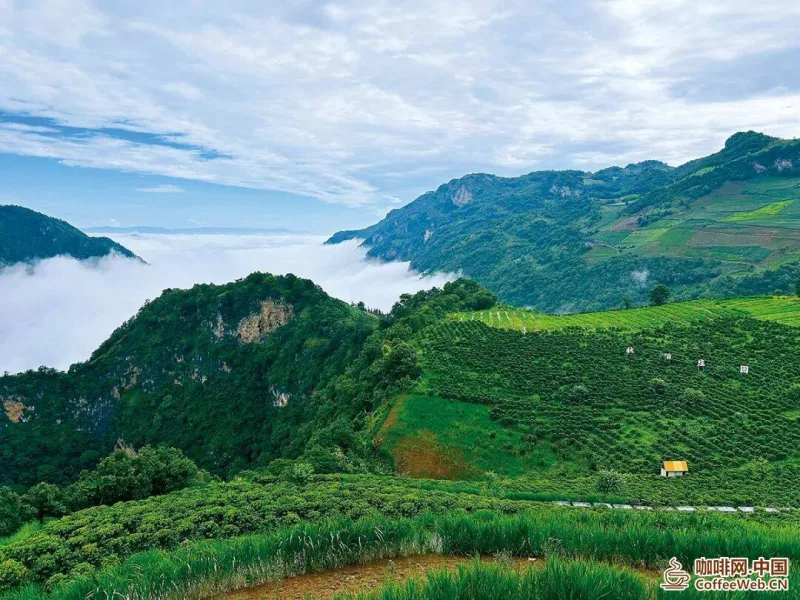
Qiupo Estate abandoned Catimor and introduced traditional or improved varieties such as Geisha, Bourbon and Castillo; the Batian that won at last year’s CoE pilot was planted then. These varieties are low-yielding, weak in disease resistance and costly to manage, but in the high-altitude, large-day-night-temperature-difference mountains of Lincang they show bright acidity and prominent sweetness, with complex flavor and aftertaste—precisely the terroir taste valued by the premium market.
From 2020 to 2021, Yunnan saw a wave of “heavy fermentation,” with estates rushing to make “curious flavors” like soy-paste, fermented-tofu and even alcohol notes, but Sai Min did not follow the trend. In 2023, when targeted processing became popular, she still stuck to her route, doing only traditional washing and natural processing, not heavy fermentation or additive processing. She believes Yunnan coffee’s true advantage lies not in imitating Africa’s or Central America’s flamboyant fruit aromas, but in the bright acidity, clean mouthfeel and sweetness brought by high altitude.
This persistence, besides personal drinking preference, also comes from Sai Min’s experience in the coffee-bean trade and her observation of the global market. “Yunnan coffee is not isolated; it is part of the global specialty system,” she told Yicai YiMagazine. “If we only chase local hotspots, we lose distinctiveness in the broader market.”
02 · Selling Yunnan’s Premium Beans
For Yunnan farmers, growing good beans is only the first step; the real challenge is letting the whole world know and be willing to pay for it.
When Qiupo Estate was founded, Sai Min faced the most practical dilemma: from planting to stable fruiting, a coffee tree takes at least three years, during which there is only investment and no income. For new farmers with limited funds, this is enough to crush entrepreneurial enthusiasm.
Qiupo Estate’s solution, in Sai Min’s words, is “small steps, fast running, cash flow first.” The estate did not plant all the land at once, but advanced in three batches. The first 20 mu were planted first, while using the small amount of fruit from existing old trees for small-batch processing and roasting, listed on a WeChat mini-program and tested at local markets. These early products had not yet reached ideal state, but were enough to support daily operating expenses, and more importantly, let her continuously gain market feedback while waiting for the new trees to bear fruit.
Of course, to truly enter the premium track, small-scale sales alone are far from enough. The brand needs a channel to be “seen” by professional buyers. So Sai Min locked onto two professional competitions: the Yunnan Coffee Green Bean Competition and CoE.
The former is a weather vane in China’s specialty-coffee circle; the latter is known as the “Oscars of coffee.” Their judges are not ordinary consumers, but roasters, green-bean traders and coffee tasters. Besides picking winners, a more important job is to find next year’s procurement targets.
So winning awards is the most efficient B2B marketing channel. In 2021, Qiupo Estate won the washed-group championship in its first send to the Yunnan Green Bean Competition. In 2022 it took the overall championship. These honors quickly opened the estate’s profile, attracting specialty roasters from first-tier cities like Shanghai and Shenzhen to proactively reach out for samples. In the following years, Qiupo Estate won many more awards, building up a number of quality B-end clients.
A greater opportunity came with the landing of the 2025 CoE pilot in Yunnan.
For this pilot, Su Chengcheng prepared for four years. After graduation her first job was at the Yunnan International Coffee Exchange, and her subsequent work has always revolved around Yunnan coffee beans. From 2021 to 2024, she submitted a total of 106 green-bean samples from Yunnan to ACE.
By October 2024, just as ACE was planning its 2025 global auction schedule—if missed, Yunnan would have to wait another year. Su Chengcheng directly contacted ACE founder Susie Spindler. Three days later, she received a reply: “If Yunnan coffee’s quality is truly there, we can explore the possibility of participating. Personally, I think Yunnan could do a CoE pilot.”
After several rounds of communication, ACE reached a preliminary consensus: in 2025, the Yunnan CoE pilot could be launched—Taiwan, China, before being entitled to host the formal CoE, went through several private auctions and one pilot, a process taking years. If Yunnan could skip the private-auction stage and start from the pilot, it would greatly shorten the process of holding the formal competition.
In the Yunnan CoE pilot, Su Chengcheng ultimately received 144 competing beans from Yunnan, covering Catimor, Geisha, Sachimor, Typica and Batian among others. After multiple rounds of blind tasting, Qiupo Estate’s Batian won the championship with 89.96 points. Notably, third place went to a Catimor. “Catimor is the most widely planted variety in Yunnan; its third place also gave many farmers hope: mass varieties also have the possibility of winning,” Su Chengcheng said.
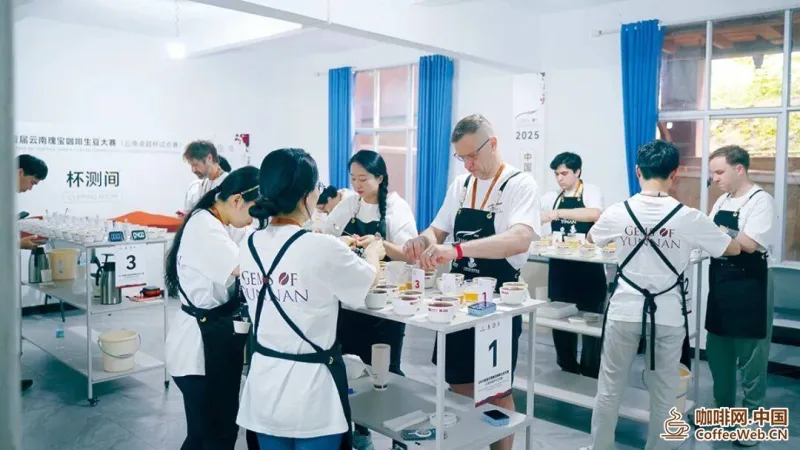
What surprised Su Chengcheng about this pilot was also the large number of estate and farmer names she had never heard of in the participant list. As a practitioner with over 10 years in the industry who has long been rooted in Yunnan’s producing regions and frequently visits farms, Su Chengcheng considered herself quite familiar with Yunnan’s local coffee industry. The concentrated appearance of these unfamiliar faces made her realize a positive trend: Yunnan’s premium-coffee cultivation is expanding at a flying pace. The influx of new entrants means more people are willing to invest time and resources to explore quality improvement.
In fact, one of CoE’s values is precisely to discover and promote previously unknown but highly potential regions and varieties. For example, Guatemala’s Huehuetenango and Honduras’ Santa Bárbara were almost unknown before, and only gradually emerged through CoE, becoming internationally renowned premium regions.
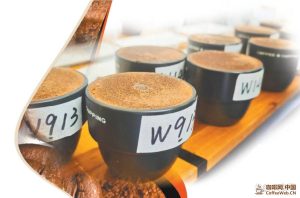
Blue Bottle’s attempt at Yunnan beans began in 2022. That year, its Shanghai roastery had just been built and urgently needed to find single origins that reflected locality yet met global quality standards. The team collected dozens of samples from partner suppliers, mainly Catimor, with a few Geisha and Bourbon. After cupping, a double-anaerobic Catimor from Menglian, Yunnan, won: clean, with tropical-fruit notes, bright acidity, composite score above 85. It thus became Blue Bottle’s first Yunnan single origin in China.
In the following three years, Blue Bottle launched a Yunnan bean almost every year. The second in 2024 was a fully red-cherry anaerobic fermentation; the 2025 was a natural bean blended with Wa ethnic-group brewing craft and fermented 21 days. Their pricing is on par with the brand’s other single-origin imported beans, 148 yuan for 200 grams, slightly higher than blends, with no discount for being “domestic.”
Blue Bottle’s launch of the “Yunnan Series” was somewhat serendipitous. “When we launched the first product, we didn’t expect the following few products,” Blue Bottle marketing staff Cheng Shangzhi told Yicai YiMagazine. Although the “Yunnan Series” is not a strictly defined long-term fixed single origin, it unexpectedly formed an annual-return concept—consumers began to expect a Yunnan product in the same period each year, and Blue Bottle would deliberately dig into Yunnan’s local elements, trying to present different flavors each year.
In 2026, Blue Bottle’s marketing department also made systematic adjustments to the style of its social-account content, beginning to provide consumers with high-information-density Yunnan-region narratives, focusing more on concrete dimensions such as “who grows it” and “how it’s processed.”
For chain brands, developing Yunnan producing regions is a more pragmatic supply-chain choice. Compared with importing green beans from the U.S. and then roasting, directly procuring Yunnan beans locally and roasting locally saves the costs of sea freight, customs clearance and inventory turnover. Although currently sold only in the Chinese market, response is faster and quality more controllable—once a batch fails cupping, taking it off the shelf and replacing it is far quicker than sourcing from overseas.
03 · Cold and Hot under the “Boutique” Label
In 2022, Li Peidong, founder of Yingli Coffee Trade who had been supplying coffee equipment and roasted beans in East China, suddenly received a large number of orders from Yunnan. Most clients were newly opened cafés in tourist places like Dali and Lijiang; they procured not only machines and grinders but also roasted beans, simply because the local supply chain couldn’t keep up with store expansion—stores opened but couldn’t find reliable equipment service or stable bean suppliers.
The surge in orders made Li Peidong aware of changes in the Yunnan market. That same year he set up an office in Kunming and began frequently visiting Yunnan’s producing regions, from Pu’er, Baoshan and Dehong to Nujiang. His basic judgment: Yunnan’s green-bean quality is indeed rising fast, but “good beans being wasted” remains common.
A senior roaster also told Yicai YiMagazine that a sample he got from a Yunnan estate with “decent hardware” had mediocre flavor and obvious roasting defects, with almost no highlights. But when he and an overseas roaster re-roasted the same green bean on the spot and adjusted the curve, cleanliness, sweetness and fruity-acidity layers immediately emerged. Even the estate owner was surprised: “Our beans can taste this good?”
In this roaster’s view, many Yunnan coffee estates actually already possess excellent specialty capability. Often it is not that Yunnan beans are no good, but that locally there is a lack of ability to “express” the beans. This technical and cognitive mismatch causes a large amount of potential beans to be lost at the last mile.
Chen Danqi, head of YSCC (Yunnan Specialty Coffee Community), pointed out in the 2025 “Coffee Yearbook” that the much-discussed great transformation of Yunnan coffee is actually limited to the top 5% of well-known estates, “the remaining 95% is no different from the past 10 or 20 years.” This means that although the top shines brightly, the base of the entire industry still faces the challenge of stagnation.
While the polishing of basic quality hits a bottleneck, the market once popularised a “shortcut”: using flavoring processing to make beans present peach, strawberry, lychee and other aromas, so the bag bursts with fragrance upon opening.
This approach did have buyers: for some consumers just touching specialty coffee, concrete fruit aroma is easier to perceive than abstract cleanliness or acidity balance. Some estates found that rather than spend time improving processing craft, they could directly add flavorings to cover the beans’ own defects—not only more catchy in flavor but doubling the price.
And when the market values aroma intensity more, over time, farmers who seriously do basic quality may lose to competitors relying on tech for attention.
In the view of practitioners, the real problem may not lie in the flavoring technology itself, but in whether it is transparent: do consumers have the right to know whether the “peach flavor” they drink comes from terroir or from technical processing? Is the labeling on the package clear? If the green-bean base is clean and solid, and flavor is strengthened in a controllable way on that basis, it can indeed make a more layered product. So for regional development, flavoring technology becomes a typical double-edged sword. Used well, it adds brilliance; used poorly, it may plunge the whole region into a bad-money-drives-out-good trap.
After a year or two of noise, the wind direction is quietly changing for the better. More and more competitions begin to separate “flavored” and “unflavored” groups; some brands also avoid vague terms like “special processing” and instead clearly label whether external additives are used. Although “tech flavoring” will not disappear in the short term, at least the market is demanding: flavor innovation is allowed, but you cannot pretend it is natural.
Besides distortion of flavor expression, another issue traders care about is flavor stability. Li Peidong mentioned that the international market buys coffee not for a stunning sample or micro-lot, but to know whether next year, the year after, even five years later, the same quality product can still be delivered. “But the reality is often that a very excellent batch can actually be grown in very few places and simply cannot deliver that much fresh fruit and green-bean bulk,” Li Peidong told Yicai YiMagazine. “Planting conditions are fairly limited, so we need to rectify from the most upstream part.”
Su Chengcheng also believes it is too early to talk about the substantive changes CoE has brought to Yunnan—after all, Yunnan has only held one pilot so far, and when the formal competition can be held is unknown. However, three judges from Japan and South Korea said on site last year that their previous impression of Yunnan coffee was stuck at “commercial beans” and “rough flavor,” and this cupping reversed their stereotype.
The same story happened at Blue Bottle. Last year, Yu Qing and Blue Bottle’s global coffee innovation director and a photographer went deep into Yunnan coffee estates, trying to bring Yunnan coffee’s story back to the U.S. through authentic imagery. In December, its China team held a Yunnan coffee special cupping session in Shanghai; the on-site flavor performance surprised colleagues and the coffee-product lead at U.S. headquarters. Currently they are sending this batch of Yunnan coffee to the U.S., preparing a tasting for baristas there.
Looking back at those producing regions that have participated in CoE for years, from unknown to chased by global buyers, it often also starts with a competition. If this “being seen” opportunity continues, it can not only bring reasonable premiums but also stimulate the whole region’s virtuous cycle of investment.
Yunnan may be standing at a similar starting point: it is still in a fragile stage full of temptations and forks. To truly enter the global specialty system, Yunnan must cross many checkpoints: for example, from a 30-kg sample to deliverable bulk of over 300 kg stably, from local auctions to global auction platforms, from one-off transactions to stable partnerships… none of these can be solved by one competition, but require long-term accumulation.
However, one thing is certain: the Yunnan CoE pilot will continue in 2026.
Reprint Notice & Disclaimer: This article is compiled and edited by China Coffee Network (coffeeyo.com) and reprinted from Yicai (First Financial). The copyright of the original article belongs to Yicai. This reprint is for the sharing of coffee industry information only. If there is any infringement, please contact us for removal.
Related Reading
 Three Decades of Shanghai-Yunnan Collaboration: A Coffee Bean ‘Ferments’ at the Import Expo
 Why Yongde’s Coffee Beans Won Gold in Shanghai – A Taste of ‘Life in Yunnan: 365 Days’
- Yunling Commentary: Yunnan Coffee Turnaround Hinges on Autonomous Pricing
 A ‘Travel Pack’ Reveals Another Possibility for Pu’er Baristas
- Bean in Short Supply: A Taiwan Youth on Yunnan Coffee as a Shared Cross-Strait Stage
- Five Years, Eight Championships: Lincang Coffee Joins the World Stage




 Liaoning ICP Security No. 21122402000217