
At a Glance (China Coffee Network): People often say Yantai’s liquor has no proof, only its wind does. In fact, Yantai’s wind has no real proof either, yet it carries a rich coffee aroma—this coastal city at 37°N is writing a new story of vitality, youth and opportunity, one cup at a time.

People often say Yantai’s liquor has no proof, only its wind does. In fact, Yantai’s wind has no real proof either, yet it carries a rich coffee aroma.
If you don’t believe it, take a walk down Chaoyang Street at dusk—Chandu’s pour-over, Starbucks Reserve; the scent of coffee will wind around your coat with the sea mist. Stroll on to the First Bathing Beach, where Island Diary’s coconut notes mingle with the foam and Ant Camera’s bitter tones ride the sunset; every sip feels like drinking with the tide. If that’s not enough, head to Fisherman’s Wharf—Bailang, Mofei, Tinghai… each sets its espresso machine atop the waves; coffee meets the sea, bitterness and saltiness reconcile on the tongue, brewing Yantai’s one-of-a-kind coastal special.
Where the wind passes, there is the scent of coffee. Yantai, this coastal city at 37°N, is using one cup of coffee to write a new story of vitality, youth and opportunity.
A Coffee Carnival Along the Coastline
On the afternoon of June 25, the third Phoenix City Coffee Season officially opened at Huanghai Pearl Square in Laishan District. With the blue sea behind and the sea breeze in hand, this uniquely Yantai romance was dialed up to the max.
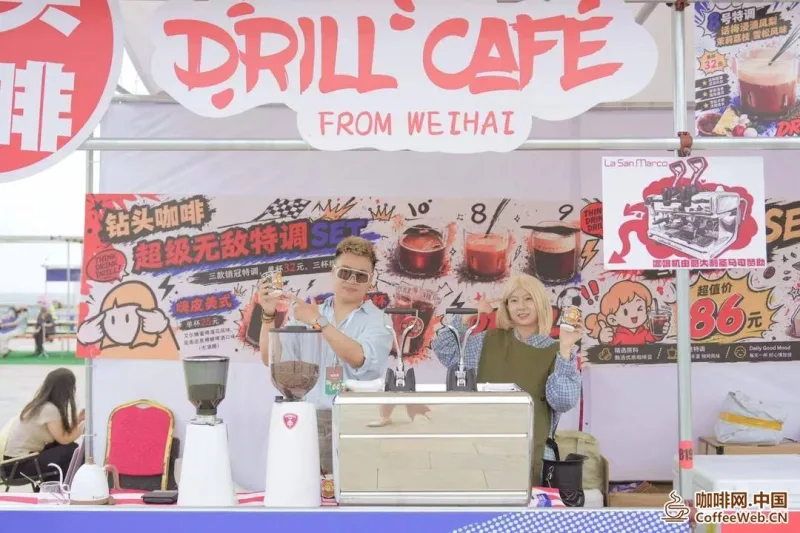
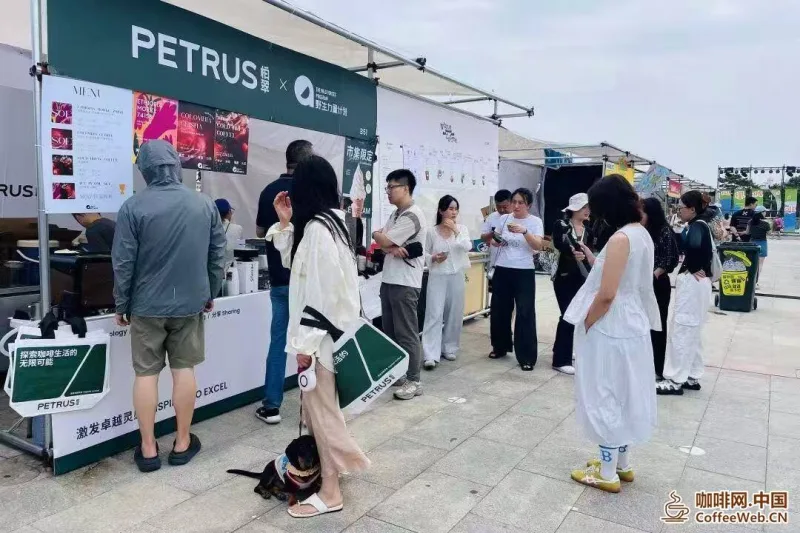
This edition was unprecedented in scale: more than 120 distinctive booths lined up along the coastline, and over 60 treasured coffee brands from home and abroad made a concentrated appearance. From Korea’s Rabbit Jump creative specials to Taiwan, China’s Homeka fine pour-over; from Henan’s Chinese-aesthetic-themed coffee to Suzhou’s gentle, healing specials; from Yunnan’s native-bean showcase to Yantai’s own powerhouse brands—a “clash of the coffee titans” played out here.
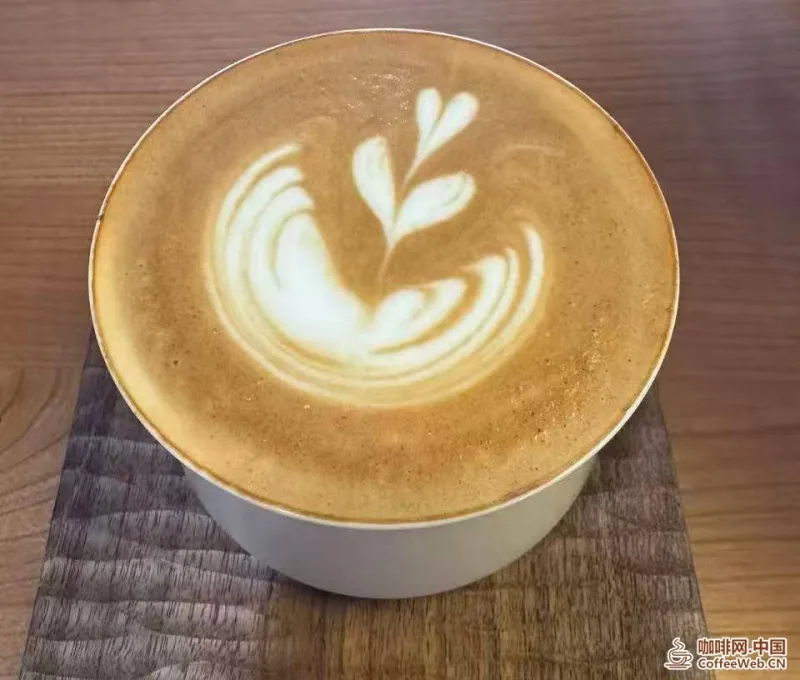
The “EBC Rookie King Latte Art City Contest” was undoubtedly the most eye-catching segment of this coffee season. Unlike professional latte-art events with their high barriers, this contest emphasized the “rookie king” positioning, creating a competitive, training opportunity for young baristas and coffee lovers who enjoy latte art.
“The contest set no threshold and was very friendly to newcomers, giving me the courage to show off the ‘little tricks’ I secretly practice at the bar. I never expected to chat and compete with so many peers, gaining a lot from latte-art technique to my understanding of coffee,” said Zhang Chen, a barista from Qingdao.
Beyond the latte-art contest, the venue also gathered fancy food, a creative-cultural market, hands-on coffee experiences and live performances. While extending coffee culture into a diversified lifestyle carnival, it turned this ten-mile golden coastline into a fragrant “coffee paradise.”
“This is the most comfortable coffee festival among the dozens I’ve attended this year,” said Zhao Yu, owner of Dayu Workshop from Shenyang, Liaoning, stretching his arms in the sea breeze. This unique experience of “facing the sea with coffee as company” is precisely the most irreplicable charm of the Phoenix City Coffee Season.
The aroma of coffee drifts year after year; the Phoenix City Coffee Season brings something new each year and boils over every session. Especially at last year’s second edition, over a hundred craft-beer masters gathered in Yantai, where coffee, automobiles, sea breeze and passion blended, attracting more than 100,000 citizens and tourists to check in, with over 3 million online exposures and direct operating revenue exceeding 1.1 million yuan.
For Yantai citizens, the annual Phoenix City Coffee Season is no longer just a feast for the taste buds, but a way of life woven into the city’s fabric. Amid the sea breeze and coffee aroma at Huanghai Pearl Square, citizens and tourists enjoy the unique experience of “checking in at top global coffee shops in one stop”; coffee consumption has expanded from the exclusive domain of the young to a broader population. Some café owners have even observed that middle-aged and elderly customers now make up nearly half of daily visitors.
“It gets bigger every year. Look over there—dozens of coffee brands from across the country are here; you can taste flavors from all over right at your doorstep, something unthinkable before,” said Song Ting, a Yantai citizen, pointing to a “3Q Sangji Highway Coffee” cart in the distance, saying it had traveled all the way from Lanzhou, carrying a free-and-easy northwest flavor.
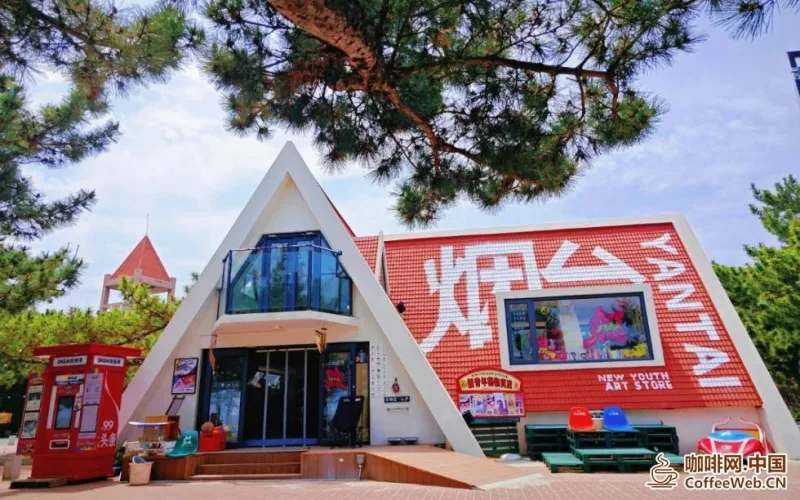
Not far away, a young woman on a business trip from out of town held a cup of “Ka Shi Tang’s” Chinese-style lion-dance special, reluctant to drink it, snapping photos the whole time. Turning to her companion, she said, “This trip was worth it; I never expected Yantai to make its coffee festival so trendy—more relaxing than any I’ve visited in other cities.”
A “Borrowed Aroma” Driving 300,000 Jobs
In Yantai today, the aroma of coffee is everywhere—it is a pour-over in a century-old villa on Chaoyang Street, the ease of drinking with the waves before the floor-to-ceiling windows of a seaside café, even the lazy, sun-soaked slow time in a rural old courtyard. Yet while people revel in the diverse experiences brought by “coffee plus,” some ask: when did this “imported” aroma take root in this seaside city?
Yantai’s coffee story begins with the city’s opening as a port in 1861. As Shandong’s earliest treaty port, the Yantai Hill and Chaoyang Street area successively hosted consulates of 17 countries including Britain, the U.S., France and Germany, and Western firms, post offices and Western-style building clusters rose up.
Historical records show that with the deep blend of Chinese and Western cultures after the port opened, modern Yantai streets saw not only traditional teahouses but also Western bars and coffee houses, where diverse cultures collided and coexisted. Although coffee may then have been a niche drink for foreign residents and the elite, these old buildings laid the most crucial “hardware” foreshadowing for coffee culture’s landing—space and scene. Today, the more than 30 well-preserved European-style buildings on Yantai Hill are the most silent yet powerful witnesses of that history.
Now, over 160 years later, Yantai’s coffee has found its own climate. The city has over 80,000 coffee-related business entities, driving nearly 300,000 jobs; “facing the sea with coffee as company” is turning from a livable, artistic slogan into a real portrait of Yantai’s streets and alleys.
Among them, Laishan District’s coffee industry has grown especially strongly in recent years. According to the district market regulator, market entities with “coffee” in their registered name grew from 33 at the end of 2021 to 143 today—a 4.3-fold expansion in five years. Along just the 10-kilometer golden coastline in Laishan, there is on average one café every 200 meters, attracting about 3,000 check-ins a day; the café density per square kilometer in the core business district even exceeds that of popular areas in some first-tier cities.
The radiating power of the coffee economy goes far beyond the shops themselves. Local brand Huli Coffee is both a beneficiary and a driver of this wave. Its single seaside store at Yantai’s Yumeiren Square sold over 3,000 cups of apple coffee and pear coffee in May alone—these creative drinks, deeply tied to Yantai’s local farm products, drove over 30% sales growth for upstream industries such as local pear orchards. With its composite model of “borderless sea view plus art exhibitions plus intangible-heritage booths,” Huli Coffee sees 300 to 400 daily visitors in peak season, with a single-day maximum approaching 1,000.
In Laishan Street’s Laishan subdistrict, Sekou Jungle Coffee, featuring “mountain scenery at the table,” builds a natural leisure space and drives a second-phase “coffee plus homestay plus camping” project nearby; once built it will add 30 jobs, with annual visitor capacity expected to exceed 100,000. More notably, leveraging the jungle-coffee project, the locality also used surrounding idle land to build the “Deer Shed Homestay,” upgrading a single coffee-consumption experience into a “eat, stay, tour” integrated suburban getaway hotspot, expected to create over 40 jobs and raise per-capita wage income by about 30,000 yuan.
Brewing “Youthful State” in the Aroma of Coffee
Strolling down Xinlong Street in Zhifu District, beneath the eaves of a century-old opera stage floats the aroma of fresh-ground coffee. Post-95 entrepreneur Xiaoguang turned a nondescript old room beside the stage into a café; a few bar stools and potted plants gave this old street—full of fruit shops and barbers—an extra touch of fashionable literary color.
“Opening on an old street, what I valued was its historical depth, which gives the little shop more identity,” Xiaoguang said. Many customers come via social platforms, experience it, then share again—a cycle that keeps the foot traffic flowing.
This is no isolated case. In Yantai, a narrative about “youth” is being rewritten cup by cup. From the “reverse growth” of old neighborhoods to the “poetic dwelling” of the countryside, from the “trendy formats” of cultural-tourism fusion to the “black tech” empowered by AI, coffee is reshaping this coastal city’s texture and temperament with a soft yet firm force.
“Yantai is a coastal city rich in cultural heritage, where many excellent independent coffee brands are born. Here, coffee can blend with liquor, and there are cross-border unions of kayaking, coffee and camping, as well as fusions of coffee, apparel and trendy toys,” said a responsible official of the Yantai Culture and Tourism Bureau. “Coffee plus” enriches tourism formats, enhances consumption experience, and makes more visitors willing to stay longer, deepen exchanges and enjoy the time.
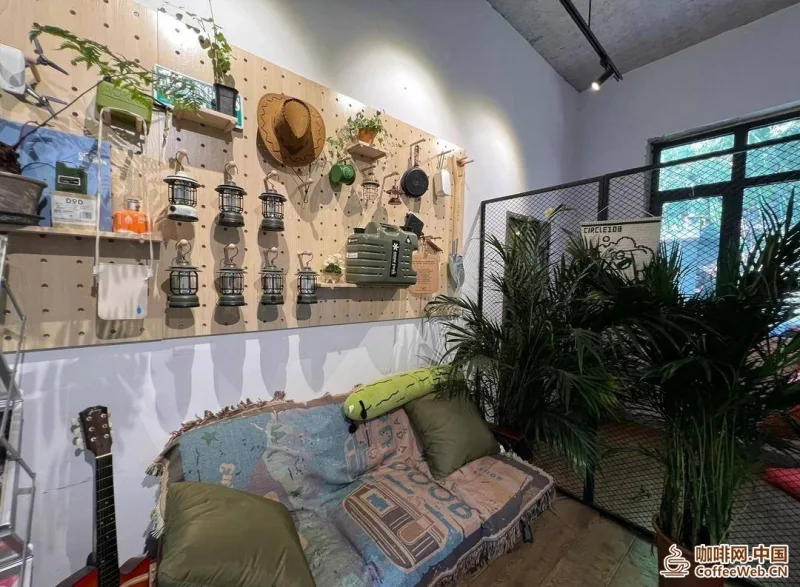
Nowadays, going to the village for coffee has become a special life experience in Yantai. In Yaqian Village, Yuangezhuang Street, Laishan District, a small courtyard surrounded by flowers and greenery stands out. Stepping inside, one sees buildings converted from villagers’ houses and disused warehouses, full of charm—this is where the internet-famous Huli Coffee is located.
Inside the café, young men and women sit around coffee tables in twos and threes, whispering or laughing openly. “Unlike traditional rural tourism, we focus on the fusion of city and countryside,” Huli Coffee co-founder Zhang Houbin told the reporter, adding that Huli advocates simplicity, rejecting flashiness from site selection to product development to decorative details, giving customers a sense of nature and poetry.
Zhang Houbin said that although he rarely promotes on social platforms, as people who come to “check in” spread the word and post photos, the café now receives over a hundred visitors a day, becoming another leisure resort for urbanites.
“Can you imagine that 50% of the people who check in at our shop every morning are middle-aged or elderly?” said Huahua, a well-known Yantai café owner. From not telling Americano from latte, to being able to brief the barista on bean flavor preferences using industry terms, Yantai consumers’ pace of evolution is astonishing.
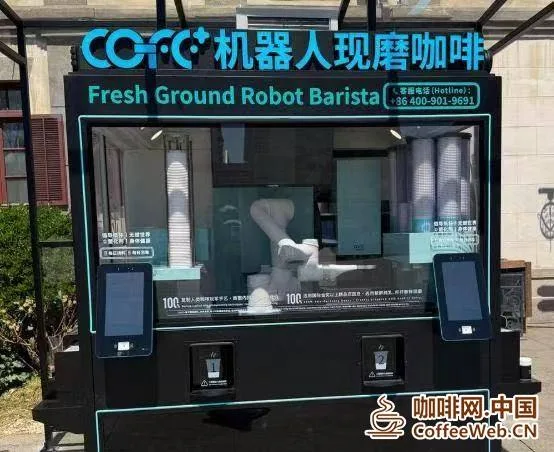
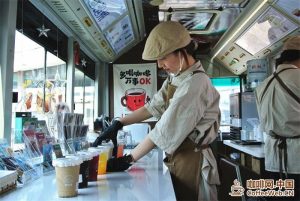
Yantai’s youthful state is also reflected in its embrace of “black tech.” Not long ago, a COFE+ fully smart robot café occupying just 2.35 square meters landed on Yantai’s Chaoyang Street. From grinding to latte art, the robotic arm finishes in 50 seconds, with prices starting at just 9.9 yuan. This 24-hour unattended new format not only refreshes the consumption experience, but also showcases Yantai’s open stance as a coastal vibrant city toward new things.
From the “reverse growth” of old streets, to the “new poetry” of the countryside, to the “cool applications” of technology, coffee is refreshing Yantai’s urban quality with its unique penetrative power. It is no longer just a drink, but a carrier of a lifestyle, a soft force of urban renewal, and an aromatic invitation Yantai extends to the young. In the fabric of this trillion-yuan-level city, the aroma of coffee is brewing a younger, more open and more vibrant future.
Reporters: Dong Qing, Yang Xiuping, Dazhong News.
Reprint Notice & Disclaimer: This article is compiled and edited by China Coffee Network (coffeeyo.com) and reprinted from Dazhong News. The copyright of the original article belongs to the original authors. This reprint is for the sharing of coffee industry information only. If there is any infringement, please contact us for removal.
Related Reading
 How ‘Sea-Flavored’ Coffee Blooms Across Dongtou
- Health Guide: How to Enjoy Your Coffee the Healthy Way
 Study: Regular Coffee and Tea May Lower Dementia Risk, but More Is Not Better
 Frontline Story: A ‘Mobile City Coffee Bar’ Arrives by the Grand Canal
 In Zhenyuan, a Cup of Coffee and a Waiting Train
 Stagger Your Coffee Intake from These Six Types of Medication





 Liaoning ICP Security No. 21122402000217