
At a Glance (China Coffee Network): On April 29, Luckin Coffee officially released its unaudited financial results for the first quarter of 2026. A report card of “surging scale, squeezed profits” has laid bare the deep tension between rapid expansion and profit efficiency facing China’s leading coffee brands.
On April 29, Luckin Coffee officially released its unaudited financial results for the first quarter of 2026. A report card of “surging scale, squeezed profits” has laid bare the deep tension between rapid expansion and profit efficiency facing China’s leading coffee brands.
Revenue increased by 35%, with stores approaching 34,000
Luckin Coffee delivered a “textbook in scaling” in the first quarter: total net revenue reached 11.995 billion yuan, up 35.3% year on year, or roughly US$1.735 billion; net new stores for the quarter numbered 2,548, of which 2,531 were in the Chinese market (including Hong Kong) and 17 overseas (1 in Singapore, 13 in Malaysia, and 3 in the United States). As of March 31, its total store count in China reached 33,419, comprising 21,713 company-operated and 11,706 partnership stores across cities of every tier; overseas stores totaled 177, including 82 company-operated in Singapore, 12 company-operated in the United States, and 83 franchised in Malaysia.
It added more than 21 million transacting customers in the quarter, bringing cumulative transacting customers to 473 million. At the same time, Luckin Coffee announced the launch of its first share-buyback program since going public, with a total of no more than US$300 million over a one-year period, funded from existing cash.
Profits under pressure: delivery fees surge nearly 90% and same-store sales turn negative
Behind the surging scale lies a clear contraction on the profit side.
Net profit fell and margins declined. GAAP (generally accepted accounting principles) net profit was 506 million yuan, down 3.3% year on year, with the net margin slipping from 5.9% to 4.2%. Adjusted net profit was 687 million yuan, up 6% year on year, but the adjusted net margin of 5.7% was still below the 7.3% of the same period last year.
Delivery costs became the biggest “bleeding point.” In the quarter, the company’s delivery expenses reached 1.308 billion yuan, surging 89.8% year on year and rising from about 8% to about 11% of revenue. Management admitted on the earnings call: “Delivery fulfillment costs take too large a share, are highly sensitive to per-cup pricing, and deliver poor unit economics.”
Same-store sales growth at company-operated stores turned from positive to negative. The same-store sales growth rate for its company-operated stores was -0.1%, versus +9.2% in the same period of 2025. This means the growth dividend from simply densifying the store network is fading, and new supply has begun to divert traffic from existing stores.
Luckin’s response: from “reliance on hit products” to a “combination punch”
Faced with declining growth quality, Luckin Coffee is adjusting its playbook on multiple fronts.
On broadening the product matrix, it launched 26 new beverages and more than ten light-food items in the quarter, introduced professional lines such as light-roast Americano and Ethiopian golden-roast latte, and at the same time expanded into non-coffee categories such as snow-cheese drinks and matcha.
On raising average order value, it introduced size-upgrade options for hot and cold drinks; the early uptake rate for upgrading to the extra-large cup was impressive, effectively supporting average ticket size.
On strengthening the supply chain, its third roasting base—the Qingdao Innovation Production Center—officially went into operation, with coordinated capacity across four sites expected to exceed 155,000 tonnes; during the quarter it procured more than 30,000 tonnes of Yunnan coffee beans.
On accelerating partnership stores’ push into lower-tier markets, revenue from partnership stores reached 3.015 billion yuan, up 44.9% year on year, with its share rising to 25.1%; franchised stores in lower-tier cities performed notably well during this year’s Spring Festival.
On driving offline traffic, in May it launched dine-in-exclusive alcoholic specialty drinks, in an attempt to pull customer traffic back from delivery to offline pickup.
Management’s verdict: the scale dividend has peaked, and the efficiency competition begins
Guo Jinyi, co-founder and CEO of Luckin Coffee, said on the earnings call: “In an increasingly diversified competitive landscape, we are using our end-to-end digital operating capabilities to steadily advance the coordinated growth of store scale, customer scale, consumption scale, and supply-chain scale. We believe our systemic competitive advantages will carry the company through short-term fluctuations and gradually unlock long-term sustainable growth and profit potential.”
At the same time, he also acknowledged the temporary price of the delivery model: “Longer delivery times may compromise the immediacy consumers expect and the taste experience of the coffee, so this is not an ideal consumption model. The coffee business will naturally return to a pickup-oriented model, although this transition may take a relatively long time.”
China’s coffee market has now entered a stage of full-chain capability competition. With 33,596 stores, 93.09 million average monthly transacting customers, and GMV (gross merchandise value) of 14 billion yuan, Luckin Coffee remains the undisputed industry leader. Yet delivery costs eating into profits, same-store sales turning negative, and the net margin falling to -4.2% all point to one thing: the first half, trading scale for growth, is over; the second half, trading efficiency for profit, has only just begun.
The launch of Luckin’s US$300 million buyback program also marks the company’s formal shift from “frenetic expansion” into a new stage of “intensive cultivation.” Whether it can make the single-store profit model work on top of a base of 34,000 stores will determine whether it can weather this round of industry efficiency competition.
Text | Li Lian
Reprint Notice & Disclaimer: This article is reprinted from public industry sources. All rights belong to the original publisher.
Related Reading
- Bean in Short Supply: A Taiwan Youth on Yunnan Coffee as a Shared Cross-Strait Stage
- Five Years, Eight Championships: Lincang Coffee Joins the World Stage
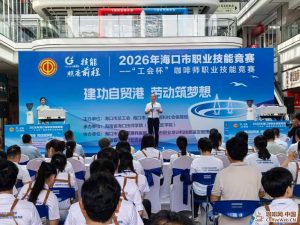
 Haikou ‘Union Cup’ Barista Skills Competition Kicks Off to Empower the Service Sector
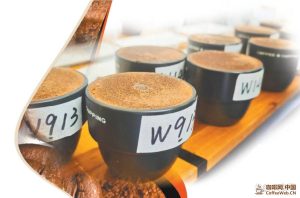
 Yunnan Specialty Coffee Beans Deliver an ‘Excellent’ Report: Path to Value Leap
- Cross-Strait Tides Rise: A Taiwan Youth Farms Coffee in Yunnan, a Cup Bridging Both Sides
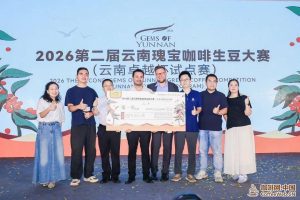
 2026 2nd Yunnan Treasure Coffee Green Bean Competition (Cup of Excellence Pilot) Concludes


 Liaoning ICP Security No. 21122402000217