

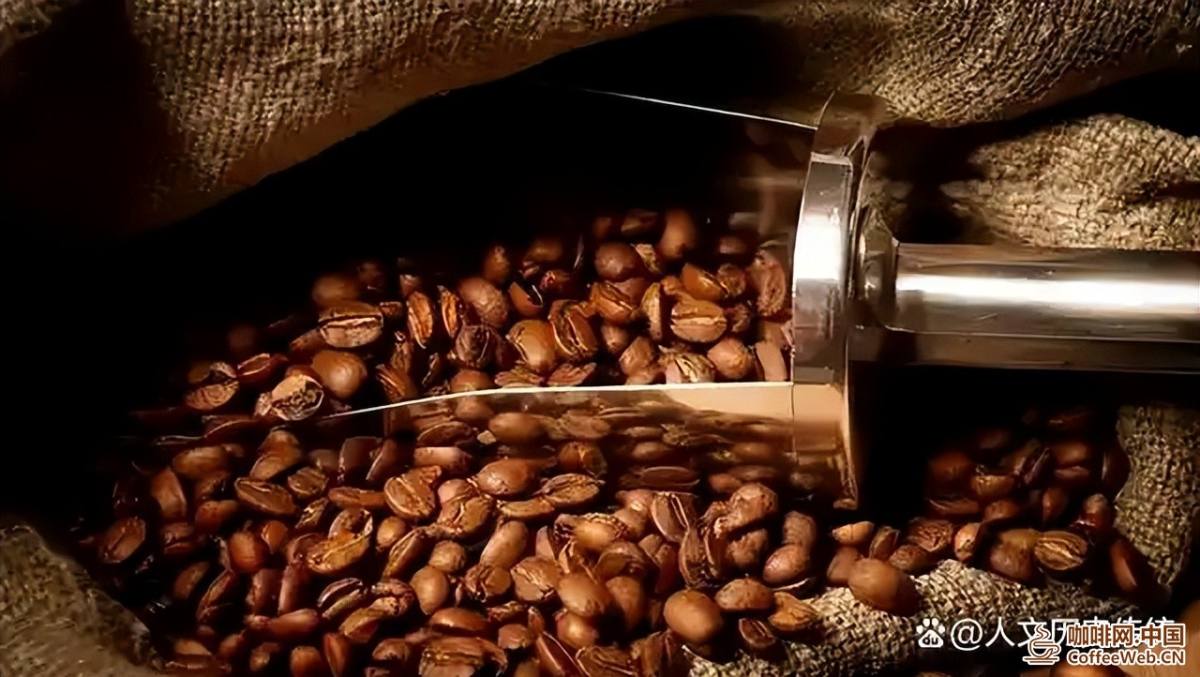


1. Coffee beans are not beans at all, they are the seeds of coffee trees
Many people assume that coffee beans are "legumes", but from a botanical perspective, they are actually the seeds of coffee cherries, the fruit of the coffee tree. The coffee tree belongs to the Rubiaceae family and is related to the familiar gardenia plant in the same family, not a legume plant, which is also the core reason why it does not belong to legumes.
After ripening, coffee cherries are bright red in color, with sweet and juicy flesh wrapped in a layer of pectin and shell. The coffee beans we see are the dark brown particles left behind after removing the flesh, pectin, and silver skin. The reason why it is called "bean" is only because of its round and plump appearance, which is very similar to beans. Over time, this name has become a convention and is essentially unrelated to beans such as soybeans and mung beans.
2. The aroma substances in coffee beans are 7 times more abundant than those in wine
The complexity of coffee's flavor far exceeds many people's imagination. Currently, there are about 1500 identified aroma compounds, while wine has only about 200. The richness of coffee's aroma is seven times that of wine. These aroma substances come from the components of coffee beans themselves, as well as chemical reactions during the roasting process.
Light roasted coffee beans can retain more of the floral, fruity, and citrus aromas of the beans themselves; Medium to deep baking will produce chocolate, caramel, and nutty aromas; Deep baking may result in smoky and woody aromas. Professional coffee tasters can distinguish the origin, variety, and roasting degree of coffee beans through aroma and taste, and even refine specific flavors such as "eucalyptus flavor" and "wild strawberry flavor".
3. Coffee beans lose 70% of their flavor within 2 minutes after grinding
The flavor preservation of coffee beans is very fragile, especially after being ground into powder, the oxidation rate will accelerate sharply. Research has shown that coffee beans lose 70% of their flavor compounds within just 2 minutes after grinding, and after 15 minutes, the flavor is almost completely lost, leaving only bitterness. This is also the core reason why many coffee shops insist on "freshly ground and freshly brewed".
This is because the ground coffee powder has a significantly increased surface area. When it comes into contact with air, the aroma substances will quickly evaporate and undergo oxidation reactions, disrupting the flavor structure. Therefore, when brewing coffee at home, it is recommended to grind the coffee beans before brewing and immediately brew them after grinding to avoid prolonged storage; The coffee shop will strictly control the serving time to ensure that customers can enjoy the best flavor.
4. The most expensive coffee beans are not cat poop coffee, but elephant poop coffee
When it comes to expensive coffee beans, many people think of cat poop coffee (musk cat coffee), but in fact, the world's most expensive coffee beans are Black Ivory Coffee, which is much more expensive than cat poop coffee. The origin of Elephant Shit Coffee is mainly in Thailand, but due to extremely scarce production, only 1 kilogram of coffee beans can be produced for every 33 kilograms of coffee fruit, with a selling price of over 1100 US dollars per kilogram.
The production principle of elephant poop coffee is similar to that of cat poop coffee: after elephants consume coffee cherries, stomach acid and digestive enzymes will decompose the flesh, soften the outer shell of the coffee beans, and change the flavor of the coffee beans. Then people select coffee beans from elephant feces, wash and roast them, and make them. This type of coffee bean has a rich and mellow flavor, with a unique fruity and woody aroma, making it the most expensive coffee category in the world due to its scarcity.
5. Producing 1 pound of coffee beans requires nearly 10000 liters of water consumption
The cultivation and processing of coffee beans is an extremely water intensive project, consuming far more water than many people imagine. According to industry data, producing 1 pound (approximately 0.45 kilograms) of coffee beans requires approximately 9464 liters of water, which even exceeds the water consumption of beef production (approximately 6814 liters). Water management has become a core challenge for sustainable coffee cultivation.
This water consumption is mainly used for irrigation of coffee trees, cleaning of fruits, and processing. Especially with the water washing method, a large amount of water is required to remove the flesh and pectin of coffee cherries. For every kilogram of coffee cherries processed, approximately 10-20 liters of water are needed. Therefore, many production areas are now promoting water-saving processes such as honey treatment and sun drying treatment to reduce water resource consumption.
6. Coffee grounds are a "universal resource" that can repel insects and refine diesel
Many people discard coffee grounds directly after making coffee, but in reality, coffee grounds are a versatile resource with multiple uses. They can turn waste into treasure while also being environmentally friendly and energy-saving. Coffee grounds contain a large amount of caffeine and oil, which have repellent effects on pests such as snails and ants. Sprinkle them in flower pots to effectively prevent pest infestation.
In addition, coffee grounds can also be used as compost to improve soil fertility; Can produce recycled packaging materials to reduce plastic pollution; It can even extract biodiesel for driving cars. The UK has conducted experiments where biodiesel extracted from coffee grounds can drive cars for 300 kilometers, which is both environmentally friendly and achieves resource recycling. Nowadays, many coffee shops have also started to recycle coffee grounds for various environmental projects.
7. Coffee was once seen as a 'prohibition alternative', and coffee shops are 'smart schools'
In history, coffee has played an important role as a substitute for prohibition. In the Middle East during the Middle Ages, Islam prohibited the consumption of alcohol, and the refreshing effect of coffee could keep people awake without violating the doctrine, so it quickly became popular among Muslims and became the social core drink at that time.
In the 15th century, coffee shops appeared in Mecca and later spread to Constantinople, becoming places for people to gather and communicate. Not only can you drink coffee here, but you can also discuss politics, news, play chess, listen to music, attracting many scholars and intellectuals, hence it is called the "Smart School". Although religious and political leaders were concerned about the freedom of discussion here and repeatedly banned coffee shops, they were unable to stop the spread of coffee culture.
8. Arabica contains an "anti sugar code" and six new active ingredients have been discovered
Coffee not only refreshes the mind, but also hides potential health benefits. The research team of the Kunming Institute of Botany, Chinese Academy of Sciences, once published research in the journal Beverage Plant Research, and discovered six new diterpenoids with potential anti diabetes activity from Arabica coffee beans through innovative technology, adding new scientific basis for the health value of coffee.
These novel diterpenoid compounds can help regulate postprandial blood glucose by inhibiting alpha glucosidase (related to carbohydrate digestion), and their activity is even better than the commonly used anti diabetic drug acarbose. One of the compounds, Caffaldehyde C, has the strongest activity, with a half maximal inhibitory concentration much lower than the positive control drug. These ingredients are hidden in the oil of coffee beans, and after proper roasting, they can be better absorbed by the human body.
9. American coffee is not "American coffee", it is Italian espresso diluted with water
The name of American coffee can easily lead people to mistakenly believe that it was invented in the United States, but in fact, it originated in Europe and was modified to cater to the tastes of Americans. The production of American coffee is very simple, which is 1 part Italian espresso diluted with 2-3 parts hot water. It has a light taste and high caffeine content, suitable for people who like pure coffee flavor and pursue refreshing effects.
It is worth noting that Americano and black coffee are not completely equivalent – black coffee is a general term for all coffee without milk or sugar, while Americano specifically refers to the category of "concentrated water". In addition, the taste of American coffee may vary depending on the order of adding water: adding concentrated water first and then heating water results in a richer taste; Add water first and then concentrate, for a fresher taste.
10. The core of latte coffee is "milk", and coffee is only an auxiliary
Many people mistakenly believe that latte is "strong coffee with a small amount of milk", but in fact, the core of latte is milk, and coffee is only used as an auxiliary. The English word for latte comes from the Italian word "Caff è Latte", which literally means "milk coffee". Its ratio is usually 1 part espresso+3-4 parts hot milk, with a thin layer of milk foam on the surface. The taste is smooth and mellow, with almost no bitterness.
The key to latte lies in the frothing of milk. The milk foam of high-quality latte is as delicate as silk, which can perfectly blend with coffee and has a silky smooth taste without any throat problems. Many people like to add flavor syrup (such as vanilla, caramel) to latte, but authentic Italian latte does not add syrup and relies solely on the flavor of milk and coffee to win, suitable for people who do not like strong bitter coffee.
11. The thickness of the milk foam in cappuccino determines its taste hierarchy
Cappuccino is a classic representative of Italian fancy coffee, with a ratio strictly following 1:1:1, which is 1 part espresso+1 part hot milk+1 part froth. The three layers are clear, and the surface is usually decorated with floral patterns. The soul of a cappuccino is its milk foam. High quality milk foam should have a thickness of 1-2 centimeters, be delicate and dense, have a fluffy texture on the palate, and avoid clumping or defoaming.
Compared to latte, cappuccino has thicker milk foam and less milk, so the bitterness of coffee is more pronounced and the taste is more layered – first the milk foam is dense, then the milk is smooth, and finally the rich aroma of espresso. Traditional cappuccino does not add any syrup and has a rich and mellow taste, suitable for people who like the original flavor of coffee and can tolerate slight bitterness.
12. The soul of Mocha coffee is chocolate, not coffee
Mocha coffee is not named after the coffee producing area, but after the port of Mocha in Yemen. Its core flavor is chocolate, not the coffee itself. The traditional recipe for Mocha coffee is: 1 part espresso, 1 part hot milk, and 1 part chocolate sauce (or cocoa powder). The surface can be topped with cream and sprinkled with cocoa powder, resulting in a sweet and rich taste that combines the richness of coffee with the smoothness of chocolate.
Many people confuse "mocha coffee" with mocha coffee beans, which are completely unrelated: mocha coffee beans are a type of coffee bean from Yemen, with a fruity and floral flavor; Mocha coffee is a fancy coffee that combines chocolate and coffee at its core. Mocha coffee has a high sweetness and is suitable for people who enjoy sweets but are not good at accepting bitterness.
13. Furui Bai is richer than latte, with milk bubbles so thin that they are almost invisible
Flat White originated in Australia and is a very popular fancy coffee in recent years. Many people confuse it with latte, but the difference between the two is significant. The ratio of Furui White is 1 part concentrated coffee+2 parts hot milk. The milk foam is extremely thin (thickness not exceeding 0.5 centimeters), almost blending with the milk, and only a faint layer of milk foam can be seen on the surface without obvious layering.
The espresso used by Fu Rui Bai is usually double espresso, so the coffee flavor is richer and the taste is richer than latte. You can taste the smoothness of milk and feel the burnt aroma of coffee, without the thick milk foam of cappuccino or the lightness of latte. It is suitable for people who like rich flavors and pursue the perfect fusion of coffee and milk.
14. The dirtiness of Dirty coffee originates from the layering of coffee and milk
Dirty coffee is a minimalist fancy coffee, and the word "dirty" in its name does not refer to hygiene issues, but originates from the natural layering of espresso and iced milk – dark espresso floats on the surface of light iced milk, creating a "dirty" visual effect, hence the name. Its production does not require complex steps, just pour concentrated coffee directly into ice milk without stirring or adding any ingredients.
Dirty coffee has a distinct taste hierarchy, starting with the burnt and slightly bitter aroma of espresso, followed by the smooth and sweet taste of iced milk, with a unique blend of hot and cold flavors. Its coffee concentration is higher than latte and lower than American style, with a soft and non aggressive milk flavor, suitable for people who like rich taste and pursue convenient drinking. It is also one of the popular items in coffee shops in recent years.
15. Cold brewed coffee is not "iced coffee", low-temperature slow brewing is the key
Many people equate cold brew coffee with iced coffee, but in fact, the production process and taste of the two are greatly different. Cold brewed coffee is made by soaking coffee beans in cold or lukewarm water for 12-24 hours, extracting flavor through low-temperature slow soaking, without heating throughout the process; Ice coffee, on the other hand, is made by cooling hot coffee and adding ice, or by boiling it with hot water and adding ice. Essentially, it is still hot extraction.
The advantage of cold brewed coffee is that low temperature can reduce the extraction of bitter substances in coffee, resulting in a fresher and softer taste with obvious fruit and floral aromas. Although the caffeine content is high, it does not stimulate the stomach and is suitable for summer consumption. It is also suitable for people with sensitive stomachs who do not like bitter coffee. In addition, the shelf life of cold brewed coffee is longer than that of iced coffee, and it can be stored for 3-5 days when refrigerated.
16. 6 core differences of popular coffee, one article to distinguish and avoid pitfalls
The core differences between latte, American style, mocha and other coffee consumed in daily life are concentrated in the ratio and production process of coffee, milk, and milk foam. Many people are easily confused, but mastering the key differences can quickly distinguish and adapt to their own taste preferences. Their core positioning is different: American style leans towards purity, latte leans towards smoothness, mocha leans towards sweetness, cappuccino leans towards richness, creamy white leans towards richness, and Dirty leans towards layering.
The specific difference is very clear: the American style is "concentrated+hot water", without milk or milk foam, with a light taste and high caffeine content; Latte is "1 part concentrated+3-4 parts milk+thin milk froth", with a predominantly milky taste and almost no bitterness; Mocha is "1 part concentrated+1 part milk+1 part chocolate", sweet and rich, suitable for sweet people; Cappuccino is "1:1:1 concentrated+milk+milk froth", with thick milk froth and prominent coffee flavor; Furui White is "double concentrated+2 portions of milk+thin milk froth", with rich coffee and no obvious layering; Dirty is a combination of concentrated and chilled milk, naturally layered with a unique blend of hot and cold flavors.
This article is sourced from the internet and the copyright belongs to the original author. Contact for infringement is deleted
 Liaoning ICP Security No. 21122402000217