
At a Glance (China Coffee Network): At ¥3.9, freshly brewed coffee is becoming a national-level “water substitute.” NOWWA uses a store-in-store model to reuse existing space and foot traffic, keeping the price at the beverage level so commuters can grab a cup on the way—boosting purchase frequency. It is not just a price change but a full channel and brand reinvention.
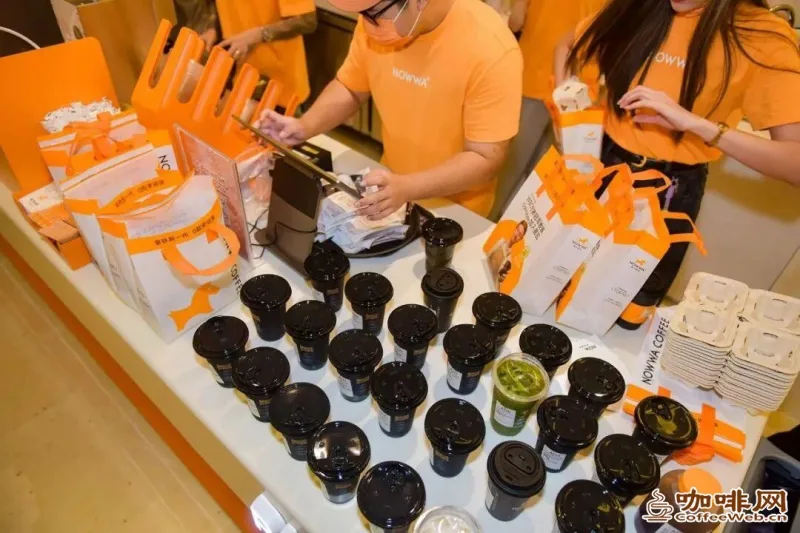
When freshly brewed coffee is sold at ¥3.9 for the long term, it begins to become a national-level water substitute. In the subway passage connecting Zhenbei Road in Shanghai, every morning there is a familiar scene: office workers rushing to clock in, many having placed a coffee order on their phones in advance, grabbing it on the way without stopping to study a coffee shop’s philosophy. Whether a cup sells often depends on whether it is on the way, familiar, and how much it costs to drink daily.
NOWWA, which opened a store here, recently wrote the answer on its new menu. The ¥3.9 dark-roast americano and freshly made lemon iced black tea, and the ¥5.9 coconut latte and orange-C americano, have gone live across its national stores. Multiple stores confirmed this is a permanent menu price, not a short-term promotion.
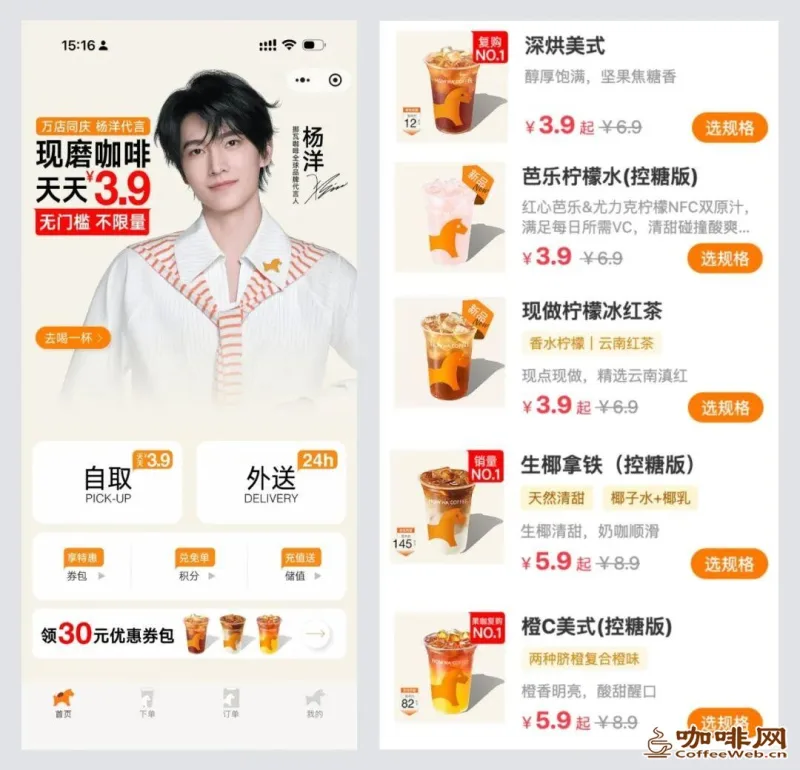
Grabbing a freshly brewed coffee in the morning is now little different in price from taking a bottled drink from a convenience store; when busy, buying another cup needs no coupon hunt. This ease may change habits more than a one-off big promotion.
In recent years, ¥9.9 lowered the coffee consumption threshold considerably, and NOWWA’s ¥3.9 pushes it one more step toward “everyday.” NOWWA founder Guo Xingjun hopes coffee can become a drink bought casually, anywhere, and repurchased after drinking. Becoming a “freshly made version of Coca-Cola” is also the destination NOWWA has been striving toward. This metaphor points to price, channel and brand together changing coffee’s purchase frequency.
Below ¥5, freshly brewed coffee enters the beverage market
In first-tier cities’ dense coffee belts, consumers have no shortage of choice. At the store below NOWWA’s Shanghai office, Luckin sits across the street, Manner is in the same building, and more brands are a few steps away. Since 2024 NOWWA has advocated a “healthier” brand philosophy, adjusted products around fruit coffee, and run quality brand moves—endorsers like Song Jia, Yang Yang and Peng Yuchang, brand ambassadors like Li Landi and Cao Jun, and IP collaborations with Tomb of Fallen Gods, Cut to the Core, Grandmaster of Demonic Cultivation, Gintama, Zhuyu, Mati Feiyan and Miracle Nikki. But beyond every careful step, NOWWA still seemed to lack a reason for passersby to instantly change habits—something Guo kept turning over.
After the new menu launched, the store’s operating data rose sharply: daily sales climbed from 100+ cups to 300+ cups, and weekly repurchase rate doubled. The data directly shows that after the price change, consumption activity in Shanghai’s core office district rose markedly—further evidence that for already high-frequency coffee, a clear price change is noticed faster than many brand slogans.
The beverage industry has offered many “low-price makes giants” samples: ¥2 bottled water, ¥3.5 soda, ¥4 freshly made lemon water, and ¥5-ish energy drinks respectively underpinned the high-frequency businesses of Nongfu Spring, Coca-Cola, Mixue and Dongpeng. Their specs, channels and margins differ, but all used an easy impulse price to capture more purchase moments and denser terminals. Coca-Cola sold 5-cent Coke for decades; when it later raised the price, even a tiny tweak was widely reported as “a big deal.”
These brands together shaped a “¥5 law”: the more a price resembles an ordinary small expense, the more likely it enters once-a-day or several-times-a-week buying. Frequency builds scale, and scale can spread production, logistics and channel costs, sustaining the low price.
A retail veteran said, “Above ¥5 and below ¥5 are two different worlds.” The reason is the shift in reference point: a ¥3.9 freshly brewed coffee is compared with convenience-store drinks and Mixue lemon water; just over five yuan may still be cheap, but it has slightly left this grab-a-bottle price band. High-frequency coffee buyers draw a “38th parallel” in their minds over this tiny difference. ¥5 is not a precise psychological mark, but it may be the threshold where coffee turns from “want to drink?” to “buy on the way.”
However, low price does not automatically create a “water substitute.” If a cup requires a special detour, even cheap it is hard to become a grab-and-go drink. Guo remembers that around 2019, consumers might bike to find a cost-effective cup; today, with supply densified, time cost stands out more. On the commute, in hotel lobbies, convenience stores, internet cafes or gas stations—coffee is best where people already pass through.
“Water substitute” does not mean coffee truly replaces plain water. It describes a frequency of buying and drinking—when thirsty, when sleepy, when passing a store, no mental arithmetic over the price of a drink.
Fresh-made drinks also offer what bottled beverages can hardly fully provide: ice in the cup in summer, hot drinks handed over on the spot in winter, and a visible making process. Once prices are close, these differences more easily enter the same purchase decision.
Competition thus crosses the coffee-shop boundary. Tea brands add coffee machines to existing stores; bottled tea and sparkling drinks also fight for the same afternoon drinking moment. NOWWA’s long-term ¥3.9 freshly brewed coffee gives it a chance to enter consumers’ daily choices alongside convenience-store cooler drinks. Keeping the fresh-made taste and temperature while approaching bottled-drink prices is not only the entry to a more mass coffee market, but also makes freshly brewed coffee a strong competitor in the Chinese market.
Where is the cost of ¥3.9 hidden?
Printing the price on the menu is easy; sustaining it long term requires reworking the math. Coffee beans are globally priced; scale procurement and a self-built roastery can optimize costs, but are not enough alone to explain why a cup of freshly brewed coffee can sell at ¥3.9. In our interviews, Guo repeatedly pointed the answer to one place: store-in-store.
An independent cafe, opening its doors, first bears the whole store’s rent, renovation, equipment and labor, then waits for cup volume to thin them out. NOWWA puts its coffee operation zone inside already-operating convenience stores, restaurants, snack shops or internet cafes, reusing ready space, foot traffic and some staff. Thus the cost of adding one more cup of coffee is utterly different from opening a cafe from scratch. From the latest franchise plan, NOWWA’s store-in-store entry threshold is ¥49,800, needing only 1–2 square meters and 1–2 weeks to land a new store; some store-in-store payback periods are 3 months.
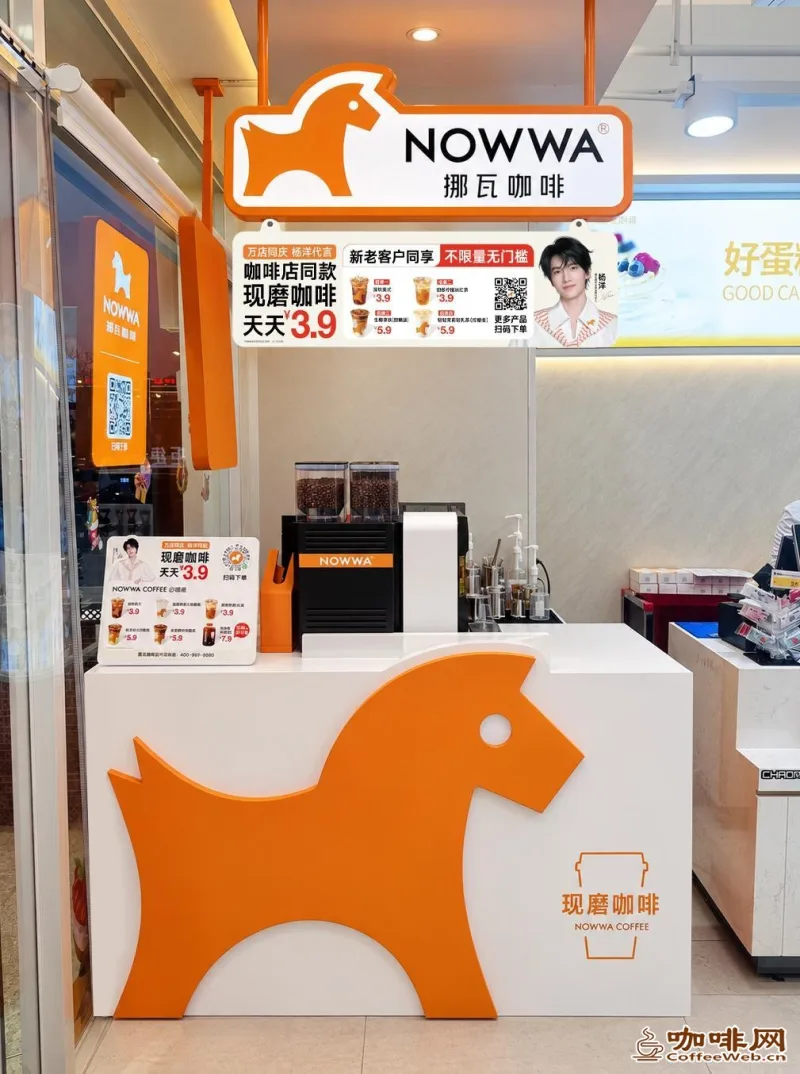
Over the past two years, NOWWA reshaped its brand with low-calorie products. Independent stores, endorsers and R&D were all investments that gave these store-in-stores—scattered inside others’ shops—their own credibility.
Building on the brand power constructed earlier, NOWWA rapidly expanded store-in-stores; once scale grew to ten-thousand stores, on one side were sharply lower rent and labor costs, on the other the supply-chain cost advantage that came with it.
Under the volume, NOWWA’s upstream centralized procurement gained more bargaining power, and its self-built ten-thousand-ton coffee roasting factory has been put into production. Now NOWWA’s R&D rebuilds products around the new price band. ¥3.9 is the price of the americano and some products; Guo told 36Kr that consumers still buy other price-tier drinks in store, such as the ¥7.9 “Ton-Ton” bucket americano, so NOWWA’s actual per-cup revenue is ¥2–3 higher than ¥3.9.
Switching the new model was not easy. NOWWA’s new menu started with a trial in 12 cities in June, expanded to 66 cities in July, and pushed national adjustment from August. Guo said about 70% of stores have completed the switch; the rest still need contract changes with agents and franchisees, expected by end of September. Old cups, old beans and new materials once sat together in stores and warehouses; headquarters had to negotiate with franchisees over who bore the inventory gap—Guo described that period as “changing the engine mid-flight.”
Behind NOWWA’s long-term pricing is a complete ledger: store-in-store reuses space and hands, scale thins supply-chain costs, other-price-tier products contribute revenue; together these gave NOWWA room to keep ¥3.9 on the menu.
Why is the store-in-store first-mover NOWWA?
In a Pudong, Shanghai convenience store, coffee may be turning the tables. This owner-operated store sells nearly 200 cups of NOWWA coffee a day. This means the store-in-store can grow from a service beside the counter into an important business for the partner store.
For the owner, the ready space gains a branded service that receives both walk-in and delivery orders, and riders stopping by can also grab something at the convenience store; for NOWWA, it need not rebuild a whole store to enter consumers’ existing routes and permeate daily-life scenarios. Beyond convenience stores, NOWWA densely partners with bulk snack shops, e-sports cafes, mahjong parlors, gas stations, billiard halls, bakeries and dessert shops. Stores with different main businesses may all sell coffee; the difficulty is making consumers recognize the brand and keeping partners willing to reserve space long term.
Store-in-store is not unique to NOWWA; what truly sets it apart is its strategic position in each company’s plan. According to 36Kr, even during independent-store expansion, NOWWA’s first principle was to let franchisees earn money, so existing independent stores mostly came with restrained rent costs, and because store counts were low, each store enjoyed higher “regional exclusivity,” with almost no mutual cannibalization with store-in-stores. Now store-in-store, at a more opportune time, has become NOWWA’s “strategic priority.”
For NOWWA, store-in-store is already the main channel; for many leading brands with many independent stores, it may only be a supplementary channel.
It is easy to calculate a direct ledger: someone spends ¥500,000 on an independent store, while next door a store-in-store needing only ¥50,000 and able to do delivery appears—the former would find it hard to accept. The same brand pushing two store types with vastly different investment must coordinate site selection, price and order attribution with original franchisees. Leading brands can try store-in-store, but to make it a strategic priority they must handle existing store-interest relations. That is why brands mainly built on independent stores find it hard to land store-in-store as the main line. NOWWA, with store-in-store as its main strategy, instead has less of this constraint.
Coca-Cola also once used local partners to send drinks to more places. In 1899, two lawyers from Chattanooga bought the bottling rights for most of the U.S. from Candler for a contractually stated one dollar—said never collected—and then designed a layered sub-licensing system. Decades later, that network covered America, minting more millionaires than any company of the time.
Compared with Coke, freshly brewed coffee cannot be pre-bottled; each cup is finished in store. The store-in-store network therefore needs both locations and continuous product and service delivery. NOWWA’s brand, partnerships and operational capability built in earlier years converged here into channel first-mover advantage.
This also gave NOWWA’s “national coffee brand” vision its first fairly complete operating vehicle: ¥3.9 gets more people willing to buy, store-in-store lets them buy on the way, and the brand and system already in stores let partners keep selling. As Chinese coffee consumption gradually turns daily, at least on the store-in-store path, NOWWA is currently the brand with the best chance of making freshly brewed coffee a national drink.
The imagination and boundaries of “Coca-Cola of coffee”
Low price is changing how NOWWA looks at products. Previously its R&D followed the methodology of fresh-made coffee and tea drinks; after this price adjustment, bottled beverages instead brought NOWWA much inspiration. NOWWA launched the ¥3.9 fresh-made iced black tea and guava lemonade, trying to let a small fresh-made counter meet more needs originally served by convenience-store coolers. This means it wants not only coffee lovers but more people who “want something to drink now.”
Seen across the industry, this is also a preview of category-boundary change. Tea brands stuff coffee into existing menus; coffee brands put iced black tea on the counter; convenience stores sell both packaged drinks and fresh-made beverages. Competition is no longer divided by signboard, but by who controls the stretch of road consumers pass each morning and the screen they order from at noon. A coffee shop’s rival is sometimes a milk-tea shop, sometimes a bottle of sugar-free tea grabbed from the cooler.
Using beverages rather than cafes as the reference, NOWWA gained a wider product coordinate. Americano meets the need to wake up; iced black tea and fruit tea quench thirst; one store-in-store can cover morning, afternoon and more time slots. Partner stores thus gain reasons to attract customers and increase purchase frequency, and NOWWA gets each location to sustain steadier cup volume. From “selling coffee” to “supplying daily drinks,” the ¥3.9 menu makes this step concrete.
Low price also drew more attention to past brand investments. Low-calorie products, endorsement communication and self-built factories respectively support product choice, brand trust and stable supply; ¥3.9 first lets consumers notice NOWWA, then they get a chance to see these accumulations. Guo said that after the price cut users further focus on NOWWA’s healthier philosophy. Price lowers the threshold of first try; fresh-made experience and brand recognition make the next purchase more natural.
Guo recalls a scene years ago: an industry insider asked him, once the brand grew, whether there would be room to raise prices—a quite reasonable deduction—but he answered then, “When capable, I will only keep lowering prices.”
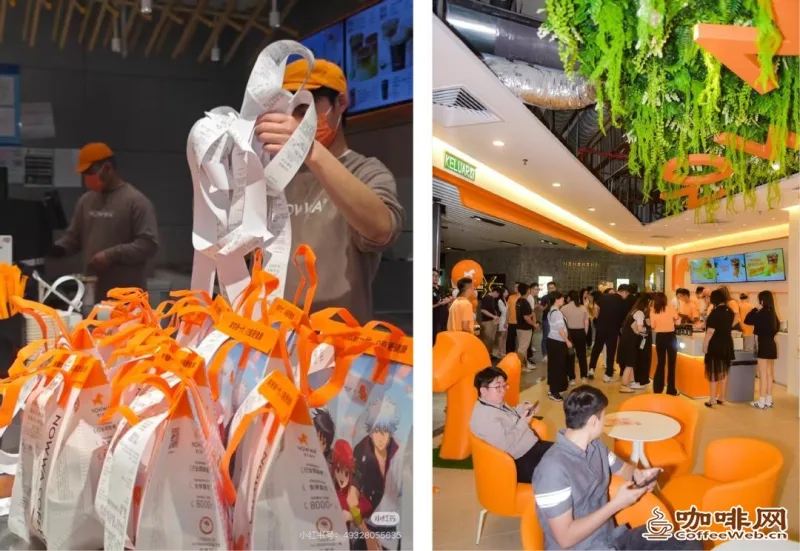
Looking back today, NOWWA’s goal seems unchanged, but the conditions supporting it took years to form one by one. Guo does not hide that when he first did store-in-store he did not expect americanos to sell at ¥3.9; and a NOWWA store-in-store in Indonesia selling coffee at 4–5 yuan, with 700+ cups a day, also gave him the inspiration and resolve for the domestic price cut. A company’s path is not a straight line drawn at the start; many answers are found repeatedly from stores and consumers.
From an industry and investment view, the imagination ¥3.9 opens exceeds opening a few more coffee shops. Fresh-made coffee can borrow existing retail networks and appear on more people’s daily routes; NOWWA has already connected price, brand and ready-made space, offering a new way to observe the incremental coffee market.
Next, same-store cup volume, repurchase and partner-store earnings will gradually show how far this structure can go. Price lets more consumers notice NOWWA for the first time; a wider store network lets the next purchase happen more handily. For fresh-made coffee, this growth driven jointly by price and availability may be more worth anticipating than simply adding more coffee monoculture stores.
Conclusion
Starbucks brought coffee into mall ground floors; Luckin put it into phone pickup orders; NOWWA chose to put freshly brewed coffee into stores that already exist. Leading brands’ opportunities often come from a new channel structure. If ¥3.9 freshly brewed coffee can be bought everywhere and for the long term like bottled drinks, China’s fresh-made coffee “Coca-Cola moment” may be approaching.
Reprint Notice & Disclaimer
- This article is compiled and edited by China Coffee Network (coffeeyo.com) from publicly available materials (36Kr). The copyright of the original text and images belongs to the original authors. This site reprints it solely for coffee-industry information sharing and does not represent our position; all data and views are subject to the original. We thank the original authors for their creation and sharing.
- Original: 36Kr interview coverage.
- If there are any issues regarding content authorization, attribution, copyright or other matters, please contact this site promptly; we will verify and cooperate in handling them at the first opportunity. We also welcome coffee producing regions, brands and industry media to exchange and contribute articles.
- Contact China Coffee Network (coffeeyo.com): Tel 400-0000-641 (+86-18288016826) | Email 405854472@qq.com | Address: Jinghong City, Xishuangbanna, Yunnan Province / Tieling City, Liaoning Province, China
Related Reading
 RMB 105 Million Instant-Coffee Deep-Processing Project Opens in Gejiu, Yunnan
 Nestlé Mainstream Ready-to-Drink Coffee Lineup
 Nongfu Spring Tan Bing (tàn bīng) Ready-to-Drink Coffee
 Luckin ‘Jixiang’ Ready-to-Drink Coffee Lineup (incl. Bottled RTD + Concentrate Launched Late April 2026)
 Taihu Lily Meets Coffee: the ‘Lily Latte’ Taking Yanglou Village by Storm
 Nayuki’s ‘Osmanthus Rice-Wine Milk Coffee’ Sells Out at Launch as It Doubles Down on ‘Coffee + Focaccia’


 Liaoning ICP Security No. 21122402000217