


At a Glance (China Coffee Network):
In July 2026, the World Brewers Cup China Final broke away from the East China core region for the first time and landed in Guiyang. As the industry’s attention focuses on this southwestern provincial capital, an industrial phenomenon full of contrast is emerging: it produces not a single coffee bean, yet it has produced the fastest-growing coffee consumption market in the country, and moreover, relying on 6 premium roasting factories holding SC food production licenses, it has sold its own roasted coffee beans into the coffee cups of consumers nationwide.
From a “coffee consumption internet-famous city” to a “premium roasting output base,” Guiyang is carving out a unique path on China’s coffee map that completely escapes “raw material origin dependence.”
From Stores to Upstream:
The “Compliance Awakening” of Guiyang Roasting
The starting point of Guiyang’s coffee industry was initially the rapidly expanding local consumption market—data shows that local coffee consumption grows at an average annual rate of 18%, with over 3,000 coffee stores citywide, and the strong local demand first nurtured a group of local coffee people who understand flavor and the market. What truly pushed them from “selling coffee” to “doing roasting” were two unavoidable core demands.

Black Stone Coffee’s “Coral Plan” roasting factory, located in the Longdongbao Food Industrial Park, only officially went into production in 2024. With a current average monthly output of about 1.5 tons, its scale is not large, but it is a typical sample of Guiyang’s local coffee brands extending from terminal stores to the upstream of the industry chain. Brand proprietor Lei Ming admitted frankly that the first motivation for building the factory was “flavor autonomy”: “The same green beans yield completely different profiles in the hands of different roasters; to perfectly match the taste of your own store and products, you can only do it yourself.”
And the second, more critical motivation is the compulsion of the compliance threshold. As a food category, coffee can only be legally and compliantly sold nationwide through online channels after obtaining an SC production license. Before that, many small roasting workshops in Guiyang had already begun trying to roast for their own use. Currently, almost all of the city’s 6 coffee roasting factories with SC qualifications are local brands that, after growing from offline stores, took the initiative to complete an “industrial upgrade.”
Highland Roasting:
Turning “Disadvantage” into “Characteristic” with a Technical Barrier
How much does coffee roasting affect flavor? Lei Ming explained with a vivid analogy: “It’s like fish-fragrant shredded pork made in the south versus the north—the texture and state presented are completely different.”
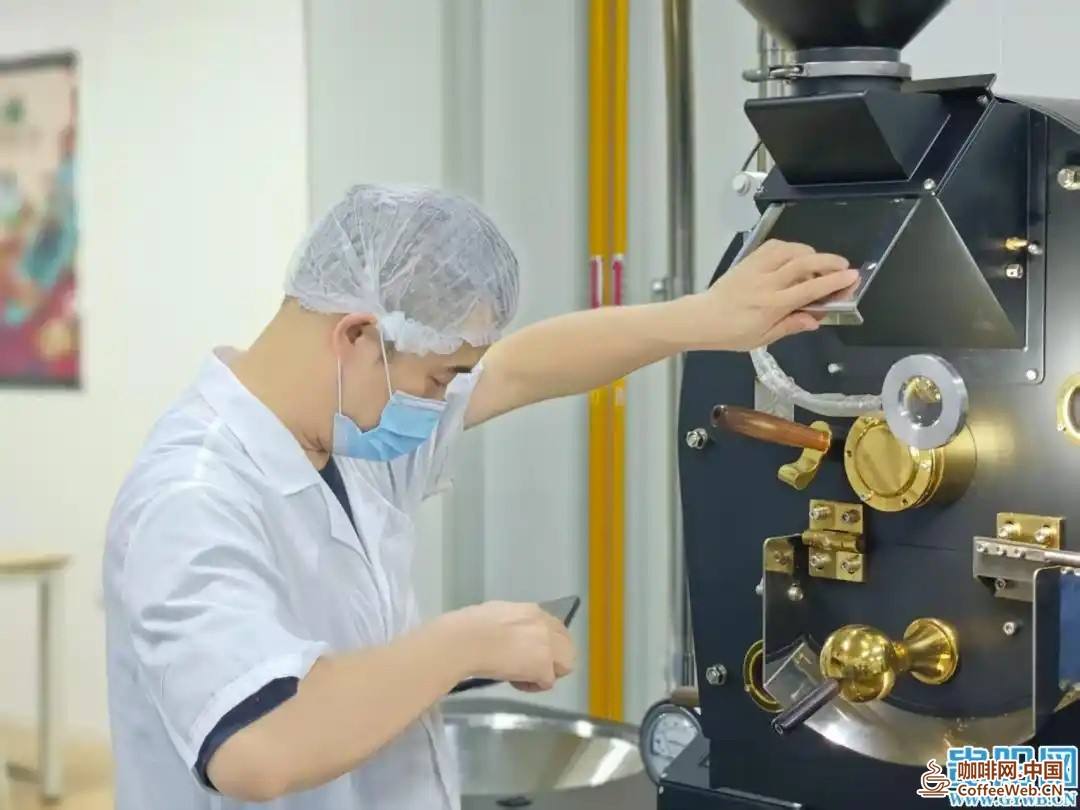
For the same green bean, light roasting retains a large amount of organic acids and floral and fruity notes, with bright acidity; medium roasting enhances sweetness and reduces acidity while increasing body; dark roasting enters the caramelization and even dry distillation reaction stage, presenting a black-chocolate-like rich bitterness. “But coffee roasting is a complex process for which even the field of food chemistry has no definitive conclusion,” Lei Ming emphasized. “Once the beans are heated, all chemical reactions occur simultaneously, only with different intensities in different temperature zones. It takes a large amount of practical accumulation to judge the coordination of firepower and airflow; this is the most difficult and scarcest ability of a roaster.”
And Guiyang’s roasters, from the very beginning, face a “special exam paper” that no other producing region in the country has: the unique low atmospheric pressure of the Yunnan-Guizhou Plateau, year-round high humidity, and annual average temperature significantly different from coastal areas mean that the same green bean roasted with exactly the same parameters in Guiyang and in Shanghai yields two products with completely different flavors.
With no ready-made experience to copy, Guiyang’s roasters could only start from scratch, repeatedly adjusting and polishing exclusive roasting plans for the local climate. This technical accumulation forced out of necessity has instead become a unique barrier for Guiyang’s roasting circle, giving the coffee beans produced here a distinctive flavor expression different from plain-area producing regions.
Under Dual Pressure, How Does Guiyang Roasting Break Through the National Market?
Speaking of survival pressure, Lei Ming was blunt: the most immediate is the raw material cost pressure. The volatility of international coffee futures prices in 2025 directly drove the cost of imported green beans up by nearly 120%, yet terminal product prices could not be raised simultaneously. Many consumers have formed a cognitive inertia toward “9.9 yuan” low-price beans and find it hard to understand the value difference behind premium green beans and refined roasting.
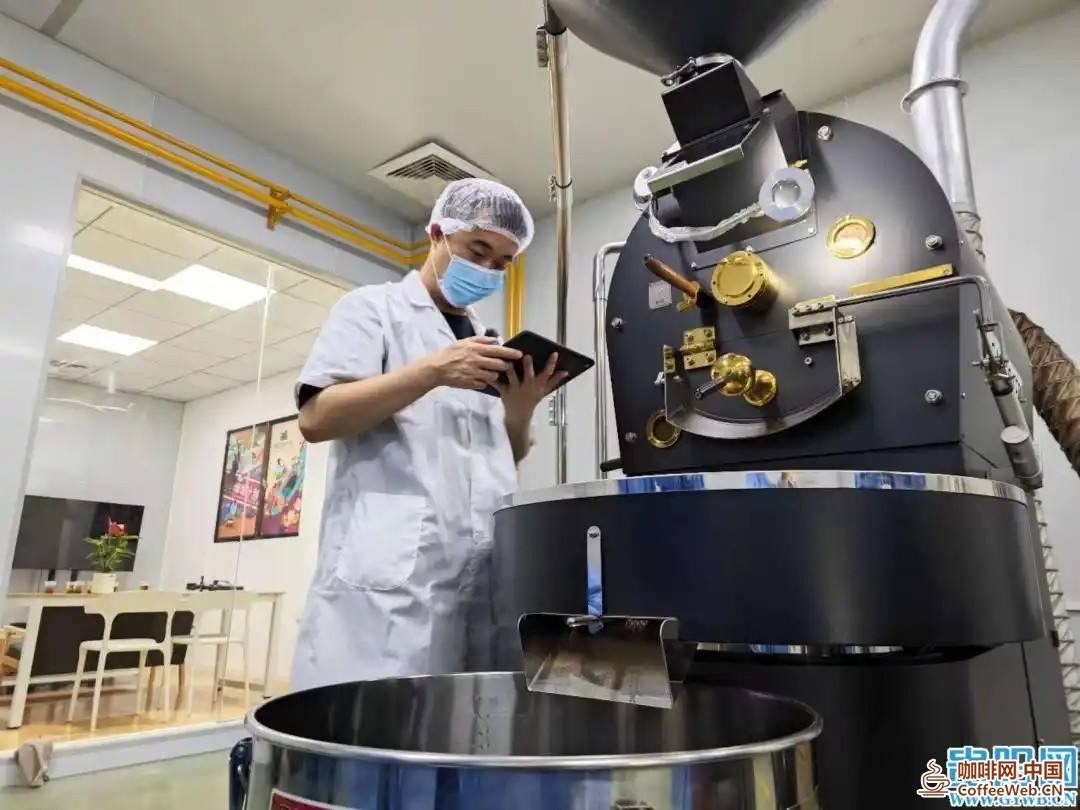
What is more tricky is the logistics shortcoming: Guiyang is neither by the sea nor bordering any border; imported green beans mostly need to be first shipped to ports in Shanghai and Guangzhou, then transferred into Guizhou by rail a second time, lengthening the supply chain cycle and pushing up comprehensive costs. Lei Ming revealed that the industry had previously fed back this pain point to relevant departments; some targeted logistics preferential policies have been introduced, but there is still a gap to fully cover the cost shortfall, and the exploration of a shorter and lower-cost raw material channel continues.
From “A Single Spark” to an Industry Closed Loop:
The Next Stop of the “City of Coffee Champions”
Today’s Guiyang coffee roasting industry is standing at a key node of transformation from “small and scattered” to “refined and specialized.” Guiyang’s coffee industry is accumulating users and polishing products in their respective niche tracks, while the continuous efforts on the policy side are adding bricks and tiles to this industrial soil.
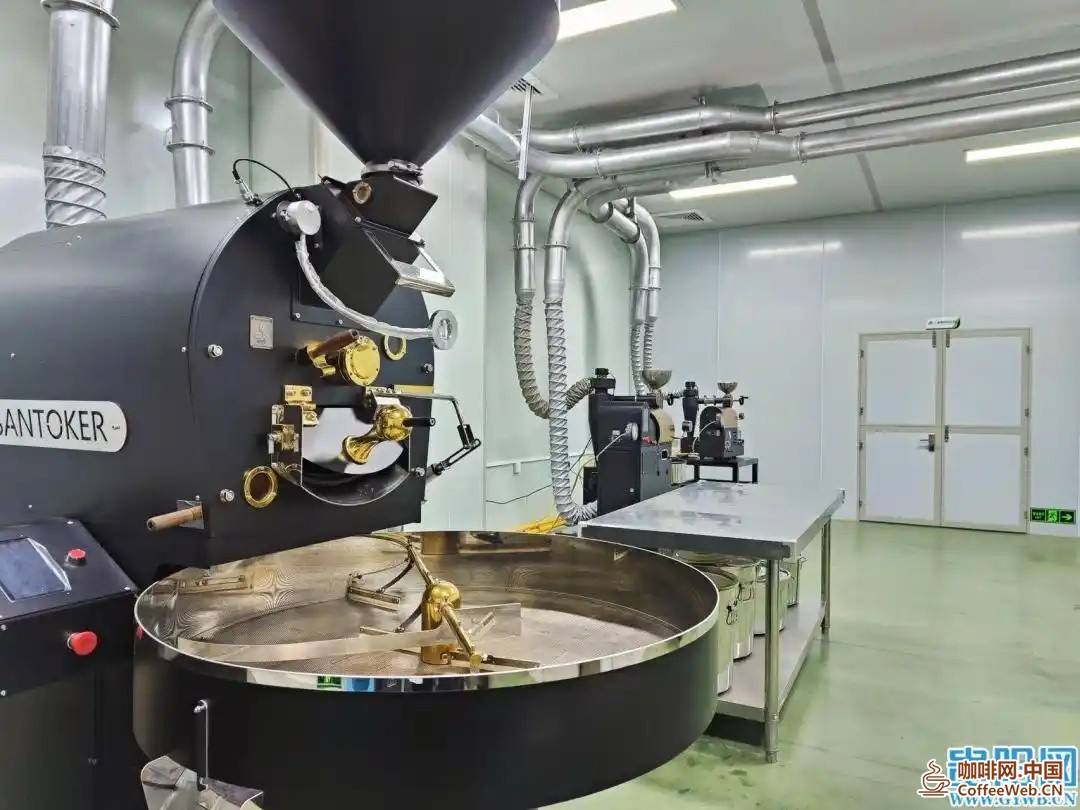
At the beginning of 2026, the “Implementation Opinions on Promoting the Development of Guiyang’s Coffee Industry” was officially issued, building a full-chain support framework for the entire industry from introducing and trial planting, processing clustering, competition subsidies, to talent cultivation. Last August, the Guiyang Coffee Industry College was inaugurated at Guiyang Vocational and Technical College, systematically cultivating professionals for the entire process of roasting, brewing, and quality control, filling the talent shortfall that the industry previously relied on “master-apprentice mentoring” to address.
From a raw-material blank land with not a single coffee bean, to a “City of Coffee Champions” possessing top national competitions, thousands of stores, and 6 compliant roasting factories, Guiyang’s coffee industry has never taken the path of “living off raw materials.” In the future, by shoring up the shortcomings of raw material costs, location logistics, and incomplete industry chain, and opening up a complete industry closed loop, this southwestern city that produces no coffee beans has every opportunity to carve out its own path of “roasting” on China’s coffee map.
From store to upstream:
The ‘Compliance Awakening’ of Guiyang Baking
Highland baking:
The next stop of ‘City of Coffee Champions’
Reprint Notice & Disclaimer
- This article has been edited and compiled by China Coffee Network. The information and images therein come from public sources and the copyright belongs to the original author. This reprint is intended solely for information sharing within the coffee industry and does not represent the views of this website; all data and opinions are subject to the original article. Our thanks to the original author for creating and sharing it.
- For matters concerning content licensing, attribution, copyright or otherwise, please contact us promptly and we will verify and cooperate in handling them as soon as possible. We also welcome coffee origins, brands and industry media to exchange ideas and contribute articles.
- Contact China Coffee Network: Tel 400-0000-641 (+86-18288016826) | Email 478203668@qq.com
Related Reading
 Tim Hortons China Q3: System Sales Up 6.3% Quarter on Quarter
- CRH Plans OATLY Exit, Nayuki Leaves Wenzhou | Tea & Coffee Weekly
 The 2026 Asian Coffee Association Annual Meeting will be held in Dehong, Yunnan, and the Asia ABODY Coffee System Standard will be officially released
 The President of Brazil's Victoria Coffee Business Center (CCCV) led a delegation of four people to Pu'er, Yunnan to conduct a special inspection of the coffee industry
 Behind the 1836 yuan "King of Brands": The Full Industry Chain and Offline Layout of Xinlu Coffee
 From a raw bean to a fragrant cup, Xiamen International Coffee Exhibition unlocks a new picture of the entire industry chain


 Liaoning ICP Security No. 21122402000217