


At a Glance (China Coffee Network):
When it comes to coffee, many people only regard it as a pick-me-up tool, yet few know that coffee hides anti-aging potential confirmed by scientific research.
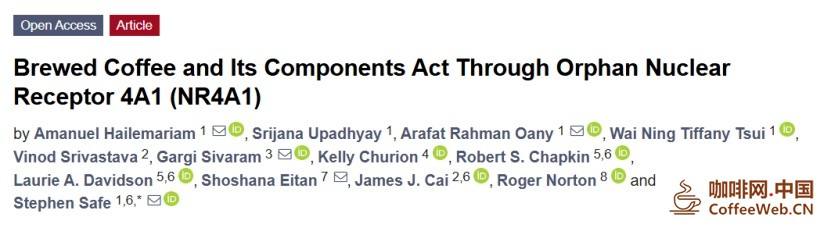
The biochemistry laboratory at Texas A&M University in the United States, led by Professor Stephen Safe, completed a set of cell and animal controlled trials; the related paper “Brewed Coffee and Its Components Act Through Orphan Nuclear Receptor 4A1 (NR4A1)” was published in the authoritative nutrition journal “Nutrients”, unveiling the core pathway of coffee’s anti-aging effects.
The research team built a two-tier experimental system, extracting human cancer cell samples on one side and isolating primary immune cells from laboratory mice on the other, with groups exposed respectively to single active coffee substances such as pure coffee extract, chlorogenic acid and caffeic acid, continuously tracking the dynamic changes of cell proliferation, aging and immune activity.
The comparative data clearly confirm that simple caffeine is not the core of anti-aging; the natural plant polyphenol compounds in coffee are the key to delaying cell aging.
Chlorogenic acid and caffeic acid remain widely in roasted and extracted coffee liquid; these polyphenols are not unique to coffee, and homologous substances can be found in various fresh fruits, green leafy vegetables and medicinal-edible herbs, but after coffee is brewed at high temperature, the dissolved concentration of active substances acts more readily on human nuclear receptors.

The paper focuses on the key target of the orphan nuclear receptor NR4A1; this protein molecule is the “master switch” regulating cell apoptosis, immune homeostasis and the aging process.
The experiments found that coffee’s active components can specifically activate the NR4A1 pathway:
On one hand, they inhibit the disordered proliferation of abnormal cells and reduce the accumulation of aging-related damage;
on the other hand, they repair immune cell activity and slow the rate at which the body’s immune function declines with age.
In the past the public always misunderstood that coffee could only stimulate the nerves; this research breaks the stereotype, proving that coffee achieves long-lasting anti-aging by regulating gene receptors, rather than short-lived physiological excitement.

It is worth mentioning that the experiments only verified the positive effects of extracted coffee liquid; fancy coffees with large amounts of added sugar and cream offset polyphenol activity and instead increase the body’s metabolic burden.
Only by drinking black coffee in moderation daily and balancing polyphenol intake with fruits and vegetables can the anti-aging value of natural plant compounds be maximized.
Behind a small cup of coffee lie complex molecular mechanisms of nuclear receptor regulation and plant polyphenol interactions.
Compared with expensive skincare products and nutritional supplements, the natural plant active substances common in the daily diet are the gentle, long-lasting anti-aging remedy.
References:
https://doi.org/10.3390/nu18060877
References:
https://doi.org/10.3390/nu18060877
Reprint Notice & Disclaimer
- This article has been edited and compiled by China Coffee Network. The information and images therein come from public sources and the copyright belongs to the original author. This reprint is intended solely for information sharing within the coffee industry and does not represent the views of this website; all data and opinions are subject to the original article. Our thanks to the original author for creating and sharing it.
- For matters concerning content licensing, attribution, copyright or otherwise, please contact us promptly and we will verify and cooperate in handling them as soon as possible. We also welcome coffee origins, brands and industry media to exchange ideas and contribute articles.
- Contact China Coffee Network: Tel 400-0000-641 (+86-18288016826) | Email 478203668@qq.com
Related Reading
 Tim Hortons China Q3: System Sales Up 6.3% Quarter on Quarter
- CRH Plans OATLY Exit, Nayuki Leaves Wenzhou | Tea & Coffee Weekly
 The 2026 Asian Coffee Association Annual Meeting will be held in Dehong, Yunnan, and the Asia ABODY Coffee System Standard will be officially released
 The President of Brazil's Victoria Coffee Business Center (CCCV) led a delegation of four people to Pu'er, Yunnan to conduct a special inspection of the coffee industry
 Behind the 1836 yuan "King of Brands": The Full Industry Chain and Offline Layout of Xinlu Coffee
 From a raw bean to a fragrant cup, Xiamen International Coffee Exhibition unlocks a new picture of the entire industry chain


 Liaoning ICP Security No. 21122402000217