


Brief (coffeeyo.com): Shanghai’s first specialty “soft-law guidance” for coffee shops launches in Xuhui—turning a typhoon-leak dispute into a practical, judge-backed “business reference book” for merchants.
“The law draws the baseline of conduct, but this soft-law guidance tells us merchants what we can actually do—it’s a real, practical ‘business reference book’!” said Zhang Liang, proprietor of Wutong Coffee, voicing the sentiments of many coffee practitioners in Xuhui.
In the plane-tree-shaded Tianping subdistrict, nearly 60 coffee shops cluster per square kilometer, with over 600 coffee industry workers. The coffee aroma drifting through the Hengfu Historic District is a vivid footnote to Shanghai’s urban life. Behind the booming coffee business, various governance challenges have emerged. How to protect the street’s vitality while holding the bottom line of compliant operation? Recently, the Xuhui District People’s Court, together with the Tianping Road Subdistrict Office, released the city’s first specialty soft-law guidance for the coffee industry at the 66 Wutong Courtyard Party-Mass Service Center, pushing the judiciary down to the grassroots and resolving conflicts within the neighborhood.
Frontline Shift: Resolving Real Disputes on the Street
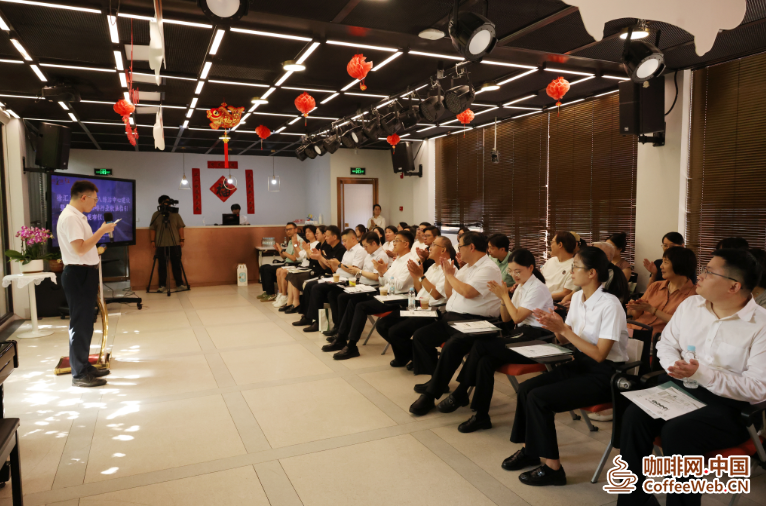
The birth of this industry guidance is rooted in disputes that actually occurred in the neighborhood and relies on the local normalized mechanism of judicial outreach to the grassroots. At the event, the Xuhui Court’s civil trial division and Tianping Subdistrict jointly signed a “Memorandum of Co-building Normalized Judicial Services for Judge Deployment to the Comprehensive Governance Center,” and the Tianping Subdistrict Comprehensive Governance Center officially became a judicial-outreach service point. A dedicated liaison team composed of Judge Zheng Xiaoyi, judge assistant Guo Xinwen, and mediator Dai Yanqun took root in the community front line, further improving the layout of judicial forces in Xuhui’s northern area.
In July this year, affected by a typhoon’s heavy rain, a café in the subdistrict suffered a ceiling leak; the coffee machine was water-damaged beyond repair, raw materials were destroyed, and the store was forced to close for two days. Store manager Ms. Li claimed compensation from the property for property losses, but the two sides held their positions and reached an impasse; the dispute was referred to the subdistrict comprehensive governance center.
“The store’s most urgent demand at the moment was not just to discuss compensation, but to promptly repair the leaking ceiling and prevent further losses,” recalled Judge Zheng Xiaoyi. She, together with the mediator, urged the property side to carry out remediation at the first opportunity; the property inspected for hazards within 3 days and completed the leak repair within 7 days. But on whether the typhoon counted as force majeure, how to calculate the closure losses, and how to assess the damaged equipment, the two sides still had deep disagreements in the compensation stage.
Drawing on experience from similar cases, Zheng Xiaoyi soothed both sides’ emotions and explained the law point by point. Through the mediator’s mediation, the two sides reached agreement on waterproof acceptance, property appraisal, and loss calculation, signed a mediation agreement on the spot, and resolved the conflict locally—a microcosm of front-end dispute resolution by judges deployed to the comprehensive governance center.
Paradigm Upgrade: From Individual-Case Mediation to Sound Industry Governance
Moving from individual-case handling to industry governance, and in light of the Tianping subdistrict’s dense coffee shops and highly similar dispute types, the Xuhui Court’s “Under the Gantang Tree” community judge studio, together with the Tianping Subdistrict judicial office, sorted through a large number of dispute cases and visited merchants for research, writing the “Tianping Subdistrict Coffee Industry Soft-Law Guidance” (hereinafter the “Guidance”).
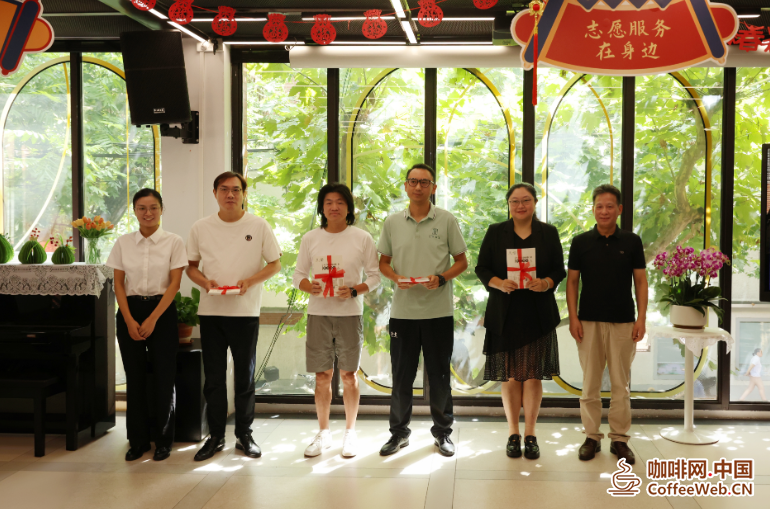
It is understood that the Guidance, based on current laws and regulations, focuses on three high-frequency pain points—street-front responsibility management, labor-rights protection, and neighborly-relations coordination—and covers the full process from guiding principles, opening preparations, and daily operations. It systematically sorts out legal risks in leasing, renovation filing, employment, and food safety, and simultaneously publicizes the subdistrict’s supporting service resources.
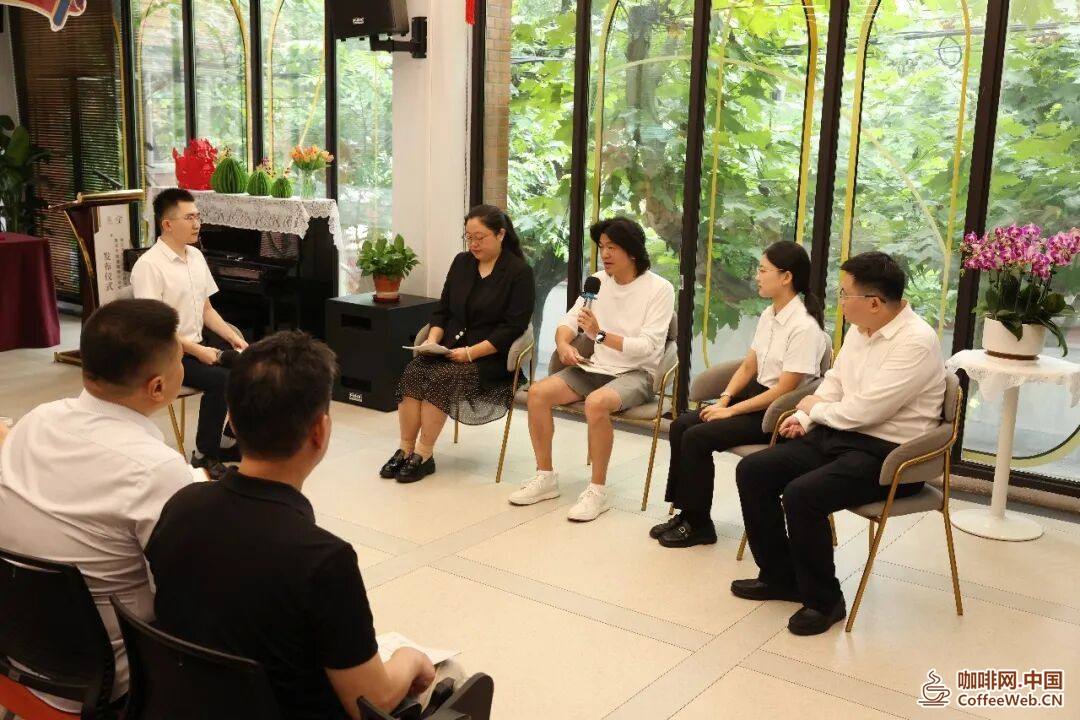
“Shops are short-staffed, and many peers only see the boundaries of the law after stepping on a landmine,” Zhang Liang shared during the interview session. The Guidance’s clarifications on temporary-employment rights and responsibilities, handling of accident risks such as slippery floors for customers, and compliance requirements for outdoor seating are all high-frequency problems in daily operations. “When preparing a branch later, from renovation and employment to daily operations, I can benchmark against the Guidance to avoid risks in advance, instead of passively defending rights after disputes arise.”
During a break in the event, Li Binbin, Party branch secretary of the Tianping Subdistrict Coffee Industry Party Branch, told the reporter that in daily visits, staff found that disputes among neighborhood coffee merchants concentrate in several types: the Hengfu Historic District has style-adaptation requirements for shop signs, and many new shop owners are unfamiliar with the rules, easily causing rework; part-time employment is common in the industry, and young owners have weak legal awareness, often ignoring work-injury insurance for part-timers until labor arbitration leaves them passive; and many partnership stores rely only on verbal agreements, lacking written contracts on profit distribution and loss sharing, which easily breeds conflict.
In addition, consultations on housing leasing, intellectual property, and related issues are also numerous. “Remedying after the fact is worse than preventing at the source; this Guidance is the merchants’ ‘encyclopedia’ for risk avoidance,” said Li Binbin. “The subdistrict also relies on the 66 Wutong Courtyard to offer free legal-consultation activities every Wednesday, continuously providing merchants with normalized support such as mediation and legal services.”
Effect Release: Expanding a New Dimension of Grassroots Governance
Since advancing the integration of judges into comprehensive-governance-center work in 2025, the Xuhui Court has classified and triaged various disputes at different levels, with over 60% already resolved locally in the neighborhood. “This Guidance is a practical achievement of judicially empowered soft-law governance. We must be good at discovering governance bottlenecks from individual cases and implementing ‘handling one case to govern a whole field,'” said Li Zeli, vice president of the Xuhui Court. “Going forward, we will continue the ‘case review—risk sorting—industry rule-making’ working method, using refined judicial services to support the building of a quality urban district.”
Reporters: Zhang Wang, Zhu Yuwei; Editors: Ye Fangfang, Zheng Liang. Reprinted with attribution to the Shanghai Xuhui official account. Source: Shanghai Xuhui official account.
Reprint Note & Disclaimer
- This article is reprinted from Chinese media for information and cultural exchange. The views expressed are those of the original author and do not necessarily reflect the position of coffeeyo.com.
- All trademarks, brand names and logos mentioned belong to their respective owners.
- For cooperation, reprint or correction requests, please contact coffeeyo.com.
Reprint Notice & Disclaimer
- This article has been edited and compiled by China Coffee Network. The information and images therein come from public sources and the copyright belongs to the original author. This reprint is intended solely for information sharing within the coffee industry and does not represent the views of this website; all data and opinions are subject to the original article. Our thanks to the original author for creating and sharing it.
- For matters concerning content licensing, attribution, copyright or otherwise, please contact us promptly and we will verify and cooperate in handling them as soon as possible. We also welcome coffee origins, brands and industry media to exchange ideas and contribute articles.
- Contact China Coffee Network: Tel 400-0000-641 (+86-18288016826) | Email 478203668@qq.com | Address: Jinghong, Xishuangbanna, Yunnan Province / Tieling, Liaoning Province
Related Reading
 Jiangxi Wuyuan: Rural Coffee Unlocks New Cultural Tourism Formats
 Jiangxi Wuyuan: Rural Cafes Unlock New Cultural Tourism Formats
 Global quality goods gather at Hongqiao Import Commodity Exhibition Center, setting "Chinese standards" for coffee
- Global premium products gather to set China's coffee standards as Hongqiao Import Commodity Exhibition Center keeps the CIIE spirit alive
- Global quality goods gather as Hongqiao Import Commodity Exhibition Center and CIIE forge lasting partnership to set China's coffee standards.
 Zhejiang "Science Cafe" Promotes Embodied Intelligence in Real-World Scenarios


 Liaoning ICP Security No. 21122402000217