


Introduction(Coffeeyo.com, a coffee website):The per capita annual consumption of coffee cups in China has increased from 16.7 cups in 2023 to 28.6 cups in 2025, a growth of over 70% in two years; The market size of freshly brewed coffee drinks is expected to reach 140.5 billion yuan by 2025 and 159 billion yuan by 2026. Capital has shifted from "casting a wide net" to "selecting targets".
From scale expansion to deep value cultivation: A new cycle and decision-making framework for investment and financing in the coffee industry
The coffee beverage industry is not just about "opening a coffee shop". From an industry perspective, it covers upstream coffee bean cultivation, trade, and deep processing, midstream roasting, packaging, equipment, and cold chain distribution, as well as downstream freshly made coffee stores, ready to drink coffee, instant coffee, coffee liquids, hanging ear coffee, online retail, and takeaway delivery, among other diverse consumer scenarios.
According to the "2026-2030 Risk Investment Trends and Investment Strategy Guidelines for the Coffee Beverage Industry" report by China Research Institute Puhua Industry Research Institute, in recent years, China's coffee consumption has shifted from "niche refreshing drinks" to "daily high-frequency essential needs". The per capita annual consumption cup has increased from 16.7 cups in 2023 to 28.6 cups in 2025, with a growth rate of over 70% in two years.
At the same time, the market size of freshly brewed coffee drinks is expected to reach 140.5 billion yuan by 2025 and 159 billion yuan by 2026, with the industry maintaining a high level of prosperity.
But the industry has also entered a clear period of structural differentiation: in the first half of 2026, the coffee chain industry's publicly disclosed investment and financing events decreased by 18% year-on-year, while the average single financing amount increased by 27% year-on-year, and capital shifted from "casting a wide net" to "selecting targets".
1、 Industry fundamentals: growth still ongoing, but dividend structure has changed
The core change in the coffee beverage industry is the shift in growth drivers from "expanding the number of stores" to "increasing consumption frequency, restructuring price bands, improving supply chain efficiency, and accumulating brand premiums".
Ready made coffee remains the main engine driving growth, but the price band has significantly shifted downwards. In the first half of 2026, the per capita consumption of freshly made coffee will remain stable at around 25 yuan, while the proportion of new products priced between 10-15 yuan and below 10 yuan will increase. High end products priced above 30 yuan will rely more on brand power and experience.
At the same time, non freshly brewed coffee is also rapidly expanding. Instant coffee, freeze-dried coffee, coffee liquid, ready to drink coffee and other product forms are catering to high-frequency scenarios such as offices, homes, and travel.
Among them, coffee liquid has grown from about 1.5 billion yuan in 2020 to about 18 billion yuan in 2024, with an average annual compound growth rate of over 80%, becoming an important entry point for "lazy and exquisite" consumption. On the upstream side, the process of refinement in domestic production areas such as Yunnan and Hainan is accelerating, and the quality of local coffee beans is improving, gradually changing the previous perception that "local potatoes=low-end raw materials".
2、 Competition pattern: hierarchical symbiosis, with head concentration and tail clearance in parallel
The current coffee beverage industry presents a pattern of "multiple tiers coexisting". Top chain brands rely on their store network, digital operations, and supply chain capabilities to occupy the mass market for essential needs; Premium coffee brands rely on single origin beans, flavor expression, and store experience to occupy a high-end mindset; Regional brands and independent cafes rely on community relationships, local flavors, and differentiated services to maintain stickiness.
But the competitive pressure is equally significant. In 2026, the total number of coffee shops has reached a high level, the industry's growth rate has slowed down, and the clearance of inefficient shops has accelerated. Affordable chain stores are facing the pressure of profit recovery after the price war, while high-end brands are facing the challenge of diluting the narrative of "boutique=high price".
Cross border coffee brands in the tea industry have also become important variables. Meixue Bingcheng, Guming, Hushang Auntie, Yum China, and others are using their existing supply chains, store networks, and membership systems to extend their coffee business, further intensifying competition in the affordable market.
3、 Venture capital trend: capital has not disappeared, it is just becoming more picky
The investment and financing logic of the coffee industry in 2026 has undergone fundamental changes. The early model of "subsidy for scale, store opening for valuation" is becoming ineffective, and capital is more focused on single store profit models, repurchase rates, supply chain controllability, franchise compliance capabilities, and long-term brand premiums.
From the perspective of capital flow, there are three main types of opportunities that receive more attention:
Affordable high-frequency chain: Brands with light asset models, standardized operations, and the ability to replicate in lower tier markets are more likely to be favored by defensive capital.
Boutique and scenario based brands: Projects that can establish a stable customer base, clear flavor system, and high brand premium are more suitable for long-term industrial capital layout, but short-term profit fluctuations are greater.
Supply chain and supporting links: infrastructure based links such as coffee bean roasting, smart devices, packaging materials, cold chain logistics, and digital SaaS are becoming a new direction of capital attention due to high barriers and stable demand.
At the same time, the trend of mergers and acquisitions is increasing. Top tier capital tends to participate in industry integration through acquisitions, controlling stakes, joint ventures, and other means, rather than simply betting on early-stage brands. This means that future industry competition is not only a competition between brands, but also a competition between capital integration capabilities, supply chain efficiency, and organizational capabilities.
4、 Key Trend Assessment from 2026 to 2030
In the next five years, the coffee beverage industry is likely to show the following trends:
The growth rate has slowed down, but the space is still there: the industry has entered a high-quality growth stage from high-speed expansion, and there is still room for improvement in per capita consumption, but the growth comes more from frequency increase and scene penetration.
Price polarization: On one end is a highly convenient and cost-effective functional coffee; On the other end is premium coffee with brand premium, professional flavor, and spatial experience.
The sinking market has become the main battlefield: the proportion of stores in third – and fourth tier markets and county-level markets has increased, but the single store model needs to be lighter, more efficient, and closer to local consumption capacity.
Product health and functionality: low sugar, low factor, plant-based, functional additives, and local flavor innovation will continue to be the new product direction.
Deepening digitalization and intelligence: Membership operations, intelligent location selection, inventory forecasting, automated equipment, and unmanned terminals will further improve efficiency.
Sustainable development becomes competitiveness: ESG factors such as eco-friendly packaging, carbon footprint management, coffee grounds recycling, and fair trade procurement can affect the long-term image of a brand.
5、 Guidelines for Investment and Financing Strategies
Priority should be given to targets that have been validated for single store profitability, solid supply chain capabilities, and healthy cash flow. Brands that still rely on subsidy expansion should be approached with caution.
For early projects, the focus should be on verifying the compliance of the franchise system, the ability to withstand fluctuations in raw material costs, product iteration capabilities, and user repurchase data. For mature projects, attention can be paid to the deterministic opportunities brought by mergers and acquisitions integration, regional leader expansion, supply chain infrastructure, and digital service providers.
For enterprise strategic decision-makers
We should no longer simply pursue the number of stores, but should restructure our strategy around a "replicable profit model". Focus on enhancing the independent and controllable ability of the supply chain, the ability to turn products into explosive products, the ability to operate members, and the ability to manage costs.
For tea beverage, catering, and retail cross-border enterprises, they can fully utilize the advantages of existing channels and supply chains, but need to avoid simply copying the original category logic. They should establish an independent operating system based on coffee consumption frequency, flavor preferences, and price sensitivity.
Entering the coffee track does not necessarily mean opening an independent store. Light asset in store, community small shops, office scene terminals, online coffee/freeze-drying brands, regional baking and equipment services are all more worthy entry points for evaluation.
Newcomers should prioritize controlling fixed costs, avoiding models with high rents, heavy renovations, and long payback periods. They should first validate repeat purchases and gross profits on a small scale before considering expansion.
6、 Main risk warning
The conclusion analysis of the "2026-2030 Risk Investment Situation and Investment and Financing Strategy Guidelines for the Coffee Beverage Industry" report by China Research Institute Puhua Industry Research Institute suggests that the coffee beverage industry still faces multiple uncertainties: price wars may recur, and fluctuations in raw material prices such as coffee beans will affect gross profit; If the franchise model is not well controlled, it may bring risks to food safety, brand reputation, and compliance.
Consumer preferences change rapidly, and product homogenization will weaken brand premiums; The increase in rent, manpower, and customer acquisition costs may compress the profit of a single store; Stricter regulation will also raise the compliance threshold.
Therefore, any investment and financing decisions should be based on independent due diligence, cash flow calculations, and stress testing to avoid being misled by short-term hype or scale narratives.
Overall, the coffee beverage industry in China still has a long-term growth foundation from 2026 to 2030, but the investment logic has shifted from "investment track" to "investment certainty". The brand that can cross the cycle may not necessarily be the fastest to open a store, but more likely to be a company with a more stable supply chain, more recognizable products, more efficient organization, and healthier cash flow.
This article is based on publicly available industry data, market research reports, and industry information for trend analysis, and does not constitute any investment advice, revenue commitment, or business decision guarantee.
The market size, number of stores, financing events, and growth rates mentioned in the article may be biased due to differences in statistical standards, disclosure timing, and information sources. Before making investment, business, or strategic decisions, readers should conduct independent research and consult professional institutions based on their own situation.
Reproduction instructions and disclaimer
- This article is written byCoffeeyo.com, a coffee websiteEdited and reprinted from Tonghuashun Finance's "Prediction and Analysis of Risk Investment Trends and Investment and Financing Strategies in the Coffee Beverage Industry from 2026 to 2030", the original copyright belongs to Tonghuashun Finance and the original author. The reposting on this website is only for information sharing in the coffee industry and does not represent the position of this website. The data and opinions in the article are subject to the original text. Thank you to the original author for their creation and sharing.
- Original reading:Prediction and Analysis of Risk Investment Trends and Investment and Financing Strategies in the Coffee Beverage Industry from 2026 to 2030 by Tonghuashun Finance
- If there are any issues related to content authorization, attribution, copyright, or other matters, please contact our website in a timely manner. We will verify and cooperate in handling them as soon as possible; We also welcome coffee companies and industry media to communicate and contribute to us.
- Coffeeyo.com Contact Information: Phone 400-0000-641 (+86-18941000313) Email 478203668@qq.com Address: Jinghong City, Xishuangbanna, Yunnan Province
Related Reading
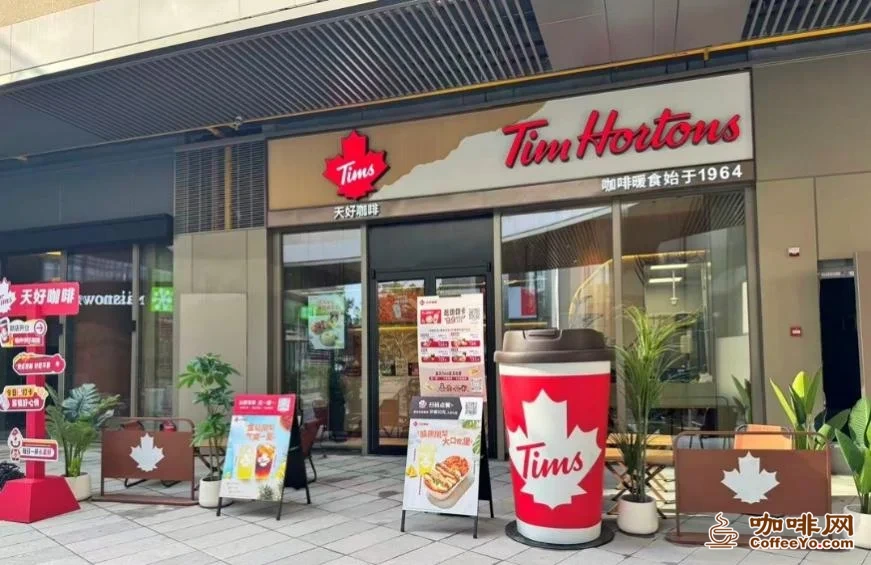 Tim Hortons China Q3: System Sales Up 6.3% Quarter on Quarter
- CRH Plans OATLY Exit, Nayuki Leaves Wenzhou | Tea & Coffee Weekly
 The 2026 Asian Coffee Association Annual Meeting will be held in Dehong, Yunnan, and the Asia ABODY Coffee System Standard will be officially released
 The President of Brazil's Victoria Coffee Business Center (CCCV) led a delegation of four people to Pu'er, Yunnan to conduct a special inspection of the coffee industry
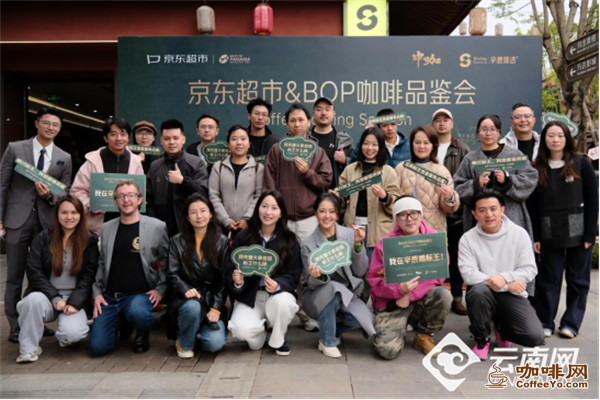 Behind the 1836 yuan "King of Brands": The Full Industry Chain and Offline Layout of Xinlu Coffee
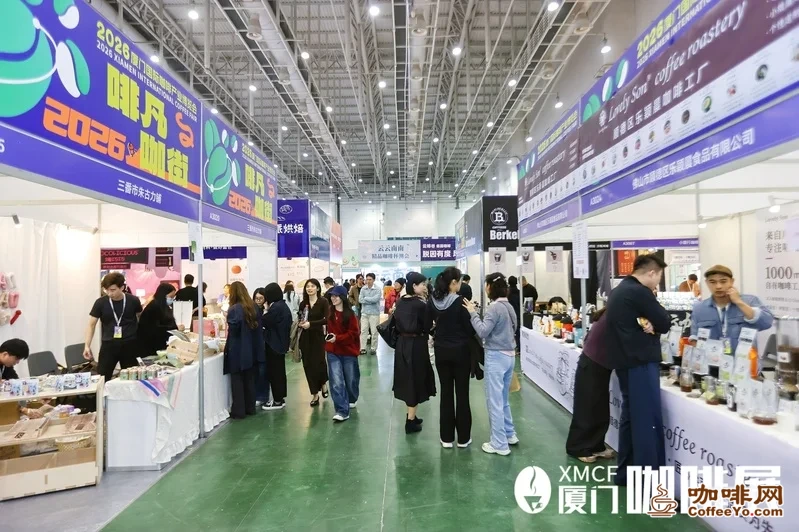 From a raw bean to a fragrant cup, Xiamen International Coffee Exhibition unlocks a new picture of the entire industry chain


 Liaoning ICP Security No. 21122402000217