
At a Glance (China Coffee Network): Mark, CEO of Manlaojiang Coffee, has been rooted in Kunming for over a decade, witnessing Yunnan coffee's move from bulk commodity to specialty benchmark as international coffee entrepreneurs become a key driving force behind Yun Coffee's global expansion.
Editor’s note:
The “Flowers Speak Across Mountains and Seas, Coffee Aroma Links the Silk Road” South and Southeast Asia international communication campaign is under way. As one of its four core segments, the “Coffee Aroma at Dianchi, Flavors Linking the World” Spring City · World Coffee Carnival international communication event builds on Kunming’s geographic advantages and Yunnan’s coffee industry base, using coffee as a bridge to connect domestic and overseas partners and create an international platform for industrial cooperation and people-to-people exchange.
From planting bases in border growing regions to professional competition stages worldwide, from neighborhood cafes to standardized roasting plants, international coffee entrepreneurs have been a constant presence throughout the specialty-coffee upgrading of Yunnan coffee. Having crossed oceans to put down roots in the Spring City, they link upstream and downstream supply chains with domestic and overseas markets, witnessing and driving Yun Coffee’s transformation from bulk commodity to specialty benchmark — both promoters of Yun Coffee’s global expansion and informal bridges between Chinese and foreign cultures.
Starting today, this site launches a series of interviews with coffee entrepreneurs, focusing on international coffee professionals deeply rooted in Kunming. Through their business practice and industry observations, the series presents a concrete picture of Yunnan coffee’s industrial upgrading and reflects Kunming’s open, inclusive character and its vitality in international communication.

Surrounded by greenery in Jinbi Park, inside the Manlaojiang Coffee shop, Manlaojiang Coffee CEO Mark Respinger is brewing pour-over coffee. As the gooseneck kettle tilts slowly, hot water spreads evenly over the grounds, fine foam rises, and a clean, mellow nutty aroma diffuses through the air.
Looking down at the level bed of grounds, Mark says with certainty: “Kunming is the center of Yunnan coffee, and Yunnan is the center of Chinese coffee — more than 97 percent of China’s coffee is grown in Yunnan. For us, this is the ideal place.”
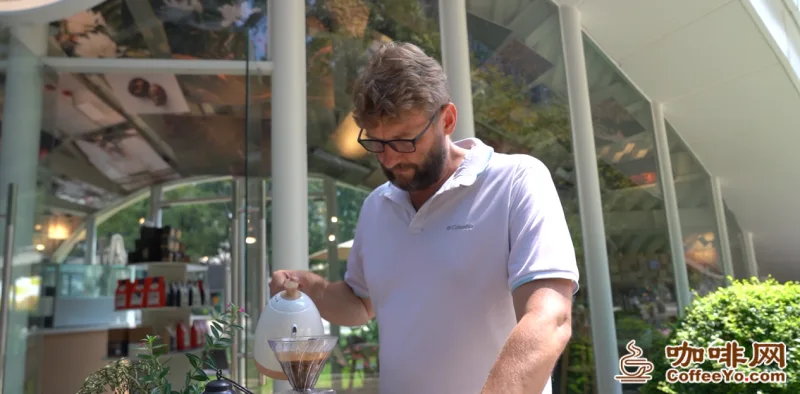
Australian Mark Respinger has lived in Kunming for many years. His roastery is located at the Kunming 871 Cultural and Creative Park, where he built the Yunnan specialty coffee brand Manlaojiang Coffee. Over the years he has sold Yunnan coffee beans across China and overseas.
“Living where other people go on holiday”
Asked why he chose Kunming, Mark’s answer is direct: both life and career can find a home here.
“Kunming’s appeal is all-round. The weather is comfortable, the food is good, the people are friendly, and the business environment is mature.” He calls Kunming a “resort city” for a simple reason: “When you live in a place that people specifically spend their holidays to visit, you know you have chosen right.”
That holiday-like ease has also blended into his daily routine. His home is beside Waterfall Park, where opening the window in the morning reveals greenery and water; his cafe sits in Jinbi Park, quiet amid the bustle; his roastery is in the Kunming 871 Cultural and Creative Park, a converted old-factory complex with broad terraces where guests can sit and slowly enjoy a cup.
Comfortable living is one thing; what truly kept him is the industrial weight behind Kunming. “In specialty coffee, being close to the growing region is the biggest advantage,” Mark says — the fundamental reason he placed his business focus in Kunming.
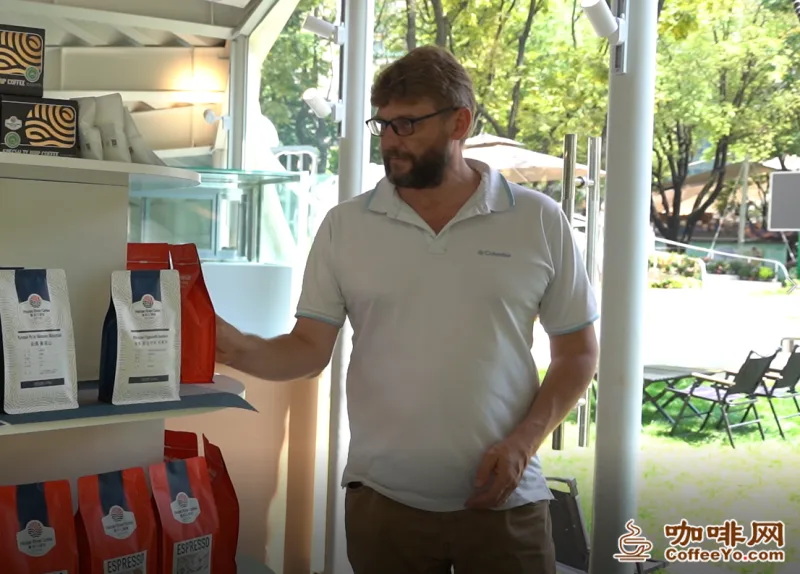
“Let the world see Yunnan coffee”
Many people do not realize that Manlaojiang is not a foreign brand but a local Yunnan one. In the Dai language, “Manlaojiang” means “a river with sweet-tasting water.” A warm river valley and fertile soil produce good coffee and sustain the local community.
In the 1990s, a group of relocated farming households settled here, and coffee gradually became the local pillar industry. Building on these exceptional growing-region foundations, Manlaojiang Coffee started in the fields and steadily built up a mature, complete coffee industry system step by step.
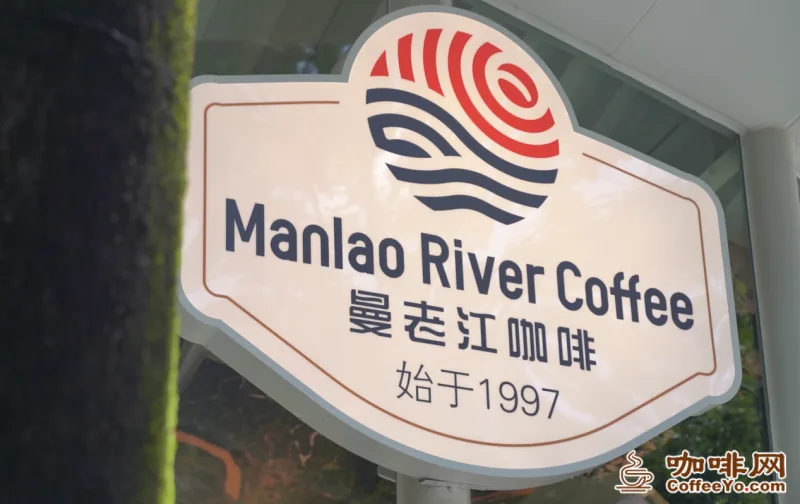
“Manlaojiang was one of the earliest local Yunnan coffee brands.” Mark joined the company much later. “The company began with farms, then added a roastery, and now cafes, connecting the whole industrial chain.”
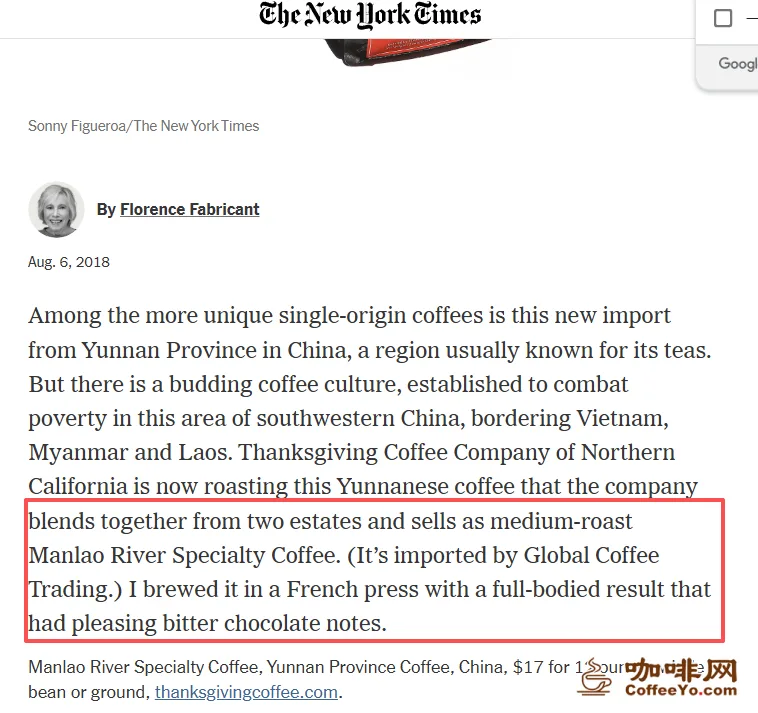
With a complete industrial chain, Yunnan coffee gained the confidence to go global. American food writer Florence Fabricant wrote in The New York Times that Manlaojiang Coffee has “a full body and a pleasurable dark-chocolate flavor”; in 2012, Manlaojiang beans were selected for the World Barista Championship bean list, making them among the first Yunnan coffees to appear on a professional international stage.
“Our idea in doing this was simple: let the world see Yunnan coffee,” Mark says. In the past, the outside world knew little about Yunnan coffee. For this reason, he and his team have long been deeply involved in global professional coffee competitions and industry exchanges, aiming to prove with solid quality that Yunnan coffee fully has specialty-grade capability and can stand firm and claim a place in the international specialty coffee field.
“I can clearly feel how the coffee farmers have grown”
After so many years in the coffee industry, Mark has watched Yunnan coffee change.
“When I first came into contact with Yunnan coffee, it was nothing like this,” he recalls. In the early years most Yunnan coffee was exported at low prices as a bulk commodity. “Back then the outside world only saw Yunnan coffee as cheap raw material; no one would associate it with specialty coffee.”
Change came quickly. In 2025, Yunnan ranked first nationwide in all three indicators — coffee planting area, green bean output, and agricultural output value — with products exported to 43 countries and regions. The share of high-quality green beans rose from 8 percent in 2021 to 41.7 percent, and the deep-processing rate climbed from 20 percent to 85 percent.

Behind these figures lie real changes in the growing regions. “Yunnan today is long past the old image of a single variety and traditional processing,” Mark says. The province has independently bred 22 coffee varieties — Typica, Bourbon and Geisha are all planted — while new processes such as honey processing and anaerobic fermentation are increasingly common, giving the beans far richer flavors than before.
What moves him most are the farmers. “I can clearly feel how the coffee farmers have grown,” Mark says. A new generation of young growers has returned home, understanding both the land and technology. “Now even at the most remote farms in Yunnan you can drink coffee of outstanding quality — something hard to imagine in the past.”
International peers can taste this change too. Francisco Gonzales, co-founder of Nomad Coffee in Barcelona, found in a blind tasting that the best coffee on the table came from Yunnan, with flavors that reminded him of “green apple, sugarcane and dates.” In Mark’s view, with more varieties and newer processes, Yunnan is becoming a “new frontier” for roasters seeking distinctive flavors.
Growth in the domestic market has also given the industry more confidence. “Yunnan produces a great deal of high-quality specialty coffee, and domestic demand for specialty coffee in China is also very strong,” Mark says. “We have the opportunity to keep Yunnan coffee largely in Chinese hands — and I think that is how it should be. This is a local coffee; we produce it and give it to Chinese consumers to drink. That in itself is the best testimony to the coffee journey.”
“In China, you cannot stand still without innovation”
Having shuttled between Chinese and overseas coffee markets for years, Mark has a clear read on Chinese consumers.
“Australian coffee is deeply influenced by Italian culture; people are used to espresso and milk-based drinks, in a very traditional and fixed way,” he compares. “The Chinese market is different: consumers are especially willing to try new things, accepting pour-over and Americano, and eager to experience new blends, new flavors and new formats.”
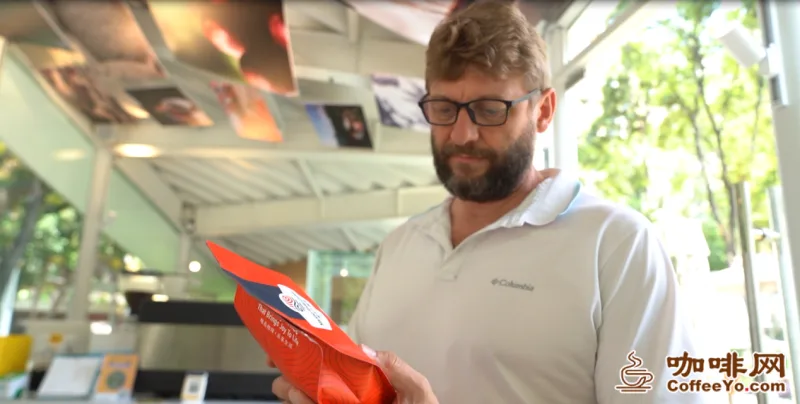
Different markets call for different playbooks. “In Australia, a traditional model is enough to run a stable business, but not in China,” Mark says bluntly. “To put down roots here, you have to keep innovating and keep iterating.”
Looking ahead, Mark remains enthusiastic and expectant. “We still have many innovation plans and new product launches in the pipeline,” he says. Going forward he will stay rooted in Kunming and deepen his work in Yunnan, continuing to tap the potential of the local coffee industry and following the path of “coffee aroma at Dianchi, flavors linking the world,” so that more high-quality Yunnan specialty coffee reaches a wider public and finds its way around the world. (Kunming Information Portal reporters Tan Shiyan and Mao Weixiang)
Reprint Notice & Disclaimer
- This article has been edited and compiled by China Coffee Network and reprinted from Kunming Information Portal, “咖香滇池 味连全球 | 让世界看见云南咖啡——曼老江咖啡CEO马克的“云咖出海记”.” The copyright of the original text belongs to Kunming Information Portal and the original author. This reprint is intended solely for information sharing within the coffee industry and does not represent the views of this website; all data and opinions are subject to the original article. Our thanks to the original author for creating and sharing it.
- Read the original: Kunming Information Portal, “咖香滇池 味连全球 | 让世界看见云南咖啡——曼老江咖啡CEO马克的“云咖出海记””
- For matters concerning content licensing, attribution, copyright or otherwise, please contact us promptly and we will verify and cooperate in handling them as soon as possible. We also welcome coffee origins, brands and industry media to exchange ideas and contribute articles.
- Contact China Coffee Network: Tel 400-0000-641 (+86-18288016826) | Email 405854472@qq.com
Related Reading
 After Four Slow Years in China, Blue Bottle Coffee Picks Up Speed
 Lancang: Over 80,000 Mu of Coffee Enter Harvest, Red Cherries Become Golden Fruit for Farmers
- How Much APEC Is on the Chinese Dinner Table? Starting with a 9.9-Yuan Cup of Coffee
 A Mountain of a Hundred Coffees: Multiple Varieties Enter Harvest Season in Ning’er’s Liming Township
 Star Legend Debuts Pandabot Cafe, a Next-Generation Entertainment Tech Space, in Tsim Sha Tsui
 After Zero Tariffs: One African Coffee Bean’s Journey to Shanghai






 Liaoning ICP Security No. 21122402000217