


Brief (coffeeyo.com): In Bozhou’s Qingyuan Community, a small “In the Tea Mountain” café has become the spark that links a thousand-mu tea garden, lakeside camping and fruit picking into one rural-revitalization story.
How can a cup of coffee awaken a thousand-mu tea mountain? Qingyuan Community, Sancha Town, Bozhou District, has its own answer. Blessed with resources such as a thousand-mu tea garden and the Shangshui Reservoir, the locality has broken from traditional agricultural thinking and, using wild-mountain coffee as a new entry point, linked diverse formats like tea-plantation cultivation, fruit and vegetable picking, and leisure entertainment. A small cup of coffee has activated dormant landscape resources and awakened the revitalization vitality of a rural area.
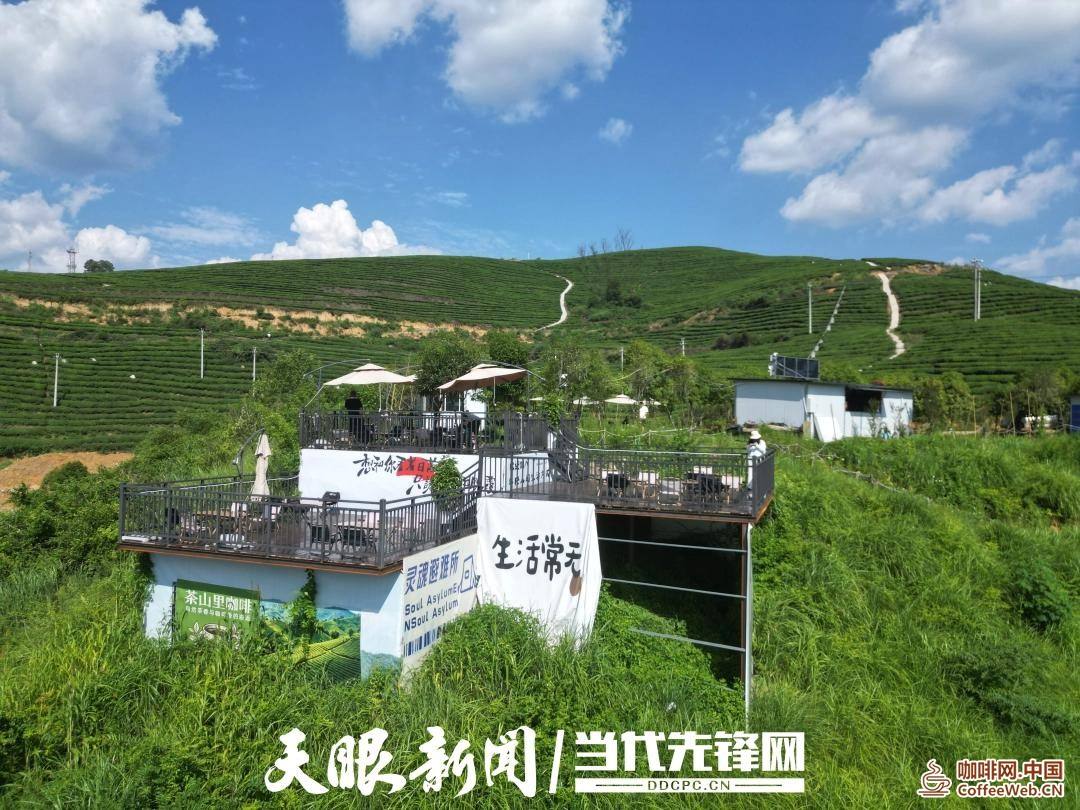
A breeze passes, and lake and mountain scenery set each other off beautifully. The Shangshui Reservoir’s clear waters shimmer; 1,100 mu of tea rows follow the mountain’s contour, a sea of green. The “Chashanli” (“In the Tea Mountain”) rural coffee house, perched by the tea garden and lakeside, enjoys a superb view—open the window to a poetic scene of hills, water, and tea, making it a distinctive check-in spot hidden in the wilds.
On May 18 this year, “Chashanli” coffee shop—built by local returning youth Wang Piao together with friends—officially opened to the public. Speaking of the name’s origin, Wang Piao admitted that the site was chosen precisely for the area’s quality ecology and landscape of contiguous thousand-mu tea mountains; after the team discussed and refined it together, they finally settled on the simple, easy-to-understand name “Chashanli,” which directly highlights the venue’s character and is easy for visitors to remember.
According to Wang Piao, the store operates a diverse range of categories, covering specialty drinks such as coffee, fruit tea, light milk tea, and sparkling water, while also offering signature foods like the “laoguo” (griddle-cooked dish). The project is still in its initial build-out stage, but overall operations are trending well. In the nearly three months since opening, monthly foot traffic has steadily held at 2,000–2,500 visits, with average monthly revenue of 30,000–50,000 yuan. This emerging micro-business has injected fresh cultural-tourism vitality into the once-quiet mountain village.
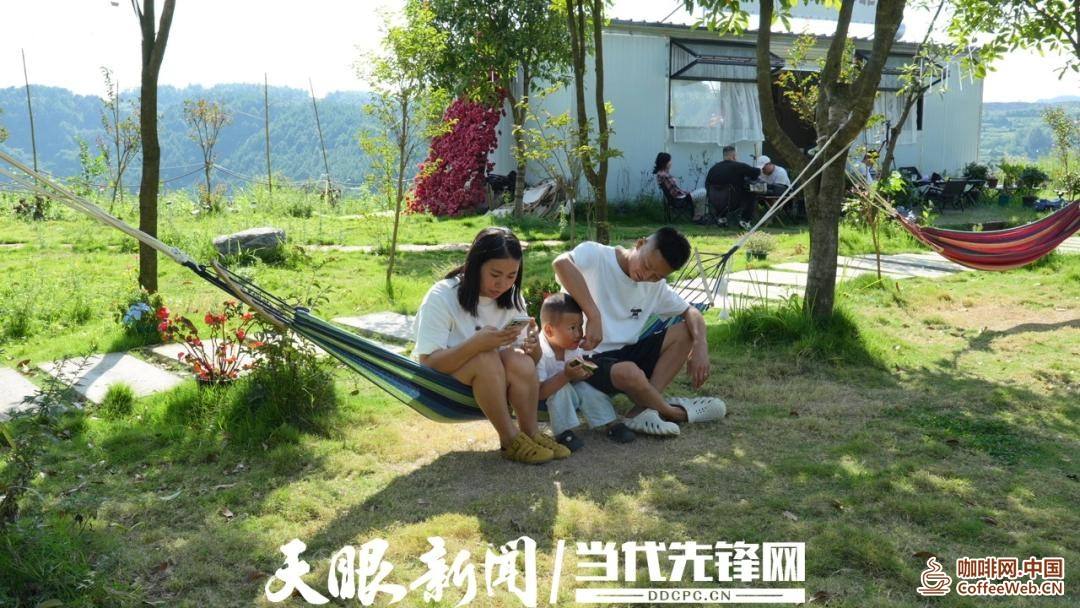
Mountain breezes, lakeside tea aroma, and specialty drinks have made “Chashanli” a place visitors call “you don’t want to leave once you’re here.” Visitor Zhang Zihan shared that the ecology is superb, the cool wind refreshing, and once the lights come on at night the ambiance is instantly maxed out—every casual shot is a blockbuster. The space is open and roomy; you can even bring pets to roam freely. The overall experience is relaxed and pleasant, well worth a visit.
Visitors’ good experiences stem from the locality’s blessed ecological foundation and solid agricultural base. Qingyuan Community owns over a thousand mu of high-altitude ecological tea gardens, featuring quality small-leaf green tea. Through scientific, refined management it achieves stable, high yields, with an annual fresh-leaf output of 2 million jin and an annual tea-garden output value of 1.76 million yuan. The industry continuously drives nearby employment, regularly absorbing over 200 villagers for work.
The scaled development of the tea garden has built a platform for locals to work nearby and increase income stably. Villager Hu Anlin has worked in the tea garden for five years; he told the reporter that his daily duties mainly involve field management such as weeding and fertilizing, working about 20 days a month at 110 yuan a day, increasing his monthly income by about 2,000 yuan.
Hold firmly to the agricultural foundation while making the cultural-tourism story lively. Relying on the ecological advantages of the thousand-mu tea garden and Shangshui Reservoir, the community has broken the single tea-planting model, developing specialty picking bases for cherries and blueberries, and expanding new projects like tea-mountain study tours and farming experiences. It has built an all-area agri-tourism pattern of “pick tea in spring, fruit in summer, study tours in autumn, leisure year-round,” adding value to land and efficiency to industry.
Zhang Pingang, Party branch secretary and community director, explained that since the rural revitalization strategy was deeply implemented, the community has pushed hard on beautiful-village construction. To activate idle resources and shore up livelihood and cultural-tourism gaps, in 2022 the community’s Party and village “two committees” broadly gathered public opinion and pooled collective wisdom; after thorough discussion and planning, they settled on a development approach to activate quality idle resources like the Shangshui Reservoir and thousand-mu tea mountain, focusing on building a rural-tourism complex integrating hiking, camping, lodging, and leisure entertainment.
In recent years, by activating idle assets for external leasing, Qingyuan Community has kept deepening the “Qingyuan Tea Mountain” cultural-tourism brand and improving study-tour support, achieving over 120,000 yuan in annual collective income growth. The community reinvests all collective earnings into upgrading rural infrastructure, while promoting a “Party members lead + public participation” governance model that guides villagers to take part in environmental care and cultural-tourism service. Riding the dividend of cultural-tourism industry development, the community has successively nurtured rural farmhouses, driving dozens of people into nearby employment and stable income growth, letting the public share the fruits of rural revitalization.
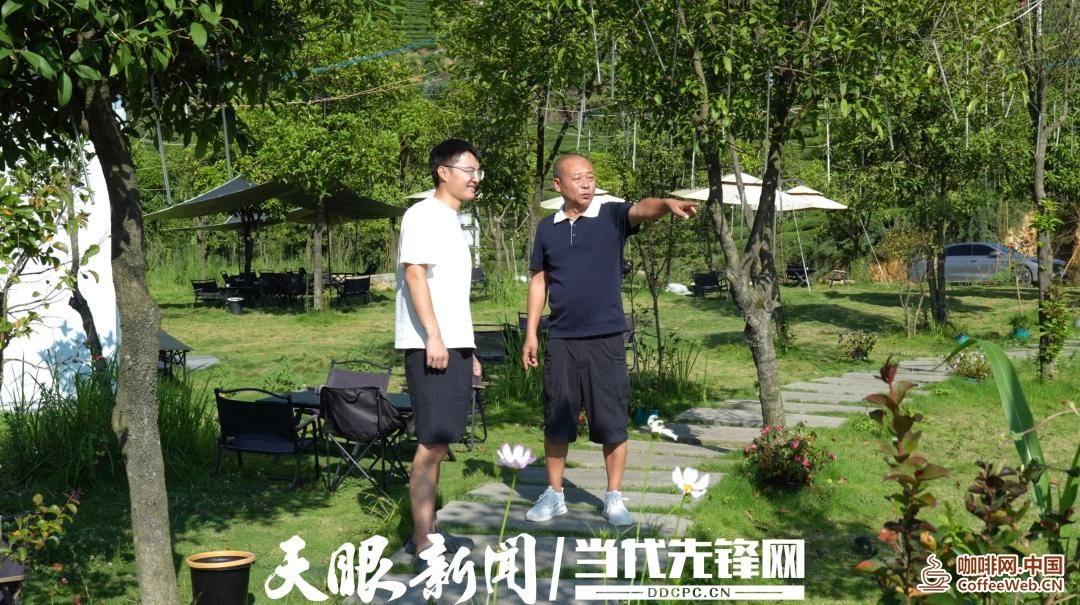
To further shore up rural-tourism experience gaps and link all-area formats, since the start of this year the community has innovated its development thinking, using wild-mountain coffee as the entry point to turn quality ecological resources into cultural-tourism products that can be experienced, consumed, and turned into income. A small rural coffee house successfully links diverse formats like tea-garden picking, fresh-fruit experiences, and lakeside camping, achieving deep integration and linked development of agriculture and tourism and opening up the rural industry chain.
Speaking of the next-step development plan, Zhang Pingang said the community will keep improving its all-area cultural-tourism support system and precisely fill tourism-development gaps. It plans to build new homestays to solve visitors’ lodging problems, while also building an RV camping base, continuously enriching tourism formats and raising comprehensive reception capacity, deepening the agriculture-tourism integration path so that green hills and clear waters keep empowering people to increase income and prosper, advancing high-quality rural revitalization.
Five years ago, the village Party and “two committees” sat together to plan; facing the thousand-mu tea mountain and the clear waves of Shangshui, they pondered “how to give the people somewhere to go and money to earn.” Today, a cup of coffee gives the answer. From activating idle assets to introducing new formats, from improving support to nurturing industry chains, every step embodies the foresight and responsibility of the grassroots Party organization. The tea mountain is the industrial root watered by sweat; the clear water is the ecological wealth gifted by nature. Hills, water, and people meet here; resources and wisdom blend here—Qingyuan Community’s revitalization practice is a vivid footnote to the “plan ahead, act in earnest” approach of its Party and village committees.
Tianyan News reporter Pan Shutao; Bozhou Rongmei Liang Liting; Yu Yuexin, Yang Longxian; Editor Cheng Peipei; Second review Wu Haoyu; Third review Tang Zhengping. Source: Tianyan News.
Reprint Note & Disclaimer
- This article is reprinted from Chinese media for information and cultural exchange. The views expressed are those of the original author and do not necessarily reflect the position of coffeeyo.com.
- All trademarks, brand names and logos mentioned belong to their respective owners.
- For cooperation, reprint or correction requests, please contact coffeeyo.com.
Reprint Notice & Disclaimer
- This article has been edited and compiled by China Coffee Network. The information and images therein come from public sources and the copyright belongs to the original author. This reprint is intended solely for information sharing within the coffee industry and does not represent the views of this website; all data and opinions are subject to the original article. Our thanks to the original author for creating and sharing it.
- For matters concerning content licensing, attribution, copyright or otherwise, please contact us promptly and we will verify and cooperate in handling them as soon as possible. We also welcome coffee origins, brands and industry media to exchange ideas and contribute articles.
- Contact China Coffee Network: Tel 400-0000-641 (+86-18288016826) | Email 478203668@qq.com | Address: Jinghong, Xishuangbanna, Yunnan Province / Tieling, Liaoning Province
Related Reading
 Jiangxi Wuyuan: Rural Coffee Unlocks New Cultural Tourism Formats
 Jiangxi Wuyuan: Rural Cafes Unlock New Cultural Tourism Formats
 Global quality goods gather at Hongqiao Import Commodity Exhibition Center, setting "Chinese standards" for coffee
- Global premium products gather to set China's coffee standards as Hongqiao Import Commodity Exhibition Center keeps the CIIE spirit alive
- Global quality goods gather as Hongqiao Import Commodity Exhibition Center and CIIE forge lasting partnership to set China's coffee standards.
 Zhejiang "Science Cafe" Promotes Embodied Intelligence in Real-World Scenarios


 Liaoning ICP Security No. 21122402000217