


At a Glance (China Coffee Network): Drinking coffee at cafes every day, whether a 9.9-yuan Luckin or a 30-yuan specialty, what you see are packaged finished products.
Drinking coffee at cafes every day, whether it is a 9.9-yuan Luckin or a 30-yuan specialty drink, what you see are all packaged finished products. Over time, this can create a kind of ‘nature-deficit’ perception: that coffee is supposed to be this way, or that one forgets, or never even knows, that coffee is originally a plant, a fruit much like a cherry, just as some children raised in cities assume rice and vegetables come from supermarkets.
I wanted to visit a coffee-growing region, to see coffee planted in the fields and growing on trees, and to trace how a single seed becomes a drink. So I headed straight for Pu’er: Yunnan contributes over 98% of China’s coffee output, and Pu’er is the core producing area with the largest planting area and highest yield in the province. Pu’er produces 58,000 tonnes of coffee a year, nearly half of the national total. On China’s coffee-growing map, one out of every two cups of coffee beans comes from Pu’er, truly a fitting ‘Coffee Capital of China’.
Located in the southwest of the Yunnan-Guizhou Plateau, Pu’er borders Yuxi and Honghe to the east, Xishuangbanna to the south, Lincang to the west, and Dali and Chuxiong to the north; to the southwest it meets Myanmar. Daytime highs reach 28°C, which feels quite comfortable. The city’s shared e-bikes let me unlock a new skill: wandering around on an electric scooter, quickly getting to know this city filled with the aroma of coffee.
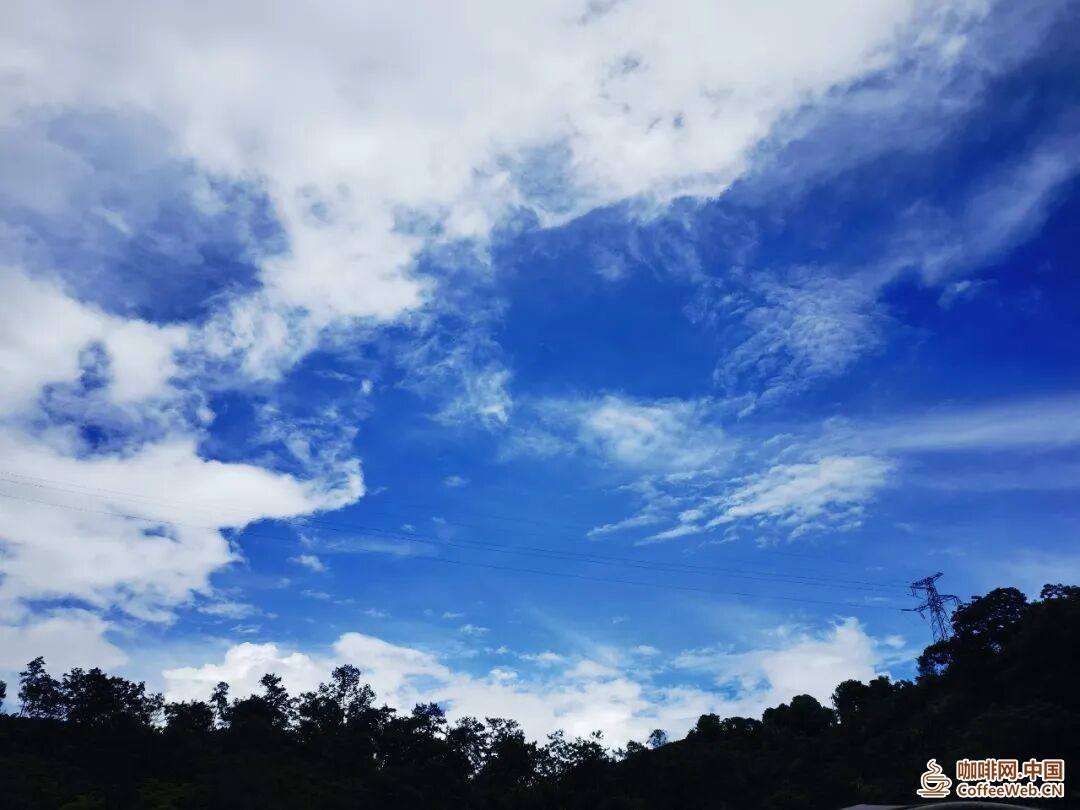
First Taste of Coffee on Daijia Lane
Daijia Lane is Pu’er’s coffee street. This alley, a little over 200 metres long, was once a post station on the Qing-dynasty Tea Horse Road and still holds nine old buildings from the late Qing and early Republican era. Change began in 2021, when young returnee entrepreneurs converted a century-old house into an experience space combining coffee and cultural creativity. Cafes, teahouses and creative shops then sprang up, and for a while it was ‘coffee in the left hand, tea in the right’. The most popular cafe was packed, the counter had stopped taking orders, and you could only order once a seat freed up.
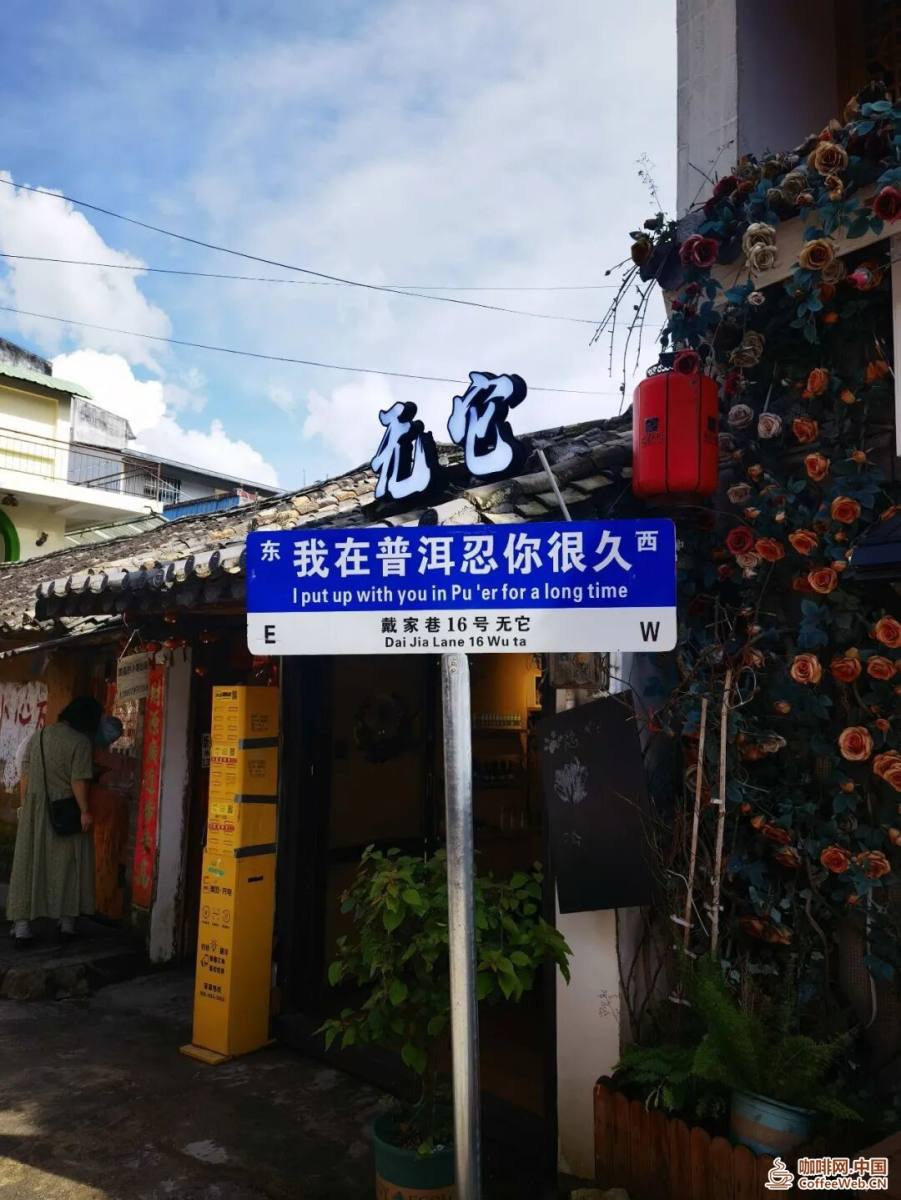
A sign on the street made people laugh: ‘I’ve put up with you for a long time in Pu’er.’ People posed with it, laughing. At the door of one cafe stood a giant avocado sculpture; avocado latte seems to be a signature of Pu’er coffee. After asking locals, I learned that Pu’er is also a core avocado-producing region: its fresh fruit accounts for over 80% of domestic avocados, directly replacing 15% of imports.
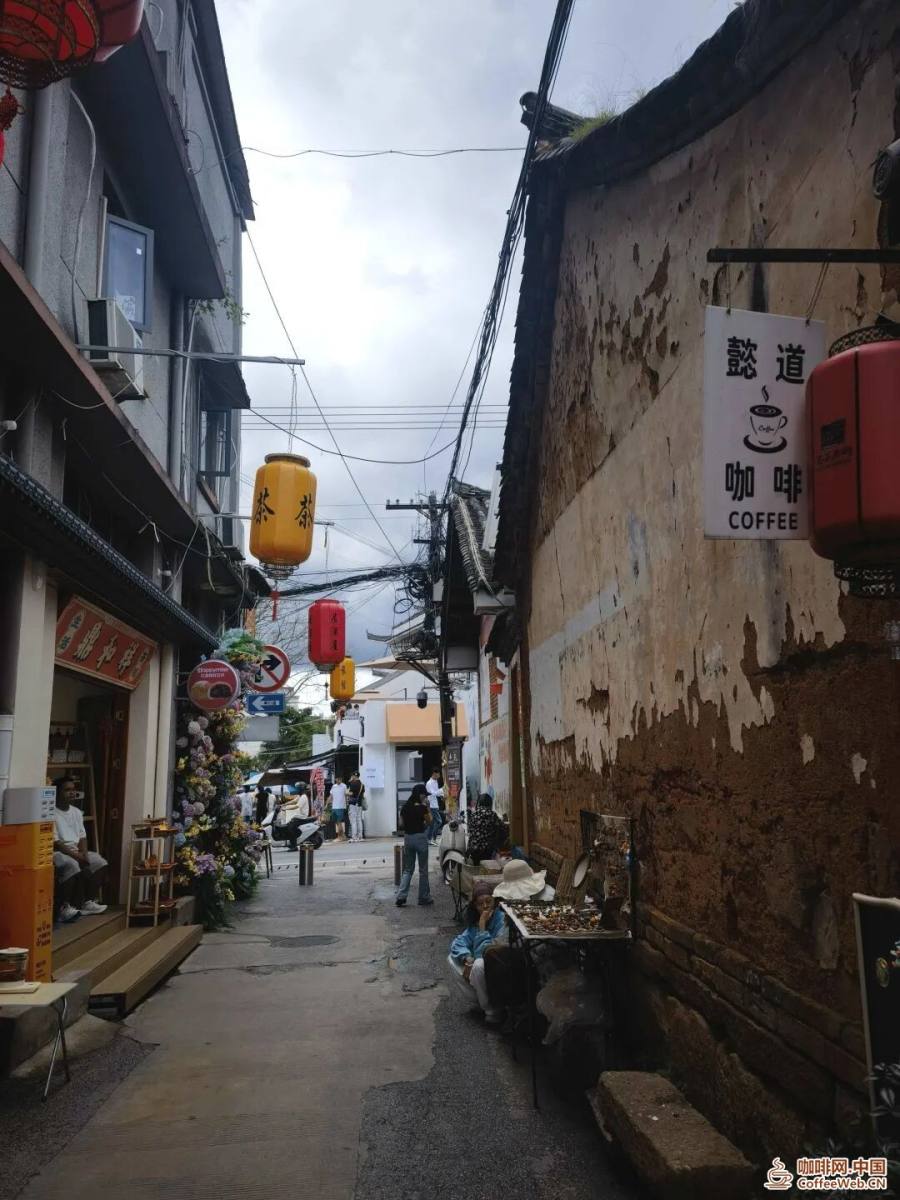
– Street view of Daijia Lane, Pu’er
The avocado’s story has been full of twists. Native to Central and South America, this fruit only became popular in recent years. Rich in unsaturated fatty acids and a staple of light meals, it was labelled ‘healthy’. Yet its neither-sour-nor-sweet taste made it an awkward fruit, until it met coffee and everything changed.
The mellow body of coffee and the creamy texture of avocado blend into a distinctive flavour spark that has become a signature at many cafes. I randomly ordered an avocado latte. Eaten alone, avocado is bland as wax; mashed and mixed into coffee, the taste clearly rises to another level.
At the corner is Zhenxiang Coffee, whose signature is a handmade yogurt dirty; stirred together, it has a unique flavour. The owner, Uncle Lang, calls out to passers-by, ‘Have a drink, have a drink’ (the shop also sells whisky). A regular sat down, ordered a coffee and a drink, and started chatting. Hearing him talk so knowledgeably, I asked him, as a coffee novice, for tips on a ‘coffee tour’ of Pu’er. He said he was also a ‘newbie’, surnamed Bai.
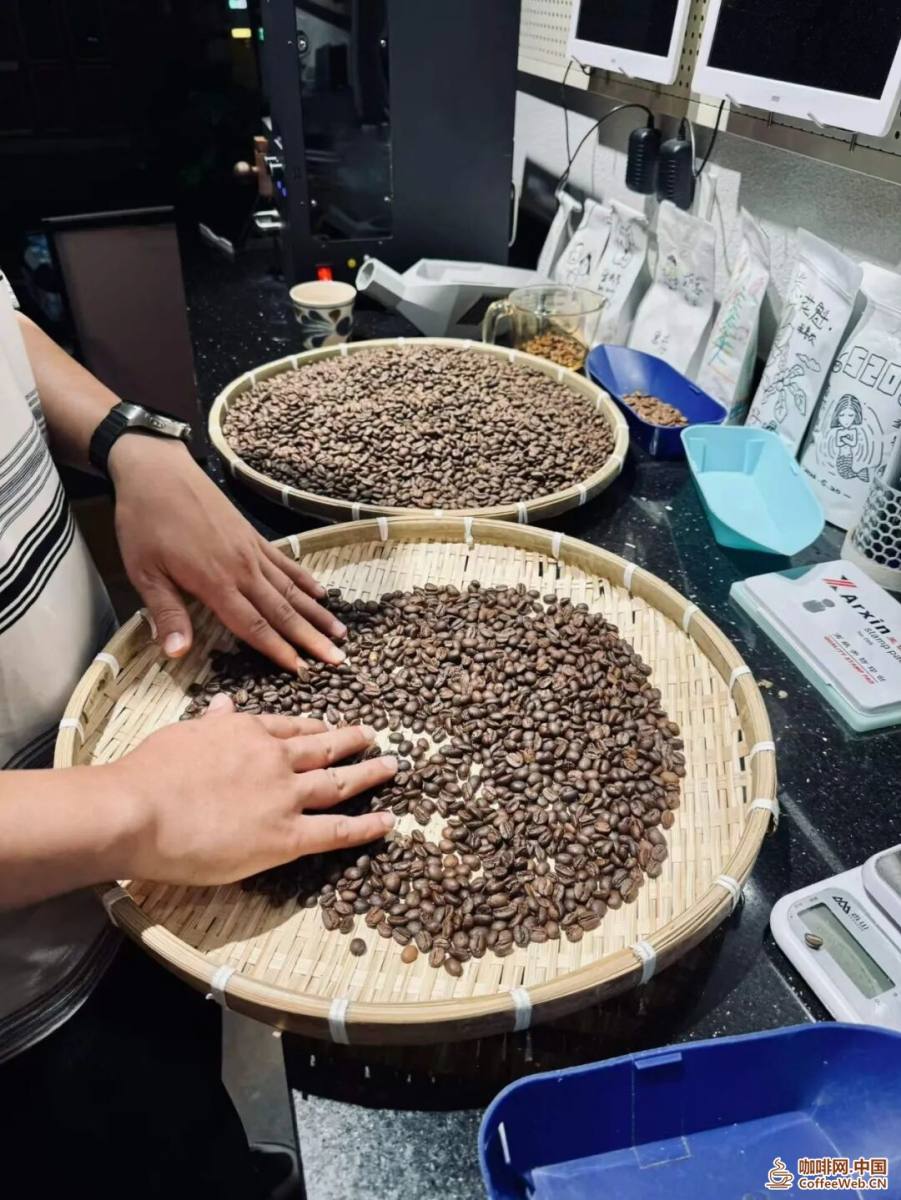
– Uncle Lang, owner of Zhenxiang Coffee, roasting beans. Photo courtesy of Uncle Lang
Xiao Bai is actually quite senior: he is now a barista and once worked as a coffee-training instructor. In his view, Pu’er coffee truly began its path toward modernisation and industrialisation in 1988. That year Nestle entered Pu’er, leased eight mu of land on the outskirts, and began coffee trial planting. Spurred by Nestle, by the following year Pu’er’s coffee planting area was already the largest in Yunnan.
People in Pu’er don’t seem particular about when they drink coffee, day or night. ‘For instance, when I get home at night I keep coffee by the bed; I drink whenever I feel like it, and it doesn’t seem to affect me; anyway I sleep well.’ This reminded me of lychee growers I once visited in Hejiang: they were just as casual about how they ate them; lychees with hotpot was routine. It seems real practitioners are all a bit ‘immune to everything’.
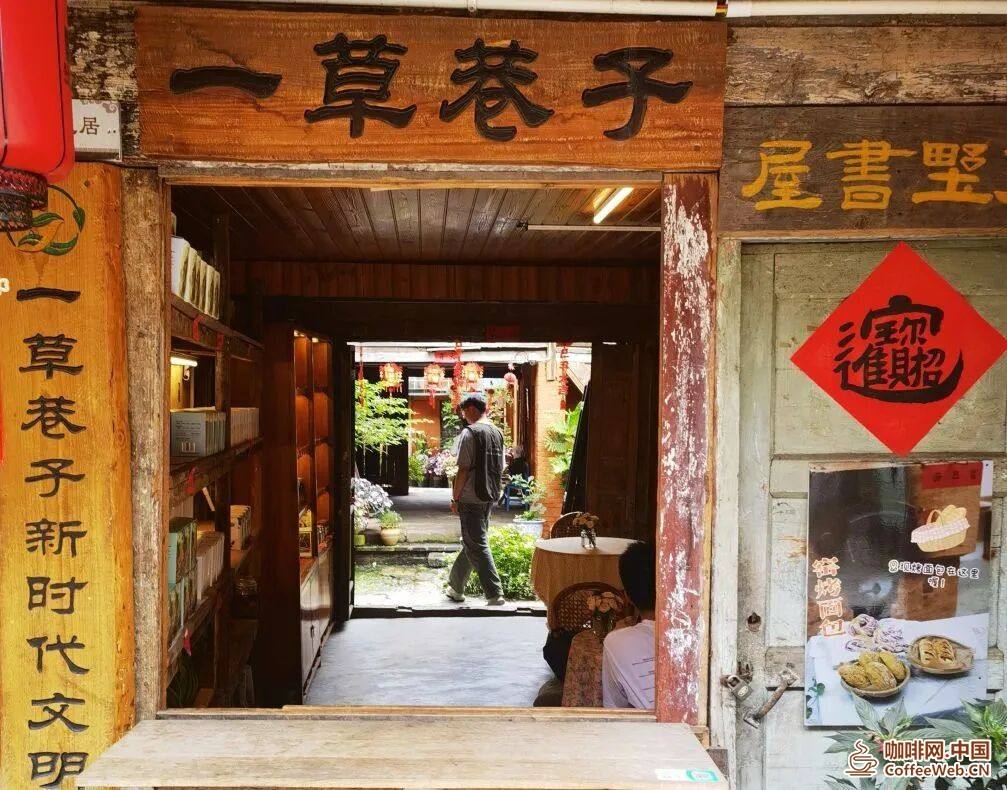
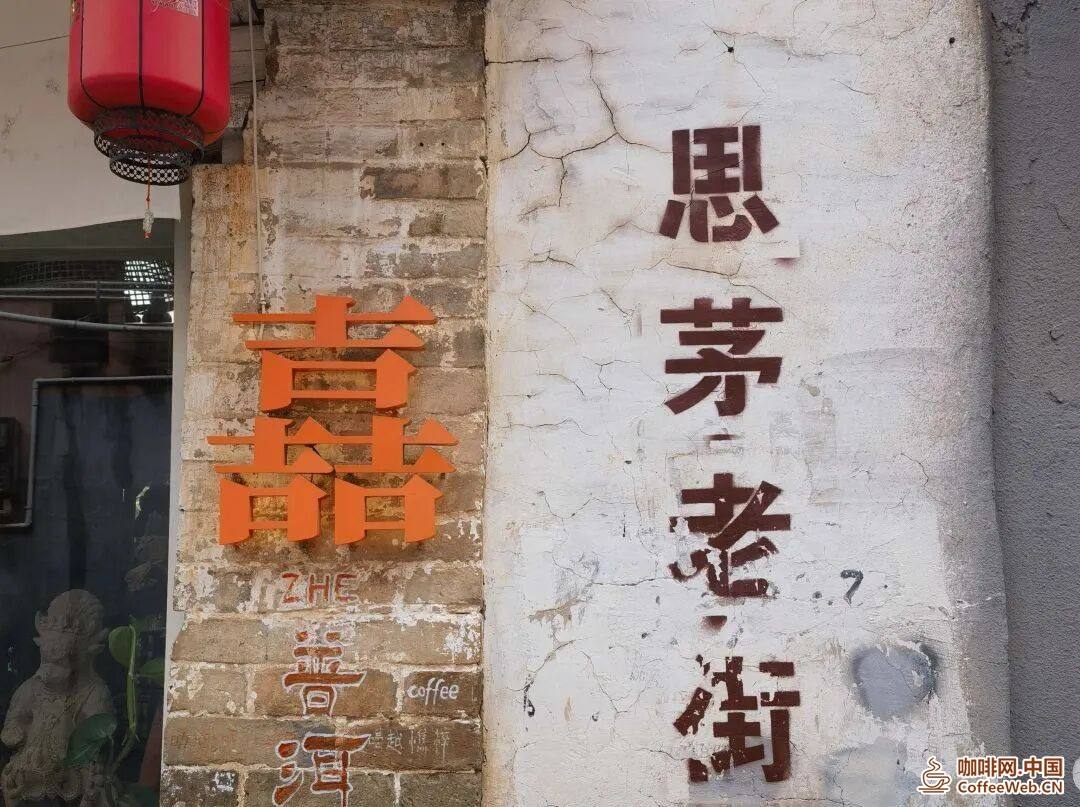
– A small shop on old Daijia Lane
Over the years, tens of thousands of people have come to Pu’er to learn about coffee, from across the country and around the world. Pu’er is a bit like ‘the Shaolin Temple of coffee’. Xiao Bai has met students from Southeast Asian countries as well as Switzerland, Italy and the US, who study while travelling in Pu’er. ‘A high-end course costs 16,000 yuan. If you come from Chengdu, with flights, meals and lodging, ten-odd days will run to around 30,000 yuan no matter how you calculate it.’
Local Pu’er media reported: ‘Through its ten-thousand-barista training support programme, Pu’er is forging a new path of integrated talent, industry, culture and tourism development, gradually shaping a vibrant new image as a city of entrepreneurship.’
Someone on the street was roasting beans with an old hand-crank roaster, like a demonstration or performance, and passers-by could try it. The machine was pitch black, much like a well-seasoned popcorn maker, yet the beans it produced were very fragrant. I said it somehow smelled better than coffee in Chengdu. Uncle Lang said, ‘Not at all, it’s the same. Chengdu’s coffee is formidable and the competition fierce; I went to check it out.’
‘Freshness,’ Xiao Bai said. ‘Because it’s fresh.’
‘Exactly, you’re right, right to the point.’ I could not agree more.
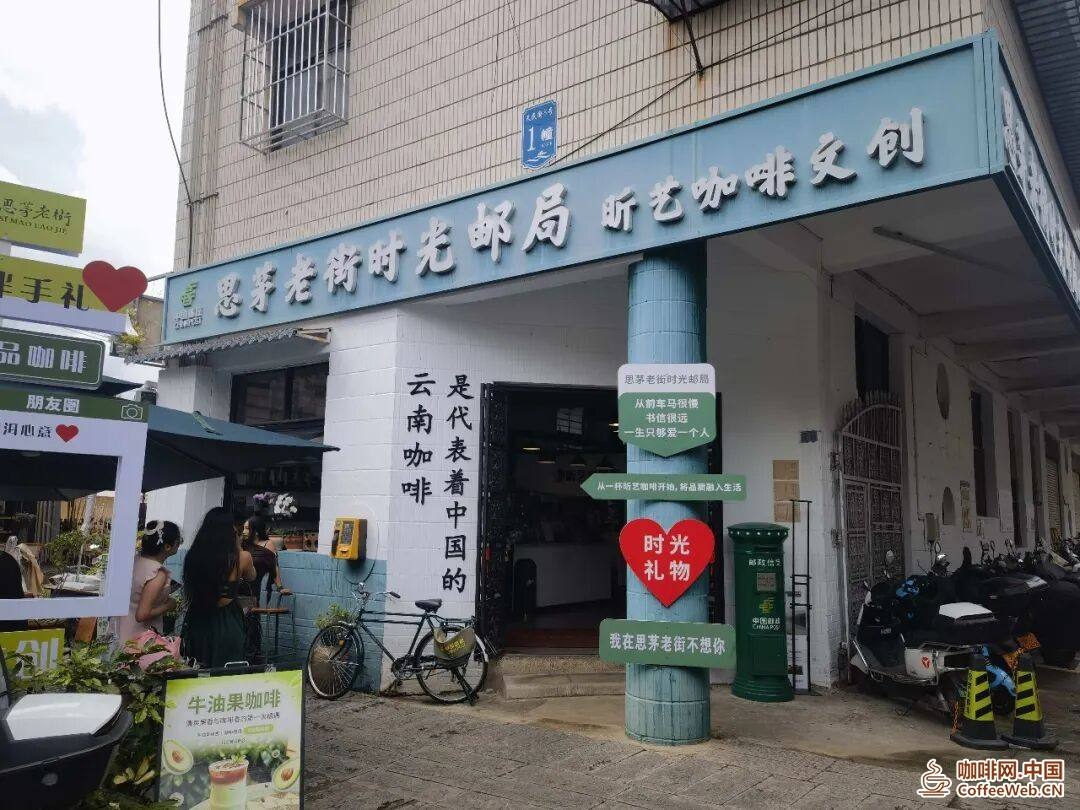
– A cafe on Pu’er’s old street
All-You-Can-Drink ‘Nine Cups’ at the Coffee Estate
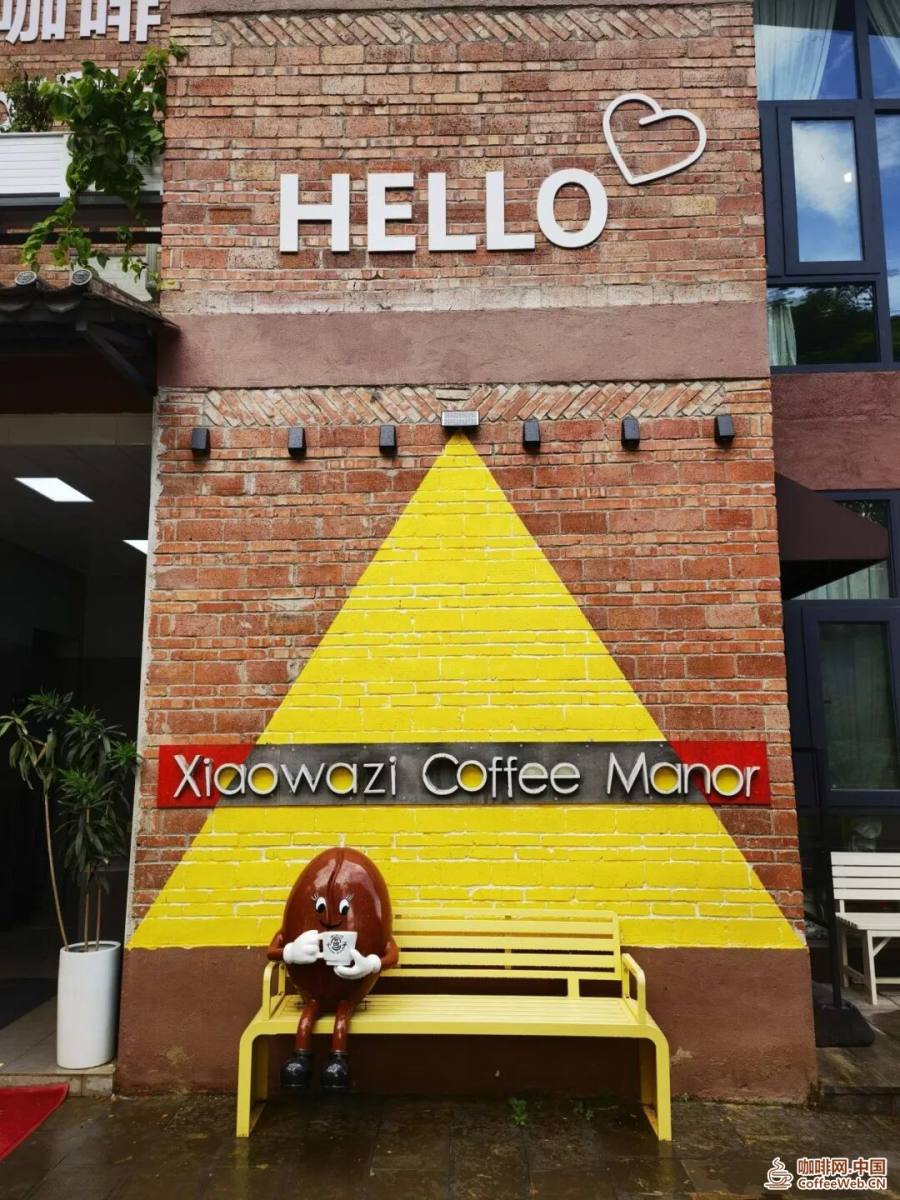
Since this was a ‘coffee tour’, a coffee estate was a must. Unfortunately the forecast showed rain all week; with news of flash floods and mudslides in mind, to go or not to go became a real question. Just as I hesitated, a downpour began. People scattered for shelter and the streets filled with misty rain. In the afternoon the rain stopped and the sun came out, so I decisively took a taxi up the mountain to Xiao’aozi Coffee Estate.
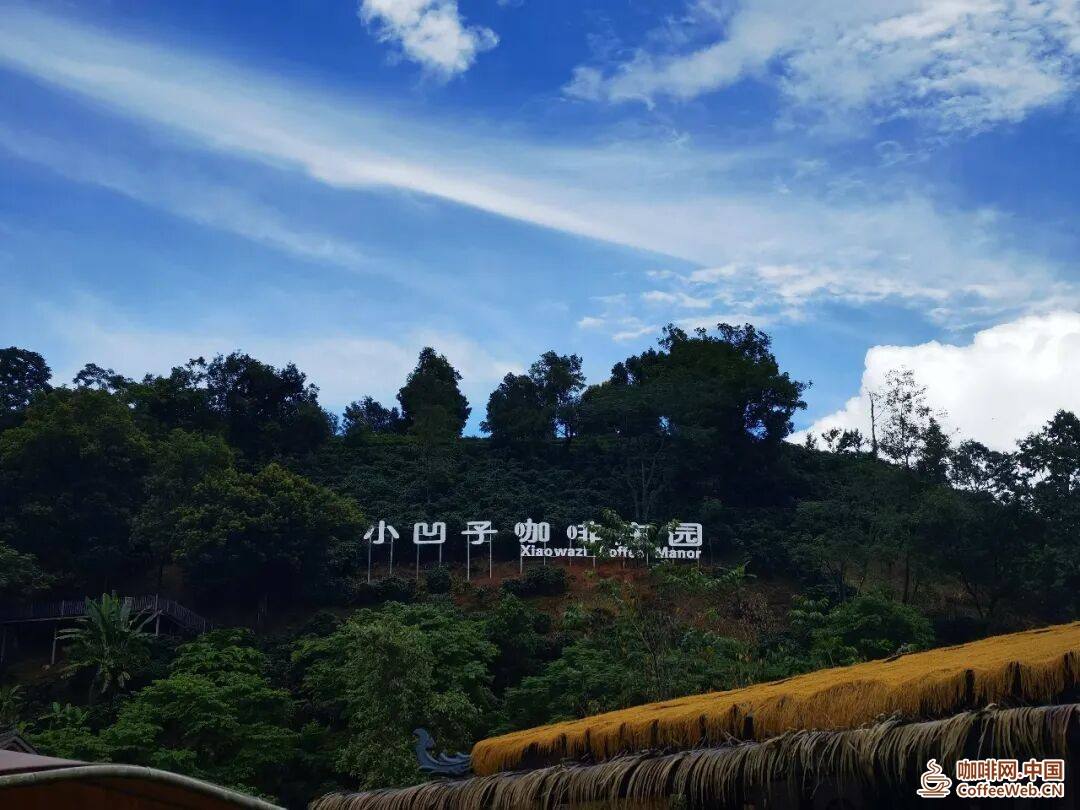
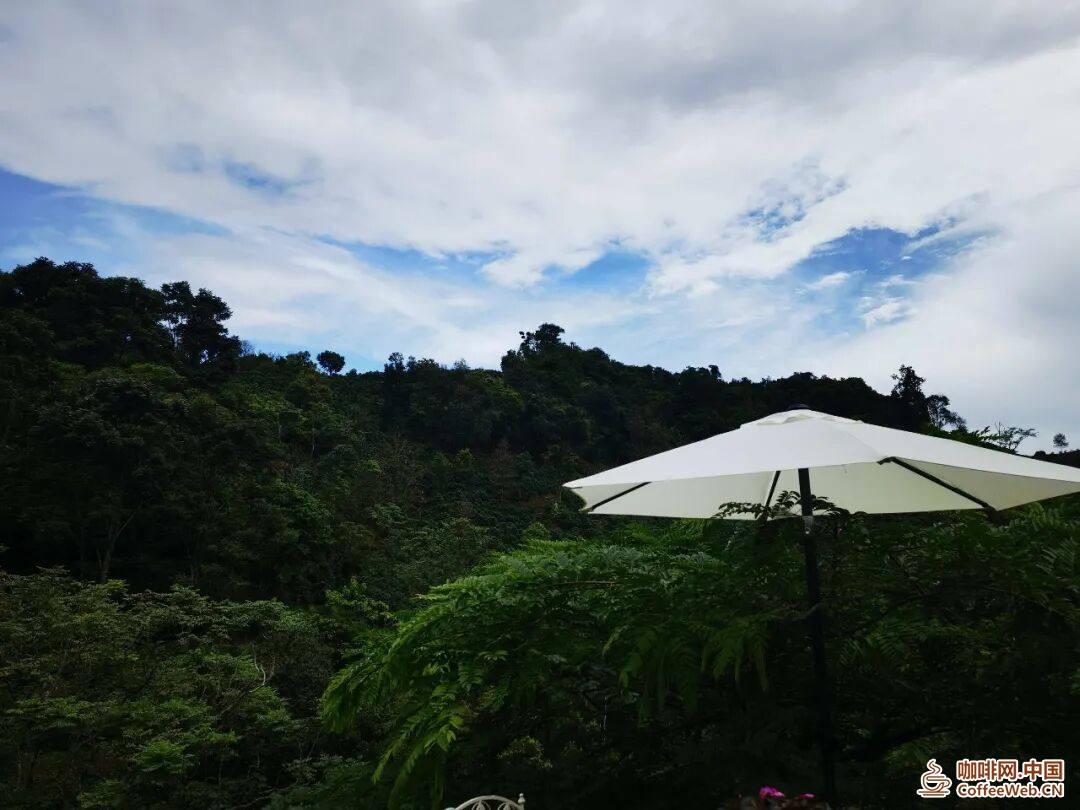
Xiao’aozi Coffee Estate is about a 30-minute drive from downtown Pu’er, with 300 mu of ecological coffee forest at 1,100 metres above sea level, ringed by green hills and wrapped in cloud, the slopes dotted with football-sized jackfruit.
Founded in 1997, the estate is now run by its third generation. Today it is a complex combining study tours, sightseeing, tasting and vacations. The film ‘Coffee or Tea?’ was shot here; it tells of three young people returning from the big city to a Yunnan village to start a business, a story spiritually rather similar to the three generations who devoted themselves to coffee at Xiao’aozi.
– Young people singing at the self-service ‘Lakeside Music Hall’
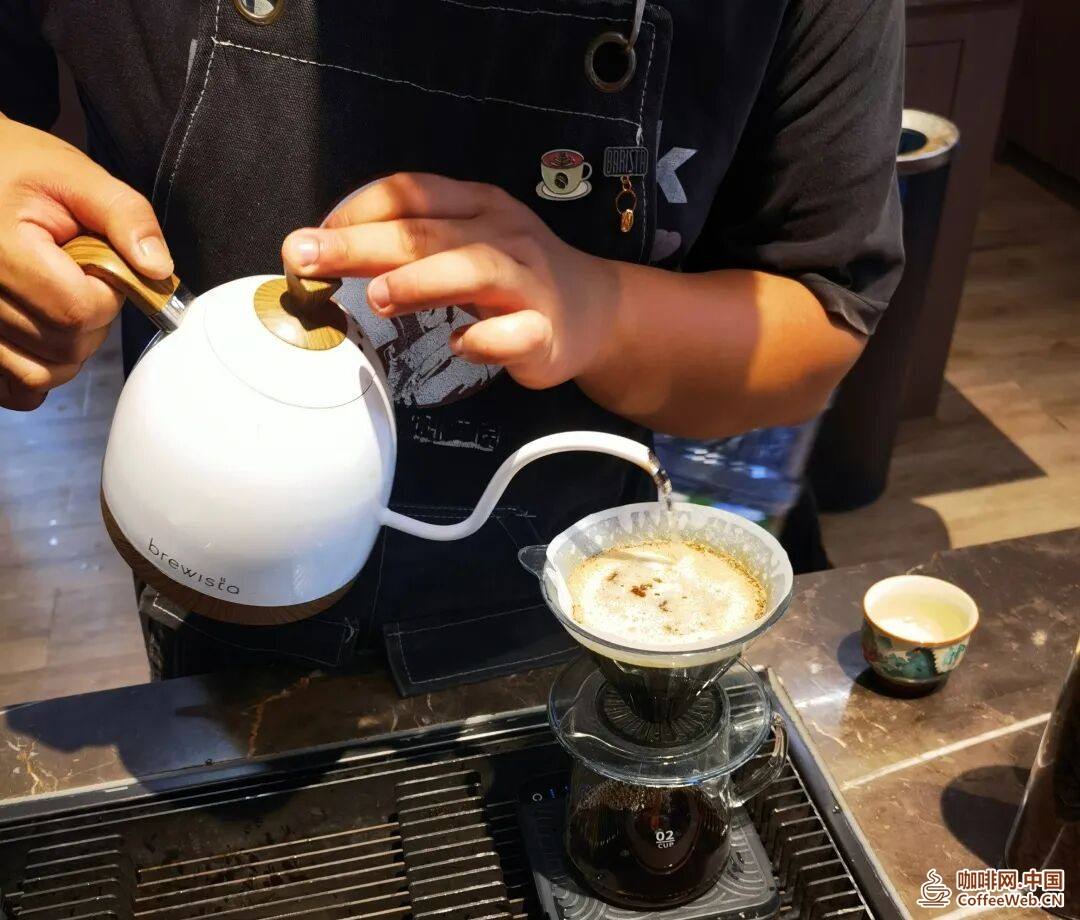
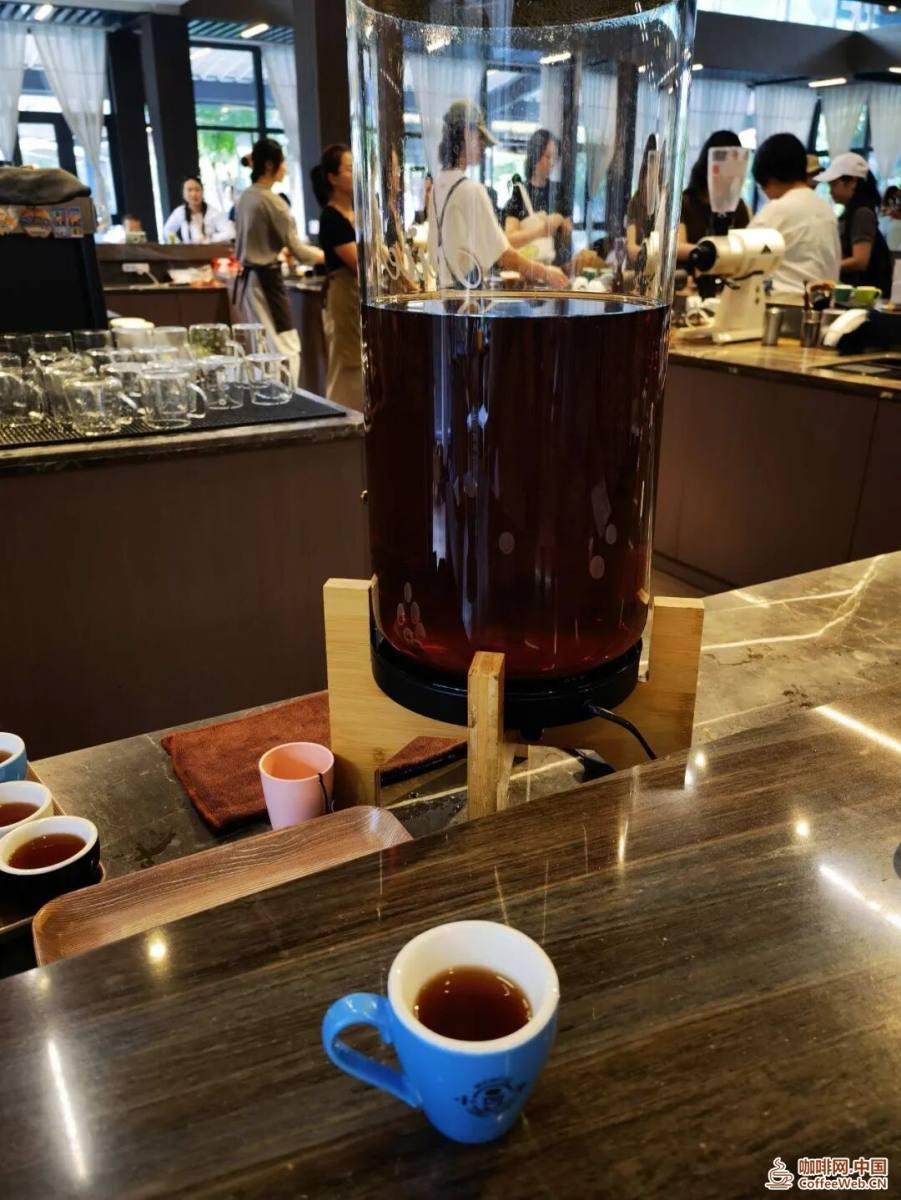
The 60-yuan entry ticket includes one guided talk and nine pour-over coffee flavours with unlimited refills. The reception hall feels like the waiting room of a forest station. On entering, staff lead you to a seat. I sat at the bar, watching the barista make coffee while tasting the nine flavours.
First came cascara tea, sweet, sour and refreshing. Staff explained that cascara is a tea made from coffee cherry skin and pulp through drying and fermentation. Coffee cherries look like cherries; in the past, when people extracted the green beans inside, the skin and pulp were often thrown away as waste. As coffee use deepened, people found the skin contains natural sugars and aromas, and the brewed tea carries notes of dried fruits like red dates and hawthorn, a uniquely tasty, healthy drink.
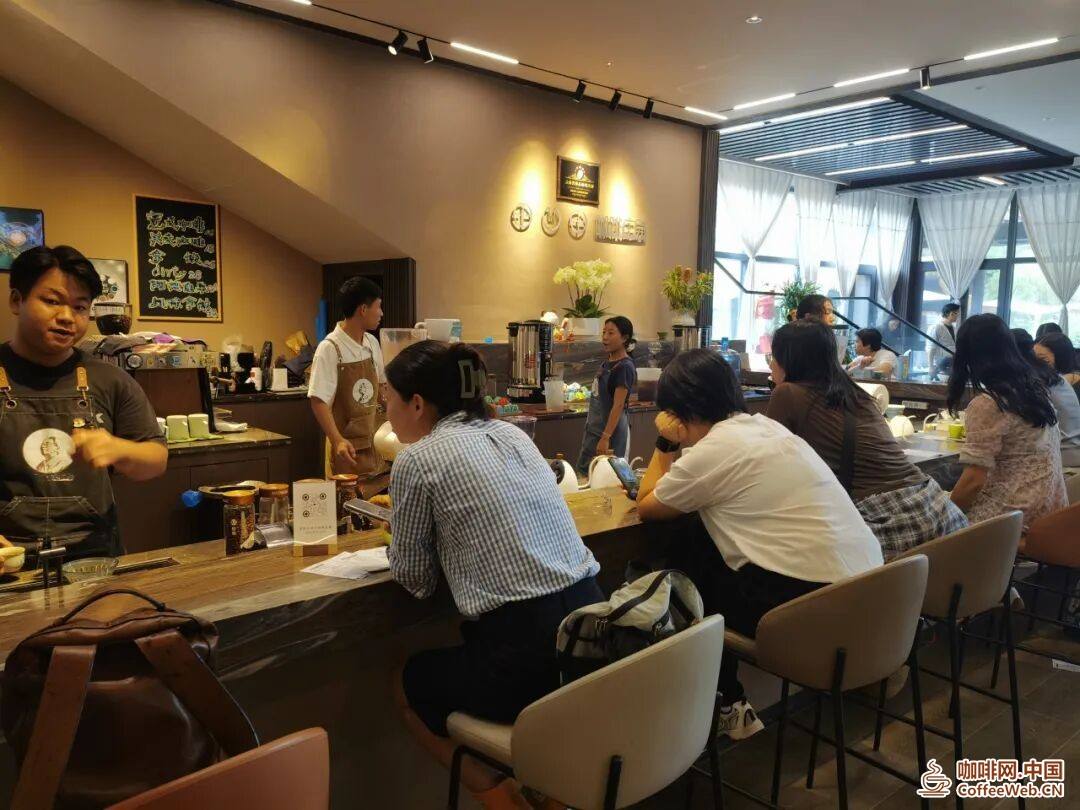
– Visitors drinking coffee at the estate
Next came ‘First Love’. This is the name of a very popular specialty bean and the estate’s signature flavour. A few fun details: the estate was founded on 14 February 1997 (Valentine’s Day), and the current owner also married on Valentine’s Day, hence the name ‘First Love’. A little far-fetched perhaps, but it tastes as named, slightly sweet, sour and bitter, something like love. Then came ‘Encounter’, ‘Ao’s Honey’, ‘Ao’s Charm’, ‘Sunflower’ and so on; by the end my palate was numb and everything tasted the same, light or strong indistinguishable.
Coffee done, it was time for a wake-up science talk. Everyone moved to a meeting room on the second floor, where a staff member opened a PowerPoint and began a witty, humorous explanation (a stand-up routine) –
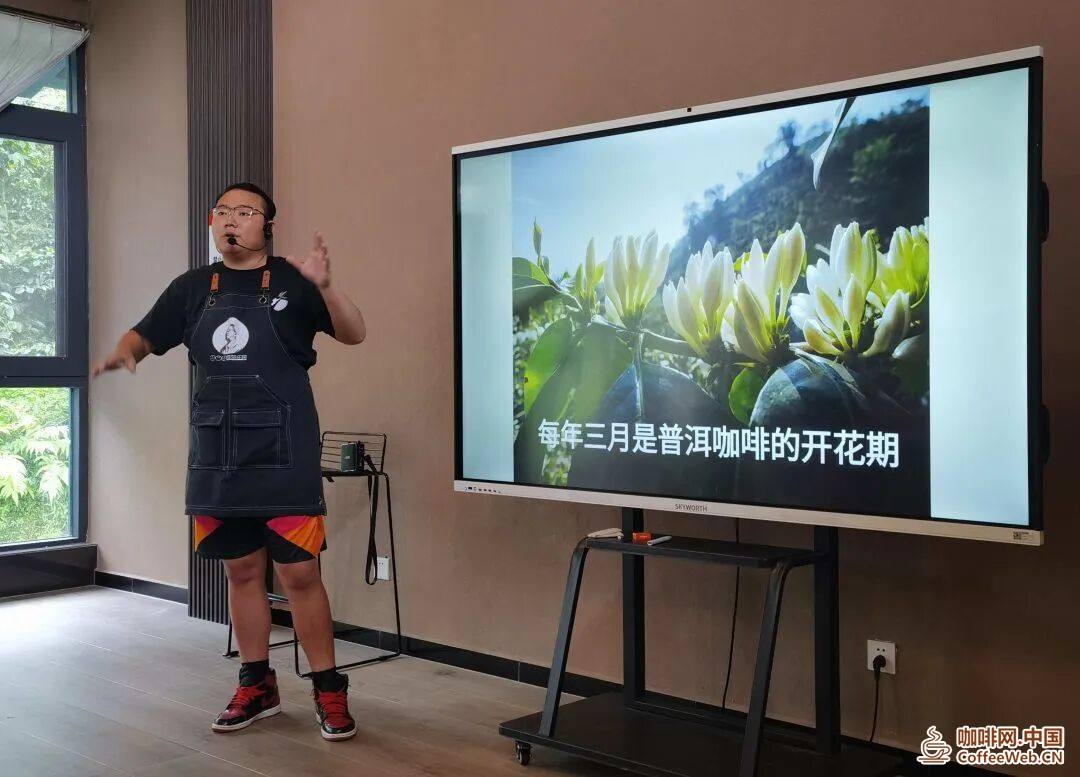

– A coffee-knowledge talk at the estate
‘The estate’s name can be read Xiao’ao (ao) zi, or Xiao’ao (wa) zi; just don’t read it as Xiao-tu-zi (little rabbit).’
‘Take as many coffee seedlings from the field as you like. Remember three things when you get them home: don’t let them go hungry, don’t let them get cold, don’t let them get too hot. Not hungry, plenty of nutrients; not cold, never below 8°C; not too hot, never above 38°C. So the climate between the Tropics suits them best.’
‘If you plant lychee, banana, durian or mango trees beside coffee trees, does it affect the taste? Have you ever eaten a mango-flavoured potato? No, right. Same-plant pollination isn’t affected by other fruit trees. If you buy coffee that tastes of pineapple, mango or lychee, never buy it, it’s absolutely a scam. They must have added something artificial!’
‘Is it good to drink coffee on an empty stomach in the morning? Remember, generally don’t drink coffee on an empty stomach. Caffeine stimulates the stomach’s parietal cells to secrete acid, and high acid directly irritates the gastric lining, so it’s best to have it with food.’
‘Right everyone, the coffee we usually drink is called office-drone coffee, right? What do we call the coffee we drink at the estate today? Today it’s coffee made for you by office drones. Ah, here I am, an office drone day in and day out, making coffee. Thank you all!’
The talk over, I was about to grab a few coffee seedlings to take home when rain started again, so I could only keep drinking coffee. That afternoon I drank the most coffee I ever had, genuinely stuffed with it. Anyway, I had an early train to Kunming the next morning, so insomnia was no worry.
In Kunming, as the last stop of the ‘coffee tour’, I visited the Yunnan Coffee Factory. China’s first modern coffee processing plant, it was a 1992 cooperation project between China and the United Nations Development Programme; its completion and operation ended the history of China having no modern coffee factory of its own.
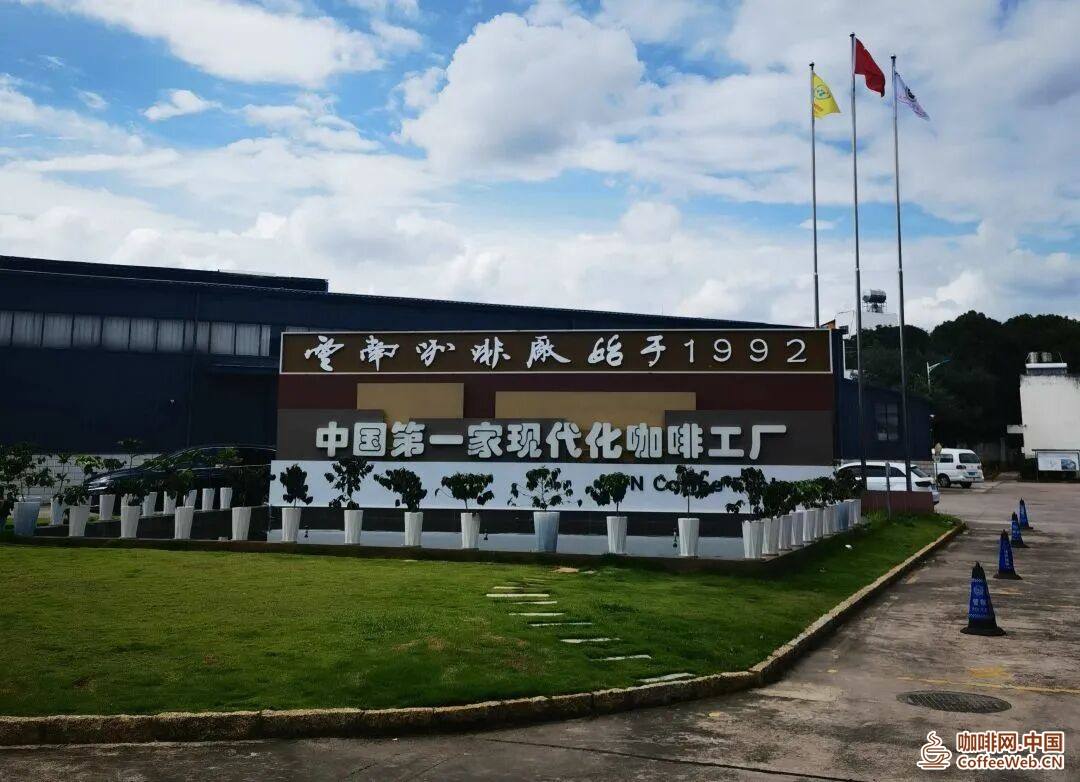
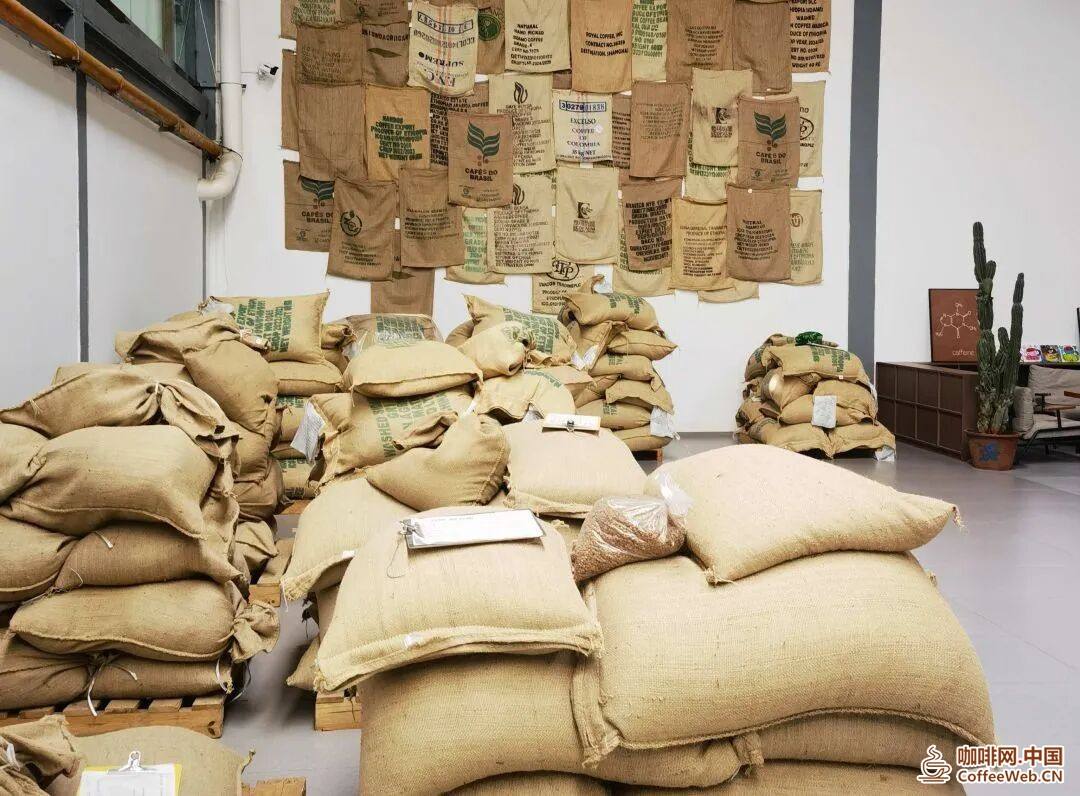
The Yunnan Coffee Factory houses a coffee culture museum where you can learn the history of Yunnan coffee in one stop, observe old machines and tree species up close, and take courses in pour-over, latte art and roasting. On the exhibition wall sits a row of coffee aroma bottles holding beans from around the world. Sniffing them one by one, I found the beans from Colombia, Costa Rica and Ethiopia most to my liking.
On this coffee journey, from the estates of Pu’er to the factory in Kunming, I can’t say exactly how many cups I drank or how many flavours I remember, only that all along the way there were people planting beans, roasting beans and tasting beans.
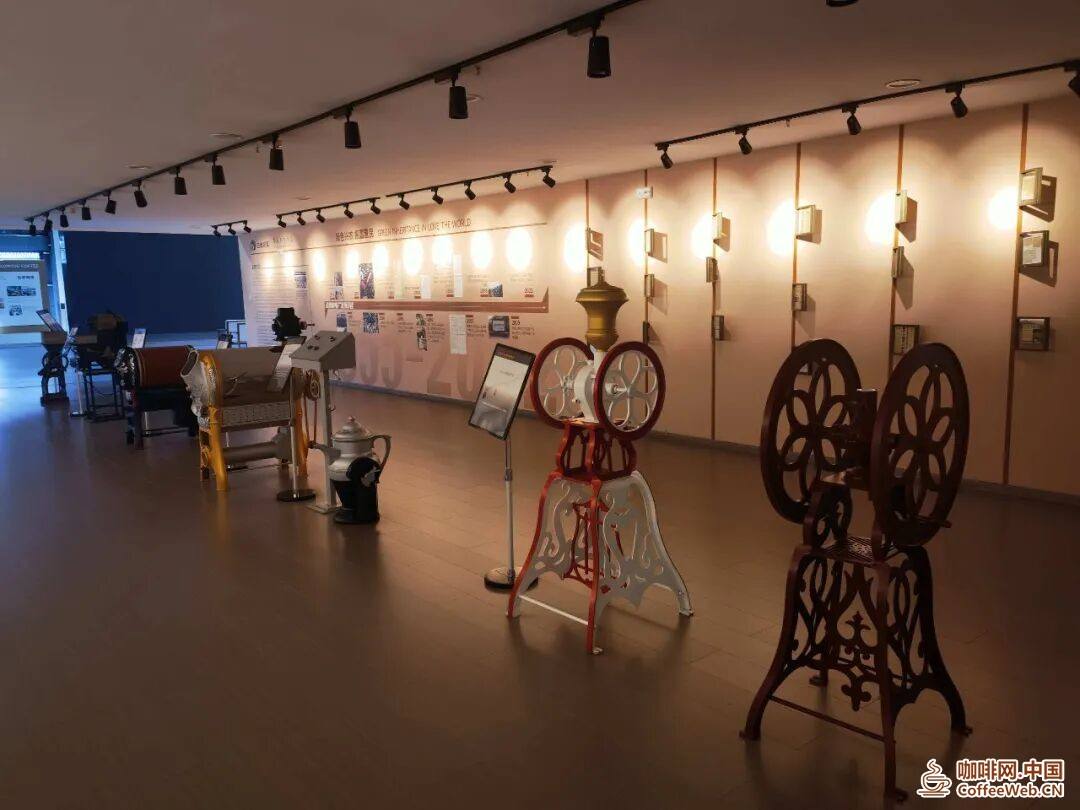
– The coffee culture exhibition hall at Yunnan Coffee Factory
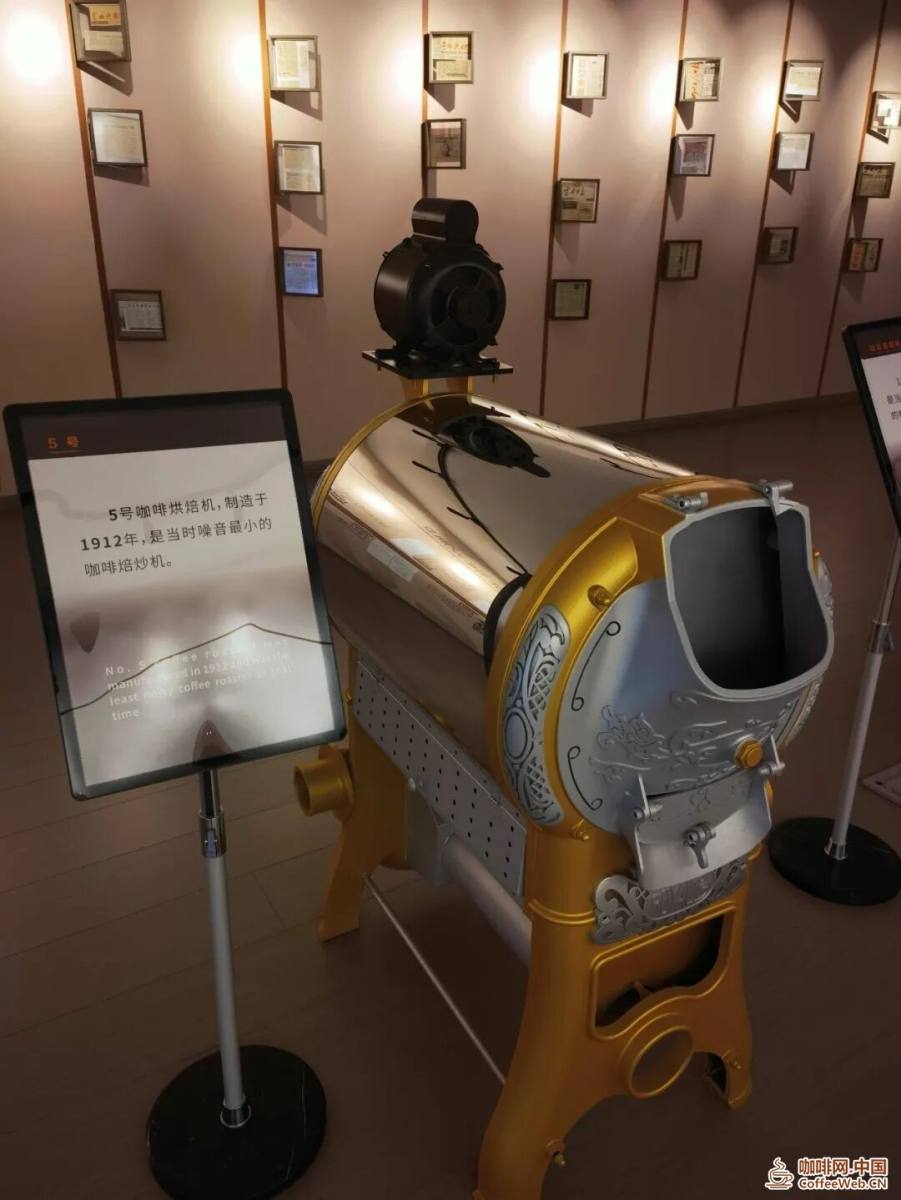
– A coffee roasting machine built in 1912
Just after I left Kunming, Uncle Lang arrived there for the Dianchi Coffee Festival. It was his second time attending the industry event as a vendor. He eagerly called out: ‘I’m here, I’m here! Back in Kunming again for the annual industry gathering! Today I’m selling drinks on the West Bank; come find me, plenty to go around.’
Uncle Lang is from Hunan, worked in Beijing for 17 years, then spent time in Shenzhen, and came to Pu’er a few years ago; this is his 10th year making coffee. Compared with the efficiency and bustle of Beijing and Shenzhen, he prefers this Yunnan-only ease. The coffee festival falls right next to the Torch Festival, and these days both banks of Dianchi are lively. He wrote on WeChat Moments: ‘Mountains and lake as the backdrop, art as the form, fireworks as the rhythm. This moving texture of life is unhurried, free, gentle and long.’
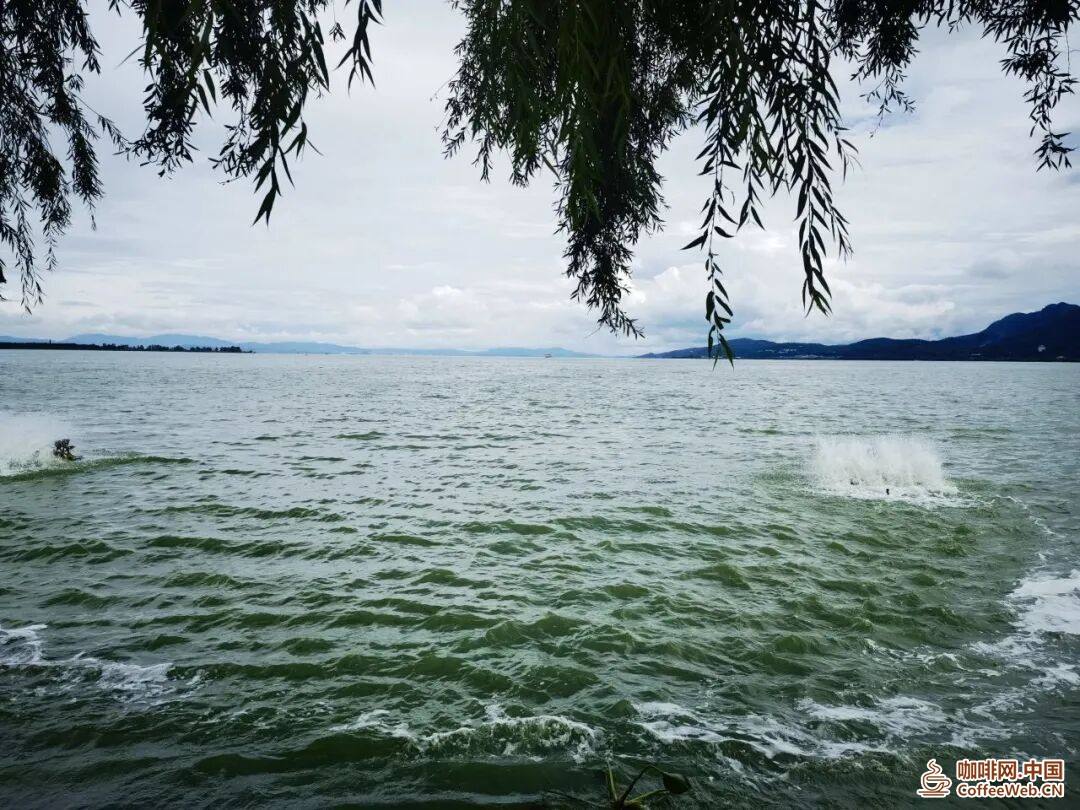
– Dianchi Lake, Kunming
That line is perhaps a footnote to the coffee boom of recent years. It is not merely a drink, a ‘life-saving sip’ for office workers, but a choice about life, direction and aspiration.
Coffee on the left, office drones on the right; Yunnan in the west, Beijing and Shenzhen in the east.
Written by / Rain
Uncredited image sources / Huang
Original title: ‘I Drank Coffee in Pu’er for Three Days’
Initial Experience of Daijiaxiang Coffee
·Pu’er Daijia Lane Street View
·The small shop in Daijiaxiang Old Street
Fresh, “Xiaobai said,” because it’s fresh
Yes, you’re right, to the point. I can’t agree more.
·The coffee shop in Pu’er Old Street
Coffee Plantation’s “Nine Cups” Fully Managed
·Coffee roasting machine manufactured in 1912
·Kunming Dianchi Lake
Writing/Rain
Unmarked source/yellow
Reprint Notice & Disclaimer
- This article has been edited and compiled by China Coffee Network. The information and images therein come from public sources and the copyright belongs to the original author. This reprint is intended solely for information sharing within the coffee industry and does not represent the views of this website; all data and opinions are subject to the original article. Our thanks to the original author for creating and sharing it.
- For matters concerning content licensing, attribution, copyright or otherwise, please contact us promptly and we will verify and cooperate in handling them as soon as possible. We also welcome coffee origins, brands and industry media to exchange ideas and contribute articles.
- Contact China Coffee Network: Tel 400-0000-641 (+86-18288016826) | Email 478203668@qq.com
Related Reading
 Lincang Advances Coffee Industry with Premium Development Strategy: Aroma of Coffee Fills the Path to Revitalization
- Lincang advances coffee industry with premium development approach: aroma of coffee fills the path to revitalization
 Jiangxi Wuyuan: Rural Coffee Unlocks New Cultural Tourism Formats
 Jiangxi Wuyuan: Rural Cafes Unlock New Cultural Tourism Formats
 Global quality goods gather at Hongqiao Import Commodity Exhibition Center, setting "Chinese standards" for coffee
- Global premium products gather to set China's coffee standards as Hongqiao Import Commodity Exhibition Center keeps the CIIE spirit alive



 Liaoning ICP Security No. 21122402000217