


At a Glance (China Coffee Network): AI Introduction The coffee market in 2026 is shifting dramatically: Luckin launched a limited pour-over priced at 68 yuan that sold out instantly, while Seesaw quietly went bankrupt. From Seesaw’s ultimate professionalism, Manner’s ultimate efficiency to M Stand’s ultimate aesthetics, China’s three major specialty coffee brands have headed toward different fates amid consumption upgrading and a price war – some trudging forward under heavy loads, others breaking through lightly equipped; only those who master the supply chain and
AIEditor’s Note (Coffee Network coffeeyo.com):
The coffee market in 2026 is shifting dramatically: Luckin launched a limited pour-over priced at 68 yuan that sold out instantly, while Seesaw quietly went bankrupt. From Seesaw’s ultimate professionalism and Manner’s ultimate efficiency to M Stand’s ultimate aesthetics, China’s three major specialty coffee brands have headed toward different fates amid consumption upgrading and a price war – some trudging forward under heavy loads, others breaking through lightly equipped; only those who master the supply chain and economies of scale can pass through the cycle.
Author | Li Qiao
Editor | Tian Tian
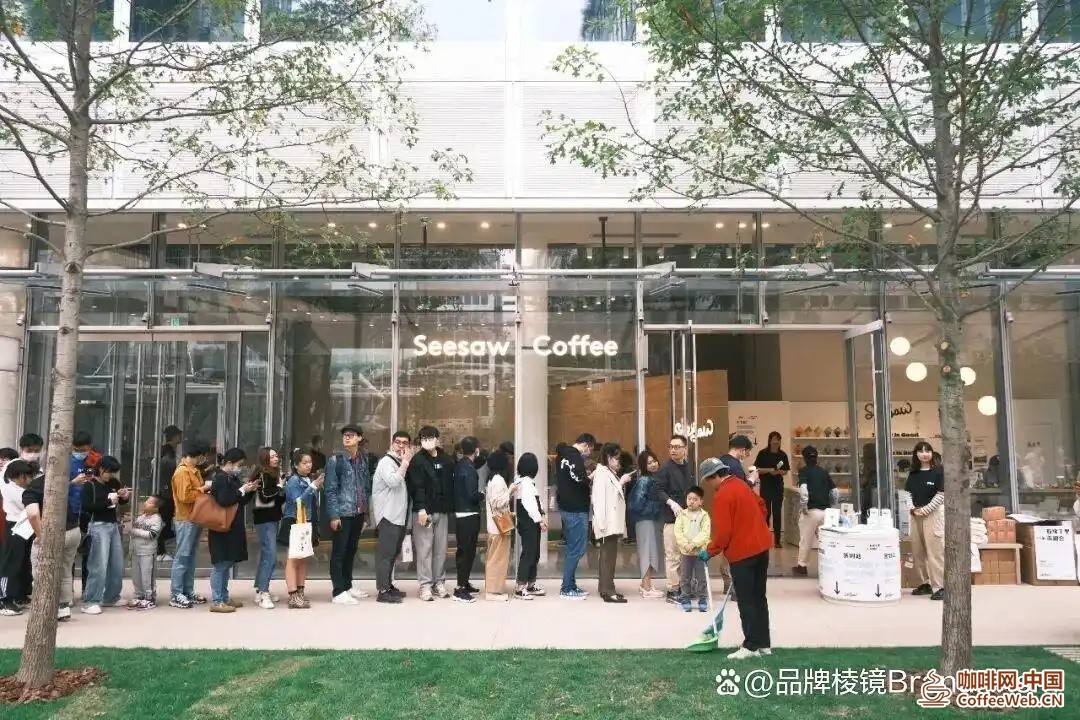
In the 2026 coffee market, Cotti has withdrawn from the price war while Luckin is reaching toward premiumization.
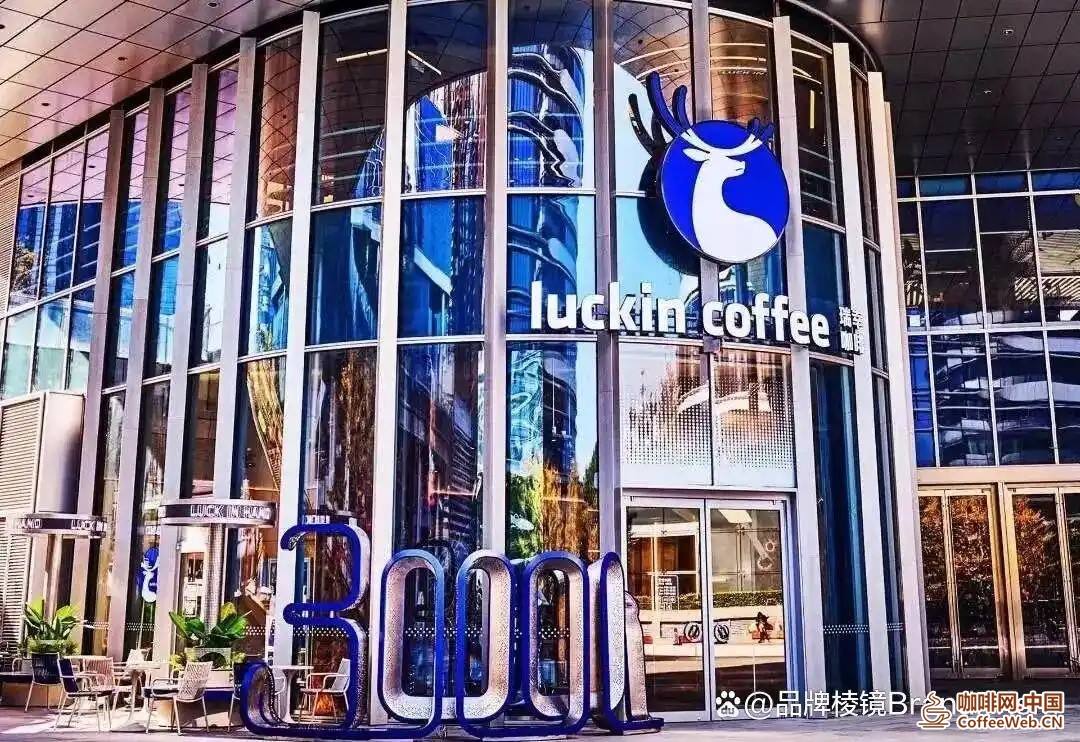
At the start of the year, at Luckin’s 30,000th store nationwide and its Origin Flagship Store, a limited pour-over featuring the champion beans (13,150 yuan/kg) from the inaugural 2025 Yunnan Treasure Green Bean Competition was priced at 68 yuan per cup and sold out on opening day. Mass consumers also sharpened their awareness of specialty coffee while trying it.
On the other side, however, Seesaw, regarded as the pioneer that introduced specialty coffee to China, officially entered bankruptcy liquidation this summer. At the same time, M Stand, once favored by Xiaohongshu, has also slowed its pace, while only Manner keeps expanding steadily.
This inevitably raises a puzzle: if coffee consumption demand is clearly upgrading, why have specialty coffee brands taken such divergent paths?
01
Specialty Coffee Shops That Grew Out of a Blank Market
When coffee has become etched into everyday consumption habits, looking back at the era in which Seesaw was born gives a sense of how much has changed.
In 2010, Zhou Libo took a swipe at Guo Degang: “How can someone who eats garlic ever be with someone who drinks coffee?” The single remark ignited an online north-south debate. It reflected the consumption mentality of the time: coffee was not merely a pick-me-up, but stood for a refined way of life.
Yet at that time, most consumers’ idea of refinement still stopped at a Starbucks latte or the freshly ground Blue Mountain at U.B.C. Coffee. As for the obscure terms defined by the SCA (Specialty Coffee Association) – a cupping score of 80 or above, pour-over, single origin espresso (SOE) – only a tiny circle of niche enthusiasts could explain them.
In 2012, Zong Xinkuang and Wu Xiaomei founded Seesaw. They stepped into the blank market for local specialty coffee and became Shanghai’s first true prototype of a specialty coffee chain.
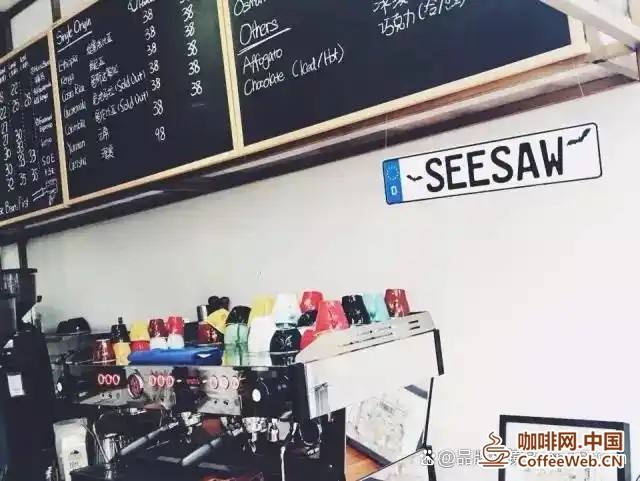
The earliest store was hidden in a design center in a lane; it had no fixed rent, only a commission on sales. The investment was low, but Seesaw’s layout across the specialty coffee industry chain was ambitious.
Upstream, when Yunnan’s coffee farmers still could not tell freshly ground from specialty coffee, Seesaw had already launched its “Yunnan Ten-Year Plan,” setting up bean-buying stations locally and helping farmers with cultivation and processing techniques.
In the middle of the chain, it built its own roasting lab and founded the “Dream Factory Coffee Academy,” providing systematic professional training and supplying talent to the entire specialty coffee industry.
Downstream, Seesaw turned its stores into community galleries; some 60 to 70 percent of its earliest customers were working women, making it an introduction to middle-class lifestyle.
Manner, born in 2015, was the complete opposite of Seesaw’s model: it began as merely a 2-square-meter takeaway street-side shop.
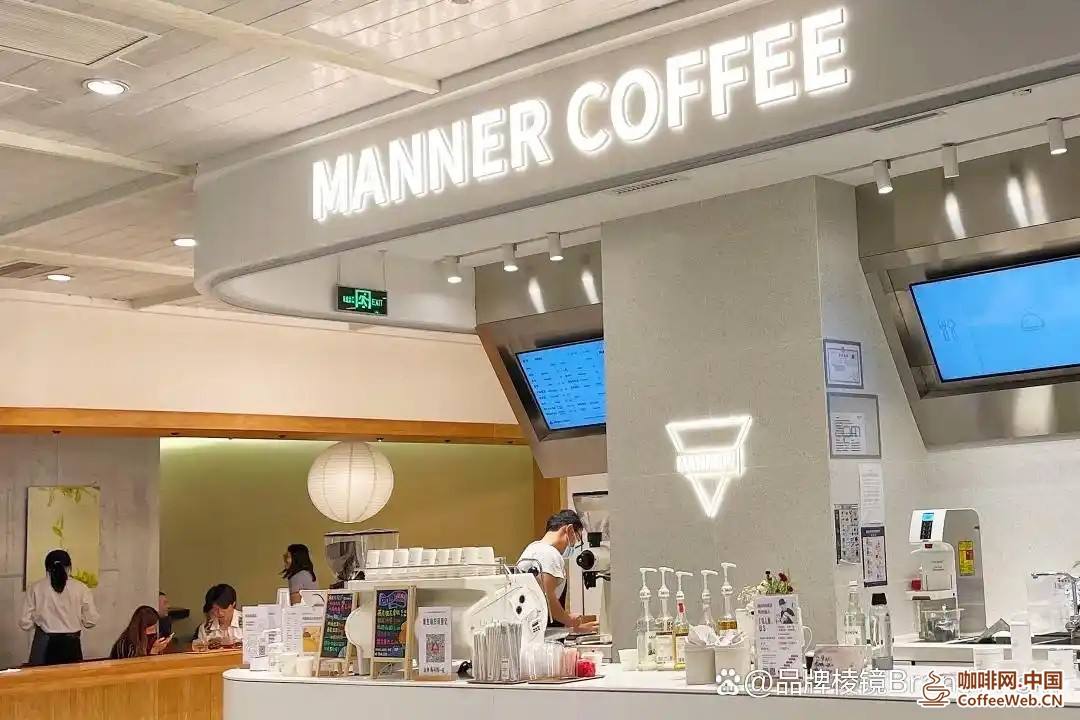
At that time, Luckin had not yet been born, Starbucks occupied the price band above 30 yuan, and Korean-style coffee chains were mired in homogenized competition. Manner precisely captured the essential need of white-collar workers – “no need for a third place, just a good cup of coffee” – slashing space costs and keeping only the core value of specialty beans.
Manner set hard standards of SOE beans and freshly roasted within 7 days, yet thanks to low costs and its supply chain, it drove the price of specialty coffee down to rock bottom.
At the time, Seesaw’s espresso line was priced between 25 and 35 yuan, while Manner’s latte cost only 20 yuan, with another 5 yuan off if you brought your own cup.
It was precisely this window-store, high-turnover model that allowed Manner to complete an efficiency revolution three years before Luckin.
If Seesaw represents the ultimate professional ideal and Manner the ultimate operational efficiency, then M Stand, which burst in in 2017, represents the ultimate pursuit of aesthetics.
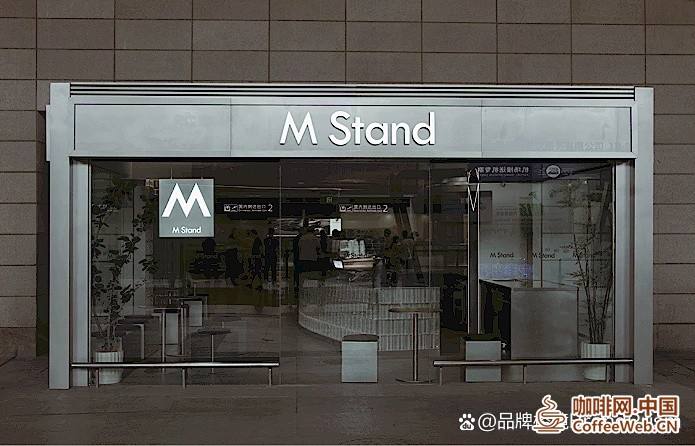
M Stand founder Ge Dong, with a background as a strategy consultant at LVMH, aimed at an internet-famous trendy brand like HEYTEA rather than pure-blood specialty coffee.
M Stand does not obsess over single origins; its core focus is aesthetic design. From the very first store it followed a one-store-one-design approach: industrial-style concrete walls, minimalist solid-wood tables and chairs, normcore soft furnishings… every store is instantly photogenic. Ge Dong calls this approach “aesthetics-driven communication” – no extra marketing needed, as Xiaohongshu and Douyin spread it and bring their own traffic.
2012 to 2017 was exactly the moment of China’s consumption-market upgrade. Riding this strong wind, the three players jointly completed the market enlightenment of local specialty coffee from zero to one.
02
The 9.9-Yuan Era: The Fork in the Road for Specialty Coffee
2017 was a golden age of surging hot money: HEYTEA and Nayuki raised hundreds of millions in their Series A rounds. Blue Bottle, the benchmark for local specialty coffee, also had a majority stake acquired by Nestle. In an era of booming consumption, capital believed in the potential of specialty coffee.
In 2017, Seesaw received 45 million yuan from Baifu Holdings and Hony Capital; in 2018, Manner received 80 million yuan from Capital Today; in 2021, CMC Capital, Qicheng Capital, Black Ant Capital and Gaorong Capital all came on board, and M Stand completed financing of over 600 million yuan.
Everything was flourishing. No one, however, could have predicted that consumption downgrading combined with the 9.9-yuan coffee price war would send the three major local specialty coffee brands down different roads.

In the spring of abundant funding, Seesaw poured capital into opening stores. Its main format was large stores of over 100 square meters, each with its own design and a preparation period of three to four months; from design to fit-out, every step demanded heavy investment.
The pursuit of pour-over craft meant slow output and high labor costs. Its 30 to 40 yuan middle-ground price sat awkwardly in between and was hit hard by 9.9-yuan coffee.
Before 2023, Seesaw still insisted on directly operated stores, quietly shouldering all the cost pressure.
Seesaw thought of imitating Starbucks and diluting costs through scale, but Starbucks had 40,000 stores worldwide and long since achieved economies of scale, whereas Seesaw had only 162 stores at the end of 2022. Every new store meant another heavy cost burden in the 9.9-yuan price war.
With its capital chain riddled with holes, Seesaw began large-scale store closures in the second half of 2023. In July 2026, data from Zhaimen Canyan showed that Seesaw had only 32 stores still operating nationwide, having closed more than 100 in four years. The 2022 ambition to be “the lululemon of coffee” ultimately became no more than a sigh in the price war.
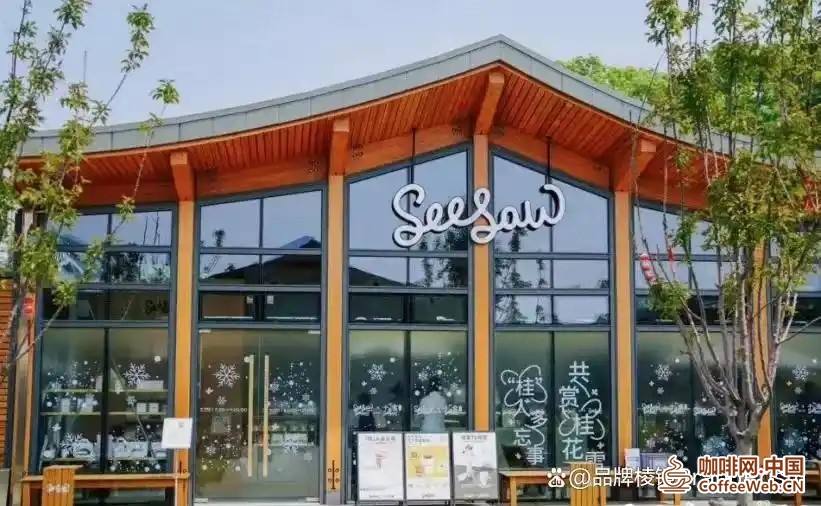
M Stand, priced like Seesaw at 35 to 45 yuan, was of course also hit hard by the price war. But M Stand, centered on spatial aesthetics, was far lighter in investment than Seesaw; it does not stress pure-blood specialty coffee, so it spends less on beans, roasting and labor.
To soften the blow, M Stand also slowed its expansion. According to Zhaimen Canyan data, it opened 251 new stores in 2023, 90 in 2024 and 83 in 2025.
Beyond that, M Stand also launched burgers and snacks to extend operating hours, and added cultural-creative, footwear and apparel merchandise to open up growth curves. For M Stand, coffee is only the hook; what really makes money are high-ticket specialty drinks, desserts and merchandise.
Of the three brands, the one living relatively comfortably is still Manner.
After receiving investment from Capital Today in 2018, Manner, besides expanding stores, placed the focus of its deployment on the supply chain. For how specialty coffee tastes, raw materials and roasting craft are crucial. Manner built its own roasting plant, keeping bean quality and supply in its own hands.
Once quality control stabilized, Manner strode ahead with expansion: 512 new stores in 2023, 655 in 2024 and 450 in 2025; by 2025 it had more than 2,400 directly operated stores nationwide. With economies of scale, Manner’s supply-chain cost advantage became pronounced, securing its price advantage. Relying on value-for-money specialty coffee, Manner found room to survive the price war, proving that specialty and scale are not an either-or choice.
03
Where Is Specialty Coffee Headed?
In 2015, Manner captured working people’s need for a good everyday coffee and entered the affordable specialty coffee track. By 2026, Luckin has also begun to copy this story, tentatively stepping toward premiumization.
In fact, Luckin’s path to premiumization did not begin this year.
As early as 2020, Luckin launched its SOE product line, the “Little Black Cup” series, bringing the concept of single origin to the general public; in 2023, it started the “Global Bean Quest” program, formed a Luckin WBC champion master team, became deeply involved upstream in the industry chain, set up a fresh-fruit processing plant in Baoshan, Yunnan, made large-scale purchases in Brazil, the world’s largest producer of Arabica beans, and built high-quality planting bases.
After years of honing its internal capabilities, Luckin’s premiumization ambition has finally been seen by more people this year.
In February 2026, its 30,000th store, the “Origin Flagship Store,” landed in Shenzhen – a 420-square-meter flagship displaying the global layout of coffee bean origins, with professional baristas doing pour-over on site, making budget-friendly Luckin look suddenly out of reach.
With Luckin moving upmarket, the one that should feel most nervous is, of course, Manner.
The Little Black Cup SOE is priced between 16 and 21 yuan, while Manner’s SOE sits between 20 and 25, so Luckin directly squeezes this part of Manner’s market. And Luckin’s advantage in supply-chain bargaining power is a dimension-reducing blow to Manner.
Against this backdrop, where exactly should specialty coffee go? The way Peet’s Coffee survives may be a reference model.
The “2024 Freshly Made Beverage Innovation Trends Report” by the Hongcan Industry Research Institute shows that nearly 80% of consumers prefer freshly made drinks priced at 10 to 20 yuan, while only 4% accept prices above 25 yuan.
Peet’s Coffee targets precisely this 4% of price-insensitive consumers. Its product line offers premium Blue Mountain and Geisha single-origin items, and through seasonal limited editions and localized specialty drinks it avoids the price war and holds the price band around 40 yuan.
That is reaching upward; reaching downward, Peet’s launched the sub-brand Ora Coffee, priced between 15 and 20 yuan, directly benchmarking against Manner.
In addition, Peet’s second growth curve – its retail business – has performed impressively.
Chen Hao, general manager of Peet’s retail, said in an interview this year that packaged products now account for more than 30% of Peet’s China revenue. Through retail channels such as Hema and Sam’s Club, it sells premium ready-to-drink coffee. In this way, the consumer base has widened from niche specialty-coffee enthusiasts to middle-class families, and specialty coffee has shifted from a discerning lifestyle into a casual everyday cup.
Manner is clearly reaching upward too. In April this year, the unit price of its SOE line rose to 25 to 30 yuan. The official reason given: selecting higher-quality beans to offer consumers a better flavor experience. Having sensed the threat of Luckin’s premiumization, Manner is working hard to strengthen its product power.
According to the “2026 China Urban Coffee Development Report” released at the 2026 Shanghai International Coffee Culture Festival, the scale of China’s coffee industry reached 354.9 billion yuan in 2025, with the growth rate of coffee bean transaction value as high as 140.38%, far exceeding the 69.05% for instant coffee.
Luckin’s premiumization will bring more customer traffic to specialty coffee, and the specialty coffee market undoubtedly holds enormous potential. Brands can either develop distinctive features, hold on to quality and raise value, or open a second growth curve so that specialty coffee brands need not be confined to chain stores but can also find more room to grow on supermarket shelves.
But whichever direction they take, the mediocre players stuck in the middle will not have an easy time.
AI Introduction
Author | Li Qiao
Editor | Tian Tian
01
02
03
Where does boutique coffee go?
Reprint Notice & Disclaimer
- This article has been edited and compiled by China Coffee Network. The information and images therein come from public sources and the copyright belongs to the original author. This reprint is intended solely for information sharing within the coffee industry and does not represent the views of this website; all data and opinions are subject to the original article. Our thanks to the original author for creating and sharing it.
- For matters concerning content licensing, attribution, copyright or otherwise, please contact us promptly and we will verify and cooperate in handling them as soon as possible. We also welcome coffee origins, brands and industry media to exchange ideas and contribute articles.
- Contact China Coffee Network: Tel 400-0000-641 (+86-18288016826) | Email 478203668@qq.com
Related Reading
 Tim Hortons China Q3: System Sales Up 6.3% Quarter on Quarter
- CRH Plans OATLY Exit, Nayuki Leaves Wenzhou | Tea & Coffee Weekly
 The 2026 Asian Coffee Association Annual Meeting will be held in Dehong, Yunnan, and the Asia ABODY Coffee System Standard will be officially released
 The President of Brazil's Victoria Coffee Business Center (CCCV) led a delegation of four people to Pu'er, Yunnan to conduct a special inspection of the coffee industry
 Behind the 1836 yuan "King of Brands": The Full Industry Chain and Offline Layout of Xinlu Coffee
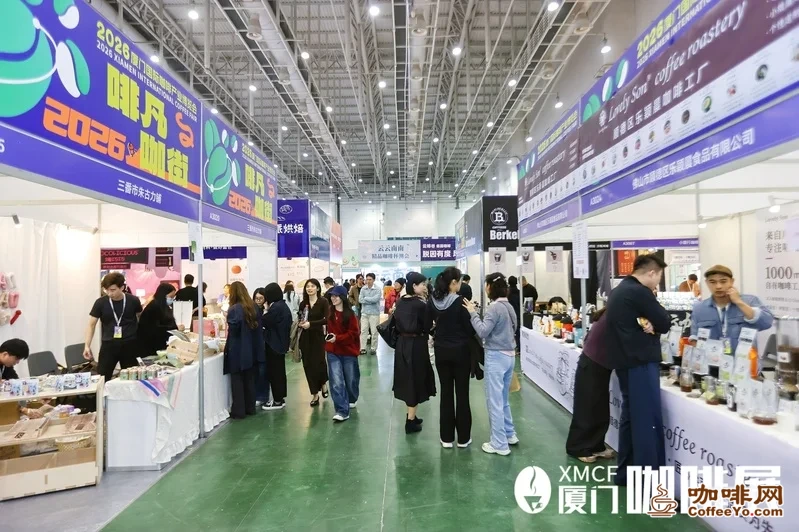 From a raw bean to a fragrant cup, Xiamen International Coffee Exhibition unlocks a new picture of the entire industry chain


 Liaoning ICP Security No. 21122402000217