


At a Glance (China Coffee Network):Green coffee beans, roasting equipment, extraction tools, high-end espresso machines, packaging technology, brand chains, supply chain support… Within the dedicated 12,000-square-.
Green coffee beans, roasting equipment, extraction tools, high-end espresso machines, packaging technology, brand chains, supply chain support… Within the dedicated 12,000-square-meter exhibition area, the aroma of coffee is the most intense.
If you are a coffee lover, then these few days, the S2 Hall of the National Convention and Exhibition Center (Tianjin) will be well worth your visit.
As a concurrent exhibition of the 31st China Tianjin Investment and Trade Fair, the Jin Coffee Culture Festival · 2026 Tianjin International Coffee Industry Exhibition attracted coffee exhibitors from over 20 countries and regions around the world to gather here.
During the exhibition, the Heping District officially released its long-term plan to cultivate and build a “City of Coffee,” proposing to use coffee as the brush and historic villas as the canvas to paint a new chapter of urban development in which century-old blocks and new consumption scenarios thrive together. From a cup of coffee to a “City of Coffee,” coffee is becoming a new narrative for Tianjin’s consumer industry—when the historic setting of Jincheng meets the globalized coffee trade, an upgrade experience from “drinking coffee” to “understanding coffee” is unfolding.
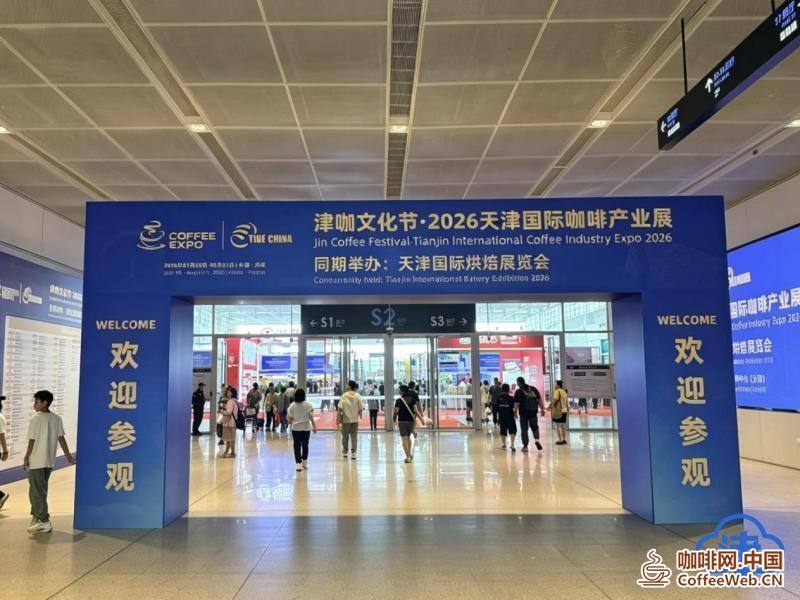
Consumers and Exhibitors Share the Charm of Coffee
“I like dark-roast beans; a bit more bitter gives a heavier mouthfeel.” “Light-roast beans are better; good beans are only lightly roasted, with a bright taste that lets you savor different flavors.”
On the morning of July 30, a long queue had already formed in front of the Saipin Coffee booth—all consumers ready to try the samples.
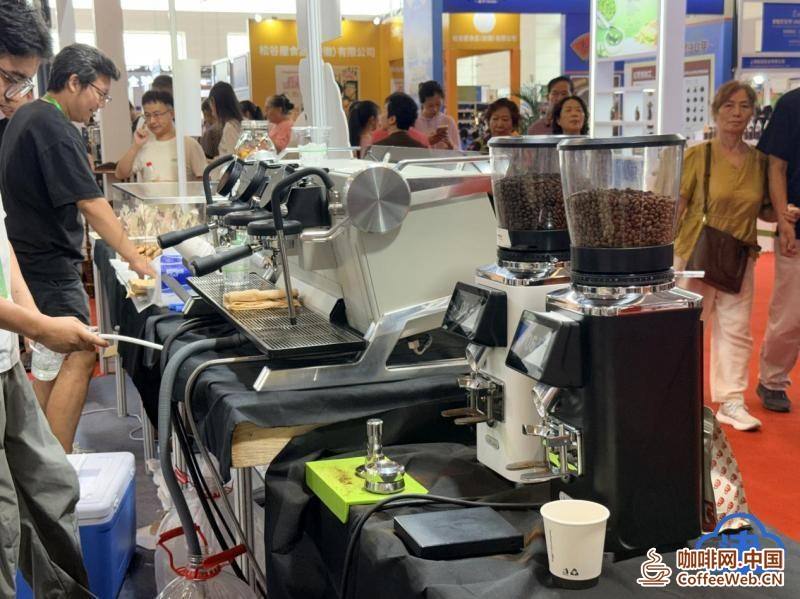
Coffee beans from different origins, flavors, and roast levels were laid out in a row. Several baristas worked simultaneously, grinding and hand-pouring on the spot, explaining the differences between categories while making them, and distributing them to consumers for on-site tasting.
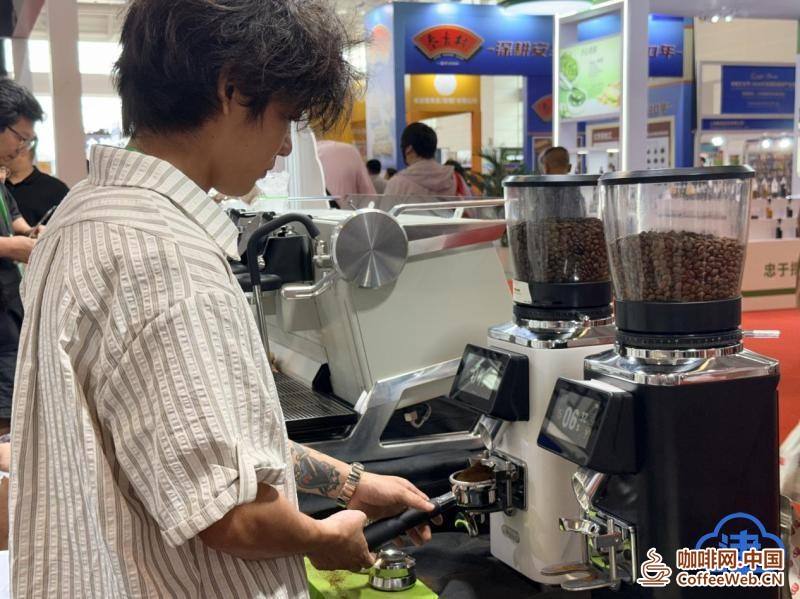
The bright fruity acidity of Ethiopian natural-process beans, the mellow nutty notes of Colombian washed beans, the caramel aroma of Yunnan dark roasts… Consumers held small paper cups, tasting and chatting, repeatedly comparing the flavor differences of the same origin across different batches.
The “coffee fans” each held their own views, but all could find their preferred category on site.
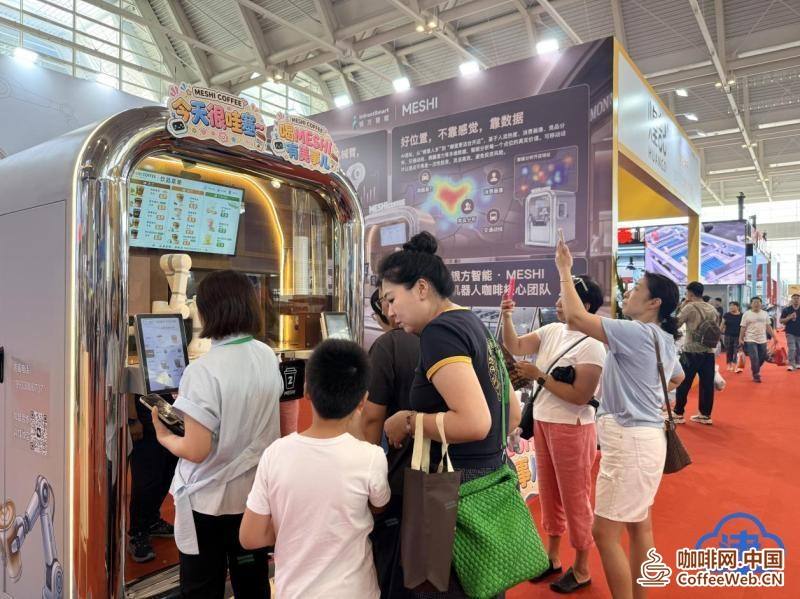
Not far away, the MESHI robot was another scene of “excitement.” The fully automated robotic arm brewing method attracted the attention of many consumers, who wanted to taste how the “robot-made” coffee differed from that made by baristas.
“Tastes great!” said Liu Xin, a local resident, after taking a sip and telling the reporter with a smile: “This is my second cup; it tastes great. No different from what a person makes, and it’s cheaper and more convenient.” He admitted that both he and his wife have the habit of drinking coffee; his wife prefers making freshly ground coffee at home, while he opts for the convenience of buying outside. “One cup at 7-Eleven in the morning, one cup at Luckin in the afternoon—it’s become a habit.”
Liu Xin’s daily consumption pattern shows that coffee is shifting from an “occasional trend” to an “everyday necessity.” And the formation of this habit is precisely the underlying driving force behind the comprehensive upgrade of Tianjin’s coffee industry from the consumption end to the supply chain end.
From “Drinking Coffee” to “Understanding Coffee”
Behind the bustle of the exhibition is a market signal that is accelerating its release.
Chen Erdong, the person in charge of Tianjin Xingluo Coffee Trading Co., Ltd., has been deeply involved in the industry for many years. His judgment of the Tianjin market is clear and confident: “Tianjin actually still has a large incremental market. Whether in terms of per-capita ratio or consumption habits, Tianjin has significant room for growth.”
The coffee consumption market in North China has maintained steady growth, the expansion speed of coffee stores in lower-tier markets continues to accelerate, and a large number of regional operators have real demands for supply chain upgrades and product selection renewal. As an important northern port city, Tianjin, leveraging its location advantages and trade network, naturally possesses a hub function connecting global coffee-producing regions with the vast consumer market in the north. During the exhibition, official exhibition groups from multiple major coffee-producing countries made appearances, and relying on the trade advantages of Tianjin Port, cross-border direct sourcing is turning from concept into reality.
The composition of exhibitors at the exhibition also confirms the diversity and vitality of Tianjin’s coffee industry. From established supply chain enterprises like Saipin Coffee to newcomers in smart equipment like MESHI; from green coffee bean traders to roasting equipment suppliers; from packaging companies to brand chains—professional players across the upstream and downstream of the industry chain all showed up.
More interestingly, emerging business formats such as coffee training academies and trunk-coffee also appeared at the exhibition, with diverse forms that are professional yet innovative.
Wang Minglu, the founder of Tianjin Xingka Coffee Academy, is one of them. This startup founded in 2025 integrates coffee sales with barista training. She told the reporter that, apart from personal passion, the more important reason for choosing the coffee track was seeing the potential of the Tianjin market: “We Tianjin folks are very relaxed; everyone especially loves drinking coffee.” She observed that coffee has moved from cafes to homes, and more and more people are shifting from simply “drinking” to “tasting,” “so our company hopes to help everyone learn more about coffee and acquire coffee knowledge. For example, obtaining SCA and PCA certificates is very necessary, whether for working as a professional barista or for recognizing one’s own level.”
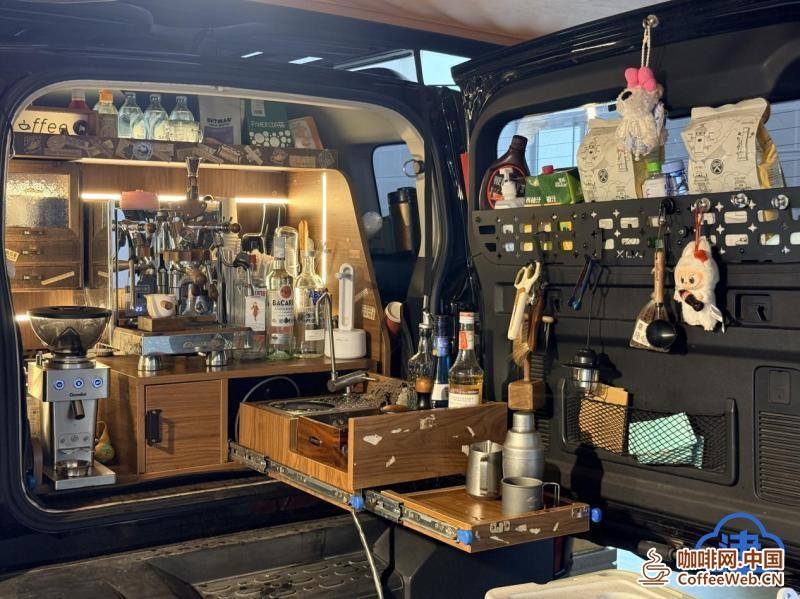
From “drinking a cup” to “understanding a cup,” this leap in consumer mindset is the true signal that the Tianjin coffee market is maturing.
Seizing the exhibition as an opportunity, the Heping District also officially announced the launch of the “City of Coffee” cultivation and construction campaign. Relying on the villa resources of historic and cultural blocks such as the Five Great Avenues, it revitalizes idle carriers through market-oriented means, making the Heping District the preferred destination for brand coffee to enter Tianjin and a hotbed for independent coffee shops to start businesses. According to the plan, the Heping District will build four major “City of Coffee” landmark commercial blocks by function: the Five Great Avenues independent specialty coffee zone, the Xiaobailou business chain coffee zone, the Jin Street trendy creative coffee zone, and the Nanshi high-end quality coffee zone. In the future, the benchmark scenario of “one villa, one specialty shop” will let century-old villas and coffee culture collide to spark more brilliance.
Chain brands and independent cafes each shine in their own way; cultural tourism integration and daily consumption go hand in hand—Tianjin’s coffee story is being written jointly by multiple forces.
From “Consumption Scenario” to “Industry Closed Loop”
The heat on the consumption end cannot be separated from the support of the supply chain end. The step from a mere “consumption scenario” to a complete “industry closed loop” is crucial.
Saipin Coffee is an important link in this industry chain. Its factory is located in Wuqing District, Tianjin, and it has been engaged in products such as coffee beans, coffee freeze-drying, and instant coffee for 20 years. Salesperson Liu Siqi introduced to a Jinyun reporter at the exhibition site: “Our company’s biggest advantage is fast response speed. Whether it’s a large order or a small one, we can guarantee timely order acceptance.” Relying on the raw material advantages of Yunnan’s high-altitude producing regions and an automated production line, Saipin has become an important coffee supply chain enterprise in the north.
Foreign-funded enterprises are also increasing their investment in Tianjin. Goglio (Tianjin) Packaging Co., Ltd., which has been deeply rooted in Tianjin for over 20 years, is the only manufacturing base of the Italian Goglio Group in Asia, providing customized solutions such as packaging bags and fully automatic packaging machines for the coffee industry. Seeing the opportunity that China’s coffee industry market size exceeded 500 billion yuan in 2025, Goglio invested 50 million yuan in independent research and development. Public information shows that Goglio has successively received orders from leading domestic coffee enterprises such as Luckin and Guming, and plans to move the coffee filling machines that originally needed to be produced at the Italian headquarters to its Tianjin base for assembly.
Cotti Coffee has set up its operation center in Tianjin Airport Economic Zone. The center undertakes the overall management and operational scheduling of the group’s full-chain digital supply chain, covering end-to-end coordination and optimization from global direct sourcing of coffee beans and self-built roasting bases to intelligent store replenishment. Vester (Tianjin) International Trade Co., Ltd., located in Jinnan District, integrates coffee equipment, raw material supply, and technical services, also contributing to the improvement of the industry chain.
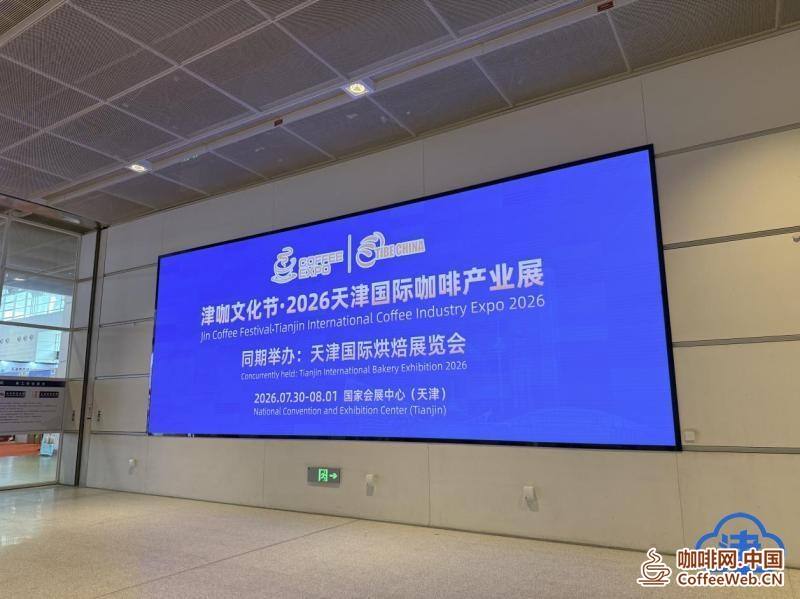
From the global direct sourcing of coffee beans and local roasting, to equipment supply and brand chains, and then to terminal consumption and cultural tourism integration—a relatively complete coffee industry chain is gradually taking shape in Tianjin. As Luo Yunjie, a relevant person in charge of the exhibition, said: “Roasting and coffee are very popular in Tianjin. We hope to use the Tianjin Fair platform to promote our exhibition brand to a broader audience and jointly grow the market.”
(Jinyun News reporter Peng Junyong, intern reporter Han Xu, text and photos)
From “drinking coffee” to “understanding coffee”
Reprint Notice & Disclaimer
- This article has been edited and compiled by China Coffee Network. The information and images therein come from public sources and the copyright belongs to the original author. This reprint is intended solely for information sharing within the coffee industry and does not represent the views of this website; all data and opinions are subject to the original article. Our thanks to the original author for creating and sharing it.
- For matters concerning content licensing, attribution, copyright or otherwise, please contact us promptly and we will verify and cooperate in handling them as soon as possible. We also welcome coffee origins, brands and industry media to exchange ideas and contribute articles.
- Contact China Coffee Network: Tel 400-0000-641 (+86-18288016826) | Email 478203668@qq.com
Related Reading
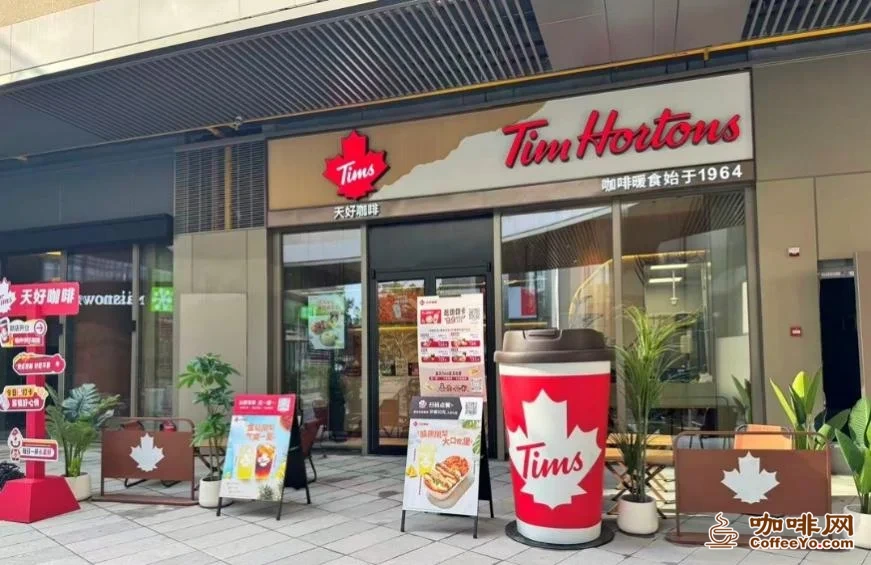 Tim Hortons China Q3: System Sales Up 6.3% Quarter on Quarter
- CRH Plans OATLY Exit, Nayuki Leaves Wenzhou | Tea & Coffee Weekly
 The 2026 Asian Coffee Association Annual Meeting will be held in Dehong, Yunnan, and the Asia ABODY Coffee System Standard will be officially released
 The President of Brazil's Victoria Coffee Business Center (CCCV) led a delegation of four people to Pu'er, Yunnan to conduct a special inspection of the coffee industry
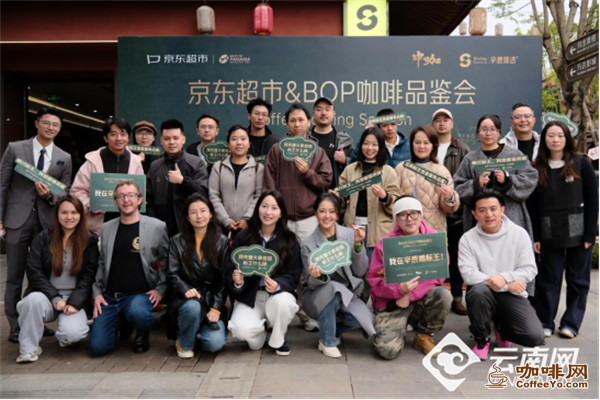 Behind the 1836 yuan "King of Brands": The Full Industry Chain and Offline Layout of Xinlu Coffee
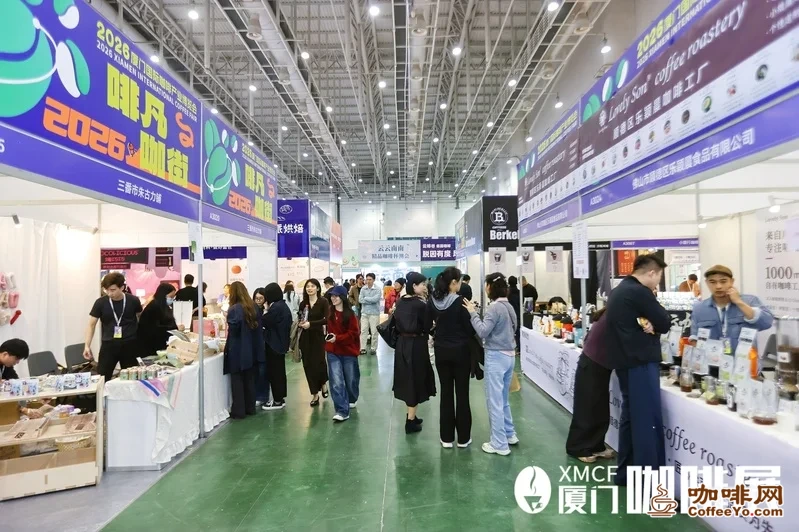 From a raw bean to a fragrant cup, Xiamen International Coffee Exhibition unlocks a new picture of the entire industry chain


 Liaoning ICP Security No. 21122402000217