
Reprinted from: Jiaxing Daily
■ Reporter Zhou Peijia, correspondent Zhou Ziyi
“Fresh yellow peaches have long left the market, but yellow-peach coffee can keep that sweetness for us all year round.”
During the first National Day holiday after the “Half-a-Peach” immersive coffee experience workshop landed in Henggang Village, Yaozhuang Town, Jiashan, founder Ding Meijuan said she never expected so many people to choose a reverse trip to the countryside — “traffic was double or more than usual, and at peak we could barely keep up.” What surprised her even more was that many guests spontaneously advertised “Half-a-Peach” on social platforms, making the signature “Peaches Are Ripe” signature drink even hotter.
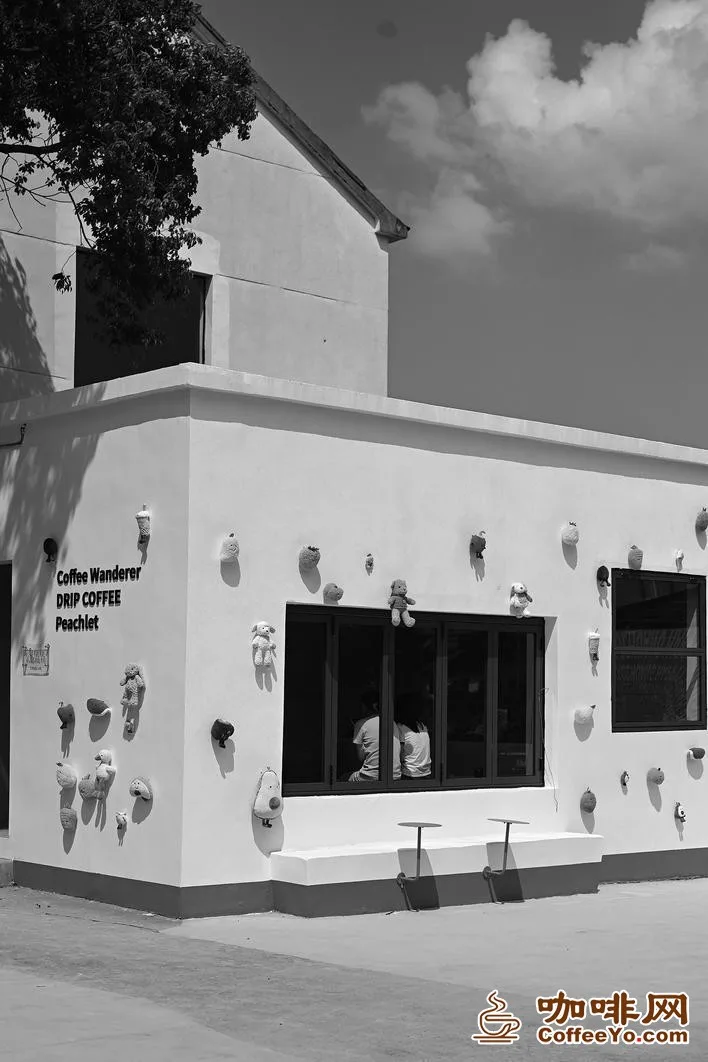
This café by the rice fields, its façade hung with adorable dolls, shows the founder’s youthful spirit; a whole wall of windows frames the autumn scenery like a painting, so being inside feels like being in the fields. Who would have thought that just over two months ago, this was an idle two-story house and an abandoned pig shed, with a simple path paved from broken bricks and rubble.
Every change traces back to this June’s Jiashan County Youth Rural Operation Contest. Ding Meijuan’s team stood out through fierce competition, winning the silver award, signing with Henggang Village within 30 days and opening for trial within 60 — “This is the first landing sample of our ‘Half-a-Series’ idea in the Yangtze River Delta. We didn’t want a ‘flash-mob’ internet-famous store; we wanted to be a ‘slow-burn’ symbiotic partner rooted in the local.”
A short shelf-life peach forces out a good cup of coffee
The story began like a young person’s impromptu adventure — no deliberate site choice, no long business plan, just spotting the Jiashan Youth Rural Operation Contest and deciding to sign up and try.
“We’d already spent over two years working with coffee in the mountains of Pu’er, Yunnan, and we liked the Yangtze River Delta coffee-consumption market, so we thought the contest might be our chance to break into the region.” Born in 1994, Ding Meijuan is straightforward and talks nonstop once coffee comes up.
Once in e-commerce services, she drank a cup of coffee every day. After entering the coffee lane she quickly learned and adapted to the role shift from tasting to making — “98% of China’s Arabica comes from Yunnan, 65% of it concentrated in Pu’er.” Ding knows these numbers by heart; the team chose to root itself closest to the core producing area, exploring coffee’s flavor expressions under different roasting and brewing craft, and its self-developed butter-flavor coffee won wide praise on debut.
With that confidence and the peculiar courage of young creators, Ding boldly entered the Jiashan contest. During the semi-final on-site research phase, Yaozhuang yellow peaches caught the team’s attention — “Fruit coffee has been hot for years but stuck on just a few fruits; Yaozhuang yellow peach, with its national geographical indication and even a place at state banquets, had never been developed.” The thought flashed in Ding’s mind; the team quickly adjusted its entry plan and simultaneously developed yellow-peach coffee.
The first problem: yellow peaches have a very short shelf life, with fresh fruit on the market only about a month. Pour fresh fruit straight into coffee? Too sour, and sugar steals the flavor. Use supermarket canned peaches? Heavy syrup, and a woody texture after freezing. The team ground away two months at its Pu’er origin store before settling on a solution: jam.
“Not just any store-bought jam — we cook it ourselves. After peaches left the market we bought a batch of Yaozhuang-made jam, and next year we want to teach the village aunties a handmade version.”
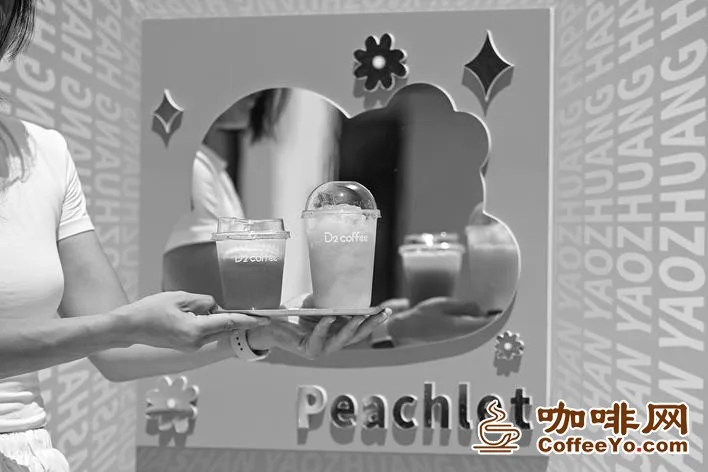
Considering different palates, the team produced three yellow-peach drinks: the star “Peaches Are Ripe” uses cold-brew butter coffee as a base, with peach jam and a milk cap — not cloying but clearly fruity, with a faint fermented-rice aroma; the sincere “Peach Thick-Milk Latte” pairs espresso concentrate for a heavier body; the “Molten-Peach Smoothie” uses pure peach flesh, caffeine-free, safe for old and young alike.
Each has its own character, opening guests’ eyes: so peaches aren’t just for eating — they can be drunk.
A “slow-burn” thing can’t be rushed
Deep in the specialty-coffee lane, Ding’s team found many village cafés blow through like a gust of wind, gone after a few months. “Our positioning: not a one-hit-wonder internet store, but a ‘slow-burn’ café that grows with the local market,” Ding said.
In her eyes, coffee is never the lead — people and peaches are.
In product terms, first let guests drink a good yellow-peach coffee; if they like it, they take home a can of the same Yunnan-origin beans or a box of cold-brew freeze-dry powder, so they can recreate a delicious cup anytime at home. “Guests experience it here, then can drink it anytime, anywhere — that’s what we want.”
This thinking “buries” guests into the operation early. During trial, buy-one-get-one; guests finish and say “tasty,” and they recommend beans and freeze-dry; guests bring friends back. “Reviews matter, but here they’re not a verdict — they’re a reason to meet next time.” Weekend traffic is at least 30% above usual, yet she hasn’t rushed to hire part-timers: “A ‘slow-burn’ thing can’t be rushed.” As she says, first let guests drink, then let time speak.
In Ding’s plan, the café is not just a place to drink coffee but a space to gather with friends because of coffee. “We launch an experience event every month — say, tasting how grind size changes brew flavor, or coffee-grounds creative painting — using our expertise to gather coffee lovers.” Ding is confident about the Yangtze River Delta coffee crowd: “We’ll launch, from time to time, coffee-ground squishies, coffee scent, coffee hand-soap and such; kids over five can join — everyone’s welcome.”
Leaving, Ding pointed to the rice fields outside the window: “See, this land can’t grow coffee, but it grows yellow peaches and rice, and grows the story we want to tell.” In the team’s plan, coffee is merely a medium — they want to turn rural scenery into an everyday drink young people are willing to pay for, an expression of keeping homesickness close.
A good yellow-peach coffee never expires; the peach aroma sipped by the rice fields is always there.
Reprint Notice & Disclaimer
- This article has been edited and compiled by China Coffee Network. The information and images therein come from public sources and the copyright belongs to the original author. This reprint is intended solely for information sharing within the coffee industry and does not represent the views of this website; all data and opinions are subject to the original article. Our thanks to the original author for creating and sharing it.
- For matters concerning content licensing, attribution, copyright or otherwise, please contact us promptly and we will verify and cooperate in handling them as soon as possible. We also welcome coffee origins, brands and industry media to exchange ideas and contribute articles.
- Contact China Coffee Network: Tel 400-0000-641 (+86-18288016826) | Email 405854472@qq.com | Address: Jinghong, Xishuangbanna, Yunnan Province / Tieling, Liaoning Province
Related Reading
 How ‘Sea-Flavored’ Coffee Blooms Across Dongtou
- Health Guide: How to Enjoy Your Coffee the Healthy Way
 Study: Regular Coffee and Tea May Lower Dementia Risk, but More Is Not Better
 Frontline Story: A ‘Mobile City Coffee Bar’ Arrives by the Grand Canal
 Yantai’s Wind Tastes of Coffee
 In Zhenyuan, a Cup of Coffee and a Waiting Train







 Liaoning ICP Security No. 21122402000217