
Chao News client. A fine autumn day. Recently, several coffee and tea drinks in Lucheng named after alley place-names have gone viral. Many citizens and tourists follow the aroma into the century-old mansions deep in the Wuma commercial district, savoring the ups and downs of business and the cultural heritage within.
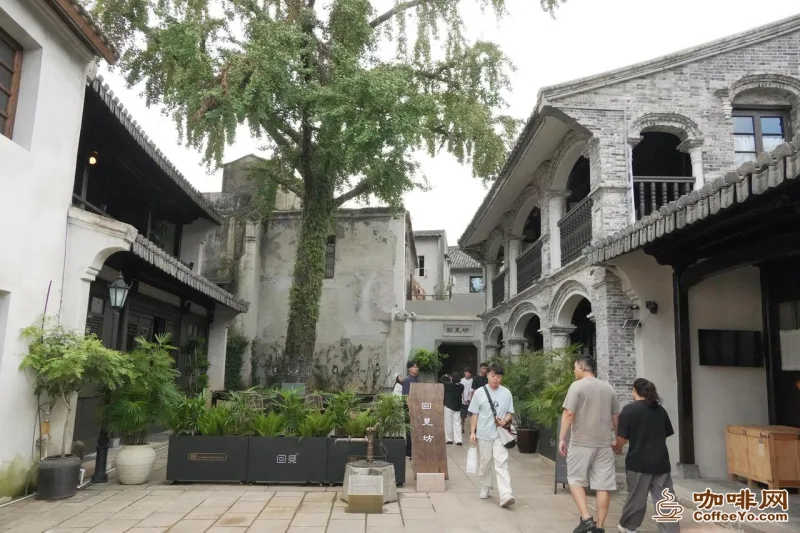
Consumers visit “Huijian Fang” for a check-in experience
The Wuma Street and Shamao River area is the core root of Lucheng, where the former residence of Wu Baiheng sits, dating back a century. Wu Baiheng was a founder of Wenzhou’s modern industry. In 1926, he founded China’s first condensed-milk factory — the Baihao Condensed Milk Factory — and broke the foreign monopoly with the “White Eagle Capture” trademark. Last October, the residence opened to the public after renovation. The recently popular “Huijian Fang” is exactly the new business format introduced during the residence’s revitalization. It integrates coffee, dining and social space, embedding industrial memory into contemporary life.
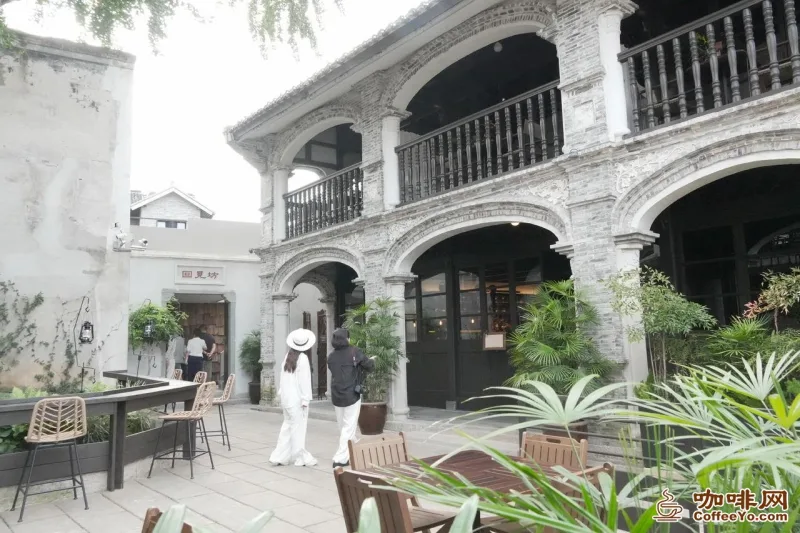
The old mansion is bounded by a tree; three buildings are connected, retaining the original beams and columns
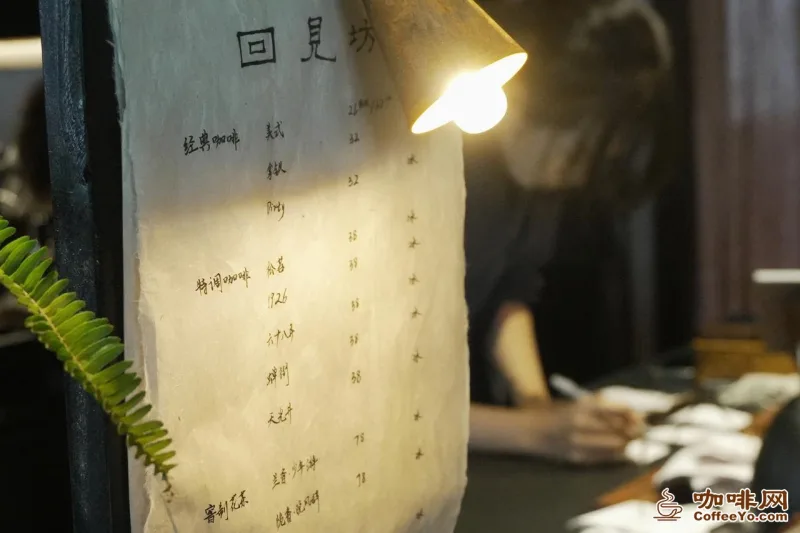
In-store drinks are named after Lucheng’s street and alley place-names
“Huijian” originates from a Beijing colloquialism, meaning “a local reunion,” which coincides with the revitalization of historical buildings. How does an old mansion carry a new business format? Bounded by a tree, three buildings are connected: two old buildings retain their original beams, columns, grey bricks and tiles, while one newly built courtyard is bright and open, where Republican-era style and new Chinese aesthetics blend. Products closely follow local culture; drink names are drawn from Lucheng’s street and alley place-names — Songtai, Chan Street and Lane 68 each have their own story, among which the signature “1926” is the best seller. The creative twist of coffee with condensed milk pays tribute to Wu Baiheng’s industrial spirit; each cup comes with a custom card, letting people relive those years of industrial salvation and integrity in business. Zhang Hao, the operator of “Huijian Fang,” said the store is rooted in old-city culture, turning old wing-rooms into a relaxing social space that blends historical context with new Chinese aesthetics, becoming an everyday parlor where people slow down.
Beyond the exhibition, finding a place to rest and feel Wenzhou’s courtyard culture in a relaxed atmosphere — that experience is exactly why many consumers come specifically. In the view of tourist Li Qianqian, a cup of coffee and a photo let one quietly savor the bits of the exhibition, making the celebrity’s former residence concrete in the mind, turning the trip into something more than a rushed tour, and deepening her impression of the city, adding a unique memory to the journey.
The revitalization of the former residence goes further. After systematic renovation, the old mansion retains its original texture: more than 10 Qing-to-Republican-era buildings keep their original appearance, and over 60 authentic artifacts together with more than 100 reproduced documents form the exhibition system. Dining composite spaces and immersive drama are introduced into the old mansion, so that through a drink or a story, visitors understand the patriotic feeling of the “founder of China’s dairy industry.” In the coming month, Zhang Hao plans to build a “day coffee, night bar” format in the courtyard space: opening the glass doors to organically connect the indoor dining space with the courtyard, letting consumers fully feel the charm of Lucheng’s colorful autumn.
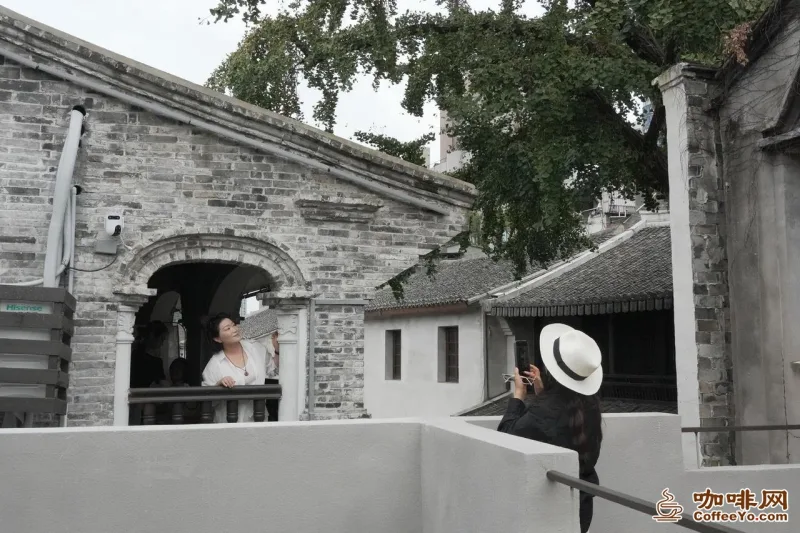
Tourists take photos and check in at the store
From the former residence extending into the back alleys, more subtle changes are taking place. The Wuma Subdistrict pioneered a “jigsaw-style” property-rights integration model, advancing renovation and operation through “design, procurement, construction and operation integration,” which shortened the project cycle by 40 percent, revitalized over 10,000 square meters of idle assets, and created 42 characteristic cultural-tourism courtyards. “In traditional dilapidated-house renovation, design and operation are often disconnected. We let the operators intervene in the design stage in advance, so that space and business format can match precisely,” said a relevant official of the Wuma Subdistrict.
Old houses cannot merely be repaired to look old; they must regain their liveliness. Last September, the subdistrict launched the “Tingyou Yisi Operator Co-construction Plan,” sorting out 26 old courtyards and publicly recruiting operators, establishing a “one operator, one service team” mechanism that provides full-process agency services in licensing, event approval and neighborhood coordination. Since the beginning of this year, the Wuma Subdistrict has started eight characteristic courtyard “micro-economy” projects including No. 2, Lane 78, Huancheng East Road and No. 140, Washi Lane, revitalizing 1,860 square meters of idle assets.
(Source: Zhangshang Lucheng client)
Please credit the source when reprinting.
Reprint notice and disclaimer
- This article is edited and compiled by coffeeyo.com. The materials and images herein are sourced from public channels; copyright belongs to the original authors. This site reprints them solely for sharing coffee-industry information and does not represent our stance; all data and opinions are subject to the original. We thank the original authors for their creation and sharing.
- If content authorization, attribution, copyright or other matters are involved, please contact us promptly. We will verify and cooperate in handling them as soon as possible; we also welcome coffee-growing regions, brands and industry media to exchange and contribute articles with us.
- Contact coffeeyo.com: Tel 400-0000-641 (+86-18288016826) | Email 405854472@qq.com | Address: Jinghong City, Xishuangbanna, Yunnan / Tieling City, Liaoning
Reprint Notice & Disclaimer
- This article has been edited and compiled by China Coffee Network. The information and images therein come from public sources and the copyright belongs to the original author. This reprint is intended solely for information sharing within the coffee industry and does not represent the views of this website; all data and opinions are subject to the original article. Our thanks to the original author for creating and sharing it.
- For matters concerning content licensing, attribution, copyright or otherwise, please contact us promptly and we will verify and cooperate in handling them as soon as possible. We also welcome coffee origins, brands and industry media to exchange ideas and contribute articles.
- Contact China Coffee Network: Tel 400-0000-641 (+86-18288016826) | Email 405854472@qq.com | Address: Jinghong, Xishuangbanna, Yunnan Province / Tieling, Liaoning Province
Related Reading
 How ‘Sea-Flavored’ Coffee Blooms Across Dongtou
- Health Guide: How to Enjoy Your Coffee the Healthy Way
 Study: Regular Coffee and Tea May Lower Dementia Risk, but More Is Not Better
 Frontline Story: A ‘Mobile City Coffee Bar’ Arrives by the Grand Canal
 Yantai’s Wind Tastes of Coffee
 In Zhenyuan, a Cup of Coffee and a Waiting Train







 Liaoning ICP Security No. 21122402000217