
Guide (Coffeeyo.com): The coffee academy has attracted many students eager to learn coffee making. Photo by Wang Yongle, all-media journalist of our newspaper.
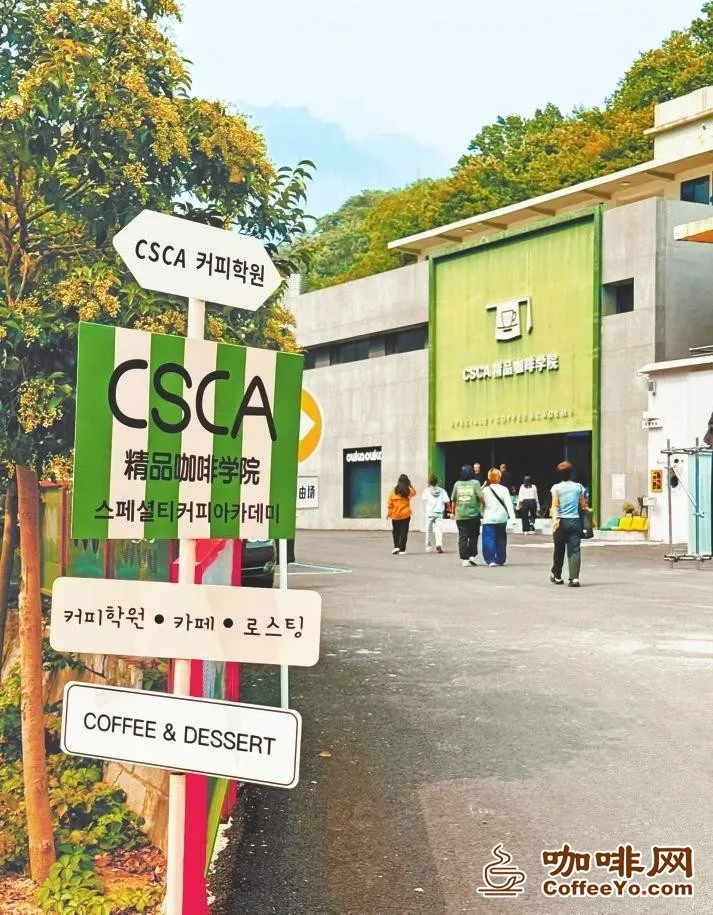
The coffee academy has attracted many students eager to learn coffee making. Photo by Wang Yongle, all-media journalist of our newspaper.
Opening Note
In the push toward the 15th Five-Year Plan, shoring up the weak links of rural modern life and building livable, business-friendly and harmonious villages comes down to people. In recent years, our province has seen a wave of capable people who understand, love and revitalize the countryside. With new ideas they revitalize resources, with new scenes they awaken nostalgia, turning traffic into sales and villages into “fragrant” destinations. Starting today, this newspaper launches the “Finding Rural Proprietors” series, exploring how these curators turn “soil” into “gold”, and witnessing the vivid practice of building beautiful and harmonious villages.
“A cup of coffee connects international standards, young people and the mountains and rivers of home, letting villagers earn the world’s money with the world’s craftsmanship.”
— A proprietor’s remark
All-media journalists of this newspaper: Que Aimin, Zhao Zhenjie, Wang Yongle, Zhou Yuanyuan
On an autumn morning in the southern Taihang, the morning mist has not yet cleared from the red cliffs of Baligou when the Shuiqu Yingyue guesthouse in Songshuping Village, Shangbalixiang Township, Huixian City, already wafts the aroma of coffee. This scent is quietly rewriting the consumption landscape of the Taihang mountain villages.
Su Xiang, the guesthouse’s owner, holds a milk pitcher and with a gentle turn of her wrist draws a tulip on the surface of a latte. Nearby, a few tourists who just finished climbing gather around the bar taking photos, one remarking: “I never expected to drink hand-pour coffee in the deep Taihang mountains that rivals first-tier cities.”
Half a year ago, Su Xiang was a farmer’s wife who only knew how to boil instant noodles for guests and tally bed fees. Today, an international barista certificate hangs behind her, and she greets everyone with a smile: “Even deep in the Taihang, we can now drink internationally standard coffee.”
From “selling beds” to making coffee by hand, Su Xiang’s transformation is a microcosm of how coffee is deeply empowering rural tourism.
The person who brought coffee into the mountains is named Zhang Jianhui, a native of Shangbalixiang, trained in art, who has done fashion design and spent years in media and the computer industry. In 2024, he established the Southern Taihang branch of CSCA Specialty Coffee Academy in the Baligou scenic area deep in the Taihang. This was not a simple commercial investment, but an “empowerment experiment” for the countryside — letting the international standards of coffee making truly take root in the wild, giving villagers an extra skill and an extra income.
Stepping into the Southern Taihang branch of CSCA Specialty Coffee Academy, the first thing that catches the eye is a coffee tree laden with coffee cherries. Further in, an antique roaster imported from Korea sits inside a glass enclosure, where trainees can directly watch green beans rotate, change color and crack under high heat; at the bar is an Italian-brand espresso machine, with the whole setup costing around one million yuan. The walls are covered with a world specialty coffee map — Brazil, Mexico, Vietnam… each origin backed by a complete flavor system. Among domestic rural tourism destinations, few can match such a professional setup.
Some wonder: is it a joke to run an SCA (Specialty Coffee Association) certification in a mountain gully? Zhang Jianhui answers succinctly: “Over 80% of independent cafes in China don’t make money; young people fail opening shops in big cities and cannot survive in the industry — the root cause is that they only know how to make coffee. What we cultivate is industry awareness: how to keep a mountain cafe truly alive.”
The academy adopts a training path of “sending trainees to Beijing for practice and transition, then returning to Henan”, letting young people first hone their skills in specialty cafes in big cities like Beijing, see the “world”, then return home. This “empowerment-style” training broadens the horizons of rural youth and gives them a skill to stand on.
Huang Jing was among the first local trainees. Before coming, her understanding of coffee stayed at “instant with sugar”. The first time she leaned close to a cupping aroma bottle, she froze: “So coffee has floral notes and fruit acidity.” From learning about coffee beans to independently extracting by international standards, Huang Jing took less than half a year; today she is an internationally certified barista with a considerable monthly income.
Young people like Huang Jing returning to the villages give the rural industry a sustainable self-generating capacity — the most vivid footnote to “rural empowerment”.
The Taihang has cliffs and waterfalls, but guesthouses mostly stayed at the “selling beds” stage. Zhang Jianhui’s solution is pragmatic: let the guesthouse owners get certified themselves and rebuild rural consumption scenes with their own hands.
Su Xiang and other local guesthouse proprietors signed up. On the day she got her certificate, she wrote in her friend circle: “From now on, our guesthouse has mountains, clouds and lattes.” Today the Shuiqu Yingyue guesthouse bar has added a professional grinder, and Su Xiang makes hand-pour for guests herself. Dongpo Pugu and three other guesthouses also became the first batch of “coffee proprietor” demonstration stores, each with its own signature product — some focus on lattes, others on flat whites.
Today, Huixian City’s unique “coffee map” is quietly taking shape. Guesthouse bars are becoming new consumption centers, and rural consumption scenes are thus refreshed.
In October 2024, after unremitting effort, the Southern Taihang branch of CSCA Specialty Coffee Academy brought the 4th “West Cup” National Barista Vocational Skills Competition’s Henan regional event to Baligou. This was the first time the national-level event landed in Henan. After the competition, the Chinese training team for the World Skills Competition’s restaurant service came to Baligou in turn; a small mountain courtyard became a training ground for preparing for the world skills event.
The academy’s dozens-of-yuan hand-pour experience classes on Dianping let tourists make a cup themselves after seeing the scenery, significantly extending their stay. Baligou is shifting from a “sightseeing destination” to a “lifestyle destination”, and the added value of rural consumption scenes is constantly being unearthed.
Zhang Jianhui is blunt: “Only when the business path is sound can it last.” He launched a “free coffee” talent-lifting plan — selecting enthusiastic Henan youth, signing agreements for employment first, paying training fees after they earn. He is also planning a coffee major with a Xinxiang university, aiming to enroll soon. “Let those willing to learn have a path, and those who opened shops survive,” says Zhang Jianhui.
In the past, Taihang villagers entertained guests with a cup of hot tea. Today, guesthouse owners can serve a hand-pour made to international standards. A cup of coffee connects international standards, young people and home’s mountains and rivers, turning “selling beds” into “selling a lifestyle”, and recreating a vibrant new rural consumption scene deep in the Taihang.
Deep in the Taihang, there is no longer only cliffs and the sound of flowing water. When the wind blows, it is filled with coffee aroma, and also carries the firm footsteps of rural development.
Reproduction Notice & Disclaimer
- This article was edited and compiled by Coffeeyo.com and reproduced from our newspaper’s all-media reporting (Coffeeyo.com), “Finding Rural Proprietors | Zhang Jianhui: Bringing International Coffee Aroma to the Taihang Mountains”. Copyright of the original text belongs to its author and the original publisher. This reproduction is for coffee industry information sharing only and does not represent the position of this site; all data and views are subject to the original. Thanks to the original author for the creation and sharing.
- Read the original (Chinese): Coffeeyo.com, “Finding Rural Proprietors | Zhang Jianhui: Bringing International Coffee Aroma to the Taihang Mountains”
- For matters regarding content licensing, attribution, copyright or others, please contact us promptly; we will verify and cooperate at the earliest opportunity. Coffee companies and industry media are also welcome to exchange ideas and contribute.
- Coffeeyo.com contact: Tel 400-0000-641 (+86-18288016826) | Email 405854472@qq.com | Address: Jinghong City, Xishuangbanna, Yunnan, China
Related Reading
 How ‘Sea-Flavored’ Coffee Blooms Across Dongtou
- Health Guide: How to Enjoy Your Coffee the Healthy Way
 Study: Regular Coffee and Tea May Lower Dementia Risk, but More Is Not Better
 Frontline Story: A ‘Mobile City Coffee Bar’ Arrives by the Grand Canal
 Yantai’s Wind Tastes of Coffee
 In Zhenyuan, a Cup of Coffee and a Waiting Train




 Liaoning ICP Security No. 21122402000217