
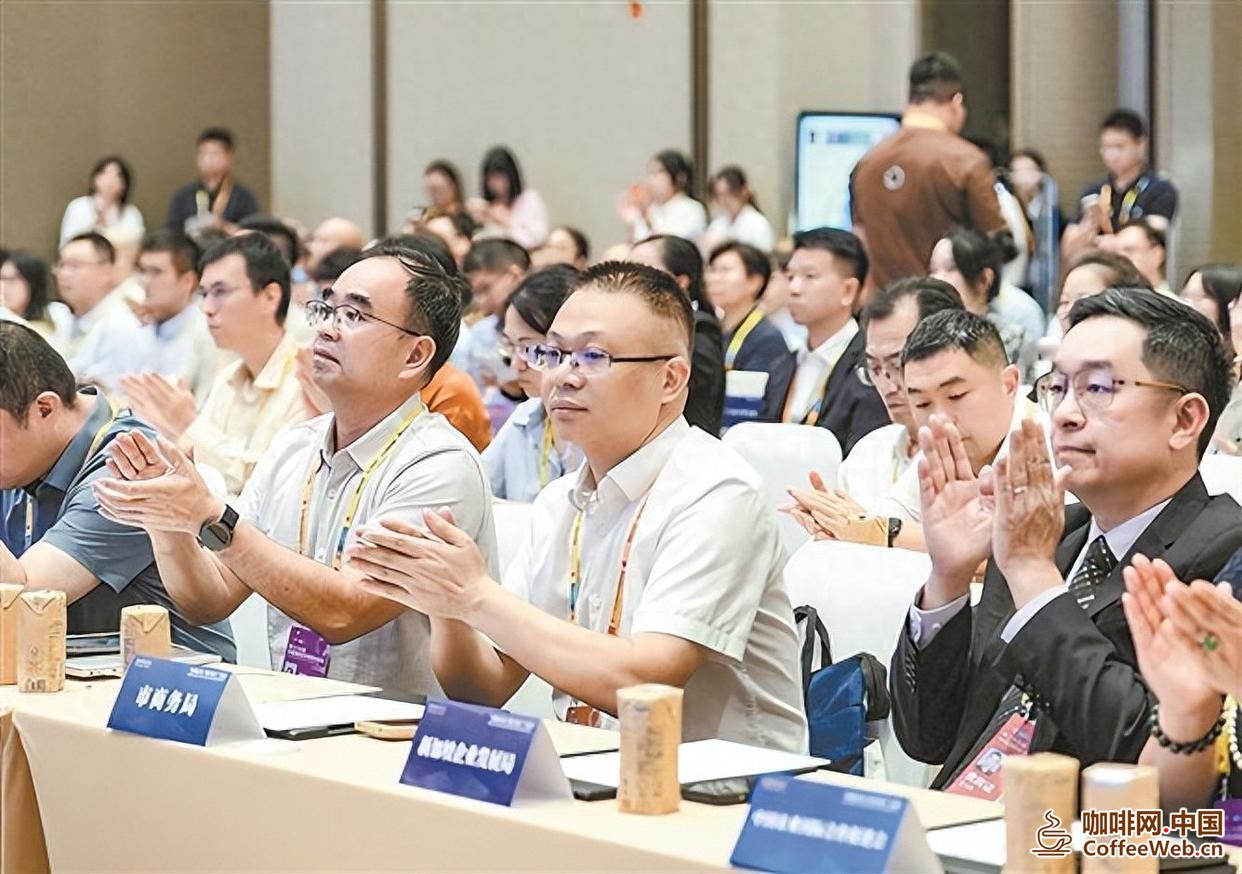
At the "Green Building the Future, Wisdom Gathering Xiamen" event, guests applauded the speech on stage. (Photo by Lu Jianhao, Xiamen Daily all media reporter)
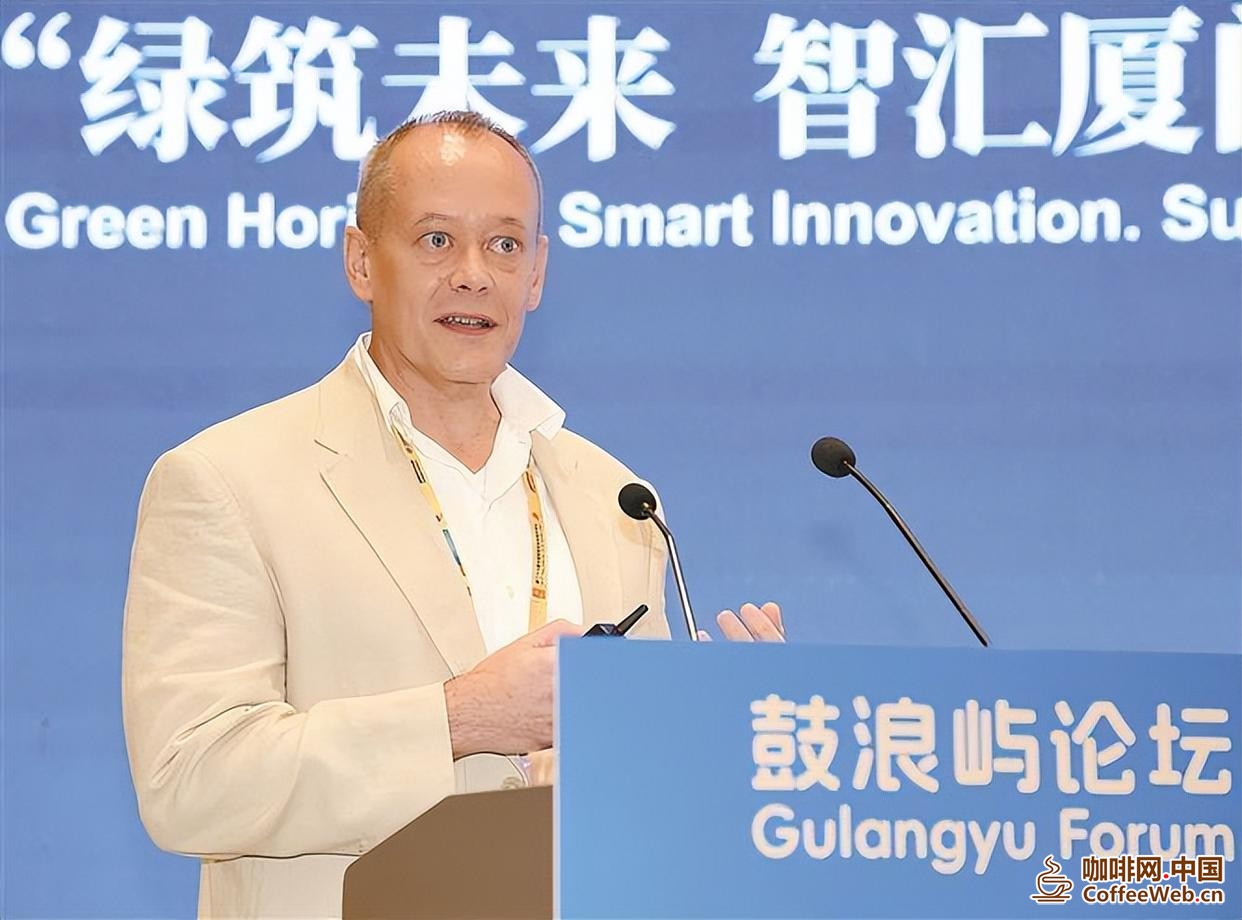
During the stage of promoting innovative achievements, James Skidmore took the stage to introduce innovative cases of high-value utilization of coffee waste. (Photo by Lu Jianhao, Xiamen Daily all media reporter
On September 7th, as one of the important supporting activities of the 26th China International Fair for Investment and Trade, the 2026 Gulangyu Forum · "Green Building the Future, Smart Gathering Xiamen" event was held at the Xiamen International Expo Center Convention Center. Chinese and foreign guests from international organizations, industry associations, financial institutions, university think tanks, and the business community had in-depth exchanges on urban green transformation. Xiamen city leaders Zhang Zhihong and Huang Shizhong attended the event.
At this event with the theme of "Shaping the Sustainable Future of Cities Together: Vision, Innovation, and Practice", a group of green innovation achievements grown from Xiamen Free Trade Zone were showcased – from coffee grounds to functional materials, to green microgrid AI intelligent agent technology, and to a globally connected ESG service system. These achievements show that the relevant practices of Xiamen's green industry are moving from concept to implementation, and gradually advancing towards scale and replicability.
Coffee grounds counterattack from waste to industrial chain
Over 10 million tons of coffee are produced globally each year. Most of the coffee grounds are directly discarded, "said James Skidmore, Brand Sustainability Director and Brand and Communication Director of Carbon and Technology (Caffon) at Qibei General Motors during the event.
In Xiamen, this "damp" thing that most people casually throw into the trash can is being redefined.
At the event, James shared his innovative practice of converting coffee grounds from waste to recycled materials. The related products have been applied in multiple fields such as water purification filters, air purification, textile fabrics, etc.
But technological breakthroughs are only the first step. James believes that the key to large-scale application lies in the product itself: "If carbon and technology can help businesses create more sustainable and truly better products, it will achieve large-scale application
He provided specific data support: in an application case, carbon and technology increased the strength of recycled packaging by 40%; The air filter plates used by KFC have better performance and longer service life; In the field of textiles, carbon and technology provide effective odor control functions. Sustainable products must also be better products. Consumers will not continue to purchase products with poor performance just because something is' green '
Liu Xuejiao, associate researcher of the Institute of Urban Environment of the Chinese Academy of Sciences, has been deeply engaged in the field of agricultural and forestry biomass resource utilization for a long time, focusing on the research and development of targeted water purification carbon materials, and holds more than 10 patents for new carbon materials and complete production equipment. He led the entire process optimization of coffee grounds based functional carbon materials from small-scale and pilot testing to industrial mass production.
He believes that after systematic verification, coffee grounds can be converted into high-value carbon materials for use in various fields such as environmental governance, new energy, industry, and healthcare. This highly aligns with the national "dual carbon" and circular economy development strategies, and is based on the green upgrading needs of Xiamen's billion dollar coffee industry chain, which can deeply support Xiamen's billion dollar coffee industry map planning.
International standards' support 'Xiamen's participation in the development of industry standards
At the forum, a more significant industrial action was launched simultaneously – the development of industry standards for carbon footprint evaluation of coffee grounds recycling and utilization. The Urban Environment Research Institute of the Chinese Academy of Sciences, Construction and Development Living Materials, Carbon and Technology, Coffee and Bean Branch of China Fruit Circulation Association, Xiamen Dark Blue Sustainable Development Innovation Research Center, National Carbon Measurement Center (Fujian), SGS and other units jointly participated.
This standard will rely on the mature industrial practices in Xiamen to fill the gap in carbon footprint evaluation standards for the preparation of activated carbon from coffee grounds, and promote the development of the coffee industry towards high-value recycling, standardization, and low-carbon direction.
The path from "Xiamen Practice" to "Industry Standards" is not accidental. The Xiamen Free Trade Zone has previously issued the "China (Fujian) Pilot Free Trade Zone Xiamen Zone" 15th Five Year Plan for the Implementation of the Pilot Free Trade Zone Upgrading Strategy ", which clearly proposes to" promote green and low-carbon transformation and development at a higher level ", and regards the construction of the Xiamen Free Trade Global Sustainable Development Innovation Center as an important lever to improve the green service support system. The center was officially launched on March 26, 2026. Since its launch, a number of benchmark projects have been implemented, including the world's first decarbonization management certification statement (ISO 50100) and the world's first circular economy verification statement in the industry (ISO 59004).
Green Industry Innovation 'Xiamen Matrix' Attracts the World
The recycling of coffee grounds is just one aspect of Xiamen's green industry map. During the forum, a group of innovative and demonstrative sustainable development projects were released in a concentrated manner.
The innovative application of AI intelligent technology for green microgrids in high humidity and high heat areas is another remarkable achievement. Jing Rui, Associate Professor of the School of Energy at Xiamen University and Chief Scientist of Zhirong Green Dynamic (Fujian) Information Technology Co., Ltd., shared the application of this innovative technology. This project targets the climate characteristics of high humidity and high heat along the southeast coast, deeply integrating artificial intelligence with green energy systems. Through multi-agent collaboration, it autonomously optimizes and regulates photovoltaics, energy storage, charging piles, and loads, effectively enhancing the renewable energy consumption capacity and regional energy system resilience. In the future, this project will deepen its integration with the ESG service system of Xiamen Free Trade Global Sustainable Development Innovation Center, empowering regional energy green transformation.
International organizations have also recognized Xiamen's advantages. Glenn Mandziuk, President and CEO of the World Alliance for Sustainable Hotels Foundation, stated at the forum that Xiamen combines the urban endowment of a "garden on the sea" with a development model supported by green materials, zero carbon parks, and circular economy, providing an "ideal soil" for the low-carbon transformation of the hotel value chain. Zhou Jinfeng, President of the World Academy of Sustainable Development Sciences, proposed that Xiamen should leverage its advantages in marine ecology and technological innovation to create a new highland for international cooperation in new material research and development, ocean governance, artificial intelligence applications, and ecological civilization construction.
98 behind the scenes footage
Seed paper for green conferences
On stage, Chinese and foreign guests from international organizations, industry associations, financial institutions, university think tanks, and the business community discussed topics such as urban green transformation and circular economy. Offline, several specific 'small things' have transformed' sustainable development 'from a discussed concept into a tangible on-site practice.
All drinking water at the venue is packaged in recyclable materials. The organizer has a clear wish: at the end of the event, there will be no disposable plastic bottles left at this venue.
The most special thing is the agenda sheet. This special agenda sheet is printed on seed paper. After the event, participants can crush it, bury it in the soil, and water it. The seeds in the paper will sprout and grow, attempting to rewrite the conventional fate of a paper agenda – from "discarded after being flipped through" to "becoming the beginning of some kind of growth".
These things are not big, but every detail is trying to answer the same question: how to reduce the burden on the environment in a conference. And the answer lies within these specific and executable choices.
(Xiamen Daily Full Media Reporter Wu Xiaojing)
 Liaoning ICP Security No. 21122402000217