
Recently, the local brand ROCHO coffee in Nanjing officially landed at Chaotian Palace. This ancient architectural complex, which carries a thousand year cultural heritage, now has a gentle and daily entrance – not a ticket, not a guide, but a cup of coffee.
Chaotian Palace is the largest and most well preserved Ming Qing official style ancient architectural complex in Jiangnan. It was personally named by Ming Taizu Zhu Yuanzhang and is known as "a Chaotian Palace, half of the history of the southern capital". The Nanjing Museum, built based on the Chaotian Palace, houses the city's development from the prosperity of the Six Dynasties to the Ming and Qing dynasties. Previously, ROCHO Coffee had successfully operated in urban landmarks such as Jiangxinzhou and Yuzui Wetland Park, organically integrating natural landscapes with coffee culture. This time, they brought the relaxed lifestyle that young people enjoy into the core of Jinling's cultural heritage.
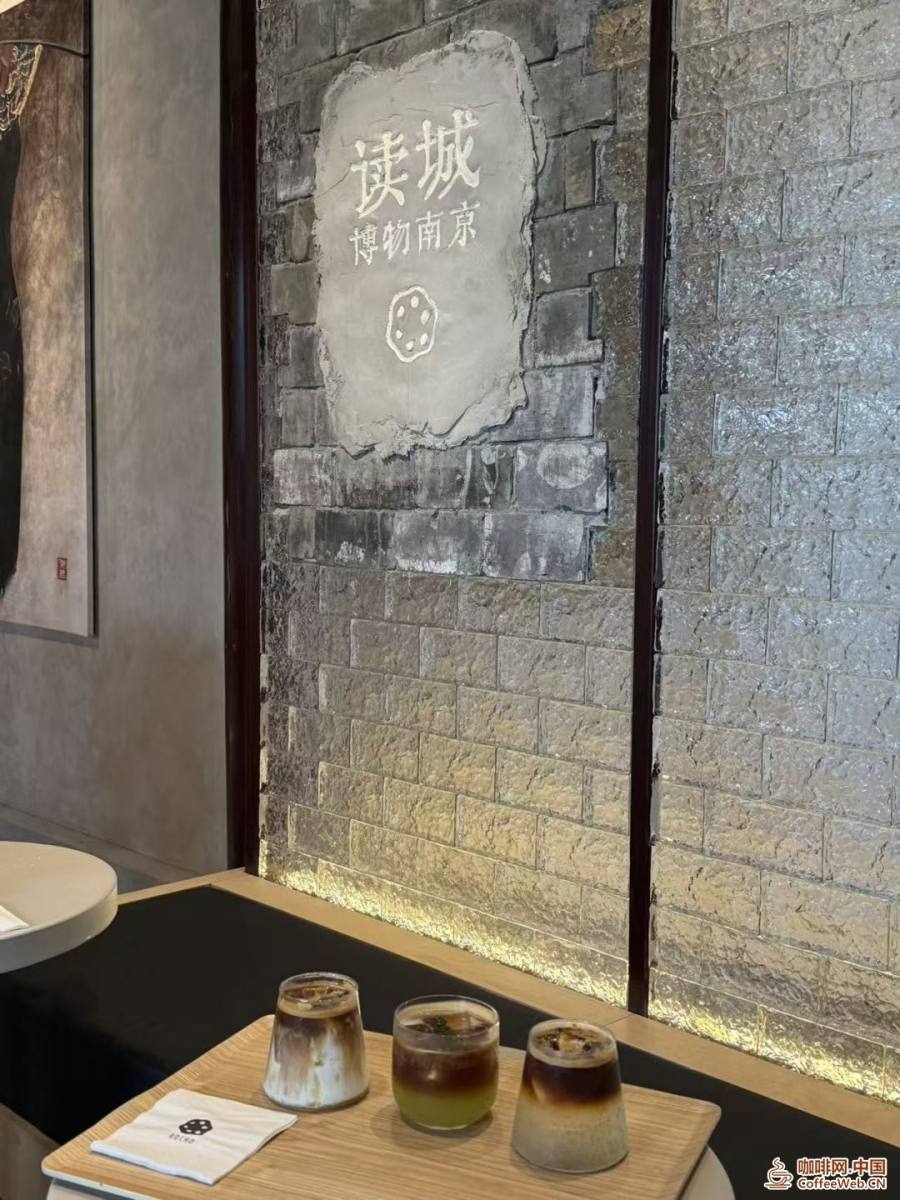
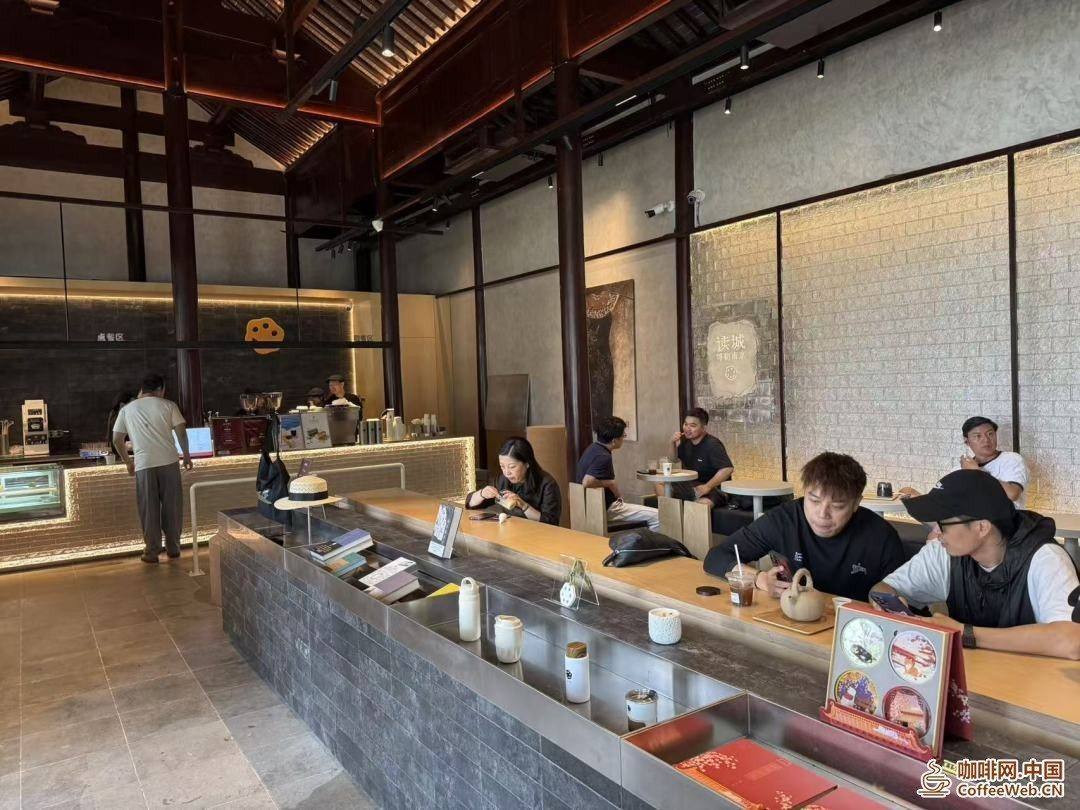
Entering the ROCHO Chaotian Palace store, the heavy atmosphere of ancient architecture is overwhelming. The deep brown classical wooden columns stand tall, and the original beams and carved window frames of the ancient architecture remain unchanged, creating a natural blend of Chinese ancient charm. The modern and minimalist bar counter and wooden tables and chairs are embedded in the ancient architectural space, cleverly blending old and new styles. On one side of the store, long seats are arranged along the lattice wooden windows, and by sliding the window, you can see the courtyard scenery. The space is scattered with round wooden chairs, elegant pottery jars, and floral arrangements. The lighting in the cultural and creative exhibition area is soft, and the objects are quietly displayed.
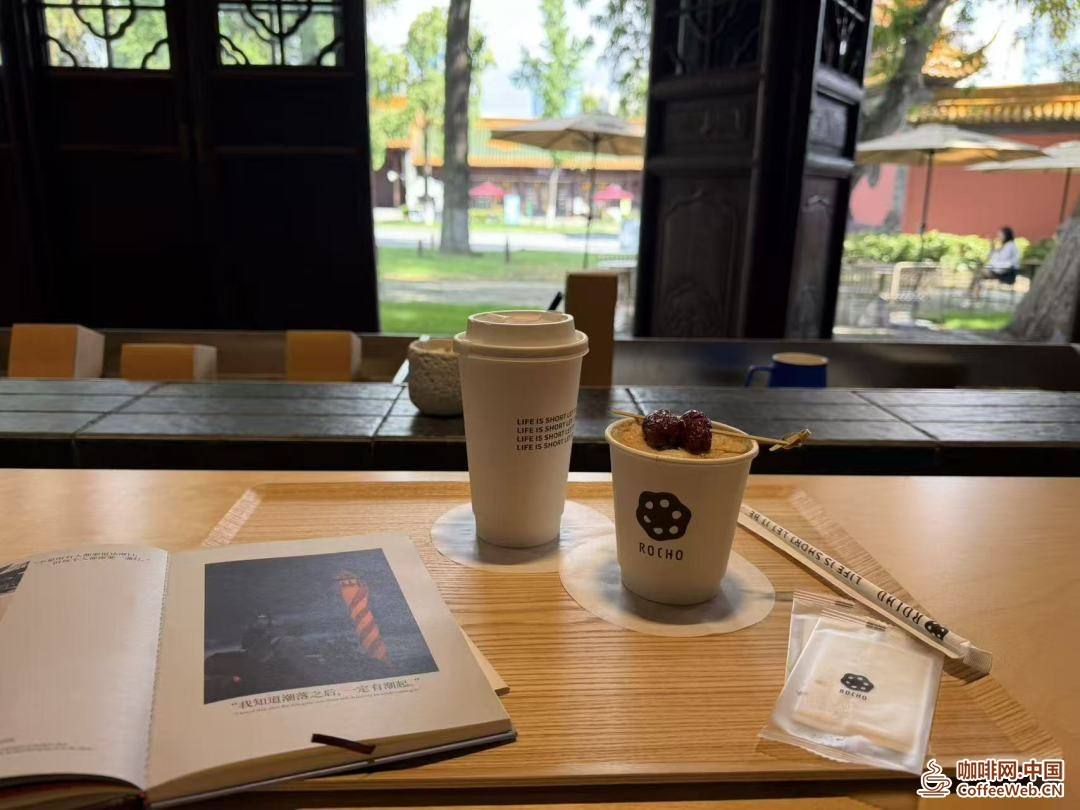
Ms. Wang, a self media store exploration blogger, shared her feelings after experiencing it: "As a coffee enthusiast, meeting ROCHO between the red walls and ancient buildings of Chaotian Palace is truly healing. After visiting the ancient architecture exhibition hall, carrying the exhaustion of the exhibition, I walked into this cultural and museum caf é, where the quiet and elegant atmosphere instantly soothed my inner restlessness. On one hand, there is the ancient charm of Jinling that has been preserved for thousands of years, while on the other hand, there is the modern daily tenderness brought by coffee. Sitting by the window, watching the light and shadow fill the eaves of ancient buildings, holding a cup of coffee and flipping through a few pages of a book, there's no need to rush. ”
According to Song Jiayun, the brand director of ROCHO, the main reason for opening the coffee shop in Chaotian Palace is that "the word 'Chaotian' is a ritual of worshipping the heavens and meeting the emperor, full of ceremony, representing the spirit of upward and upward light inherent in this city". Song Jiayun said that Chaotian Palace, as the largest and most well preserved ancient architectural complex of Ming and Qing Confucian temples in Jiangnan, is the core landmark of Nanjing's cultural context. "From the charm of the Six Dynasties to the atmosphere of the Ming and Qing dynasties, from the collection of treasures to the buildings themselves, every brick and tile is a readable chapter of the city.
What impressed ROCHO even more was the calm and composed demeanor of Chaotian Palace – situated in a bustling area, yet standing on its own, with red walls, yellow tiles, and towering ancient trees, naturally carrying a sense of relaxation. This is exactly the urban slow life advocated by ROCHO. ”Song Jiayun said, "For us, putting the coffee space in Chaotian Palace is not just about opening a shop in an ancient building, but about hoping that this three-dimensional urban history book has an entrance where we can sit down and slowly enjoy it
Strolling through exhibition halls is a compulsory course, sitting down and drinking coffee is an elective course, "Song Jiayun said. ROCHO Chaotian Palace store has put a lot of effort into space design and flow planning. On the moving line, the coffee space naturally connects with the museum exhibition, and citizens and tourists can reach the exhibition as soon as they move around. There is no gap between 'seeing the exhibition' and 'returning to the sweet', and the cultural relic and history they just saw slowly return to their hearts.
The coffee shop has three clever ideas in terms of space: firstly, borrowing scenery, introducing the red walls, yellow tiles, and ancient wooden eaves of Chaotian Palace into the interior, and opening the wooden door to blend the indoor and outdoor scenery; The second is to leave space, with relaxed seats and transparent light and shadow, allowing people to naturally slow down their pace after the exhibition; The third is' content becomes scenery ', in addition to coffee, books, intangible cultural heritage handicrafts, and cultural creativity all grow in this space. The books displayed in the store mainly focus on Nanjing history, Jinling culture, and Chaotian Palace related content. In terms of intangible cultural heritage, cooperation will be carried out with institutions such as the Nanjing Museum, and independent cultural and creative products that integrate intangible cultural heritage elements will also be launched.
Our attitude has always been 'not to generate traffic one by one, just for long-term companionship', "Song Jiayun said. In order for Chaotian Palace store to settle into the cultural coordinates of Reading City, it must do a good job in content, community, and city linkage. In terms of content, intangible cultural heritage handicraft salons, book clubs, cultural and creative innovation, and reading city themed activities are continuously scheduled to keep the space constantly updated. On the community, ROCHO currently has forty to fifty WeChat communities, with a single group size of two to three hundred people, all operated by real group owners who insist on not relying on robots. They also organize interest communities such as cycling and outdoor yoga to keep people and deepen relationships. In terms of urban linkage, they, together with cultural and museum partners, have incorporated the Chaotian Palace store into the daily "Reading City" campaign, "making it a part of the city's public culture, not just a part of commerce".
This long-term operation model has been validated: from 2024 to 2025, the annual passenger flow of Jiangxinzhou Lighthouse Coffee will increase from 130000 to 300000. We also have confidence in the Chaotian Palace store, "said Song Jiayun.
From cultural salons throughout the city to intangible cultural heritage workshops on the streets and alleys, from scattered city study rooms to coffee spaces grown in museums, although the ways are different, every encounter is a deep dialogue with the city. The addition of ROCHO coffee injects new vitality into the ancient Chaotian Palace, cleverly integrating cultural space, intangible cultural heritage experience, cultural and creative goods, and reading scenes, making the "reading city" lose its sense of distance and become familiar and calm. As Song Jiayun said, from Jiangxinzhou to Chaotian Palace, ROCHO has already taken a path of growth along the historical context of the city. "In the future, we will continue to choose urban spaces with stories and continue to do the thing of 'reading the city'.
Renowned cultural scholar Xue Bing stated that the new formats within cultural and museum venues should be positioned as the expansion and extension of cultural services for external promotion, rather than commercial leisure spaces. After the audience's visit, they can rest here and reminisce about the exhibits, deepen their viewing experience, and also purchase relevant books to achieve a deep understanding of the city's history. Previously, the old tea house of Nanjing Folk Museum was an excellent model, and drinking tea has become a must-have item after visiting and experiencing folk customs. Xue Bing hopes that Chaotian Palace can combine its own exhibitions to incubate more characteristic activities, optimize public cultural services, and also hopes that more cultural and tourism venues in Nanjing can create cultural service spaces with their own characteristics.
Jiangnan Times reporter Zhang Jiaojiao's article/photo
 Liaoning ICP Security No. 21122402000217