
(The author of this article is Entrepreneurial Frontline, authorized by Titanium Media) Article | Entrepreneurial Frontline
What will the future coffee shop look like? There will be a thousand answers in the minds of a thousand people, but most people will have one element in their minds, which is robots.
On July 29th, at the online summit of the "Yingzhi XBOT embodied commercial robot" project, Tang Mu, founder and CEO of Yingzhi XBOT, gave an estimate that "in the next three years, there will be at least 100000 robot coffee shops emerging in China", which is twice the total number of operating stores of Luckin Coffee and Kudi in China.
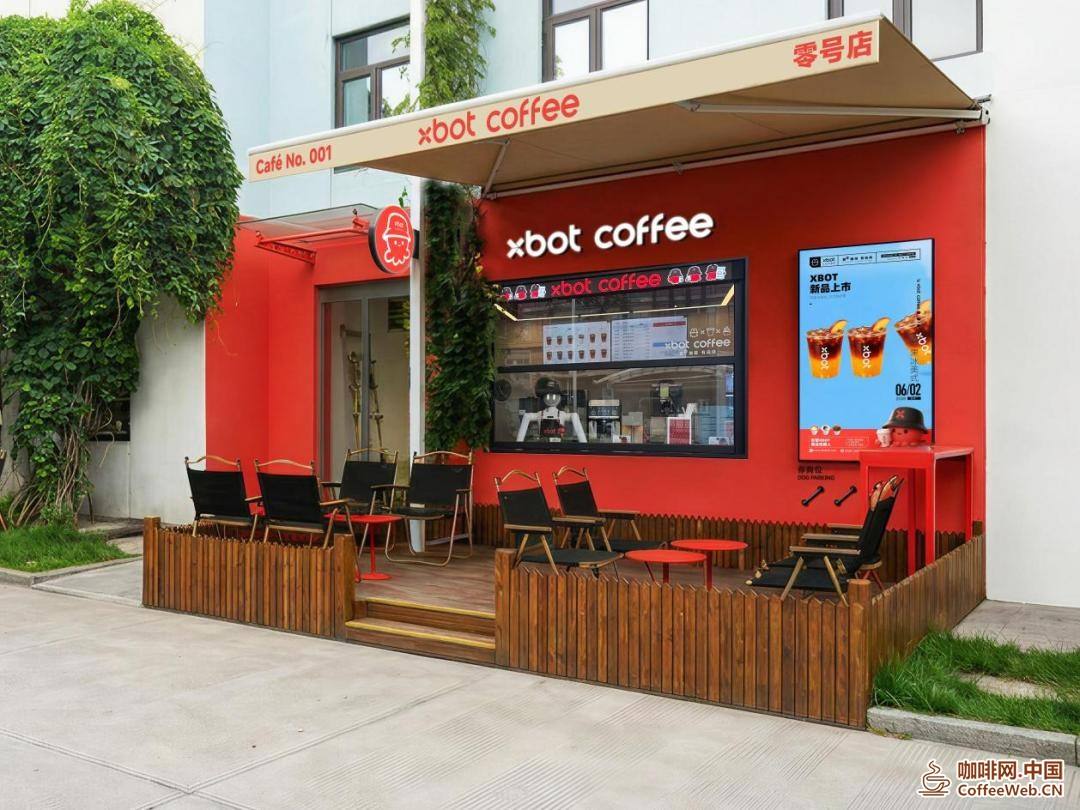
Prior to this, Yingzhi XBOT had officially launched its self operated chain coffee brand XBOT COFFEE and its first flagship experience store XBOT Lab. The core elements of both are not real baristas, but rather coffee robots.
XBOT Lab for Image/Human Computer Collaboration Mode (Image source: Yingzhi XBOT)
During the on-site experience of "Entrepreneurial Frontline", it was found that the XBOT C3 coffee robot launched by Yingzhi XBOT mainly uses a robotic arm to make coffee. In addition to the conventional American latte, it can also customize latte art. The positioning of XBOT Lab is "human-machine collaboration", where robots are responsible for stable coffee production, while human shop assistants are responsible for collaborative processes such as packaging, refilling, and daily maintenance.
The common concern in the industry is: What is the profit model for coffee robots to be put into the market? What kind of ecosystem will its popularity form with chain coffee brands such as Luckin Coffee and Kudi?
Coffee robot or automatic coffee machine?
The XBOT C3 coffee robot launched by Yingzhi XBOT condenses a coffee shop into a machine that covers an area of about 2 square meters. The machine includes a coffee machine, a milk frother, an ice maker, a printing machine, etc. The robotic arm is responsible for "holding" the cup and connecting it between various devices.
In addition to hardware, the XBOT C3 is paired with the self-developed XOS 3.0 system by Yingzhi, allowing the robot to have full chain capabilities of "seeing, understanding, and executing" simultaneously. On the interactive screen, the Aibao store manager Agent wearing an apron and reminding users to pick up food is a reflection of this system.
It is reported that the system can achieve cross ontology skill transfer – the operational ability learned once can still be reused after changing the robot form.
Image/XBOT C3 Coffee Robot
Unlike humanoid robots, some consumers see coffee robots more as a device.
I carefully observed the XBOT C3 machine and felt that it was a combination of a robotic arm and an automatic coffee machine. ”Consumers have expressed.
Tang Mu, founder and CEO of Yingzhi XBOT, explained in detail the reasons for choosing a robotic arm over a humanoid robot during an interview with "Entrepreneurial Frontline".
He said that on the one hand, in the process of making coffee, baristas rely more on their wrists and forearm, while the main function of their fingers is to grab the cup. By using a mechanical arm gripper, they can replicate most of the barista's movements.
On the other hand, compared to the human like finger joint design, the robotic arm gripper can save costs and lay the foundation for subsequent commercial promotion.
But in practical commercial applications, in order to ensure safety and stability, the XBOT C3 coffee robot has cut off some interactivity.
For example, Tang Mu told us that the robotic arm of the original coffee robot was exposed, allowing consumers to observe the coffee making process up close. Some consumers also touch the robotic arm during the coffee delivery process to form interaction.
But in the subsequent commercial application process, we found that there were hygiene hazards in this scene, so we covered it with a glass cover, "Tang Mu said.
This persistence in commercializing products is related to Tang Mu's previous work experience. Before founding Yingzhi XBOT, Tang Mu worked in core teams such as Tencent CDC and Xiaomi Exploration Lab, leading the experience design of QQ series products and creating products such as Xiaoai speakers and Xiaomi routers.
Tang Mu told us that these employment experiences have made him deeply realize that overemphasizing the "high-end" of product technology and excluding consumers from thousands of miles away cannot achieve commercial success.
The coffee robot itself is a 'simple' name, and its positioning is to truly enter consumers' lives. Therefore, rather than emphasizing the concept of robots, I am more concerned about whether it can present consumers with a good cup of coffee, "said Tang Mu.
Tianyancha shows that Yingzhi XBOT was established in November 2022, and currently has launched products including coffee robots, ice cream robots, and general catering humanoid robots.
According to previous reports from 36Kr, Yingzhi XBOT has completed two rounds of financing worth hundreds of millions of yuan. The A round of financing worth 200 million yuan was contributed by Hong Kong Jiankun Capital GPTX, while the B round of financing was worth 300-500 million yuan, jointly funded by multiple government funds, US dollar funds, and industry investors.
In terms of deployment scale, XBOT coffee robots have landed over 1000 units worldwide, covering 100 cities and producing over 4 million cups of coffee. The "Frontline of Entrepreneurship" found through the XBOT COFFEE mini program that the machine's deployment locations in Beijing are mainly concentrated in office buildings, scenic spots, and shopping malls.
At the same time, in order to further expand its scale, XBOT COFFEE has opened up franchise and launched coffee robots for device sales on JD.com in mid July this year. The XBOT C3 is priced at 219000 yuan, and the Lite version is priced at 239900 yuan. According to the consultation of "Entrepreneurial Frontline", the main difference between the two is that the Lite version operates in dual arm collaboration, while the XBOT C3 operates in single arm collaboration, and the actual price may fluctuate with JD channel activities.
According to the sales manager of Yingzhi XBOT, there are currently two business models for XBOT: XBOT ROBOT solution sales and XBOT COFFEE beverage brand franchise. In the solution sales model, customers can customize DIY body coating, choose their own brand logo, and use their own coffee accessory suppliers after purchasing equipment, but cannot use the XBOT brand logo or corresponding food safety qualifications under the brand.
Under the direct franchise model, both parties are constrained by the operation of the coffee brand, and XBOT COFFEE provides operation, maintenance, and other services to franchise partners. In addition to equipment procurement, it is also necessary to follow standards and requirements such as brand cooperation and direct material procurement.
Compared to opening a physical coffee shop, the main advantage of this project is to save on rent and labor costs. If we make an average of 100 cups per day, the payback period is about six months, "said the sales manager.
So, what kind of market pattern will the constantly landing coffee robots form with the existing "Luckin Kudi"?
Coffee Master's' Efficiency Revolution '?
The 2026 China Urban Coffee Development Report shows that by 2025, the scale of the national coffee industry will reach 354.9 billion yuan, with a year-on-year growth rate of 13.3%. The per capita coffee consumption in China has reached 28.57 cups, an increase from 22.24 cups in 2024 and 16.74 cups in 2023.
The increasing demand for coffee among Chinese people and standardized production processes is one of the business opportunities Tang Mu sees entering the market.
According to the "Frontline of Entrepreneurship" interview, baristas currently have different attitudes towards coffee robots: baristas working in chain brands such as Kudi and Luckin Coffee believe that their process of making coffee is similar to that of robots; However, another type of coffee manager who produces premium coffee believes that there are parts of their work that robots cannot replace.
Xiao Xiao, who has been working at Luckin Coffee for a year and a half, told us that during peak meal times, he needs to make 200 cups of coffee a day, which requires four to five hours of continuous rotation, and this production process is very fixed and mechanical.
For example, when making a raw coconut latte, the milliliters of coconut milk and coffee liquid added are standard, and the coffee liquid is extracted through a fixed program of the machine, which can generate variables such as controlling the sugar content, temperature, and changing the milk base or coffee bean type. Xiaokong said that repeating those mechanical actions has a low sense of achievement, and often wonders if there is a robot that can replace her work.
Another barista working at Kudi also told us that because the process of making beverages is relatively standardized, following the recipe can be mastered in just one or two days.
The above-mentioned barista told us that the time to make a cup of coffee varies from 30 seconds to one minute, while the XBOT coffee robot's product line includes American/milk coffee/printed series, etc. It takes about 45 seconds to make a cup of non printed coffee, can output 80 cups per hour, and can run for 24 hours, with more stable and long-lasting efficiency.
But Xiao Xiao also stated that compared to coffee robots, human shop assistants have higher flexibility. "For example, if customers find that they have placed the wrong order or have personalized taste requirements, we can respond and adjust in a timely manner. However, if coffee robots are 'unmanned', the response speed will be slower
Another employee working at Starbucks Select told us that although the coffee production process is standardized, her sense of achievement lies in interacting with customers. "I like the feeling of being photographed and praised by customers after finishing a cup of coffee, and I also introduce customers to the origin of coffee beans, Starbucks' procurement channels, and so on
The employee also stated that Starbucks places great emphasis on connecting and communicating with customers. "Our store's foot traffic is average, and I will try my best to introduce coffee to customers. I believe that only coffee made by people is more warm
In fact, in some private coffee shops or boutique coffee shops, baristas have their own understanding and pursuit of coffee. They generally believe that communication and introductions with customers, as well as categories such as hand brewed coffee that do not rely on machines, are parts that coffee robots cannot replace.
The discussion that extends from these scenarios is: Where are the functional boundaries of coffee robots? What cooperation model can it form with baristas besides independent operation?
Tang Mu told us that in his vision, coffee robots are responsible for repetitive and standardized coffee production work, while human baristas are responsible for communicating with customers and conducting new product development.
This scenario is similar to the previous statement made by Shao Buyun, the Operations Director of Novacoffee. In April of this year, Novacoffee and Qinglang Intelligence jointly built a "Robot Cafe" pop-up store in Shanghai, achieving the world's first joint venture between a humanoid robot brand and a coffee chain brand.
Image/"Robot Cafe" pop-up store, Qinglang humanoid robot is making coffee for consumers (Image source: Qinglang Robot Xiaohongshu account)
At the event, consumers placed orders through voice or tablet, and the Qinglang humanoid robot independently completed the entire coffee making process. So, how is the cooperation between non humanoid XBOT coffee robots and chain coffee brands?
Tang Mu revealed to us that some freshly made coffee chain brands have significant differences in their positioning of coffee robots compared to themselves.
We believe that coffee robots are a form of employee, and coffee robot experience stores are a model for future coffee shops. However, in the eyes of some chain freshly made coffee brands, coffee robots are just machines. This cognitive bias leads to both parties being undervalued as a part of the supply chain equipment in the process of promoting cooperation, and cannot fully demonstrate our advantages in user experience and store operation. ”Tang Mu said.
He further added to us that business competition is an efficiency revolution, and some coffee brands that hope to use coffee robots to quickly expand their stores and increase market share have great opportunities for cooperation with XBOT coffee robots.
In the past year, influenced by subsidies from e-commerce platforms and the food delivery war, coffee has experienced significant price reductions in the food delivery channel.
The 2026 China Urban Coffee Development Report shows that by 2025, the average unit price of coffee takeaway orders will decrease from 29.42 yuan to 14.30 yuan, especially during the peak of the subsidy war in the third quarter (Q3), when the unit price dropped to 11.88 yuan. Low price orders below 10 yuan have already occupied nearly half of the market share.
In the XBOT COFFEE mini program, we see that the price range of products on sale is concentrated between 6.9-18.9 yuan, which is in the same price range as brands such as Luckin, Kudi, and Lucky Coffee.
Tang Mu introduced to us that the average price of XBOT coffee is around ten yuan, but it is not a uniform price. For example, in cooperation points such as scenic spots and museums, the channel may cooperate to increase the price appropriately.
However, the difficulty in landing coffee robots is not price positioning.
A formidable opponent that cannot be avoided
According to data from Narrow Gate Restaurant, as of July 2026, Luckin Coffee has over 34000 operating stores, while Kudi has 16000 operating stores. At present, the number of XBOT coffee robots deployed is only a fraction of the top freshly made coffee chain brands.
This means that the placement points of coffee robots need to penetrate more deeply into the "capillaries" of the city.
Consumer Yingying told us that she uses a coffee robot not because there is no Luckin around her workplace, but because the coffee robot is closer to her.
In summer, walking to a coffee shop requires passing through a path without any shade of trees, which makes it feel hot. The temperature of the coffee that comes with ordering takeout is also not suitable. Fortunately, a coffee robot has been placed at the entrance of the unit cafeteria, which makes it much more convenient, "said Yingying.
In fact, compared to Luckin Coffee, XBOT coffee robots mainly fill the "last mile" of consumers, such as in closed office parks where takeout cannot pass, or in university teaching buildings and canteens, in order to get closer to consumers.
However, due to the density of freshly made coffee brand stores, the penetration space left for coffee robots is constantly decreasing.
We consulted multiple office building operators and were informed that Luckin Coffee is located near the office building and has no plans to introduce coffee robots. Some office building operators also told us that Luckin Coffee is located directly on the first floor of the office building, which is already convenient enough.
Industry insiders have pointed out to us that although the demand for coffee in China is constantly expanding, there is still a limit on the number of coffee cups per person per day. As a commercial form that entered the market after freshly made coffee brands, coffee robots need to become "substitutes" for Luckin Coffee rather than "candidates" if they want to compete for market share.
With the continuous development of coffee robots, it is inevitable to have a direct confrontation with freshly made coffee brands.
In addition, as a new business model, consumers' awareness of coffee robots is still in the education stage of cultivation.
Some coffee robots placed in scenic spots can attract consumers to check in and try out by launching customized prints for the scenic area; But the machines deployed in office buildings and campus scenes need to consider the issue of repurchase rate more.
This means that coffee robots need to have sufficient flavor assurance and a continuous frequency of updates to attract consumers.
We have noticed that many coffee robot brands on the market are gradually forming their own taste systems.
For example, COFE+coffee robots have launched the "Ace of Nations" coffee series, allowing consumers to taste global flavors without leaving their homes; The "Fuyou Coffee" coffee robot generates local flavor labels and enriches the coffee flavor by adding Guangdong's characteristic Chinese medicinal ingredients; The XBOT coffee robot puts effort into the raw materials, improving the taste through self-developed coffee beans, golden milk sources, and other ingredients.
But currently, compared to Luckin Coffee, coffee robots have not formed enough flavor dominance, and some consumers have bluntly told us that if coffee robots cannot achieve lower prices than Luckin Coffee, why not choose Luckin Coffee?
We have found that XBOT coffee robots are indeed continuously attracting consumers to purchase through lower consumption discounts. For example, in the XBOT COFFEE community, consumers can obtain preferential benefits by checking in, with 3 days of continuous check-in at a discount of 3.8%, 5 days of check-in at a discount of 1.8%, and 7 days of check-in for free coffee.
However, whether this strategy can become an effective means to promote consumer repurchase still needs to be verified by the market.
From the perspective of franchisees, the prices of different brands and models of coffee robots sold on the market range from 130000 to 400000 yuan. In addition to XBOT, several other coffee robot brands have also revealed to us a payback period of 6-8 months.
This also means that the new stories that XBOT coffee robots can tell in the billion dollar coffee market will not only be of interest to consumers, but also a key concern for franchisees.
From the current development perspective, efficiency is an "important weapon" for coffee robots, but it cannot be considered a "trump card". It has indeed filled the consumption scenarios that traditional chain brands cannot cover, by using unmanned technology to break through the new volume of affordable coffee and reduce operating costs. However, taste barriers, repurchase operations, and brand awareness are the three difficulties that stand in front of many coffee robot companies.
More importantly, robots will not replace baristas, but will reshape the division of labor in the coffee industry: machines undertake repetitive standardized labor, while humans focus on communication, research and development, and service. Technology is only a means to serve consumers, not an end in itself.
When the convenience brought by technology is combined with high repurchase rate products and mature user operations, coffee robots can transform from short-term trends to long-term sustainable commercial formats. And this coffee "efficiency revolution" triggered by robotic arms is the real landing.
For more exciting content, follow the Titanium Media WeChat account (ID: taimeiti), or download the Titanium Media App
 Liaoning ICP Security No. 21122402000217