
On August 7th, Yuehui City, Liwan District. The closing ceremony of the 2026 Guangzhou Coffee Culture Season, titled 'Flower City Coffee Fragrance, Taste the World', was held here. Policy promotion, event awards, coffee experience, brand exhibition and sales, a combination of several things, have made coffee no longer just a drink in this city, but a city event supported by industrial logic.
Coffee is happening in this way during the summer in Guangzhou.
But in the same city, Cheung Chau Island has a 40 acre coffee plantation, and Conghua has 50000 coffee seedlings. Guangzhou is not a traditional coffee producing area, but has begun to see the emergence of coffee trees, coffee plantations, roasting factories, a large number of stores, and market activities.
Coffee in Guangzhou is slowly growing different branches.
Coffee trees growing in Guangzhou
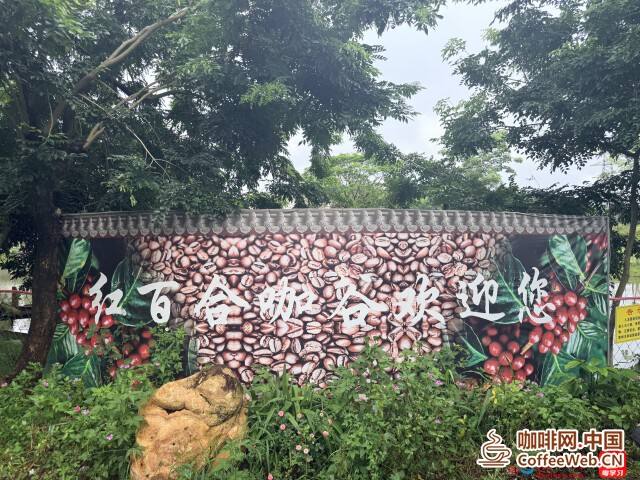
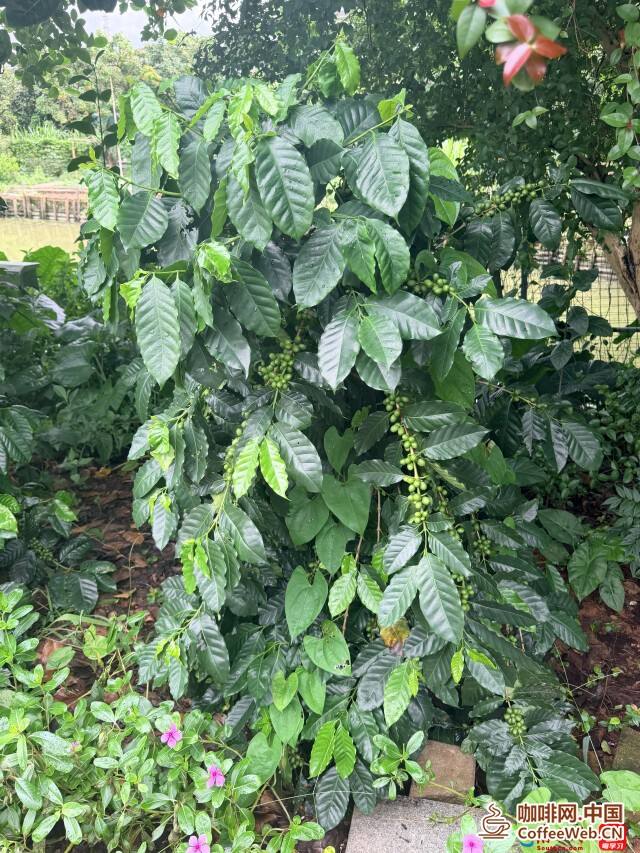
On Cheung Chau Island in July, there is still a hint of bitterness in the air from the sun drying leaves. The coffee trees in the Red Lily Ecological Park bear fruit at this moment. The small green fruits are hidden in the leaves, and it takes until November for the skin to slowly turn red, like a string of inconspicuous lights.
Red Lily Ecological Park
Red Lily Ecological Park
In the distance are mango trees, longan trees, and papaya trees. The coffee seedlings are placed in the shadows cast by these tree crowns, and they are new plants that need to learn to adapt to the light, wind, and heat here. There are pumpkins planted next to some coffee plants. Wang Hongxing said that pumpkin leaves are big and can help block out the sun in July and August. "It's too hot for the seedlings to bask in," he said. This is the soil method he tried in the field.
If we turn back a few years, these saplings still don't exist. The coffee narrative in Guangzhou once only stayed at the consumer end, where people sold and drank coffee, but never thought that coffee could also grow here.
Wherever there is no frost in Guangdong, coffee can be grown, "said Wang Hongxing standing under the tree. He is the technical director of the Red Lily Ecological Park and a retired soldier who later started his own business as a feed additive. The opportunity for Wang Hongxing to come into contact with coffee was not a delicious hand brew, but a very "feed" issue: chlorogenic acid in coffee leaves and fruits is in demand in health products and feed additives.
In 2022, he obtained a batch of coffee seedlings transported from Yunnan through Chen Rong, a senior engineer at South China University of Technology. That year was too hot, and the seedlings withered one by one. Wang Hongxing moved them to denser shade and said, 'Plant them first and see if they can survive.'. In the second half of the year, new shoots slowly emerge again.
Coffee beans growing on Cheung Chau Island
Coffee beans growing on Cheung Chau Island
Guangzhou has started growing coffee, which sounds a bit counter common sense. Why is a city known for its humid heat, plains, fruit trees, and moisture associated with growing coffee? The classic growth map of coffee has always been drawn in the "coffee belt" between the Tropic of Cancer and the Tropic of Capricorn. From the perspective of altitude, temperature difference, rainfall, and soil, coffee seems to prefer cooler, drier, and higher places.
Wang Hongxing turned his gaze to coffee, initially seeing the possibility of coffee as an "extract ingredient". He said that many people only think of a cup of beverage when they mention coffee, but from the perspective of cultivation, coffee is first and foremost a crop.
In the Red Lily Ecological Garden, he tried different varieties and planting environments, "first conducting experiments to see how different varieties grow in different environments.
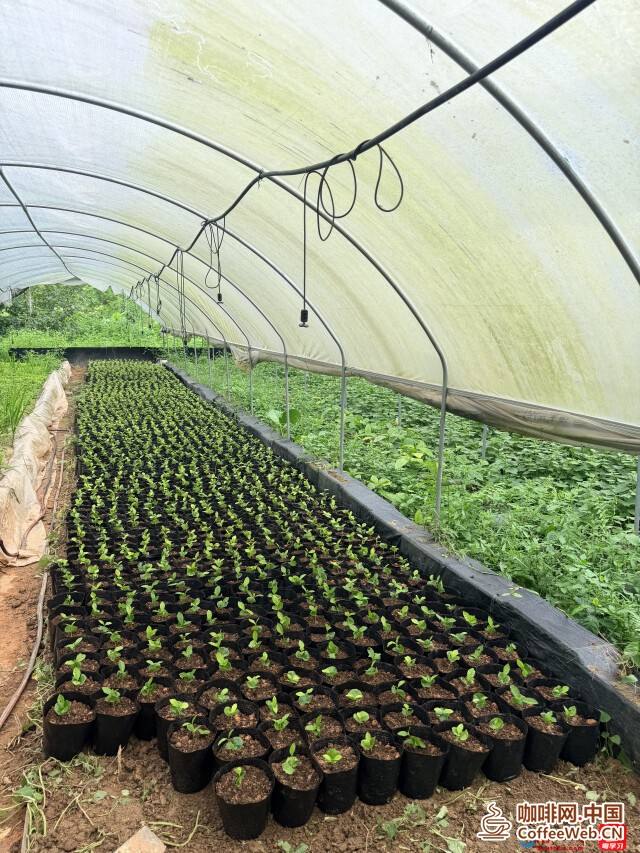
Coffee seedling cultivation
Coffee seedling cultivation
In recent years, the Red Lily has become the largest coffee ecological landscape belt in Guangzhou, covering an area of 40 acres, with around 20 varieties and 100000 seedlings. Wang Hongxing said that the most important thing now is not to urgently expand planting, but to first clarify the varieties and planting methods.
Why still grow coffee? The answer is not only in terms of climate, but also in land use. Wang Hongxing once calculated that one acre of land can plant 200 coffee trees, and one hundred acres of land is only 20000 trees. Coffee trees can grow for over a hundred years without the need to cut them down and start over every year. In his view, this is not a replacement, but a superposition, where a new economic crop grows under the original fruit tree.
Growing coffee in Guangzhou has given Guangzhou its first imagination of the "origin of coffee": not treating coffee as just a city drink, but putting it back into the trees, land, and climate to understand.
Beyond local customs, the coffee industry in Guangzhou
'Growing well' is just the first step, there is still a long way to go before 'forming a production area'.
In the coffee industry, it is often said that the origin determines the color of the flavor. Both of the Guixia varieties, Panama Emerald Estate presents elegant tones of jasmine and bergamot, while Ethiopia is a wild tropical fruit with white tea fragrance – genetically identical varieties, but with completely different flavors due to different terroirs. A bean finder will tell you that the raw bean end determines 60-70% of the flavor profile of a cup of coffee, and technology cannot create top-notch flavors out of thin air.
But for most daily consumption, the sense of origin is constantly weakening. The blended beans of chain brands are mixed with ingredients from multiple production areas, and deep baking can mask the local flavor. Milk and syrup also wrap up the local flavor. What consumers drink is often no longer a simple story of the production area.
Guangzhou grows coffee and doesn't compete with Yunnan for high-quality products, "Wang Hongxing himself knows. The altitude in Guangdong is not high enough, and the temperature difference between day and night is small, making it impossible to grow the bright and sour fruit like high mountain coffee. But it can be made into base beans and extracts
According to relevant data, China's cumulative import of coffee beans (including raw and roasted beans) reached 329100 tons in 2023/2024, a year-on-year increase of about 30%. The annual coffee production in Yunnan is about 130000 tons, and the domestic coffee consumption in China is about 345900 tons. Domestic production is still far from meeting consumer demand.
The coffee industry, from being able to grow and survive to forming production areas, is separated by a complete system of planting management, initial processing, warehousing and logistics, market circulation, and brand awareness.
Guangzhou is clearly not such a place at present. The real strength here is the passage. If the estate answers' Where does coffee come from? ', then the factory answers' How does coffee flow in Guangzhou?'.
The position of Guangzhou as a coffee distribution hub has already laid the groundwork. In 1836, Danish merchants opened China's first coffee shop "North Wind and Sea" on Jingyuan Street in Shisanhang. In 1905, Guangzhou businessman Chen Xianyuan established Guangzhou's first local coffee roasting workshop in Fangcun. Now, Jinda Coffee Beverage City in Baiyun District gathers a large number of brand enterprises in the coffee and tea beverage industry, covering the entire chain of raw bean trade, baking and processing, equipment supply, technical training, and brand incubation.
Round trip coffee to Zhongcun store
Round trip coffee to Zhongcun store
Round trip coffee is also a typical example.
Founder Deng Ziyang initially started his business in the oil industry, and he admits that he "didn't like drinking coffee" at the time, but felt that it was an "incremental market". In 2015, Round Trip Coffee opened its first store in South Tianhe, Guangzhou. At first, they purchased coffee beans from premium coffee suppliers in Portland, USA and Oslo, Norway. The first group of fans attracted by the imported beans were the owners of various coffee shops in Guangzhou. They know we have imported good beans here, "said the coffee related staff back and forth.
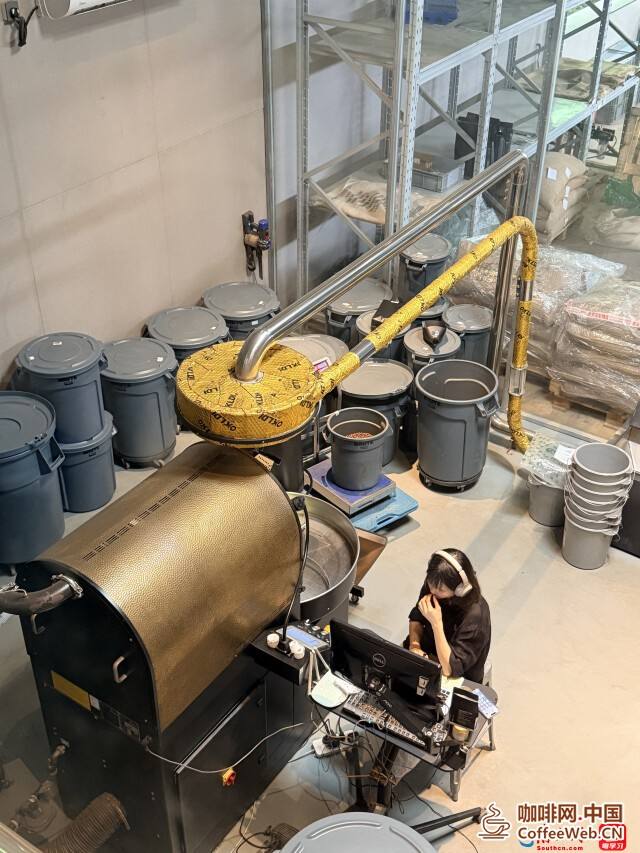
The roasting room for coffee back and forth
The roasting room for coffee back and forth
In 2018, the Zhongcun branch of Round Trip Coffee officially began coffee roasting and pastry making supply. Round Trip Coffee has established a "front store and back factory" in Zhongcun. Initially, there was a coffee roasting area on the first floor, providing an experience of drinking coffee while watching the roasting, gradually growing into a composite space. As of today, there are two baking machines in the Zhongcun Baking Factory, one American Loring 35kg all hot air and one German Probat 12kg semi straight fire. In the baking area, each bean has its own baking curve. Two bakers stared at the screen, carefully checking the data and the status of the beans.
This model is not commonly seen in Guangzhou. It values both assets and operations: it has to manage not only the coffee bar, but also the baking factory, and the light meal kitchen. Site selection, fire safety, food production qualifications, and environmental requirements are all challenging.
Round trip coffee
Round trip coffee
The logic of round-trip coffee is also very clear: the factory store is located in Zhongcun because the rent is relatively cheap; But if the store is well done, the space itself can also attract foot traffic. The shop of Shamian is located in an old building, and the restoration and renovation of the old building were also done by our own design team. As long as you do well, people will naturally come, "Deng Ziyang said.
The Guangzhou path of coffee is both a way of life and an industry
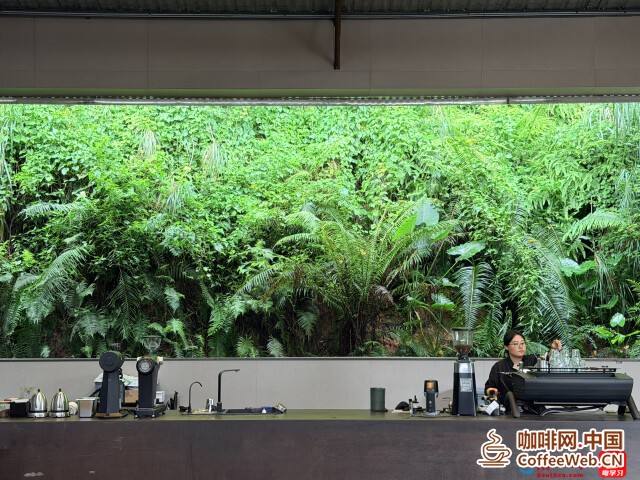
Like many other places, in Guangzhou, coffee shops are no longer just a place to buy a refreshing drink. Someone rode a bike to the riverbank, blew the wind, finished their coffee, and then continued on the road; Someone walked into the community caf é with a puppy and sat there for an afternoon; Someone is eating cake and drinking hand brewed coffee under the arcade in the old city area; Some people just want to find a less crowded place, quiet for a while, and read a book.
Coffee in Guangzhou appears in communities, suburbs, near farms, and old buildings. It is closely connected to the lifestyle that Guangzhou already has. The data can support this sense of daily life: by the end of 2025, there will be over 8000 coffee shops in Guangzhou, ranking second in the country and first in South China. In 2025, the revenue of beverages and cold drink services (coffee+new-style tea drinks) in Guangzhou will increase by 22.8% year-on-year.
The coffee plantations on Changzhou Island, the coffee saplings in Conghua, and the community cafes in the old city area… may seem like different nodes, but they all point to the same thing. Coffee in Guangzhou, from a imported consumer product, has gradually become a way for the city to organize daily life.
Nowadays, Guangzhou has coffee markets, coffee festivals, brand flash mobs, and city events all year round. They turn everyday consumption back into an event, giving brands and consumers the opportunity to meet face-to-face, and transforming coffee from a simple beverage into something that can be included in weekend itineraries. Estates, factories, stores, and consumers, who were originally scattered in different links, are starting to see each other in the same city.
This is probably the most noteworthy aspect of Guangzhou coffee that deserves to be recorded. It may not necessarily become the largest coffee producing region in China, and there is no need to rush to prove that it can compete with Panama and Ethiopia. But it is indeed embedding coffee back into the city in its own way.
Nowadays, Guangzhou has over 8000 coffee shops scattered in streets, commercial districts, and suburbs, making it the second city in China in terms of the number of coffee shops. An industrial chain with an annual output value of 67 billion yuan is quietly growing. It connects imports, raw beans, baking, equipment, stores, and consumers, as well as over 150000 job opportunities. Every day, about 2 million cups of freshly brewed coffee are served in this city. It starts with a drink and becomes a 'new commodity', connecting land and supply chains upwards and entering neighborhoods and people's lives downwards.
Coffee grows from a tree and eventually enters the daily life of Guangzhou, condensing into life itself and building an industry that connects the world.
Southern Net and Guangdong Study journalist Xia Siwan
Design: Wu Junli
Editor: Li Jiechan Responsible Editor: Ye Lizi Proofreading: Chen Xuede
 Liaoning ICP Security No. 21122402000217