
1.Aydin, E., et al.,Time of day influences caffeine’s effects on exercise-induced haemostatic responses in sedentary young men: a randomized crossover trial.European Journal of Clinical Nutrition, 2026.80(5): p. 524-531.
The news of 41 year old internet celebrity Zhang Xuefeng's sudden cardiac death after running has recently caused countless people to sigh and regret.
In recent years, similar news has frequently appeared: many middle-aged people in their thirties and forties who usually insist on long-distance running, and even young fitness enthusiasts, have sudden heart accidents during exercise.
On one hand, doctors advocate for exercise to protect the heart every day, while on the other hand, there are occasional cases of sudden death from exercise. Many ordinary people are confused: is exercise beneficial or harmful? How to exercise to avoid the risk of blood clots and heart attacks?
A multinational joint trial published in the European Journal of Clinical Nutrition provides practical scientific answers from three dimensions: coagulation patterns, coffee consumption, and exercise duration.
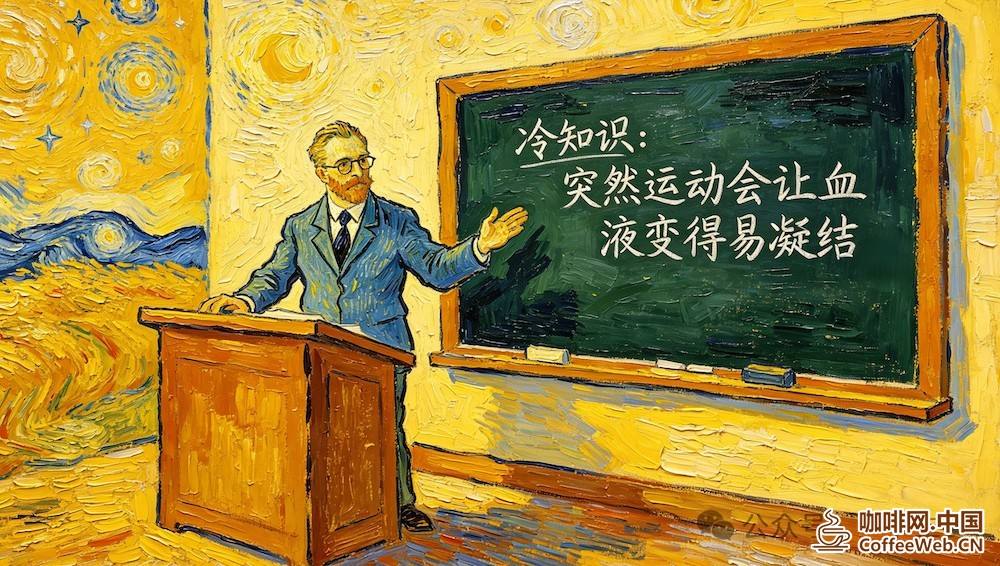
As long as there is a movement, the blood will briefly become "sticky", which is a physiological mechanism inherent in the human body
A study selected 30 young men who sit for long periods of time and hardly drink coffee, and did standardized moderate intensity aerobic exercise in different time periods. After monitoring coagulation indicators through blood sampling, it was found that after exercise, platelet aggregation and thrombin production in the human body would increase, blood clot dissolution time would be longer, and blood clotting would be easier in the short term.
This is not a bug in the body, but a self-protection mechanism of the human body: during exercise, muscles and microvessels are inevitably slightly damaged, and the body upregulates its coagulation ability in advance, which can prevent heavy bleeding after sports injuries.
But blood is prone to clotting, which means it is more likely to produce blood clots. Thrombotic events are one of the main causes of cardiovascular disease (CVD).
Fortunately, the human body has its own balance system, and after exercise, the thrombolytic substance tPA in the body increases synchronously, actively dissolving excess blood clots.
For ordinary people who are physically healthy and have no underlying diseases, the "blood viscosity" caused by exercise will recover on its own and will not form blood clots. But if combined with some other stimulating factors, the balance system of the body is easily disrupted.
Exercise in the evening is safer
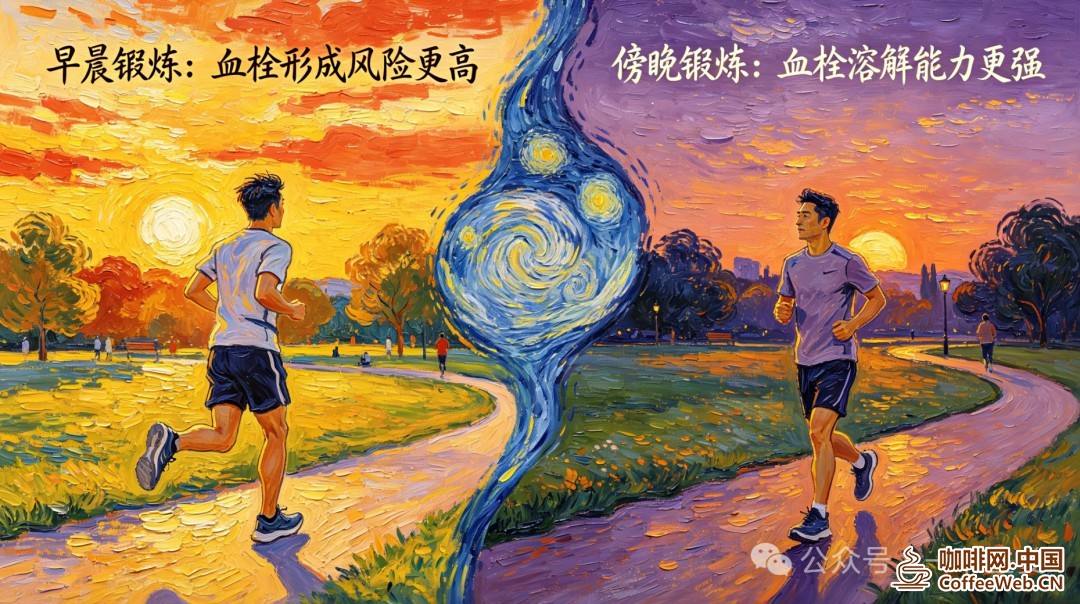
Although both morning and evening exercise increase the risk of blood clots, the risk is higher in the morning.
After morning exercise, higher platelet aggregation, stronger thrombin production, higher PAI-1 activity, and longer clot lysis time were detected, indicating poorer fibrinolysis ability and increased likelihood of thrombus formation.
On the contrary, after evening exercise, lower thrombotic indicators and stronger fibrinolysis ability (higher tPA activity and shorter clot lysis time) were detected, indicating a stronger ability to dissolve blood clots.
The reason for this difference is due to the influence of the human circadian rhythm:
The morning peak phenomenon of PAI-1: The level of PAI-1 in the human body naturally reaches its peak in the morning, which inhibits the fibrinolytic system and makes blood clots more difficult to dissolve.
Platelet reactivity: After waking up in the morning, platelet reactivity increases and the tendency to aggregate increases.
Sympathetic nervous activity: In the morning, sympathetic nervous tension is higher, which may further amplify the coagulation response after exercise.
In fact, the morning is a high-risk period for cardiovascular events, which is related to the body's natural "thrombotic state" in the morning.
And this study suggests that exercise can further enhance the "thrombotic state" in the morning.
It should be pointed out that if the sleep schedule is not early to bed and early to rise, then "morning" can also be extended to the noon period.
According to media reports, Zhang Xuefeng experienced discomfort after running at the company at 12:26 noon.
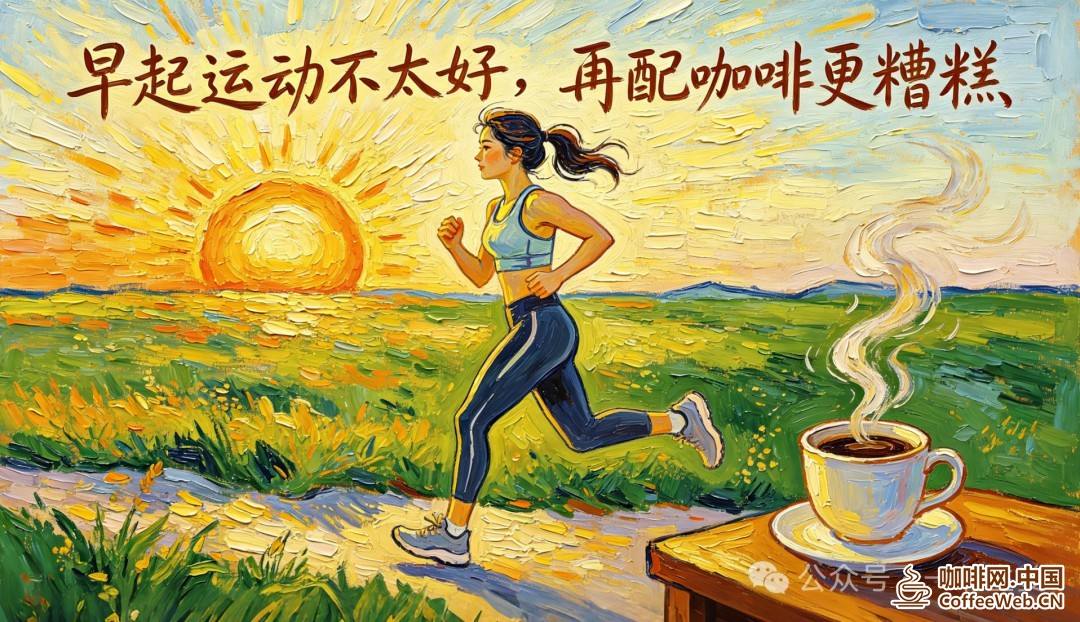
Drinking coffee on an empty stomach in the morning and exercising immediately can increase the risk of blood clots
Many office workers are accustomed to having a refreshing American drink in the morning, followed by running and exercising outside. This seemingly healthy lifestyle is precisely the combination with the highest risk of blood clots.
The effect of caffeine on thrombosis was also tested in the aforementioned experiment. Compared to those who do not drink coffee, participants who exercise in the morning after drinking coffee tend to have more obvious platelet clumping, more thrombin, and more difficult blood clots to dissolve.
Simply put, exercise makes blood easier to clot, and caffeine in the morning is like adding fuel to the fire, further increasing the potential risk of blood clots.
In the above experiment, the participants had a caffeine intake of 3mg per kilogram of body weight, relative to the amount of one cup of regular American coffee.
Of course, due to different people's tolerance to caffeine, the effectiveness of coffee may vary among different individuals.
The study also tested the effect of the same dose of coffee in the evening and found that the procoagulant effect was significantly reduced. Even after drinking coffee and exercising, the fluctuations in coagulation indicators were much milder.
So, exercising in the evening is safer, and drinking coffee in the evening has less impact on blood clots. (But the impact on sleep will be even greater…)
Choose to exercise in the evening and avoid the misconception of pairing morning exercise with coffee
It should be pointed out that the above study has certain limitations: the participants in the experiment were all young men who sit for long periods of time and hardly drink coffee.
Sedentary sitting itself is a bad habit that leads to cardiovascular disease. Long term inactivity can easily lead to abnormal platelet activity, decreased thrombolytic ability, and a tendency for blood to become more prone to coagulation. The most typical example: Long distance flight and prolonged sitting can induce lower limb thrombosis.
Therefore, changing sedentary behavior can reduce cardiovascular risk. During long-distance flights, it is also important to pay attention to walking more or doing some leg lifting exercises.
The above study specifically selected sedentary individuals for experimental testing because their indicators fluctuate more prominently, and the coagulation changes caused by caffeine and exercise are easier to observe.
So the purpose of this experiment is not to persuade everyone to give up exercise, but to help us find the right time to drink coffee and exercise.
Combining experimental data, remembering three points in daily fitness can significantly reduce cardiovascular risks:
Exercise in the evening as much as possible: Around 6pm in the evening, the body has the best thrombolytic ability, with strong secretion of the thrombolytic substance tPA and less thrombogenic factors. Under the same amount of exercise, the blood is less likely to become "thick".
Never drink coffee on an empty stomach in the morning and exercise immediately: for those with high blood pressure, history of blood clots, family history of cardiovascular and cerebrovascular diseases, and those over 60 years old, do not step on this combination. If you really want to drink coffee early in the morning, it is recommended to rest for an hour after practicing before drinking; Drink only warm water before morning exercise to make up for the lack of water at night.
Gradual fitness for sedentary individuals: avoid sudden long-distance running and intense exercise when not moving for a long time, start with low-intensity exercises such as walking; If you experience persistent chest tightness, leg soreness, or unexplained fatigue after exercise, stop exercising immediately and seek medical attention promptly.
Watching others win lottery tickets and thinking that one is also capable is hasty; Watching others die suddenly during exercise and feeling that I am not capable is even more hasty.
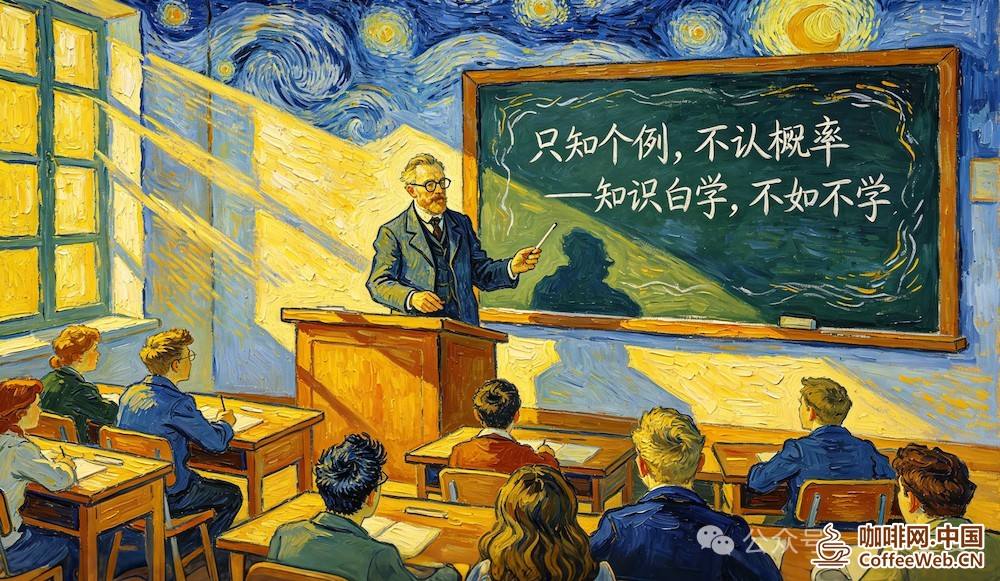
Focusing only on extreme cases without learning the overall probability is far more harmful than not understanding.
The significance of scientific research is to help us see probabilities and distinguish between chance and normalcy.
Don't be intimidated by individual sudden death news, the benefits of regular exercise for protecting blood vessels and stabilizing the three highs far outweigh the extremely low risks.
The real harm to the body is never the exercise itself, but the wrong timing and habits that collide with serious exercise.
1.Aydin, E., et al.,Time of day influences caffeine’s effects on exercise-induced haemostatic responses in sedentary young men: a randomized crossover trial.European Journal of Clinical Nutrition, 2026.80(5): p. 524-531.
(Author: Zhang Hongtao, pen name "Yijie Ginger", has written popular science books such as "What to Eat? – Reflections on the Tip of the Tongue" and "If the Tip of the Tongue Can Think". It can talk about the most cutting-edge medical research or tell the most popular stories. This article is only for medical research progress and health knowledge popularization, and is not intended as any medical advice. If you feel unwell, please seek medical treatment as soon as possible and follow the doctor's advice for targeted treatment. Thank you for generating the picture of Doubao.)
Original title: "After drinking coffee in the morning and running, the heart may 'not be able to handle it'? Authoritative research: Exercise itself is harmless, wrong timing and combination
 Liaoning ICP Security No. 21122402000217