
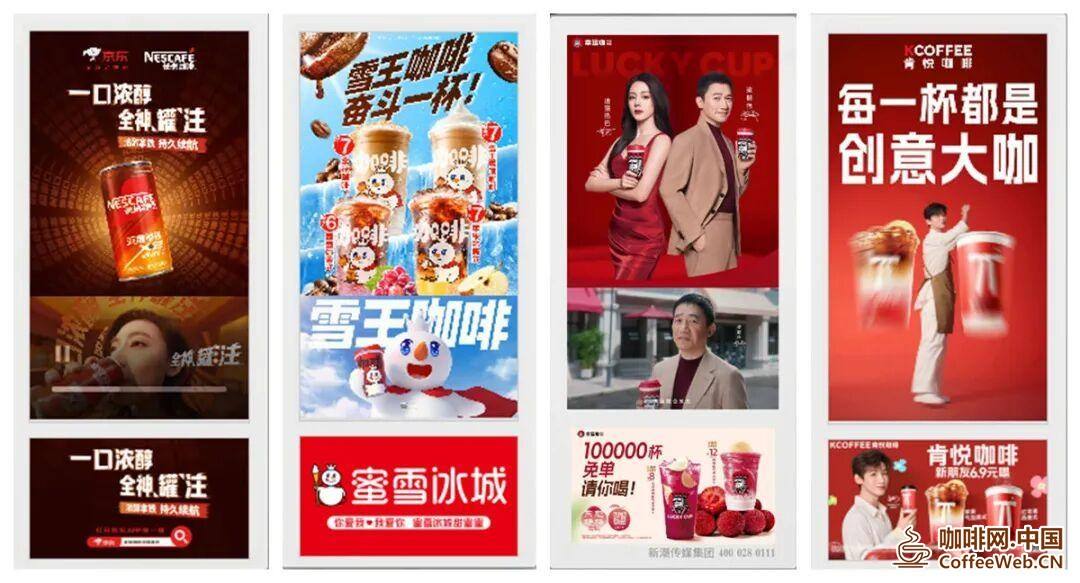
Source: New Tide Media Group
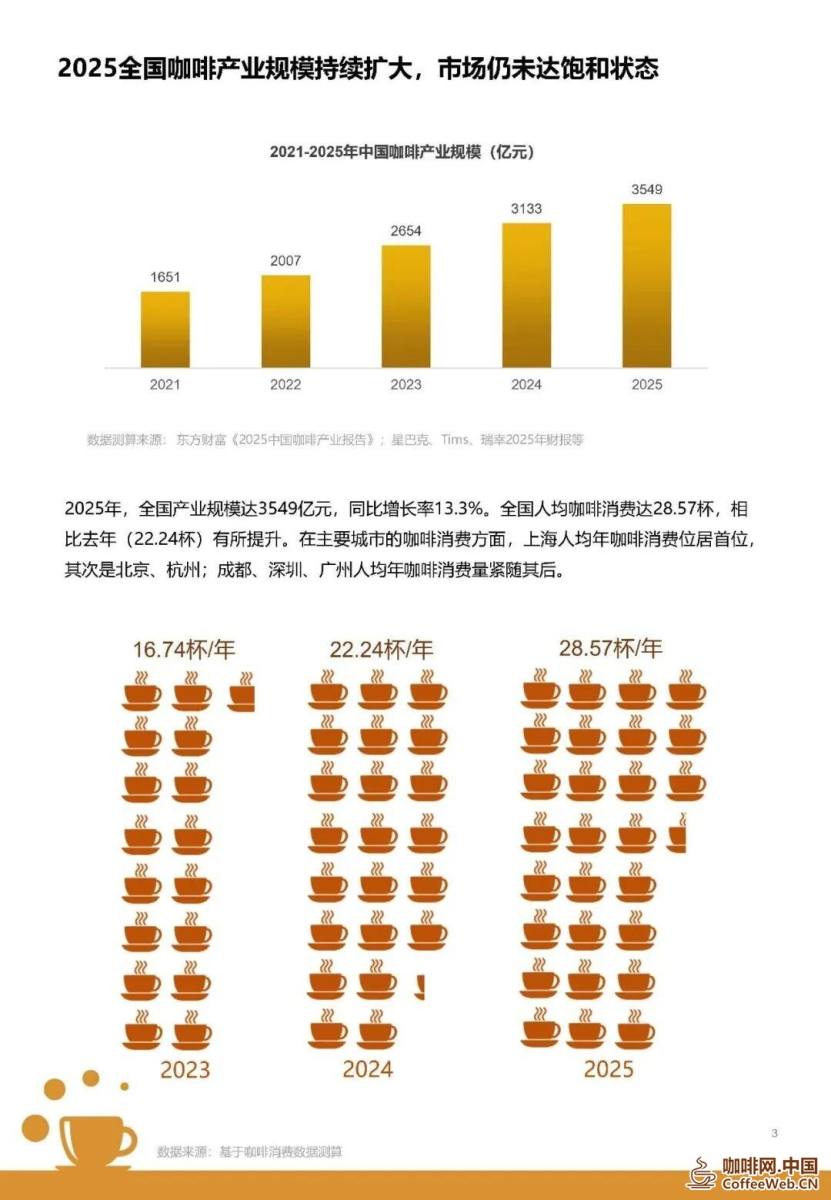
Numbers are silent, yet they speak most powerfully about change. By 2025, the scale of China's coffee industry will reach 354.9 billion yuan, a year-on-year increase of 13.3%. This is not just a cold growth curve, but also a vivid footnote to the rise of per capita coffee consumption in China from 22.24 cups to 28.57 cups. Coffee, once a trendy label in first tier cities, is rapidly infiltrating the capillaries of Chinese cities. And third – and fourth tier cities have shown tremendous potential, with a transaction volume growth rate of 4.6%, becoming an important driving force for market growth.
In this wave of spreading from the center to the whole, the tentacles of brand marketing are strongly extending to the real physical space of consumers' lives. Elevator media, with its high-frequency, mandatory, and low interference accessibility characteristics in enclosed spaces, is becoming a strategic carrier for coffee brands to deeply integrate into core consumer scenarios such as communities and office buildings. It helps brands achieve seamless coverage of mainstream consumer groups, repeatedly strengthening brand awareness on consumers' daily lives, from "seeing" to "remembering", and ultimately promoting "buying", building a solid brand scene consensus.
Changes in Consumption and Population Map
Multidimensional evolution of people, goods, and venues
The Chinese coffee market is undergoing a profound transformation from popularization to stratification, presenting a clear new picture in the three dimensions of "people, goods, and venues".
Human: Female dominance, male rise, release of potential for Generation Z and sinking markets
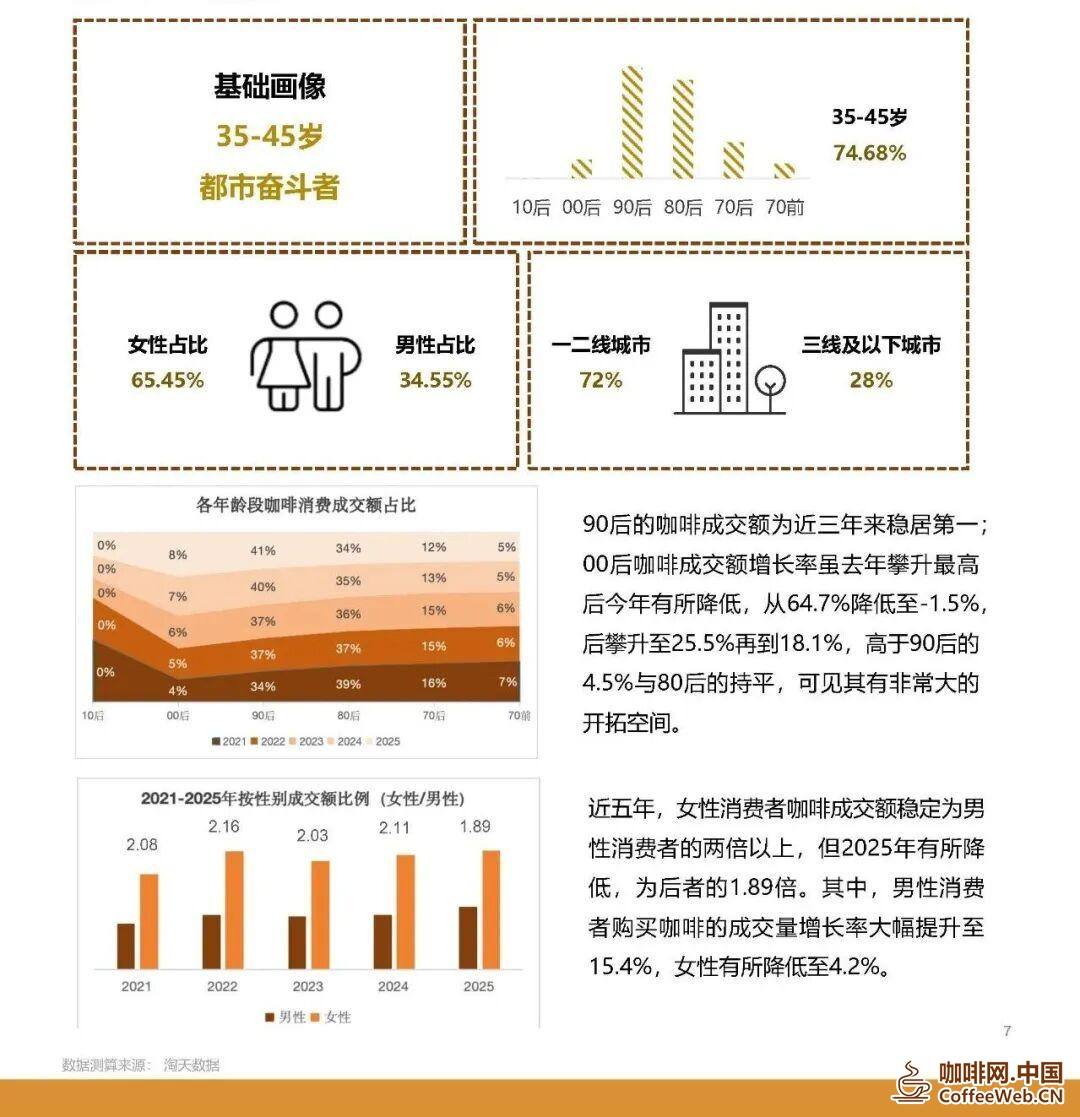
The consumer structure is dynamically reshaping. Women are still the absolute mainstay of the market, accounting for 65.45% of the total consumption. The growth momentum of the male consumer group is rapid, with a significant increase in transaction volume growth rate to 15.4% by 2025, demonstrating a huge growth elasticity.
From an intergenerational perspective, the post-90s generation is currently the backbone of consumption, accounting for 40.62%. Although the proportion of post-2000s is not high at present, a growth rate of 18.1% indicates the future direction of growth. In terms of regional distribution, first and second tier cities contribute 72% of the total consumption, indicating a stable base. But the growth potential of third tier and below cities is gradually being released, becoming a new battlefield for brand competition.
Goods: From instant to premium, the consumption upgrade path is clear
The changes in consumer goods can best reflect the depth of the market. The category structure presents a clear upgrade and differentiation:
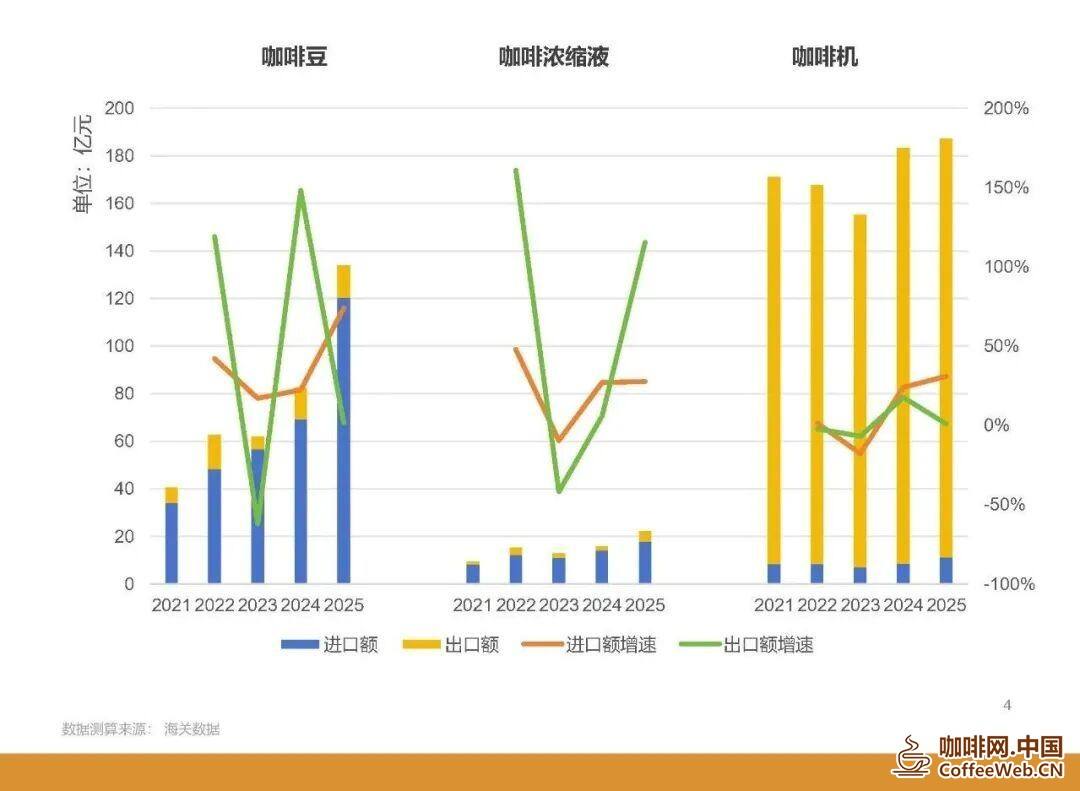
The transaction volume of coffee machines leads the entire category, accounting for 28%, indicating a steady increase in demand for homemade coffee in home and office settings, pursuing quality and experience.
Instant coffee accounts for 25% of the market share, and with its irreplaceable convenience, it has stabilized the basic consumer base and achieved a year-on-year growth of 69.05%.
The biggest highlight comes from coffee beans, which have become the largest growth engine with a super high growth rate of 140.38%, increasing their proportion to 21%. This intuitively confirms that consumers are rapidly transitioning from "entry-level" instant coffee to a "deep experience" world of premium coffee.
Market: Brand sinking accelerates, industrial belt pattern highlights
Retail terminals and upstream industries are also surging. Coffee shops across the country are accelerating their layout in the global market, forming a clear hierarchy:
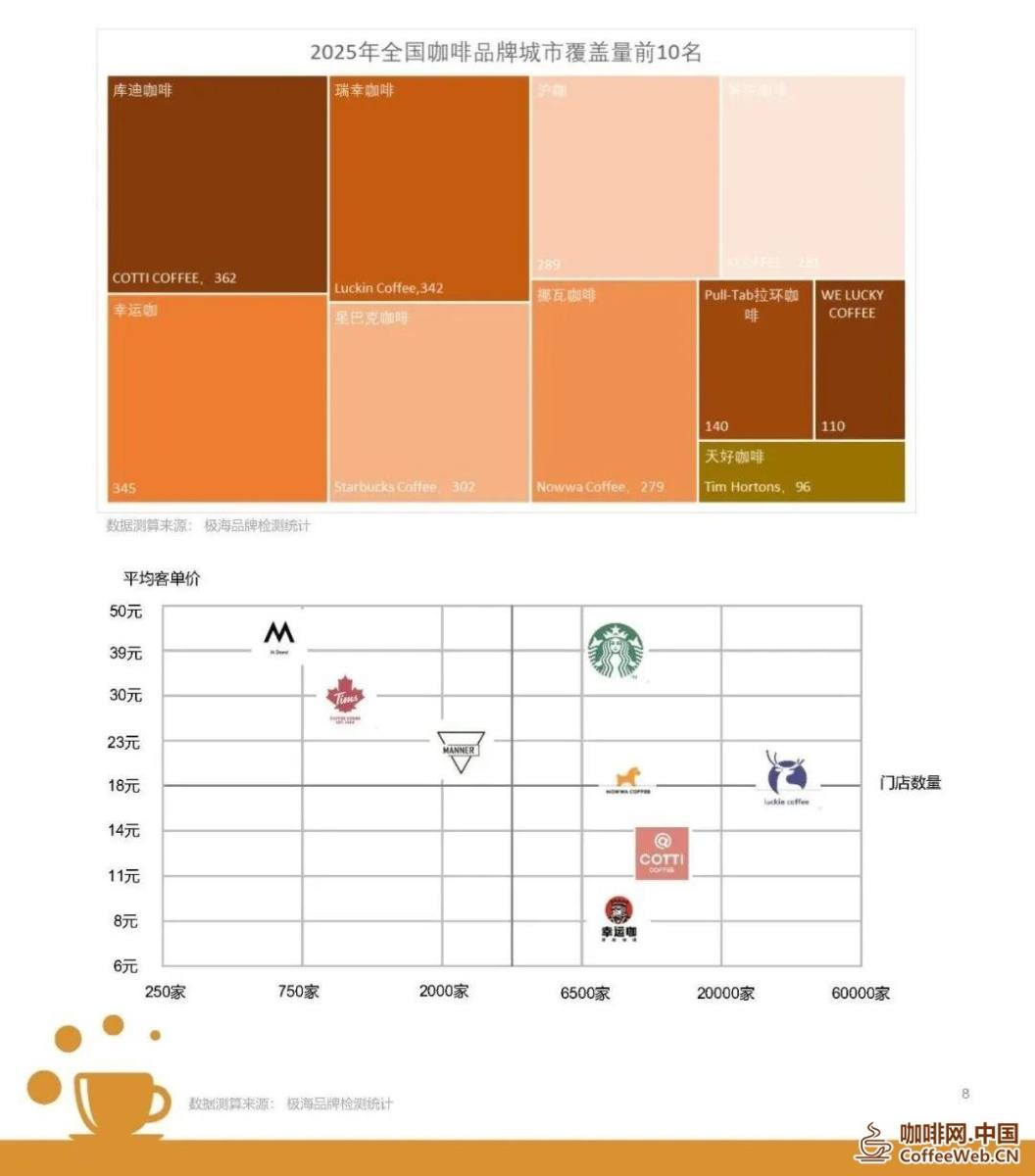
Kudi Coffee, Luckin Coffee, and Lucky Coffee form the first tier, achieving nationwide coverage. At the industry level, the number of registered coffee related enterprises, after experiencing a peak of 62700 in 2023, rationally fell to 48700 in 2024 and rebounded to 57900 in 2025.
The Chinese coffee market has entered a new stage of development characterized by "popularization, refinement, and contextualization". Consumer profiles are becoming increasingly diverse, consumer demand continues to upgrade, and market channels are sinking deeper. A more mature, diverse, and fiercely competitive coffee consumption ecosystem is taking shape.
The food delivery market is booming
Subsidy leverage, sinking dominance, and time differentiation
In 2025, the year-on-year growth rate of coffee delivery orders will reach 430.86%, with a total volume exceeding 990 million orders and a total consumption of 14.2189 billion yuan. The number of users has exceeded 156 million, a year-on-year increase of 3.5 times. The core engine of this outbreak is platform subsidies, which contributed 40% of the year's GMV and nearly 70% of new customer growth in the third quarter alone. Prove that 'takeaway coffee' has evolved from being driven by promotions to a stable long-term consumption habit among the public.
Regional Change: Sinking Markets Become Absolute Growth Engines
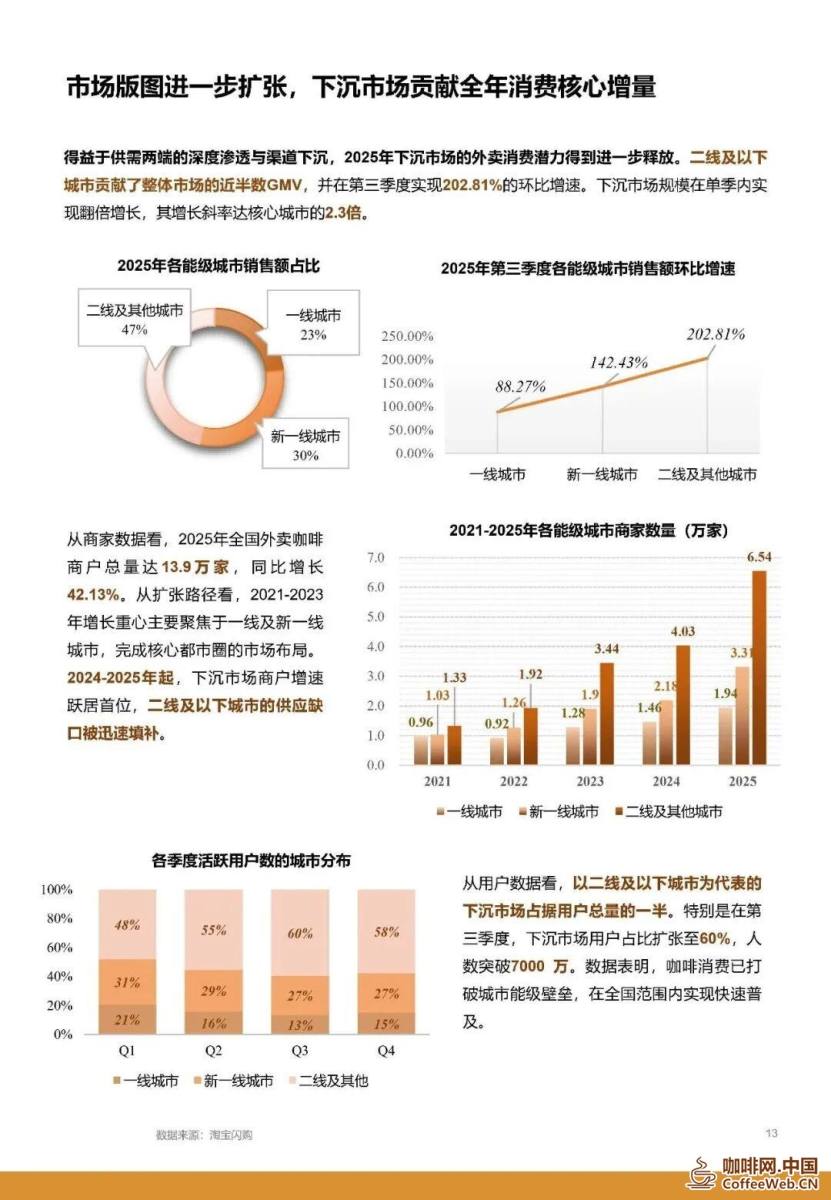
The main battlefield of growth has quietly shifted. Second tier and below cities contributed 47% of the overall market GMV and achieved a month on month growth rate of 202.81% in the third quarter. By 2025, the total number of takeaway coffee merchants in China will reach 139000, a year-on-year increase of 42.13%. Among them, the number of merchants in the sinking market has surged from 13300 in 2021 to 65400 in 2025. At the user level, the proportion of users in the sinking market expanded to 60% in the third quarter, with the number exceeding 70 million, becoming the main source of user growth.
Price War: The average price is halved, and the market landscape is drastically reshaped
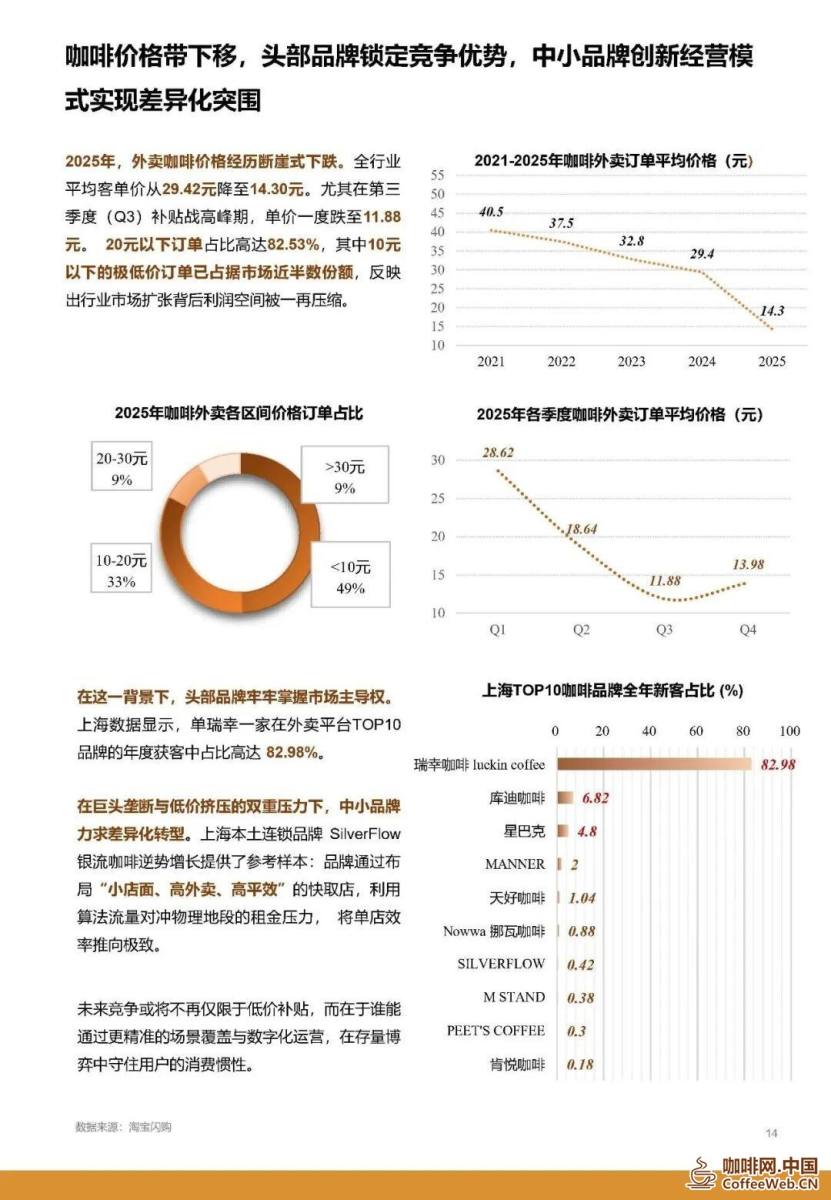
Data shows that the average unit price per customer in the entire industry has decreased from 29.42 yuan to 14.30 yuan, with orders below 20 yuan accounting for 82.53% of the market share, and extremely low price orders below 10 yuan accounting for nearly half of the market share. In this situation, small and medium-sized brands are facing severe challenges in their survival space under the monopoly of giants and the pressure of low prices, and are forced to seek differentiation and transformation to break through.
The outbreak of the food delivery market is the result of the resonance between platform capital, brand potential, and consumer convenience needs. It has educated the market, especially the sinking market, with unprecedented strength, but it has also brought challenges of price system reconstruction and giant monopoly.
Go deep into the scene, occupy the mind
Elevator media drives brand consensus and consumer conversion
As a beverage with strong contextual associations, coffee's consumption decisions are deeply influenced by real-time environments and repeated reminders. In this context, elevator media that can penetrate into communities, office buildings, and other daily necessities of consumers, with its unique scene value, has become a key tool for coffee brands to achieve precise outreach and build brand consensus.
The core advantage of elevator media is that it can provide high-frequency and mandatory reach to mainstream consumer groups in a closed and interference free environment. For coffee brands, this kind of outreach is "scene triggered":
Accurate coverage: Directly penetrate the home community (household coffee machines, coffee bean consumption scenes) and the office core area (daily coffee consumption decision-making location), achieving precise coverage of the target audience.
High frequency exposure: By utilizing the essential route that consumers must take when riding elevators multiple times a day, through repeated playback, brand memory can be quickly established and strengthened in a short period of time, solving the problem of brand "being remembered".
Driving consumption: Providing prompts in scenarios close to the consumption decision point (before work, after returning home) can seamlessly transform brand awareness into immediate consumption desires or next purchase choices, effectively shortening the consumption decision chain.
In the coffee market where stock competition and incremental expansion coexist, elevator media is no longer a simple advertising channel, but a core strategic carrier for coffee brands to deeply connect with consumers, accumulate brand assets, and drive long-term growth. It provides important support for the industry's overall marketing upgrade and brand differentiation competition.
Coffee Network China
Copyright © 2026 Coffee Network China. All rights reserved.
 Liaoning ICP Security No. 21122402000217
 Tel:400-0000-641 (+86-18941000313)
Email:405854472@qq.com
Address:Office 1: Jinghong City, Xishuangbanna, Yunnan Province, China / Office 2: Tieling City, Liaoning Province, China