
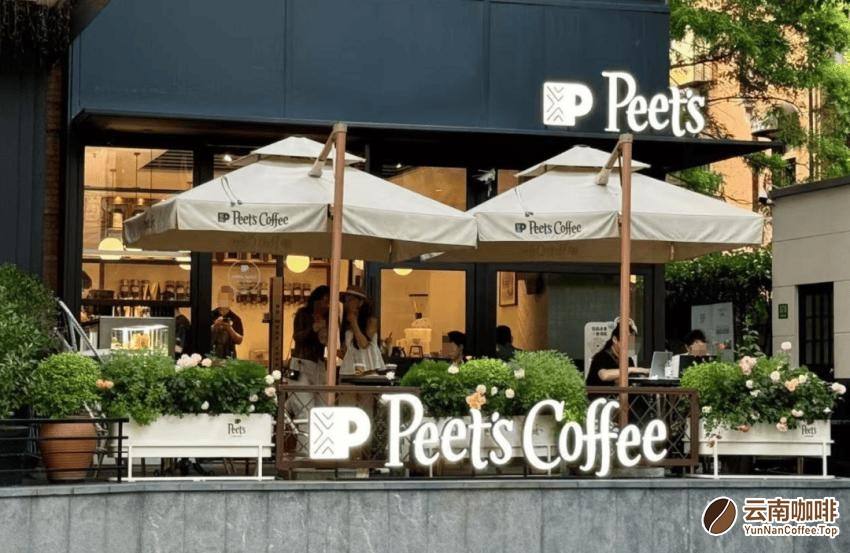
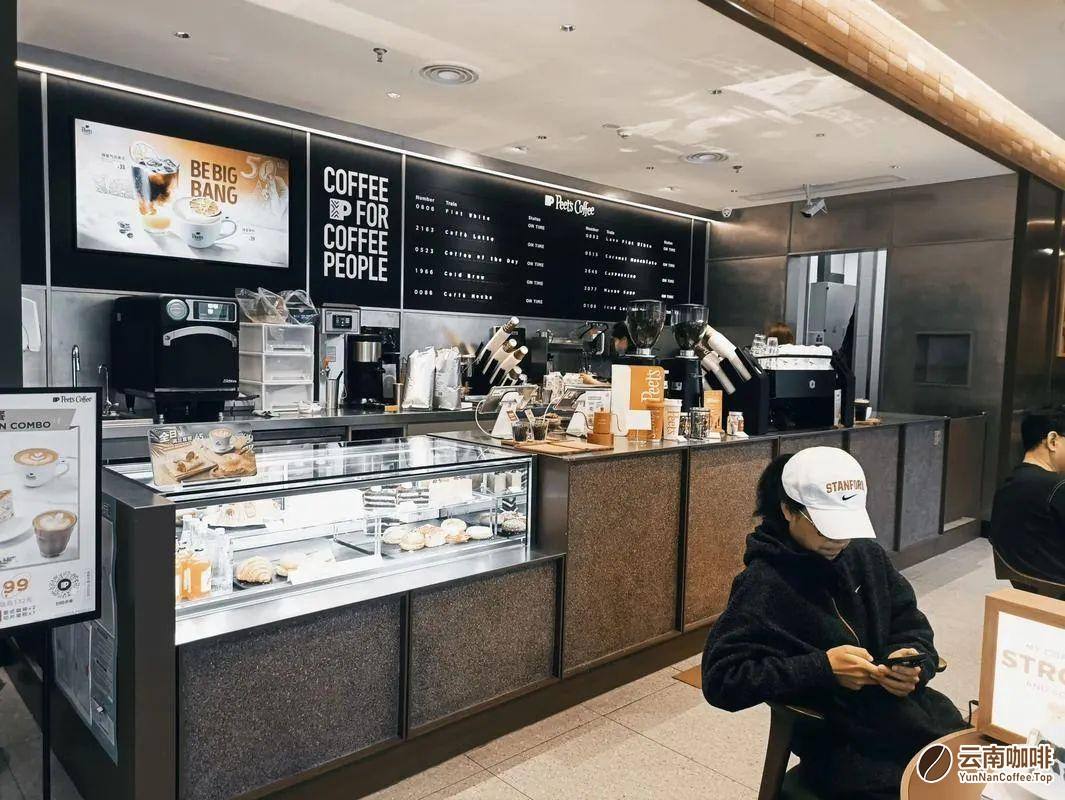

Source: Foodie's Side Notes: Peet's Coffee, known as the "ancestor of Starbucks," has recently experienced a wave of closures. It is reported that this boutique coffee brand originating from the United States has closed several core stores since the beginning of this year, including iconic stores such as the first store in Shenzhen Wanxiang Tiandi South China, the first store in Guangzhou, and the flagship store in West Lake, Hangzhou.
In stark contrast, local brand Luckin Coffee announced on the first day of autumn on August 7th that it had set a daily sales record of 20 million cups. According to official disclosure data, the daily sales volume in Shanghai exceeded one million cups, with the Lujiazui Zhengda Plaza store selling 2691 cups in a single day.
Public data shows that the expansion speed of Piye Coffee has significantly slowed down. 98 new stores will be opened in 2023, decreasing to 51 in 2024, and only 16 new stores will be opened in the first half of 2025.
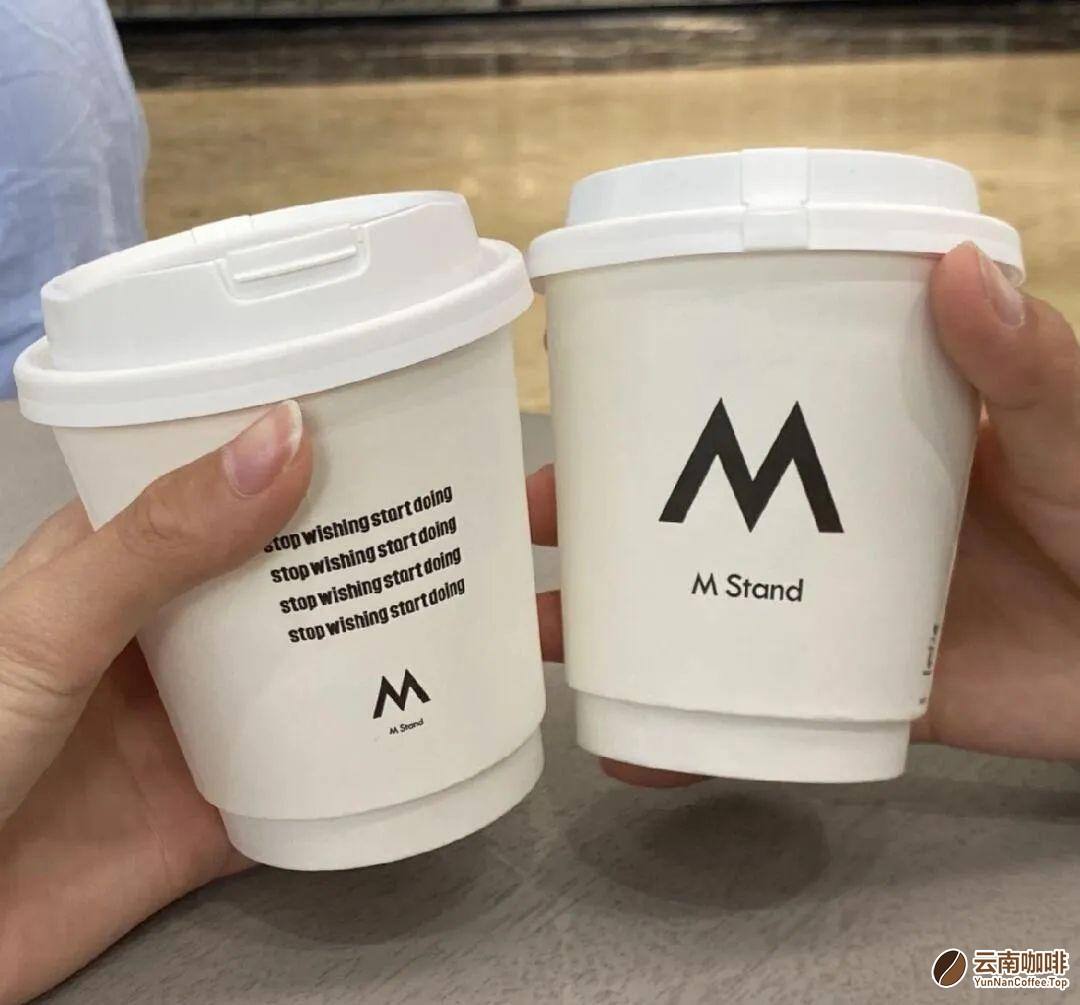
Piye's predicament is just a microcosm of the boutique coffee market. Seesaw Coffee, which is also positioned as a high-end brand, has recently been exposed for owing employee salaries and closing at least half of its stores, with less than 50 stores nationwide. M Stand also fell into a vicious cycle of "opening three stores and closing two" last year, opening 87 new stores but closing 64 in 2024.
According to Euromonitor International data, the growth rate of China's premium coffee market has decreased from 25% in 2023 to 12% in 2025.
Contrary to the dilemma of specialty coffee, affordable coffee brands are rapidly expanding. Brands such as Luckin Coffee and Kudi quickly captured the market with their regular promotion strategy of 9.9 yuan.
Luckin Coffee's latest financial report shows that in the second quarter of 2025, it achieved a total net revenue of 12.359 billion yuan, a year-on-year increase of 47.1%, and operating profit increased by 61.8% year-on-year to 1.7 billion yuan.
Digital operations and localized innovation are the key to the success of these local brands. Luckin not only relies on apps as core touchpoints, but also provides precise push notifications based on geographic location. Through e-commerce platforms such as Tiktok and Taobao, coffee has been transformed from offline drinks to online FMCG products by means of live broadcast with goods and short video planting grass.
Behind the market upheaval is a fundamental change in consumer coffee consumption behavior. According to the "2024 China Urban Coffee Development Report," the scale of China's coffee industry reached 313.3 billion yuan in 2024, an increase of 18.1% compared to the previous year; The per capita annual consumption has increased to 22.24 cups. Consumers' awareness of coffee as a 'daily necessity' has further strengthened.
However, the average unit price of coffee consumption has been decreasing year by year. According to Meituan data, the average unit price of coffee in store group purchases nationwide in 2023 decreased from 34.4 yuan in 2021 to 13.8 yuan. In a survey of coffee consumers, 80% of consumers make decisions based on cost-effectiveness, and only 4% of consumers are willing to pay more than 25 yuan for "buying coffee".
Fine coffee brands are facing dual pressures of internal cost structure imbalance and external price wars. Throughout history, boutique coffee brands have relied on core business district locations, resulting in heavy rental costs. In 2024, global coffee bean prices soared by 30%, with Arabica beans breaking through 220 cents per pound, further exacerbating cost pressures.
Top tier shopping malls such as Shenzhen Wanda Plaza have seen an annual rent increase of 5% -8%, while labor costs account for over 25%, far higher than the 15% increase for affordable coffee brands.
Externally, the "9.9 yuan coffee price war" within the industry has reshaped the public's perception of coffee consumption. The continuous questioning of "it's all coffee, others charge 9.9 yuan, it sells for 40 yuan" has caused a significant loss of customer flow for high-end boutique coffee brands.
Faced with market pressure, boutique coffee brands are seeking transformation. Piye Coffee launched its affordable sub brand Ora Coffee in December 2024, with prices ranging from 15-25 yuan. Some products can be discounted as low as 9.9 yuan, adopting a "small but refined" store model.
In July of this year, Piye Coffee implemented a consumption seating policy in some stores in Hubei, Zhejiang, Guangzhou and other places, requiring customers to consume before being seated, in order to solve the long-standing problem of "occupying seats but not consuming".
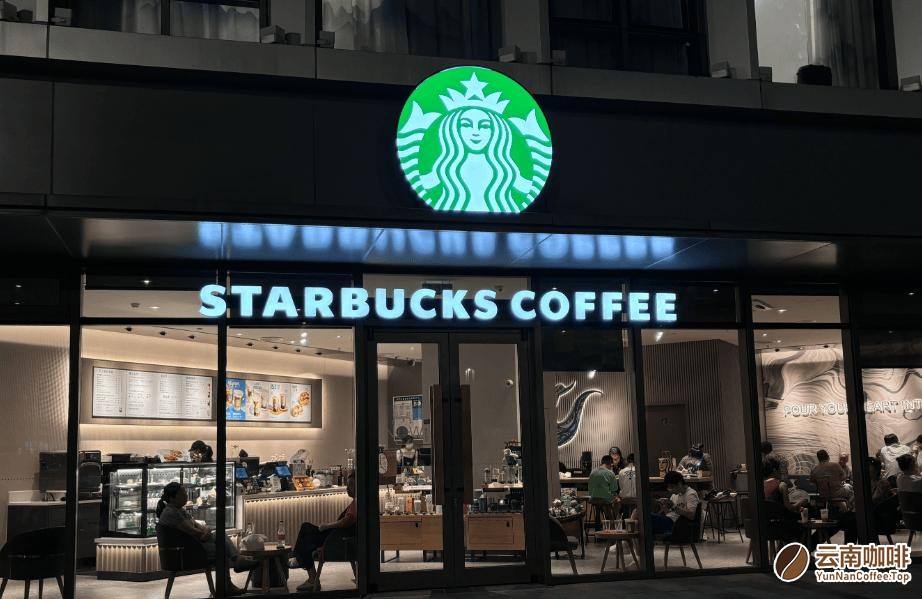
Although Starbucks' market share has declined from 42% in 2017 to 14% in 2024, it still opened 522 new stores and achieved 8% revenue growth in its most recent quarter. Starbucks China has entered 17 new county-level markets, with new stores contributing above average same store sales within two years of opening.
The differentiation of the Chinese coffee market is accelerating. On one hand, high-end boutique coffee brands are losing ground, while on the other hand, local affordable brands are making rapid progress. This differentiation is not only reflected in sales data, but also reflects a fundamental shift in Chinese consumers' coffee consumption concepts.
JDE Peet's 2024 annual report shows that although organic sales in China have continued to grow, with adjusted EBIT organic growth of 23.8%, this report cannot conceal its weak expansion in the Chinese market.
Industry insiders point out that "the Chinese coffee market has entered a period of deep adjustment. The era of relying on brand halo and high-end positioning to win in the past is over. What is needed now is a deep understanding of local consumer culture and the ability to respond quickly
The future belongs to brands that truly understand Chinese consumers, iterate products quickly, and precisely control costs. Luckin Coffee's daily 20 million cups and Piye's store closure trend reveal a cruel reality: in the Chinese market, economies of scale and operational efficiency will be more important.
At present, the coffee market has shifted from experiential consumption in the "third space" to daily functional consumption, which also means that brands must rebuild their value proposition and find their positioning in the new consumption environment. ”
It is worth noting that although affordable coffee currently dominates, there is still a demand for consumer upgrades. The future winners may be brands that can find the best balance between cost-effectiveness and quality.
Coffee Network China
Copyright © 2026 Coffee Network China. All rights reserved.
 Liaoning ICP Security No. 21122402000217
 Tel:400-0000-641 (+86-18941000313)
Email:405854472@qq.com
Address:Office 1: Jinghong City, Xishuangbanna, Yunnan Province, China / Office 2: Tieling City, Liaoning Province, China