


Introduction (Coffee Network coffeeyo.com):In 2016, some overseas observers concluded that a hard landing of the Chinese economy was "almost inevitable." By this year, claims such as the "deflation trap," "China Shock 2.0," and "spillover of China's economic crisis" have taken turns on center stage. In March this year, the Office of the U.S. Trade Representative initiated a "Section 301 investigation" into China and several other economies on the grounds of so-called structural overcapacity in manufacturing, explicitly stating the goal of safeguarding the U.S. industrial base and promoting the return of manufacturing. In the first three quarters of this year, China's economy grew 4.6% year on year, ranking among the top of the world's major economies.
On November 21, the People's Daily app's "Quick Takes on Economic Hotspots" published an article:
What exactly are those in the U.S. and the West who talk down the Chinese economy really calculating?
Since the start of this year, some overseas media outlets and institutions have repeatedly attacked the Chinese economy. One moment they hype the so-called "deflation trap," asserting that China's economic growth is unsustainable; the next they play up "China Shock 2.0," claiming that Chinese manufacturing threatens global industries. The rhetoric keeps changing, yet the pessimistic conclusions seem to have been written in advance.
Behind these narratives lies a calculation of their own interests and political agendas: using "China's collapse" to shake confidence, and using the "China threat" to impose restrictions and contain China.
Unfortunately for them, the development of the Chinese economy has never been decided by these naysayers.
I
Talking down the Chinese economy is nothing new.
In 2001, some in the U.S. and the West put forward the "China collapse theory," predicting that factors such as WTO accession would cause China to "collapse" in 2011. When 2011 arrived, the prediction unsurprisingly failed to materialize.
In 2016, some overseas observers concluded that a hard landing of the Chinese economy was "almost inevitable"; in 2023, The Wall Street Journal declared that "China's 40-year boom is over." By this year, claims such as the "deflation trap," "China Shock 2.0," and "spillover of China's economic crisis" have taken turns on center stage.
For decades, there has been no shortage of overseas voices talking down the Chinese economy, yet they have been proven wrong by reality time and again.
The so-called bearish narratives this year generally fall into the following categories.
One is overgeneralization, extrapolating temporary difficulties into an overall crisis. In October this year, The Washington Post seized on short-term fluctuations in real estate prices, weak consumer confidence and other partial indicators to one-sidedly claim that China's economic prospects are bleak. This narrative ignores the complexity of the economy as a whole, and its conclusion does not hold up to scrutiny.
Another is the substitution of concepts, portraying advantages in market competition as a threat to the world. When China's new energy vehicles sell well globally, they hype "overcapacity"; when China's manufacturing competitiveness strengthens, they trot out "China Shock 2.0." Technological progress and efficiency gains are the natural essence of market competition—so why is it that when Chinese companies achieve them, they suddenly become risks to be guarded against?
Yet another is predetermined conclusions: no matter how the Chinese economy develops, they repeat the same bearish refrain. If growth slows, they say the growth model is unsustainable; if growth is maintained, they say it relies excessively on policy stimulus; if exports come under pressure, they question the competitiveness of Chinese manufacturing; if exports perform strongly, they attribute it to overcapacity and insufficient domestic demand—either way, they can arrive at a negative conclusion.
In this way, economic analysis becomes a leading question with an answer already decided—like making dumplings just to have a saucer of vinegar; the filling may be empty, but that does not stop them from talking nonsense and heaping on criticism.

On November 13, at the Afghanistan Pavilion of the 2026 China Yiwu Imported Commodities Fair at the Yiwu International Expo Center in Zhejiang, a foreign merchant introduces handmade wool scarves to domestic customers. Photo by Lyu Bin
II
Some in the U.S. and the West always like to make an issue of the Chinese economy, and a closer look reveals quite a lot behind it.
In March this year, the Office of the U.S. Trade Representative initiated a "Section 301 investigation" into China and several other economies on the grounds of so-called structural overcapacity in manufacturing, explicitly stating the goal of safeguarding the U.S. industrial base and promoting the return of manufacturing. Clearly, this is an attempt to preserve an established pattern of advantageous interests.
In the past, enterprises in some developed countries dominated high-end manufacturing, while China was mostly positioned at the middle and lower ends of the international industrial division of labor. Today, China's new energy vehicles are driving into global markets, machinery and equipment and communications technology continue to make breakthroughs, and more and more Chinese companies are emerging on the international market.
The cake is still the same cake, but the people dividing it have changed, and those who used to take the biggest share inevitably find it hard to sit still.
But does competitiveness on the part of Chinese companies necessarily mean "unfair competition"? Does the popularity of Chinese goods among consumers necessarily mean "overcapacity"? If those who cannot compete accuse the other side of breaking the rules, does market competition become a game in which only they may win and others may not?
Some politicians also invoke China's name while loudly playing their own domestic political calculations. Blaming "China Shock" for factory closures at home and explaining declining competitiveness as a "China threat" both shifts blame and helps drum up support for tariff barriers and trade restrictions. After all, explaining one's own policy failures and lagging industrial transformation to voters is far less convenient than simply pinning the blame on China.
In the final analysis, some people have always held deep-rooted prejudices against China, are unwilling to face up to the achievements of China's development path, and always want to measure and judge China by their own standards, trying by every means to talk it down and weaken confidence in and the appeal of China's development, trapped in the pattern of suspecting and disparaging China on every issue.
With multiple factors intertwined, it is hardly surprising that some negative narratives persist over the long term.

In Qianhai, Shenzhen, building screens scroll APEC-themed promotional posters. Photo by Xinhua reporter Mao Siqian
III
The noise and clamor of the naysayers cannot change the real achievements, quality and trajectory of China's high-quality economic development.
In the first three quarters of this year, China's economy grew 4.6% year on year, ranking among the top of the world's major economies; in the first 10 months, total goods trade imports and exports grew 20% year on year, with imports up 23.6%; the just-concluded 9th China International Import Expo attracted participants from 162 countries, regions and international organizations, with 4,142 overseas enterprises exhibiting, setting a new record. On one side, some say China's economy has lost its appeal; on the other, global businesses are voting with their feet—which is more convincing goes without saying.
Of course, how can an economy develop without difficulties and challenges? China's real estate market is still adjusting, household consumer confidence needs to be boosted, and industrial transformation and upgrading still have many hard nuts to crack. We have never shied away from these problems. Where supply is strong and demand weak, we are deepening the special campaign to boost consumption and stepping up efforts to expand domestic demand; where the real estate market is under pressure, we are adopting city-specific policies and accelerating the construction of a new model for real estate development; where the pace of replacing old growth drivers with new ones does not match, we are developing new quality productive forces in light of local conditions, revitalizing traditional industries and supporting the growth of new ones. What has carried us forward all along is this spirit of not avoiding problems, not fearing difficulties, and working hard to overcome them.
Looking back, how many storms has the Chinese economy weathered in recent years? The impact of the once-in-a-century pandemic, external containment and suppression… We have overcome obstacles and forged ahead through wave after wave. The confidence of the Chinese economy ultimately comes from the composure and resolve of those at the helm in the face of storms, from the hard work of hundreds of millions of people, and from the commitment to focusing on doing our own things well.
An ant on a locust tree boasts of a great state; a mayfly trying to shake a tree—how easy is that!" For an economy with a super-large market, a complete industrial system and strong innovation capacity, how big a wave can a few bearish voices stir up? "Ten thousand years is too long; seize the day and seize the hour." The most powerful response to the clamor lies in these four words: "seize the day.
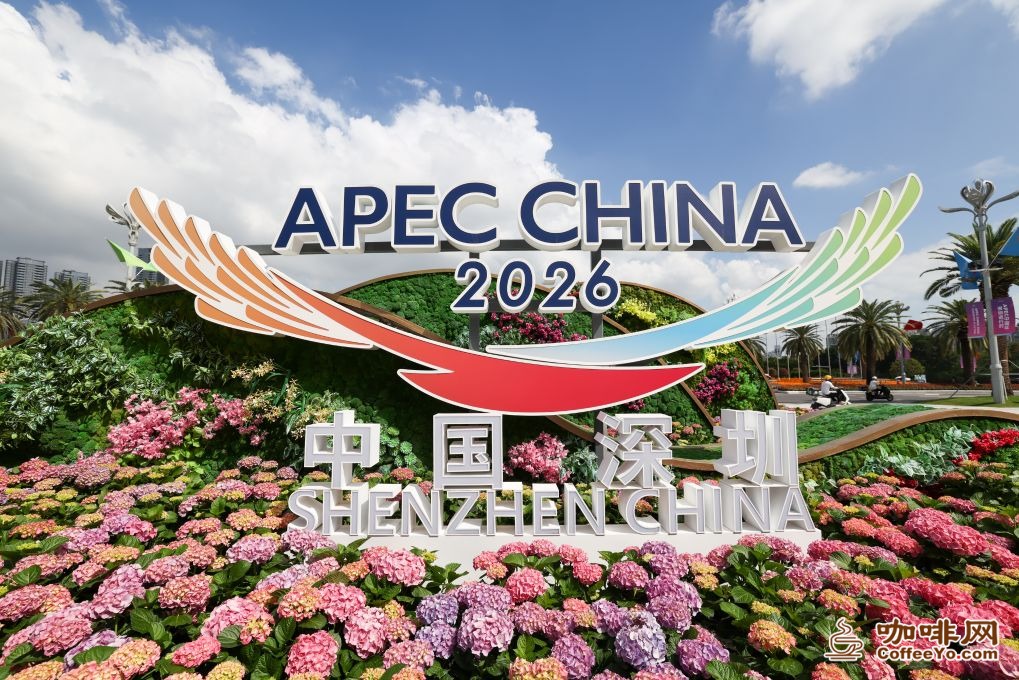
Recently, the 2026 APEC meeting was successfully held in Shenzhen. While some overseas forces are busy building walls and barriers and hyping threats, China is working with others to build the "four beams and eight pillars" of an Asia-Pacific community. Promoting the alignment of regional trade and economic agreements, creating an open and innovative ecosystem… a series of pragmatic measures are being taken in the Asia-Pacific with a global vision, seeking long-term common development of the region and opening new paths for building a community with a shared future for mankind.
No matter how the international landscape changes, China's determination to pursue win-win cooperation with countries around the world will not change.
The cake of the world economy can only grow bigger through joint cooperation. On one side is the narrow-minded thinking of zero-sum games and protectionism; on the other is the broad-mindedness of openness, inclusiveness and win-win cooperation. Who treats the world economy as an arena of winners and losers, and who is working to broaden the path of common development? The contrast makes the truth self-evident.
The naysayers will ultimately be proven wrong; those who do the hard work have a bright future.
Reprint Notice and Disclaimer
- This article was compiled byCoffee Network coffeeyo.com. The materials and images in this article come from public sources, and the copyright belongs to the original authors. This reprint is solely for sharing information about the coffee industry and does not represent the position of this website. The data and views in the article are subject to the original text. We hereby thank the original author for their creation and sharing.
- Read the original article:People's Daily: Those who talk down the Chinese economy will ultimately be proven wrong!
- If any matters concerning content authorization, attribution, copyright or otherwise are involved, please contact this website promptly, and we will verify and cooperate in handling them as soon as possible. We also welcome coffee-producing regions, brands and industry media to exchange and contribute articles with us.
- Coffee Network contact information: Tel 400-0000-641 (+86-18288016826) Email 478203668@qq.com
Related Reading
 Deep Mountain Freshness in Changbai Mountains: How a Korean Pine Nut Passes the Freshness Test
 New products unveiled to expand agricultural trade
- Luckin Coffee joins the fray? Are home appliance companies worried?
 Focus on APEC: Building a Better World Together – Shenzhen APEC Meeting Offers Profound Insights
 Wuhua District, Kunming City, Yunnan Province, established the Coffee Industry Youth League Working Committee to gather the power of "coffee" youth
 Observation of the Great Wall | From Duck Shed Coffee to Thousand Acres of Rice Waves: Zhejiang's Thousand Million Project, What Can Hebei Learn?


 Liaoning ICP Security No. 21122402000217