


At a Glance (China Coffee Network): From thick-walled ceramic cups for Yirgacheffe to takeaway paper cups, the vessel shapes how coffee tastes and mirrors the way we live.
A rounded body and short, sturdy feet.
In the world of coffee, we have talked about bean varieties, origins, roasting and brewing techniques, yet we have never paused to look at the vessel that holds the drink. If coffee culture is a flowing history of civilization, does the coffee cup have a footnote of its own?
Step into more and more specialty coffee shops, and the first thing you meet is a precise calculation of temperature. Light-roast Yirgacheffe is poured into a preheated, thick-walled ceramic cup, preserving a fragile balance of floral and fruity notes between heat retention and dissipation. An iced shaken espresso, by contrast, may be served in a pre-chilled glass. The shape of the rim matters, too, because it governs the speed and landing point of the coffee as it enters the mouth: a thin rim suits lighter bodies or beans with bright acidity, while a thick rim directs the coffee to the sides of the mouth first, amplifying nutty and chocolatey depth. These subtle physical differences draw very different flavor coordinates on the drinker’s sensory map.
Back in daily life, the Americano gulped down in a morning rush usually goes into a paper cup or a double-walled stainless travel mug. A weekend pour-over shared with friends calls for fine bone china; if you like, add a thoughtfully chosen coaster and even a tablecloth to match. Writing this now, I cannot help recalling the image of Nordic people drinking black coffee from handleless mugs while reading by the window.
On a deeper level, the disposable paper cup of the mid-20th century made takeaway coffee a global phenomenon, yet it also generated astonishing amounts of waste. Today, biodegradable plant-fiber cups and discounts for bringing your own reusable cup have turned the vessel from a single-use consumable back into a portable everyday object. The retro wave of recent years has also summoned hand-thrown ceramic cups, and even the rustic rice bowls of Japan’s Mingei folk-craft movement, back to the coffee table. One cannot help but marvel that knowledge and delight can be found everywhere in daily life.
Perhaps the vessel we choose for our coffee ultimately depends on where we place this drink in our lives. A pick-me-up? A social medium? A ritual to slow life down? It is, in the end, simply our attitude toward life.
Reprint Notice & Disclaimer
- This article has been edited and compiled by China Coffee Network and reprinted from Macao Daily News, “咖啡容器里的态度.” The copyright of the original text belongs to Macao Daily News and the original author. This reprint is intended solely for information sharing within the coffee industry and does not represent the views of this website; all data and opinions are subject to the original article. Our thanks to the original author for creating and sharing it.
- Read the original: Macao Daily News, “咖啡容器里的态度”
- For matters concerning content licensing, attribution, copyright or otherwise, please contact us promptly and we will verify and cooperate in handling them as soon as possible. We also welcome coffee origins, brands and industry media to exchange ideas and contribute articles.
- Contact China Coffee Network: Tel 400-0000-641 (+86-18288016826) | Email 478203668@qq.com
Related Reading
 Overwhelmed by semi-automatic coffee machines? Guangdong consumer council testing and tasting helps you choose
 The 'Domestic Dynamics' robot barista is here! Qingtian explores new paths for overseas trade
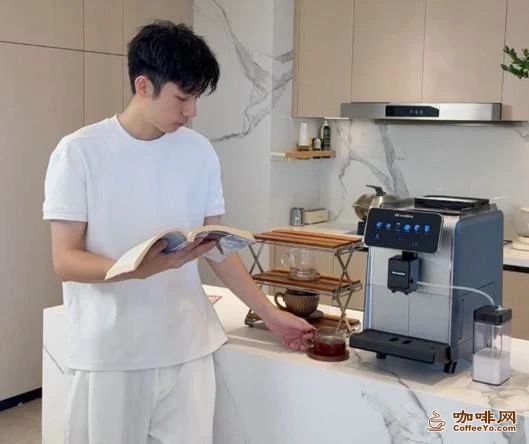 Reference for purchasing a fully automatic coffee machine for home use: Dr. Coffee H1s, with full parameter adjustment available at the entry-level price
- Reference for purchasing a fully automatic coffee machine for home use: Dr. Coffee H1s, with full parameter adjustment available at the entry-level price
- Automatic Coffee Machines Recommended for Office Workers
 Gree Wins New Robot Patent as Its Coffee Robot Draws a Flood of Orders


 Liaoning ICP Security No. 21122402000217