


At a Glance (China Coffee Network): Green coffee from Peru now reaches Shanghai from Chancay Port in 28 days, and the upgraded China–Peru FTA protocol took effect this month. Kunshan Customs mapped 13 processes for beans moving in and out of the bonded zone, with over 90% cleared “on declaration” and testing time cut by 70%. In the first nine months of this year, Yunnan exported 490 million yuan worth of coffee and coffee products.
Coffee beans from Peru are becoming an increasingly common sight on the Chinese market.
Peru has grown coffee since the 18th century. Its shipments to Asia once went mainly through Central and North America. Today, a vessel loaded with Peruvian green coffee leaves Chancay Port and reaches Shanghai in 28 days. Earlier this month, the protocol upgrading the China–Peru Free Trade Agreement formally entered into force, bringing fresh momentum to bilateral trade.
After crossing the ocean, beans still have to pass customs clearance, inspection, storage and distribution. Building a whole chain “from a single bean to a cup of coffee” is above all about speed.
Kunshan Customs mapped out 13 process paths for coffee beans entering and leaving the comprehensive bonded zone, and more than 90% of beans are now inspected as soon as they are declared. The Kunshan Import and Export Food Testing Service Centre, which opened last year, has expanded full-panel testing capacity for coffee and can cut testing time by 70%.
At the Asia-Pacific Green Coffee Distribution Centre in Kunshan — China’s first specialised, high-standard constant-temperature and constant-humidity warehouse for green beans — staff say the beans mainly supply roasting plants one kilometre away, a journey of a few minutes.
Li Tianbo, a coffee trader, said the beans’ ocean crossing reflects ever-closer trade ties across the Asia-Pacific and makes the connectivity and trade facilitation advocated by APEC tangible.
More variety, more flavours on the table
When it comes to beans from Papua New Guinea, Xi Xiaohua, vice-chair of the Kunshan Coffee Association, praises their soft mouthfeel and high quality. Through the distribution centre, PNG beans can also be consolidated and re-shipped to Southeast Asia — a vivid example of economic cooperation among APEC members.
In Nanning, Guangxi, Guo Chaoling has run a coffee shop for five years, serving beans from around the world. Many locals, she says, are fond of Vietnamese drip coffee.
In the first seven months of this year, China’s imports of coffee and coffee products from Vietnam rose 45.2% year on year. Vietnam is both a supplier of beans and an important coffee trade partner. In the first nine months, Yunnan exported 490 million yuan worth of coffee and coffee products to Vietnam, Malaysia and other markets, evidence of smooth industrial circulation under the APEC framework.
Yunnan is China’s main coffee-growing region. Looking further ahead, experts suggest jointly building processing and trade parks at border ports and advancing mutual recognition of green-bean grading and cupping standards between Yunnan coffee and ASEAN origins to raise their influence in international markets.

Empowerment: coffee meets technology
Since the press centre for the 2026 APEC Leaders’ Week opened, smart coffee robots developed by Shenzhen companies have been put to work there.
During the APEC Ministers’ Meeting on Small and Medium Enterprises in Guangzhou this September, AI coffee robots were likewise a star attraction in the interactive zone. A participant from Malaysia planned to introduce the robots into the country to support SMEs, noting that the APEC platform “lets members share best practices with one another”.
“Chinese-made coffee machines keep selling well in South Korea,” said Quan Xiaoxing, an adjunct researcher at the Centre for Korean Peninsula Studies at the University of International Business and Economics. The Korean side hopes the APEC meeting will translate cooperation into corporate orders, jobs, tourism revenue and benefits people can feel directly.
Respondents also looked to the APEC framework to better connect coffee-producing and coffee-consuming economies, building a smoother, greener and lower-cost trading environment across the region so that more people can enjoy a good cup of coffee.
Reprint Notice & Disclaimer
- This article has been edited and compiled by China Coffee Network and reprinted from China Youth Net (China News Service), “Fast: From One Bean to a Cup of Coffee”. The copyright of the original text belongs to China News Service and the original author. This reprint is intended solely for information sharing within the coffee industry and does not represent the views of this website; all data and opinions are subject to the original article. Our thanks to the original author for creating and sharing it.
- Read the original: China Youth Net (China News Service) — “Fast: From One Bean to a Cup of Coffee”
- For matters concerning content licensing, attribution, copyright or otherwise, please contact us promptly and we will verify and cooperate in handling them as soon as possible. We also welcome coffee companies and industry media to exchange ideas and contribute articles.
- Contact China Coffee Network: Tel 400-0000-641 (+86-18941000313) | Email 478203668@qq.com | Address: Jinghong, Xishuangbanna, Yunnan, China
Related Reading
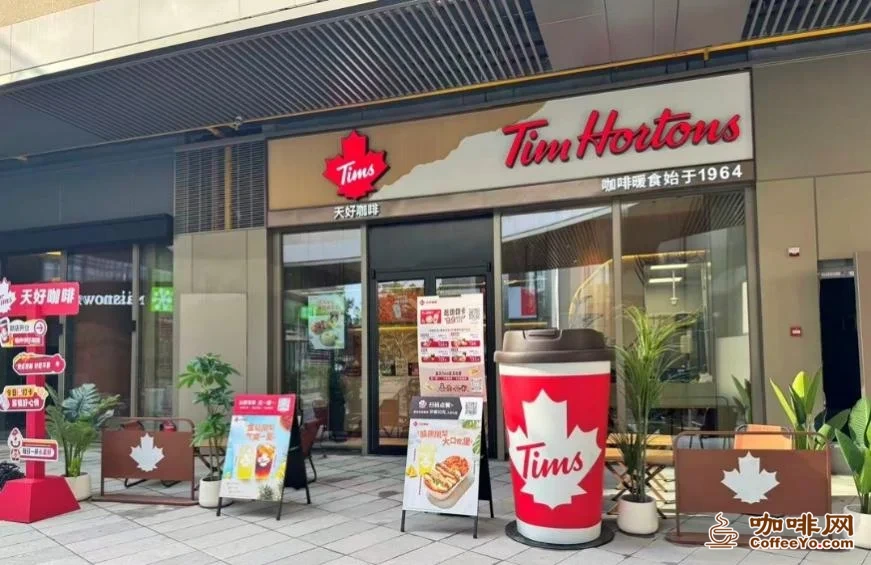 Tim Hortons China Q3: System Sales Up 6.3% Quarter on Quarter
- CRH Plans OATLY Exit, Nayuki Leaves Wenzhou | Tea & Coffee Weekly
 The 2026 Asian Coffee Association Annual Meeting will be held in Dehong, Yunnan, and the Asia ABODY Coffee System Standard will be officially released
 The President of Brazil's Victoria Coffee Business Center (CCCV) led a delegation of four people to Pu'er, Yunnan to conduct a special inspection of the coffee industry
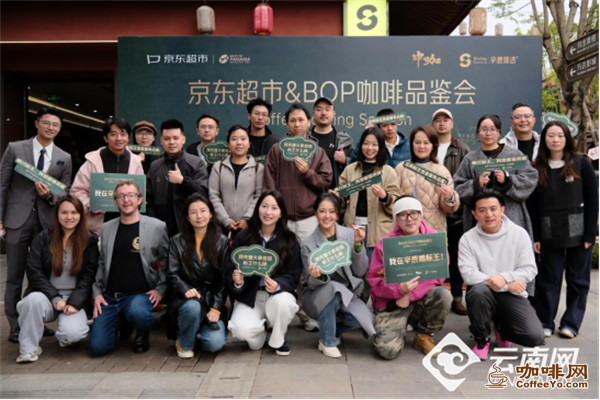 Behind the 1836 yuan "King of Brands": The Full Industry Chain and Offline Layout of Xinlu Coffee
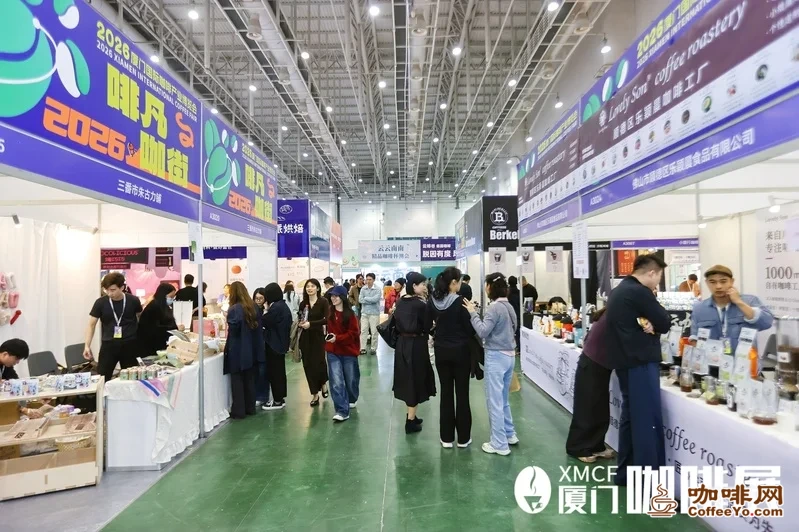 From a raw bean to a fragrant cup, Xiamen International Coffee Exhibition unlocks a new picture of the entire industry chain


 Liaoning ICP Security No. 21122402000217