


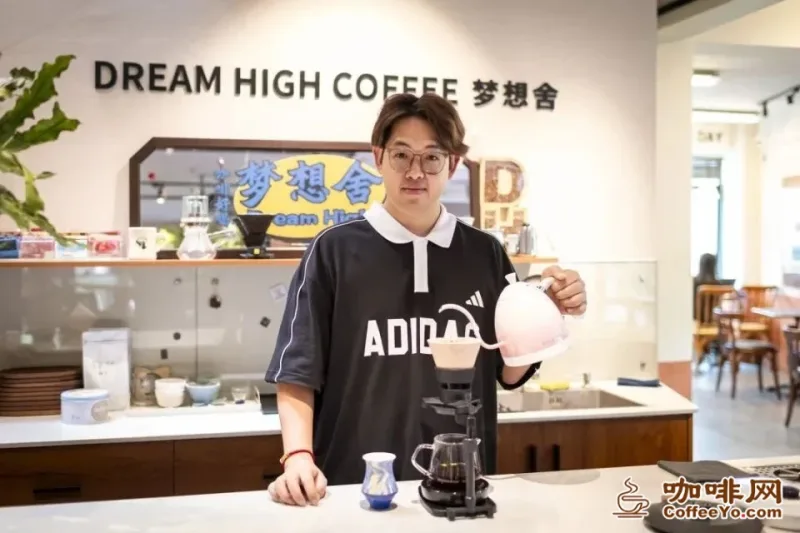
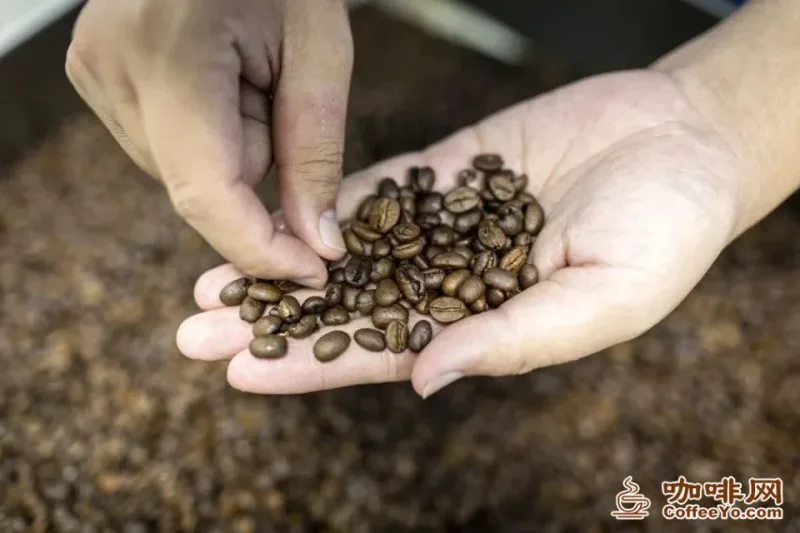
At a Glance (China Coffee Network): In a standalone red-brick house on Caofangwei in Guangzhou's Haizhu district, coffee roasting champion "Muzi" Li Menghu is carefully tasting a cup of pour-over coffee. The young entrepreneur, who grew up in Guangzhou, spent more than a decade rising from coffee apprentice to national champion of the TISCA International Roasting Competition, and then built a complete coffee business spanning farms, cafes and the supply chain. After winning the title he moved from a single shop to a full-chain operation: Yunnan upstream for green-bean quality, an expanded factory midstream for standardised output, and nationwide wholesale and retail downstream, while continuing to break the niche boundary with the "coffee+" idea and folding memories of the city into the beans.
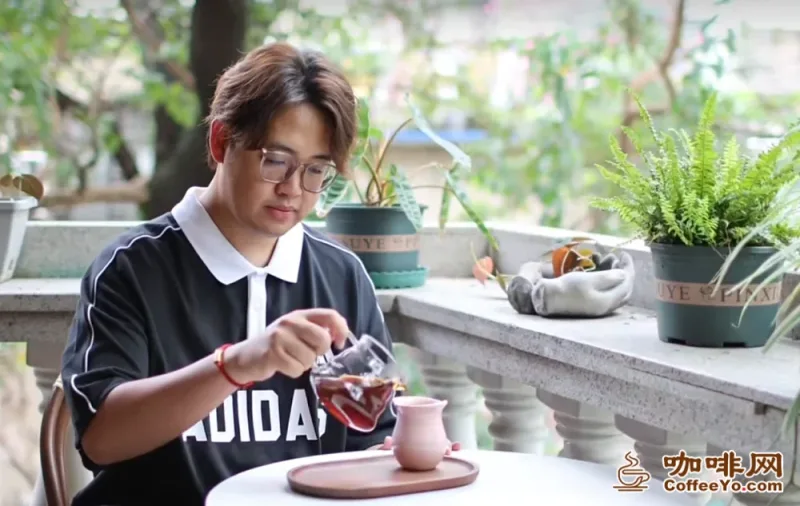
In a standalone red-brick house on Caofangwei in Guangzhou’s Haizhu district
the aroma of a coffee roaster
drifts over vintage patterned tiles
and the green plants in the courtyard.
Coffee roasting champion “Muzi” Li Menghu is carefully tasting a cup of pour-over coffee.
The young entrepreneur, who grew up in Guangzhou,
spent more than a decade rising from coffee apprentice to national champion of the TISCA International Roasting Competition, and then built a complete coffee business spanning farms, cafes
and the supply chain.
Magnolia flowers, rose apples, red walls and patterned tiles —
Muzi folds the memories of his childhood
into cup after cup of coffee,
carving out a distinctive
“coffee+” path as an entrepreneur.
Crossing Boundaries to Chase a Dream: From a Well-Paid White-Collar Job to a Coffee Apprentice
Muzi’s bond with coffee began in 2009 at a cafe on Tiyuxi Heng Street. Specialty coffee was still a niche in Guangzhou then. Recalling his first pour-over, he described it in a very local way: “as bitter as a herbal tea.”
“The first pour-over was on the house. It tasted very bitter, but the way he concentrated on the siphon was so cool!” That moment of light and aroma pulled Muzi, then a university student, into the world of coffee. On his second visit he spent more than 400 yuan on a full siphon set. From then on, coffee became a love woven into everyday life.
After graduating he became an e-commerce manager earning over 10,000 yuan a month, often meeting clients in cafes and spending more than 5,000 yuan on coffee in half a year. “You spend that much on coffee in six months — why not open your own place?” a barista joked. The idea took hold. He began spending his spare time learning to roast at cafes, offering his operational skills in exchange.
On 1 January 2012 he made a decision that surprised everyone around him: he quit his well-paid job and became a cafe apprentice. That year, under the handle “Dreamhighcoffee”, he wrote down his original coffee dream on social media and set out to chase it. “My dad said, ‘If it doesn’t work out, there’s still food at home.’ My family’s support became the backbone of my business.”
Where City Flavour Meets the Cup: Guangzhou’s Everyday Life Shapes a Distinctive Coffee Flavour
In 2014 Muzi opened the first Dream High Coffee on Zilong Street in Jiangnanxi. “When I was choosing the site I saw a huge magnolia tree in the yard, and it reminded me of the magnolia bracelets an old lady used to sell on the roadside when I was a child.” To keep that scent, he rented his landlady’s home at 1.5 times the market rate and reserved free seats for her and her neighbours.
Light-roast coffee had not yet won over the market, so he added lemon tea and pomelo tea to the menu to keep the cafe afloat. He never forgot why he started: he gave away light-roast coffee and patiently cultivated an audience for specialty coffee. “The giveaway lasted about a year, and customers kept asking about and choosing light roasts.”
In 2015 he travelled to Yunnan to buy a coffee plot, securing the source of his supply chain and experimenting with green-bean processing; in 2016 he set up his own roasting studio, taking control of the whole process from green bean to cup. 2018 was the turning point, when he won his first roasting title — national champion of the TISCA International Roasting Competition.
“There were few coffee roasting champions in Guangzhou then, so we studied the competition rules in depth,” he recalls. He roasted 20–30 batches a day, then cupped and scored them following the Cup of Excellence (CoE) protocol — cleanliness, sweetness, acidity, mouthfeel — training his palate daily against the CoE standards and steadily sharpening his roasting.
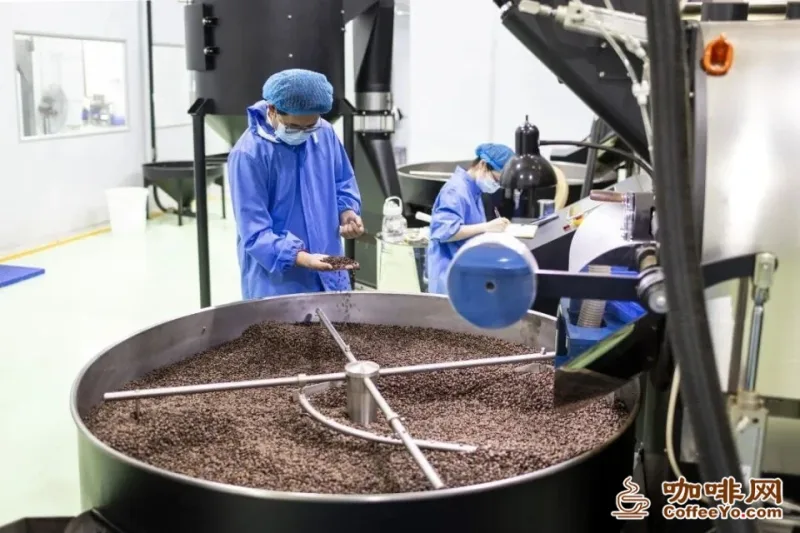
“We expected a lot of visitors after winning. How to absorb that wave of attention was a very practical question.” Rather than blindly adding stores, he upgraded the roasting studio into a professional factory with 2,000 square metres of standardised roasting space. As his technique improved, he and his partners collected one trophy after another and built a brewing philosophy of their own.
“I always bring my own beans to competitions to share with peers, and that opened up international markets.” Today Muzi is a green-bean buyer, travelling to growing regions worldwide for unusual varieties. His roasted beans sell across China and are exported to Southeast Asia, taking Guangzhou’s local coffee to the world.
As an entrepreneur raised in Guangzhou, Muzi has always folded the city’s character and Lingnan everyday life into the brand. Guangzhou is south China’s key import port for coffee: frequent flights bring specialty beans in fresh and fast. As a first-tier city it also gathers master baristas and serious enthusiasts, giving him fertile ground to refine his craft and a loyal customer base.
On product development, he says much of his inspiration comes from childhood memories of Guangzhou. His beloved magnolia is slow-infused at low temperature into milk for the signature “Mulan Dirty”; the “Old Guangzhou Dirty” recreates the sweet rose-apple note of the Lingnan waterways, and many regulars say it tastes “like childhood”.
Breaking Boundaries Through Innovation: An Innovation Mindset Builds the “Coffee+” Model
Muzi believes his steady progress owes much to blending internet thinking with coffee-shop management. “Coffee was a niche early on, and specialty coffee even more so. A coffee business can’t stay inside the enthusiast circle; it has to cross boundaries and innovate.”
Early on he launched a “book for a coffee” charity drive, using social platforms to turn the cafe into a hub for young creatives and breaking the niche boundary with the “coffee+” idea. After winning the roasting title he moved decisively from a single shop to a full-chain operation: Yunnan upstream for green-bean quality, an expanded factory midstream for standardised output, and nationwide wholesale and retail downstream — a stable, sustainable model.
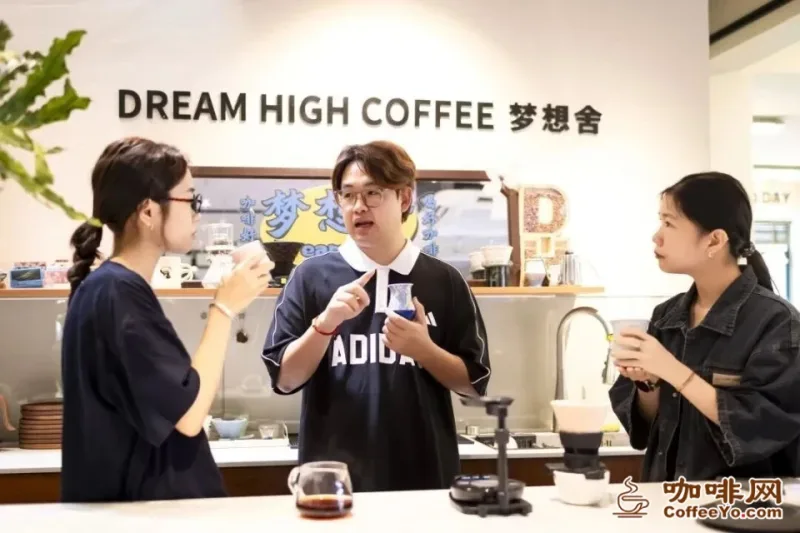
Red walls, patterned tiles, greenery all around. At the bar, a barista patiently explains the flavour of each bean. Muzi shows a 2012 Weibo screenshot: “A small dream: to have my own 35–50 square metre cafe, with a little garden, and to sit in a little corner listening to soft music and reading.” That dream has long since come true, and his coffee story is still being written in Guangzhou’s everyday bustle.
A chance encounter, and a bond with coffee
Leaving the white-collar job to become an apprentice
Muzi puts down roots in old Guangzhou
Folding the city’s memories
into the coffee beans
Winning on the competition stage
he never stopped
Exploring “coffee+”
to break the niche boundary
With passion as a torch and hard work as the path
The coffee story of a Guangzhou youth
is still going on
Source: Guangzhou Youth, compiled from Guangzhou Daily and Guangzhou Haizhu Release
Reprint Notice & Disclaimer
- This article has been edited and compiled by China Coffee Network and reprinted from Guangzhou Youth, “放下高薪工作深耕本土咖啡!这位广州青年,烘出全国咖啡冠军.” The copyright of the original text belongs to Guangzhou Youth and the original author. This reprint is intended solely for information sharing within the coffee industry and does not represent the views of this website; all data and opinions are subject to the original article. Our thanks to the original author for creating and sharing it.
- Read the original: Guangzhou Youth, “放下高薪工作深耕本土咖啡!这位广州青年,烘出全国咖啡冠军”
- For matters concerning content licensing, attribution, copyright or otherwise, please contact us promptly and we will verify and cooperate in handling them as soon as possible. We also welcome coffee origins, brands and industry media to exchange ideas and contribute articles.
- Contact China Coffee Network: Tel 400-0000-641 (+86-18288016826) | Email 405854472@qq.com
Related Reading
- Brazil’s Coffee Industry Upgrades Open New Space for China-Brazil Cooperation
 Coffee as Daily Life in Kunming and a Hundred-Billion-Yuan Industry Chain
 Pour-Over Coffee Basics: Drippers, Filters and the Fundamentals of Pouring Water
 Don’t Box Yourself In: Head to Huadu and Let Your Coffee Spirits Take Off
 After Four Slow Years in China, Blue Bottle Coffee Picks Up Speed
- How Much APEC Is on the Chinese Dinner Table? Starting with a 9.9-Yuan Cup of Coffee


 Liaoning ICP Security No. 21122402000217