


At a Glance (China Coffee Network): According to Guming Coffee R&D staff, the brand has kept the complete chain from post-roasting to store use within 30 days.
CNR, Beijing, July 6 (Reporter Chen Yue) When consumers take a cup of freshly ground coffee from the counter, few tend to notice when the beans used in that cup were roasted, or how long they sat in warehouses and logistics. Every day from the completion of roasting to final extraction affects the taste. This is a production chain that most consumers cannot see, yet that genuinely exists.The 30-Day ‘Best-Tasting Window’ of Coffee BeansGreen coffee beans can keep their best flavor for about 12 months under proper storage, but after roasting it is completely different. According to the consensus of the SCA (Specialty Coffee Association) and multiple specialty roasters, the best-tasting window for coffee beans is 7 to 30 days after roasting, with days 7 to 21 being the flavor-peak window. Studies point out that, under proper storage conditions, coffee beans can reach a flavor score of 95 points (on a 100-point scale) on day 10 after roasting, and still maintain above 85 points by day 30, but after 30 days the flavor decay noticeably accelerates. Beyond 30 days, volatile compounds such as floral and fruity aromas are lost in large amounts, and even dark-roast beans can hardly hide woody notes and hollow bitterness.However, most brands in the industry set the coffee bean usage cycle at 2 to 3 months. Behind this are the practical pressures of green bean trade, roasting, warehousing, logistics and stores, with every link adding time cost. For most chain brands with thousands of stores, transporting beans from the roasting plant to every store and ensuring they are in optimal condition is no easy task.Guming Deeply Cultivates Its Supply Chain to Support the New ’30-Day Fresh Beans’ Standard
According to Guming Coffee R&D staff, the brand has kept the complete chain from post-roasting to store use within 30 days. Guming’s proposed ’30-day fresh beans’ standard means coffee beans, from completed roasting to being fully used in stores, are kept within 30 days, including a 10-day bean-resting period.

The flavor changes of coffee beans after roasting follow their own patterns. According to Guming R&D staff, 7 to 10 days after dark roasting, carbon dioxide release tends to stabilize and flavor begins to enter a better state; days 10 to 30 are the stage where overall flavor performance is most stable and balanced. From the consumer experience, what is perceived first is the change in aroma, followed only then by changes in flavor layers and aftertaste.The 30-day standard places higher demands on the supply chain. According to a Guming Coffee representative, the core of this standard is that the supply chain must make stocking plans according to the logic of short-shelf-life products; warehouse inventory must be compressed, and planners must watch real-time inventory daily, judge sales expectations, and avoid stockouts or slow-moving stock. Coffee beans differ from other raw materials — if a stockout occurs, replenishment cannot be used directly and a bean-resting period must be reserved, so sales forecasts need to be made 7 to 8 days in advance.The distribution logic for coffee beans differs from that of fresh fruit and fresh milk. According to Guming, milk has large production capacity and can be transported directly to warehouses for use after production; whereas if coffee beans run out, replenishment cannot be used immediately and a bean-resting period must be reserved, so supply chain management requires more precise rhythm control.Guming’s ability to achieve the 30-day standard is related to the supply chain capabilities it accumulated in the tea-drink field. At present, the cold-chain warehousing and distribution system Guming has built already covers the full chain from raw material procurement to store delivery. As of the end of 2025, Guming operated 24 warehouses, with a total warehouse floor area of about 258,000 square meters, of which cold-storage capacity exceeds 70,000 cubic meters, able to support storage needs across multiple temperature zones; these warehouses can provide cold-chain delivery once every two days to about 98% of stores as needed. This system, accumulated in managing short-shelf-life raw materials such as fresh fruit and fresh milk, has now been extended to the coffee business.Tea-Drink Brands Crowd into the Coffee TrackGuming officially launched coffee testing in 2021, introducing its first coffee product ‘Iced Coffee Little Yellow Lemon’; in 2022 it began small-batch deployment of freshly ground coffee machines; from the second half of 2024 it deployed on a large scale. As of the end of 2025, more than 12,000 stores were equipped with freshly ground coffee machines, and 27 coffee drinks were launched throughout the year.In fact, tea-drink brands crossing into coffee are no isolated case. According to the 2025 China Coffee Industry Development Report, in 2025 China’s coffee market reached 218.1 billion yuan, of which the freshly ground coffee market exceeded 188 billion yuan. China’s coffee consumption has grown at a compound annual rate of 10% over the past decade. In 2025 the net increase in China’s coffee stores was over 40,000, reaching 215,000, a 25% rise; the chain rate rose from 46% to 53%. The report also notes that China’s coffee track is undergoing an ‘atypical explosion’, with non-professional players using existing channel advantages to achieve cross-sector dimensional reduction strikes on scenarios.At present, tea-drink brands such as Auntea Jenny, Mixue, Nayuki and Chabaidao have all added coffee categories to their product matrices. In Guming’s view, its logic for doing coffee is the same as for tea drinks — finding ingredients at the origin, making fresh, tasty, high-quality yet affordable products. Choosing ‘freshness’ as the breakthrough, according to a Guming Coffee representative, is because freshness directly affects coffee’s most core flavor experience; this is not merely a concept of time but a systemic capability running through the supply chain and store output, including raw material quality, roasting craft, packaging preservation, logistics turnover and standardized store production.Guming believes that, for chain coffee, true competitiveness lies not in flavor reaching its peak on some one day, but in being able to consistently and steadily deliver a good cup of coffee to consumers. Behind this is a precisely operating system: dynamically adjusting blend plans according to differences in the harvest seasons of global coffee-producing regions; customizing roasting curves for each set of equipment to unify output flavor; continuously optimizing packaging to solve airtightness problems; and finely controlling extraction parameters. The number of days a cup of coffee experiences from bean to cup will ultimately show up on consumers’ taste buds. As more and more brands begin to pay attention to this invisible timeline, the quality standards of the whole industry may be being redefined.
Tea beverage brands flock to the coffee track
Reprint Notice & Disclaimer
- This article has been edited and compiled by China Coffee Network. The information and images therein come from public sources and the copyright belongs to the original author. This reprint is intended solely for information sharing within the coffee industry and does not represent the views of this website; all data and opinions are subject to the original article. Our thanks to the original author for creating and sharing it.
- For matters concerning content licensing, attribution, copyright or otherwise, please contact us promptly and we will verify and cooperate in handling them as soon as possible. We also welcome coffee origins, brands and industry media to exchange ideas and contribute articles.
- Contact China Coffee Network: Tel 400-0000-641 (+86-18288016826) | Email 478203668@qq.com
Related Reading
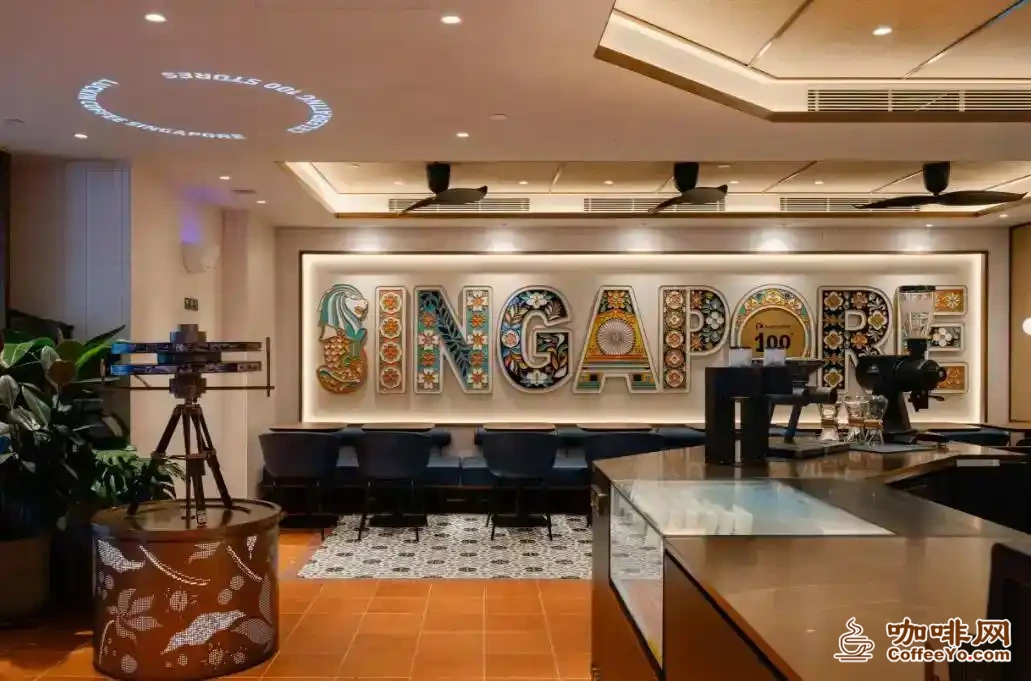 A Cup of Coffee Connecting Asia-Pacific
- Asia Pacific Connection in a Cup of Coffee
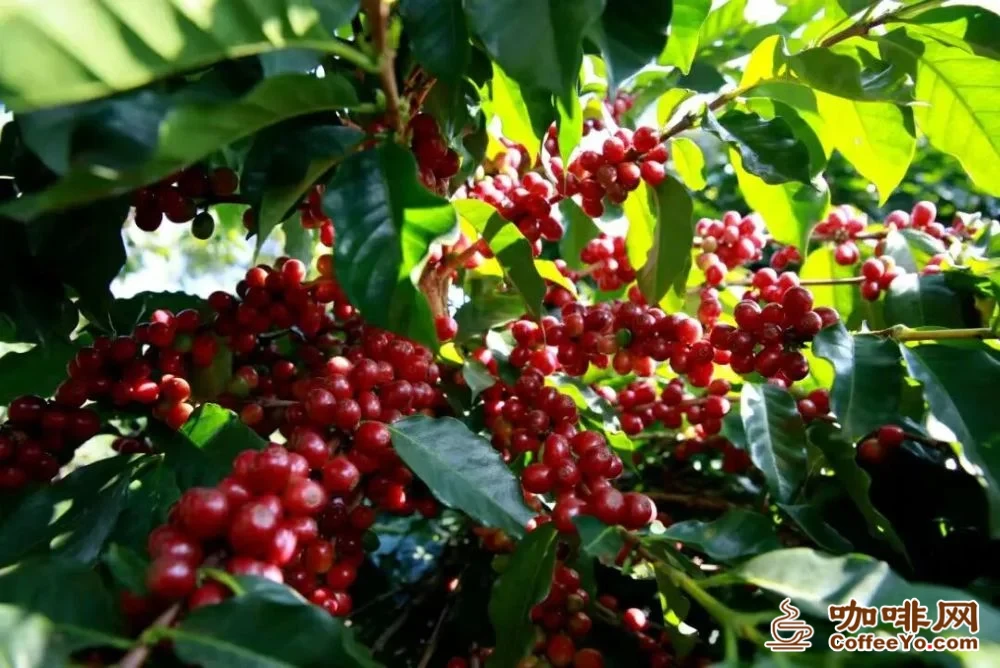 ICE agricultural futures main contracts mostly closed higher, while coffee futures rose 1.84%
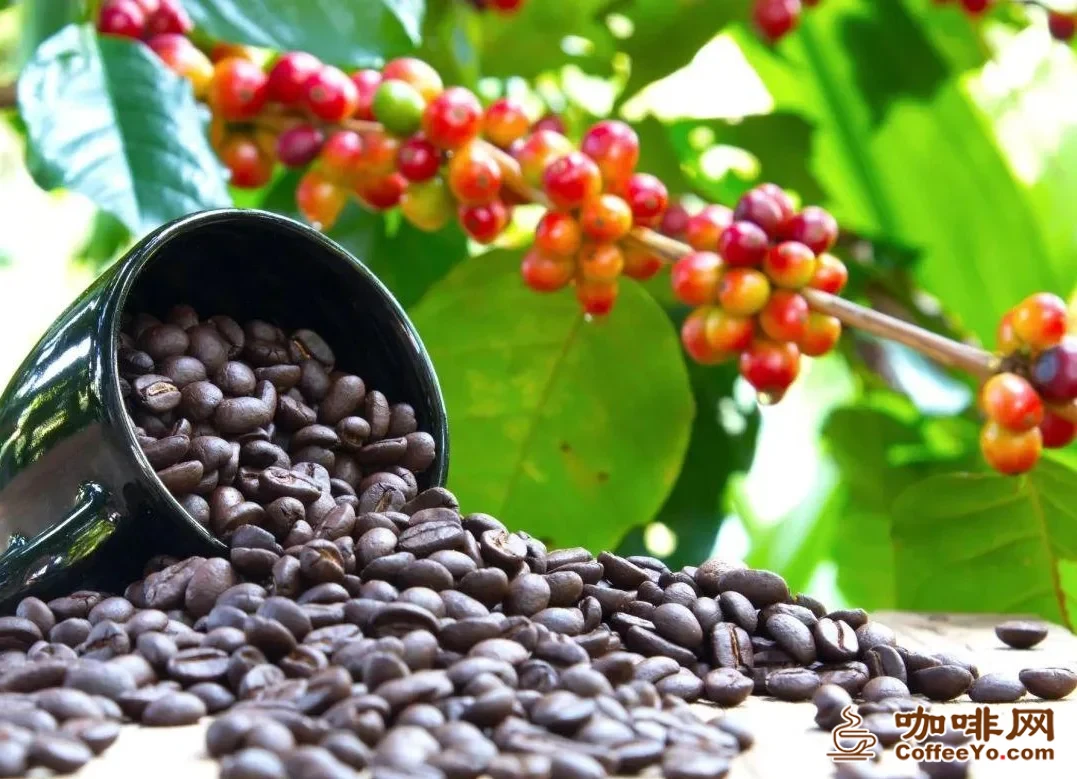 The coffee market is experiencing two extremes! Arabica inventory drops to 27 year low, but Robusta plummets to two-week low
 Financial Observation: Why is Generation Z from the United States flocking to coffee and tea shops in China
 ‘All-Ice’ Coffee Goes Viral! Will the Next Hit Be Your Personal Favorite?


 Liaoning ICP Security No. 21122402000217