


At a Glance (China Coffee Network):On a street corner in Yuelu District, Changsha, Hunan, there is a special coffee shop where some staff move gently and, after skillfully serving customers a hot cup of coffee.
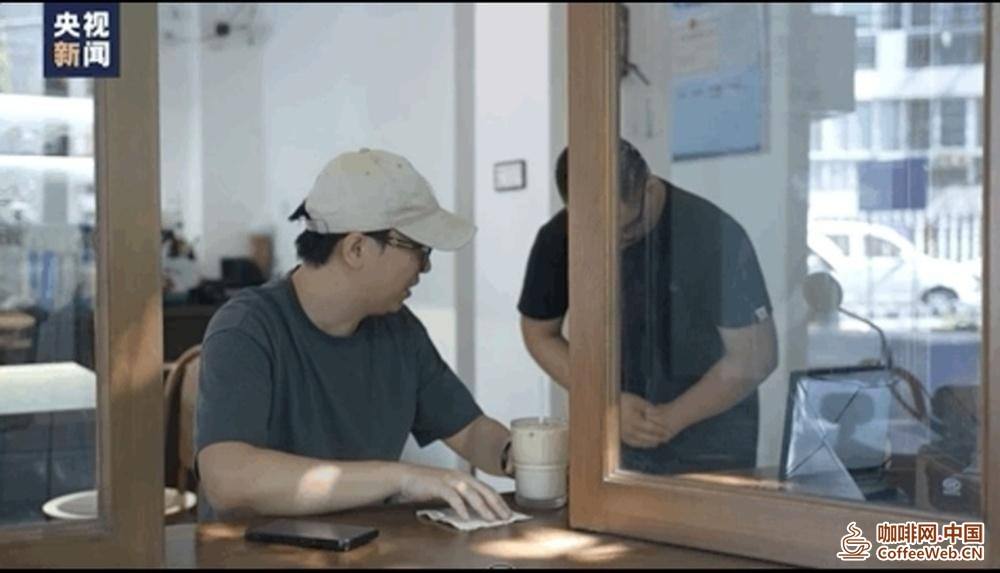
On a street corner in Yuelu District, Changsha, Hunan, there is a special coffee shop where some staff move gently and, after skillfully serving customers a hot cup of coffee, offer a shy smile. In fact, they are young people with Down syndrome. In 2023, to help more children with Down syndrome enter society smoothly, ‘Tang Bao’ mother Li Xiufang joined other parents to open this coffee shop. Many families affected by Down syndrome have found solace and hope here, and the shop has also let more people see the real side of the Down syndrome community.
After a Child with Down Syndrome Arrives
Down syndrome, also known as trisomy 21 or congenital intellectual disability, was the first chromosomal disorder confirmed in humans; it mostly occurs sporadically but can also involve hereditary factors. Children with Down syndrome are also called ‘Down children’ or ‘Tang Bao’. Main features include distinctive facial features, intellectual disability, growth and developmental delay, and associated malformations.
In her early years, Li Xiufang did technical work at a state-owned enterprise in Changsha and later moved to a finance position. In 2002, welcoming her first child, she carefully prepared herself as a new mother, never missing a single prenatal checkup at a top-tier hospital.
But at the time, conditions like Down syndrome received far less attention than they do today. Soon, the joy of Li Xiufang’s new motherhood was doused with cold water — when her son Gao Jin was a little over a month old, he began to seem somehow different from other children, and was diagnosed with Down syndrome.
This strong and capable woman gave her all to support her child at every step of his life thereafter.
After entering kindergarten, Gao Jin was not very good at socializing with other children and needed extra care from teachers. Fortunately, the kindergarten’s principal was introducing a relatively new Montessori educational philosophy and exploring new teaching models that respected each child’s individual needs and gave children more opportunities for self-expression. Little Gao Jin’s time in kindergarten was, on the whole, a happy one.
By the time Gao Jin reached primary school, things changed somewhat. Many schools would simply refuse children with conditions like Down syndrome. Li Xiufang did not dare volunteer the truth about her child to the teacher, but by chance the teacher she met also had a child with depression at home and was especially empathetic and willing to look after Gao Jin.
When Gao Jin was in fourth grade, his teacher changed, and Li Xiufang had a second child, dividing her time and energy. Under mounting pressure, Gao Jin was sent to a special school. Still, thanks to a solid early foundation, Gao Jin performed very well and was especially cooperative with teachers. His teachers liked him a great deal and gave him plenty of chances to express himself; he learned responsibility and was raised confident, well-behaved and considerate, helping his parents cook and wash dishes at home and handling housework with ease.
Li Xiufang is grateful for all the kind people her child met along the way. ‘I think he has been especially lucky,’ she said.
Parents Who Huddle Together for Warmth
Li Xiufang describes herself as persistent: once she sets her mind on something, she must do it well and strive for perfection. Knowing firsthand how hard life is for families affected by Down syndrome, in 2013 she began rallying parents of children with Down syndrome to set up a public-welfare organization for such families, so they could huddle together for warmth.
‘There are still relatively few organizations like ours that focus on full-life-cycle service support for the children,’ Li Xiufang recalls. At that time, apart from some localities offering pediatric rehabilitation or day-care centers for adults, organizations like theirs dedicated to sustained advocacy for the Down syndrome community were not only the first in Hunan Province but also rare nationwide.
The original impulse to found the public-welfare organization came when Li Xiufang noticed by chance that, as the parents around her gradually entered old age, the future care of their children became a burden these parents could not set aside.
In 2013, Li Xiufang and other parents learned of advanced models in other regions and wanted to replicate them locally to create opportunities for their children, with parents accompanying and supporting one another and giving each other strength. They also believed that their collective strength could win more opportunities for the children.
In 2014, Tangguo Home was formally established. The name was chosen together by everyone, because many families of children with Down syndrome had lost the feeling of having a home — ‘a beautiful wish that they might all have a sweet life.’
Parents often gathered at the Sunshine 100 residential community in Yuelu District. At first they brought their children to take part in activities; later they began to organize issue-based advocacy around the children’s specific needs. With little domestic experience to draw on, everything was explored step by step and constantly adjusted by the parents themselves — ‘giving these families some confidence and strength, and giving the public a window to understand them.’
On the medical front, treatment for Down syndrome has seen no major breakthroughs or changes, so Li Xiufang has focused more on special education. In her view, for the Down syndrome community, support from the social environment matters most. She also sensed that society’s fixed perceptions of people with Down syndrome had been somewhat limited. But as the children have grown, public awareness of Down syndrome and the social environment’s inclusiveness toward the community have been rising year by year in recent years, giving parents like Li Xiufang a measure of hope.
A Mother’s Lifting Hand
Love for her child drove this mother to keep moving forward. Li Xiufang and the parents carefully designed many activities, such as building independent-living spaces in the community to teach the children cooking and cleaning and foster independent-living skills. They also helped the children move from youth into adulthood through vocational education, letting them understand what a job is and learn pre-employment preparation, building professional competence.
Li Xiufang says parents invested enormous time, energy and resources to help their children gain better educational opportunities. But by adolescence, the children could only return home, facing the awkward reality of having no job opportunities.
After discussing it, Li Xiufang and several parents decided to open a coffee shop to give the children internship and job-seeking experience. Several parents pooled funds and did the renovation and design themselves, and thus Tangguo Coffee came to be. ‘Once a woman becomes a mother, for her child she may try even the hardest things,’ she said.
Li Xiufang explains that when the children come to intern at the shop, besides technical guidance from staff they also need support from an employment coach, and since the space is small, only two children can be placed at a time, with a three-month internship. The shop’s later operations were handed over to a young man.
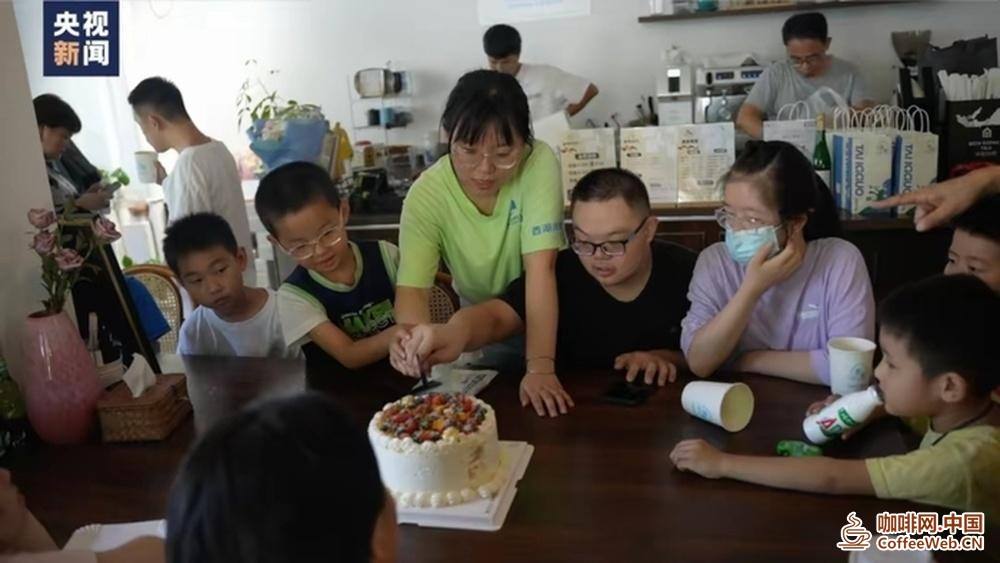
Li Xiufang says teaching the children to make coffee is not only about learning a vocational skill, but also about cultivating basic qualities. For example, some shop tasks must be broken down step by step, and the children carefully write down the many instructions. Over the years, the children themselves have changed considerably.
In media footage, the coffee shop is simply decorated but especially warm; parents and children of the Candy Home sit around the shop beaming, and laughter and chat never stop. Some children, guided by staff, carefully carry coffee to customers and then give a gentle bow.
Li Xiufang admits, however, that only a very limited number of children can be pushed out into real jobs after training, yet the parents keep trying their utmost. Gao Jin himself found a job as a warehouse clerk, giving confidence to other children and parents around him.
Gao Jin especially cherishes this job. Although he runs into small problems at work, every day he pays attention to how he dresses and greatly enjoys the sense of accomplishment the job brings.
At the end of 2025, after that job contract expired, Gao Jin took a cleaning job at a corporate park, and he still very much likes his work.
‘I care more about the children’s chance to take part,’ Li Xiufang says calmly about the difficulty they face finding jobs. When even ordinary people are under considerable pressure to find work, let alone these children. She keeps reaching out to communities to see whether flexible or short-term job opportunities can be developed or found, turning her attention to cooperation between communities and elderly-care institutions, hoping to let the children take part in work such as meal delivery services for the elderly.
Parents Watching Over One Another
This year, more than 60 families at Tangguo Home are at the vocational-education stage. Tangguo Home now has a working team including five social workers, mainly connecting with parents through projects or having parents proactively seek help with various matters, with a very flexible operating mechanism.
Li Xiufang says the parents of Tangguo Home also feel very happy. Many parents from other places envy Changsha parents for having Tangguo Home. ‘I know Tangguo Home can’t truly solve the specific problems of any one family with a Down syndrome child. But for families, Tangguo Home thinks ahead and works out ways to address those specific problems.’
Because she could not manage both her job and Tangguo Home’s operations, in 2020 Li Xiufang, caught in a dilemma, chose to resign and devote herself to running Tangguo Home as a purely public-welfare organization. ‘At the time I felt I had to choose one,’ she said.
Tangguo Home has now been running steadily for over a decade. Li Xiufang is still run off her feet and feels she owes something to her family; her greatest wish is to spend more time with her child.
Today, Tangguo Coffee has also passed its third year. Looking at social media, Tangguo Coffee still has many fans: customers take photos in the shop, thoughtfully write down their impressions of the coffee’s quality, and even rate it a must-visit spot for coffee lovers.
On July 30, Li Xiufang told a Xinhuanghe reporter that the shop had been closed for renovation over the past two months. ‘Feeling our way slowly, trying slowly.’ Summing up three years of running the shop, Li Xiufang still hopes to express the children’s real needs through this format and help them integrate better into society. ‘Only by letting others understand them more truly can everyone consider how to offer them some support.’
Reporter: Chen Si Editor: Lyu Bing Proofreader: Tang Qi
After the arrival of a child with Down syndrome
Parents huddled together for warmth
The support of maternal love
Parents’ mutual vigilance
Reprint Notice & Disclaimer
- This article has been edited and compiled by China Coffee Network. The information and images therein come from public sources and the copyright belongs to the original author. This reprint is intended solely for information sharing within the coffee industry and does not represent the views of this website; all data and opinions are subject to the original article. Our thanks to the original author for creating and sharing it.
- For matters concerning content licensing, attribution, copyright or otherwise, please contact us promptly and we will verify and cooperate in handling them as soon as possible. We also welcome coffee origins, brands and industry media to exchange ideas and contribute articles.
- Contact China Coffee Network: Tel 400-0000-641 (+86-18288016826) | Email 478203668@qq.com
Related Reading
 Jiangxi Wuyuan: Rural Coffee Unlocks New Cultural Tourism Formats
 Jiangxi Wuyuan: Rural Cafes Unlock New Cultural Tourism Formats
 Global quality goods gather at Hongqiao Import Commodity Exhibition Center, setting "Chinese standards" for coffee
- Global premium products gather to set China's coffee standards as Hongqiao Import Commodity Exhibition Center keeps the CIIE spirit alive
- Global quality goods gather as Hongqiao Import Commodity Exhibition Center and CIIE forge lasting partnership to set China's coffee standards.
 Zhejiang "Science Cafe" Promotes Embodied Intelligence in Real-World Scenarios


 Liaoning ICP Security No. 21122402000217