
At a Glance (China Coffee Network): Zhenkang County in Lincang, Yunnan, has built an understory symbiotic park in the rainforest belt at elevations of 1,200 to 1,800 metres, with 1,100 mu of pure coffee, 2,300 mu of nut trees interplanted with coffee and 2,600 mu of avocado and coffee composite planting; chemical fertiliser and pesticide inputs are more than 40% lower than in open-field planting.
(Source: Bianmei Zhenkang)
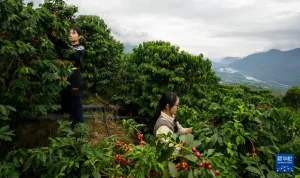
Entering Zhenkang County in Lincang City, mist curls through the unbroken rainforest and the mild, humid air carries a faint scent of coffee fruit. Along the ‘golden flavour belt’ for coffee at elevations of 1,200 to 1,800 metres, patches of coffee forest are quietly growing — beneath the shade of nut and avocado trees, living and growing together with all things in the rainforest. This is the rainforest coffee understory symbiotic park that Zhenkang County has made a priority, and in the eyes of local people it is a place of hope where ‘golden beans’ grow.
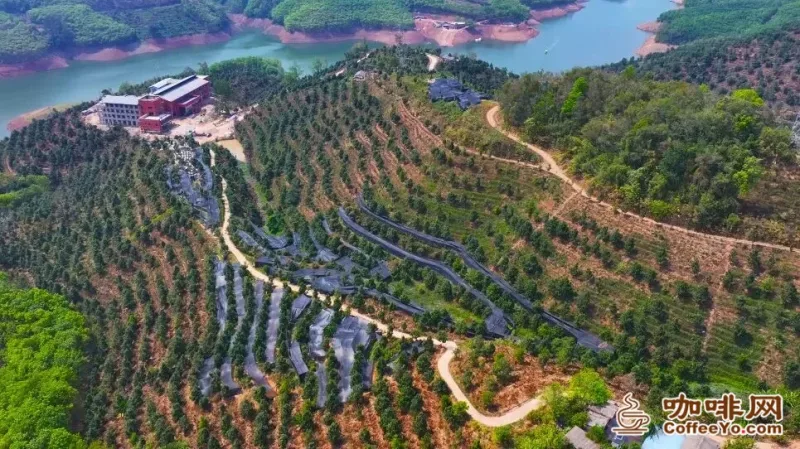
‘In the past we watched over the mountain forest just to guard the trees; now we use the forest land well to earn money,’ laughed a farmer tending coffee among the trees. Zhenkang County lies on the southwestern frontier; with its warm, humid rainforest and abundant mist and cloud, it is natural fertile ground for developing specialty understory coffee.
In recent years, the county Party committee and county government have made the coffee industry the core income-generating industry of the understory economy, strictly holding the ecological red line, insisting on no deforestation and no land reclamation, revitalising forest land space by improving the tending and quality of state-owned forest land, bringing in Mingshan Coffee Manor (Yunnan) Co., Ltd. to build the rainforest coffee understory symbiotic park, selecting specialty varieties such as Gesha and Colombia, and actively exploring a vertical composite planting model for rainforest coffee.
The natural shade of the trees creates a microclimate suited to coffee growth, so that ‘golden beans’ that help local people raise their incomes and build prosperity have truly grown under the green canopy of the rainforest.
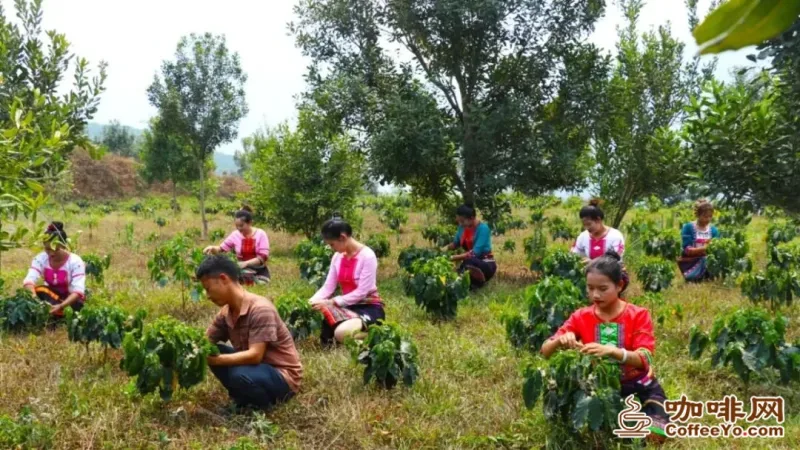
In the park’s layout, three types of understory planting blocks have been scientifically positioned: 1,100 mu of pure coffee under state-owned forest, 2,300 mu of interplanted nut trees and coffee, and 2,600 mu of composite avocado and coffee planting.
The park applies a model of ‘upgrading low-efficiency forest + developing native understory’, building a vertical symbiotic planting system for the rainforest.
The upper-layer nut and avocado trees form a natural shade barrier, while fallen branches and leaves returned to the soil build fertility; inputs of chemical fertiliser and pesticide are cut by more than 40% compared with open-field planting, effectively reducing agricultural non-point-source pollution while conserving soil and water and enriching understory biodiversity.
The mix of high and low layers and the symbiosis of forest and farming solve the problem of low returns from single-crop planting, realising ‘one mu of forest land, multiple layers of output, short- and long-term complementarity’.
‘Coffee delivers results in the short term, while nuts and avocados underpin long-term returns, and staggered output also smooths the risk of market fluctuations,’ the park’s person in charge explained. The rainforest composite planting model has effectively revitalised state-owned forest land resources and built a stable income structure. Once the base is fully in production and operating effectively, its combined output value is expected to reach more than RMB 30 million.
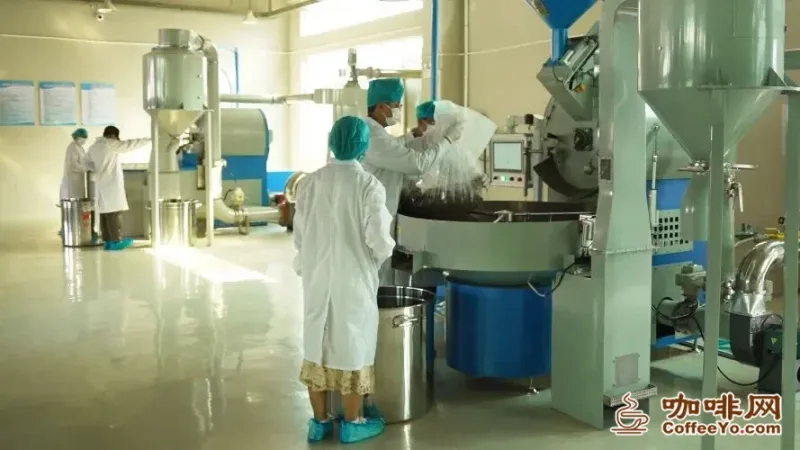
The park has improved the ‘enterprise + base + farmer’ benefit-linking mechanism, giving priority to nearby residents in land preparation, planting, tending, fresh-fruit picking, primary processing and other work, regularly carrying out ‘training through work’ and teaching coffee management and green pest-control techniques hands-on; the enterprise provides full-chain services covering seedling supply, technical guidance and guaranteed-price purchasing, helping farmers steadily raise their incomes and continuously strengthening the village collective economy.
From ‘watching the trees’ while guarding mountain forests to ‘earning money’ by putting forest land to good use, Zhenkang is turning high-quality ecological resources into industrial and economic advantages.
At present, the locality continues to focus on improving the quality and efficiency of rainforest coffee, upgrading infrastructure such as irrigation, access paths, warehousing and cold chains, and planning primary and deep-processing stages including grading, roasting and packaging, so as to extend the industrial chain and raise added value; it is working to build the Zhenkang rainforest coffee public brand, broadening online and offline sales channels, and simultaneously developing formats such as coffee picking and rainforest study tours to advance the integrated development of ‘coffee + culture and tourism’. Empowering the building of harmonious and beautiful villages with distinctive understory industries, a new picture of rural revitalisation — sound ecology, thriving industries, prosperous people and a stable frontier — is slowly unfolding among the unbroken rainforest.
Reprint Notice & Disclaimer
- This article has been edited and compiled by China Coffee Network and reprinted from Sina Finance, “镇康:雨林深处种出“金豆子” 立体农业铺就富民路.” The copyright of the original text belongs to Sina Finance and the original author. This reprint is intended solely for information sharing within the coffee industry and does not represent the views of this website; all data and opinions are subject to the original article. Our thanks to the original author for creating and sharing it.
- Read the original: Sina Finance, “镇康:雨林深处种出“金豆子” 立体农业铺就富民路”
- For matters concerning content licensing, attribution, copyright or otherwise, please contact us promptly and we will verify and cooperate in handling them as soon as possible. We also welcome coffee origins, brands and industry media to exchange ideas and contribute articles.
- Contact China Coffee Network: Tel 400-0000-641 (+86-18288016826) | Email 405854472@qq.com
Related Reading
 Baoshan, Yunnan Builds a Hub for China’s Specialty Coffee
 Three Decades of Shanghai-Yunnan Collaboration: A Coffee Bean ‘Ferments’ at the Import Expo
 Why Yongde’s Coffee Beans Won Gold in Shanghai – A Taste of ‘Life in Yunnan: 365 Days’
- Yunnan’s Coffee-Tourism Story, Told Through an Invoice
- Yunling Commentary: Yunnan Coffee Turnaround Hinges on Autonomous Pricing
 A ‘Travel Pack’ Reveals Another Possibility for Pu’er Baristas


 Liaoning ICP Security No. 21122402000217