


At a Glance (China Coffee Network): Jimu News reporters Yin Jie and Liu Yang – What surprises arise when everyday market bustle meets the rich aroma of coffee? At Wuhan’s Hanqiao Fresh Market, a small stall squeezed between two butcher shops, a coffee shop of just 5.2 square meters, has quietly become a hit. The mellow scent of grinding beans mingles with the market’s natural earthiness, and beautifully made fresh-ground coffee paired with a down-to-earth free-scallion perk made this little shop famous within just a month of opening. At 8 a.m. the Hanqiao Fresh Market is already in full swing. Butchers
Jimu News reporters Yin Jie and Liu Yang
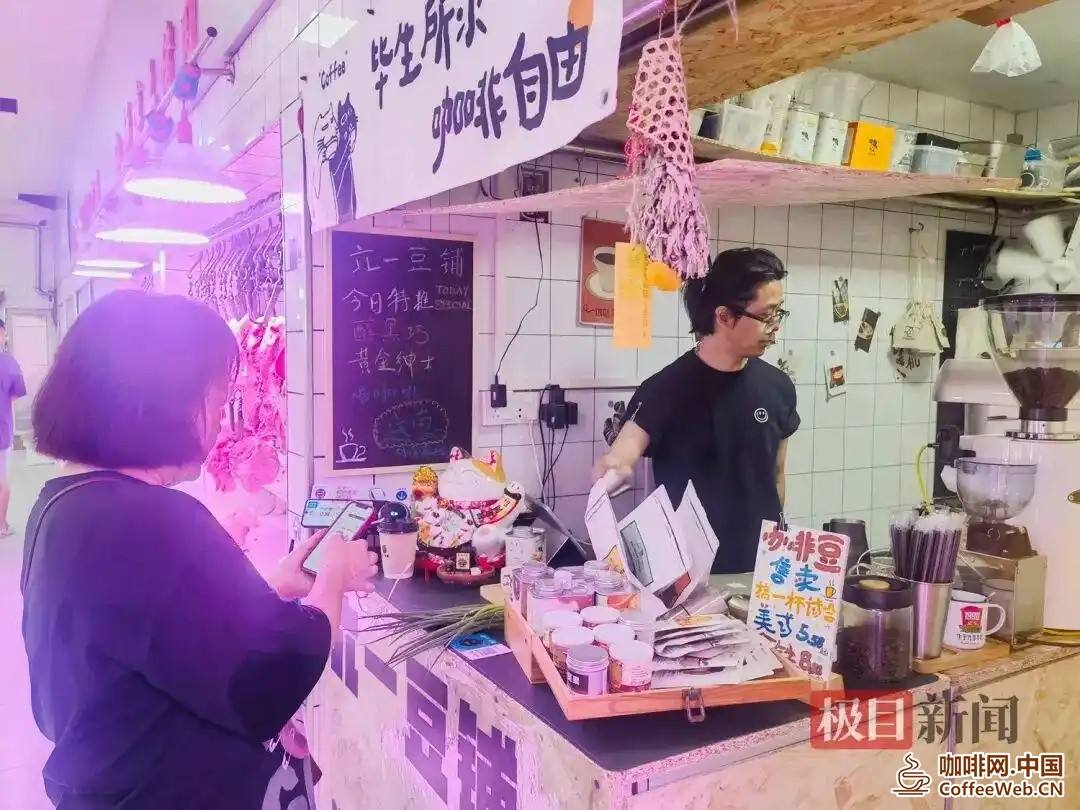
What surprises arise when everyday market bustle meets the rich aroma of coffee? At Wuhan’s Hanqiao Fresh Market, a small stall squeezed between two butcher shops, a coffee shop of just 5.2 square meters, has quietly become a hit. The mellow scent of grinding beans mingles with the market’s natural earthiness, and beautifully made fresh-ground coffee paired with a down-to-earth free-scallion perk made this little shop famous within just a month of opening.
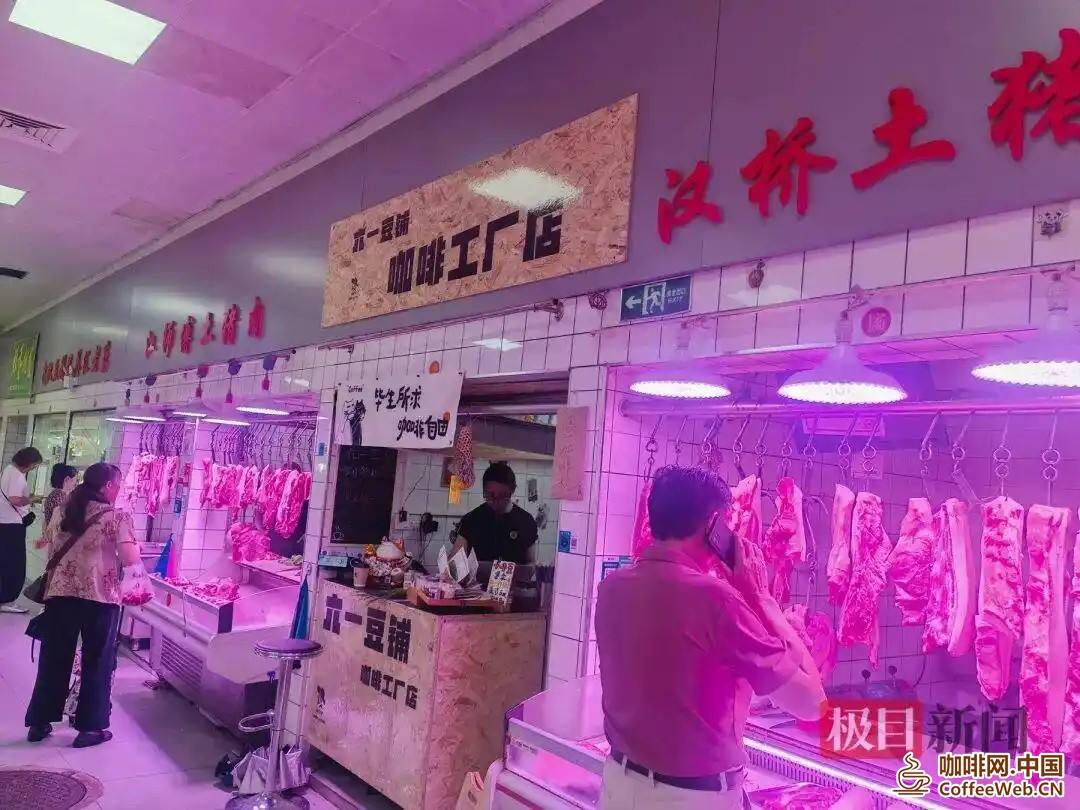
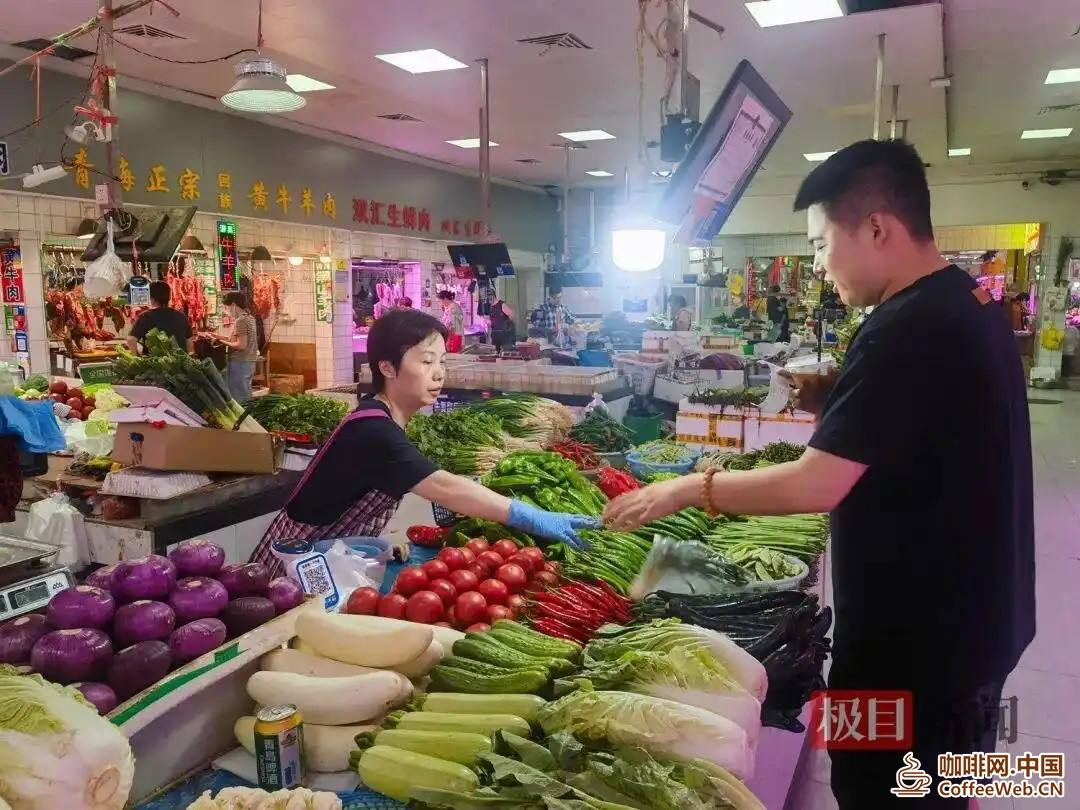
By 8 a.m., Hanqiao Fresh Market has already begun a busy day. The sound of butchers chopping bones rises and falls, pork belly and ribs hanging on iron hooks gleam fresh and bright, and the crispness of produce blends with the savor of meat into the most authentic everyday bustle. The tiny storefront of “Liuyi Bean Shop” stands out especially here, adding a touch of urban polish to the lively market.
Owner Yu Yi is a Wuhan native born in the 1980s. Having studied hotel management, he honed his skills at several well-known hotels in Shanghai, Zhuhai, and Chongqing. He later returned home, running a Japanese restaurant and working in the coffee industry for years. After moving to Qilimiao in Hanyang two years ago, he often wandered through wet markets to experience local life. Last December, while accompanying his wife to buy groceries, the lively, vibrant market scene sparked a bold idea: does a coffee shop have to be in a shopping district or office building? Could one work inside a wet market?
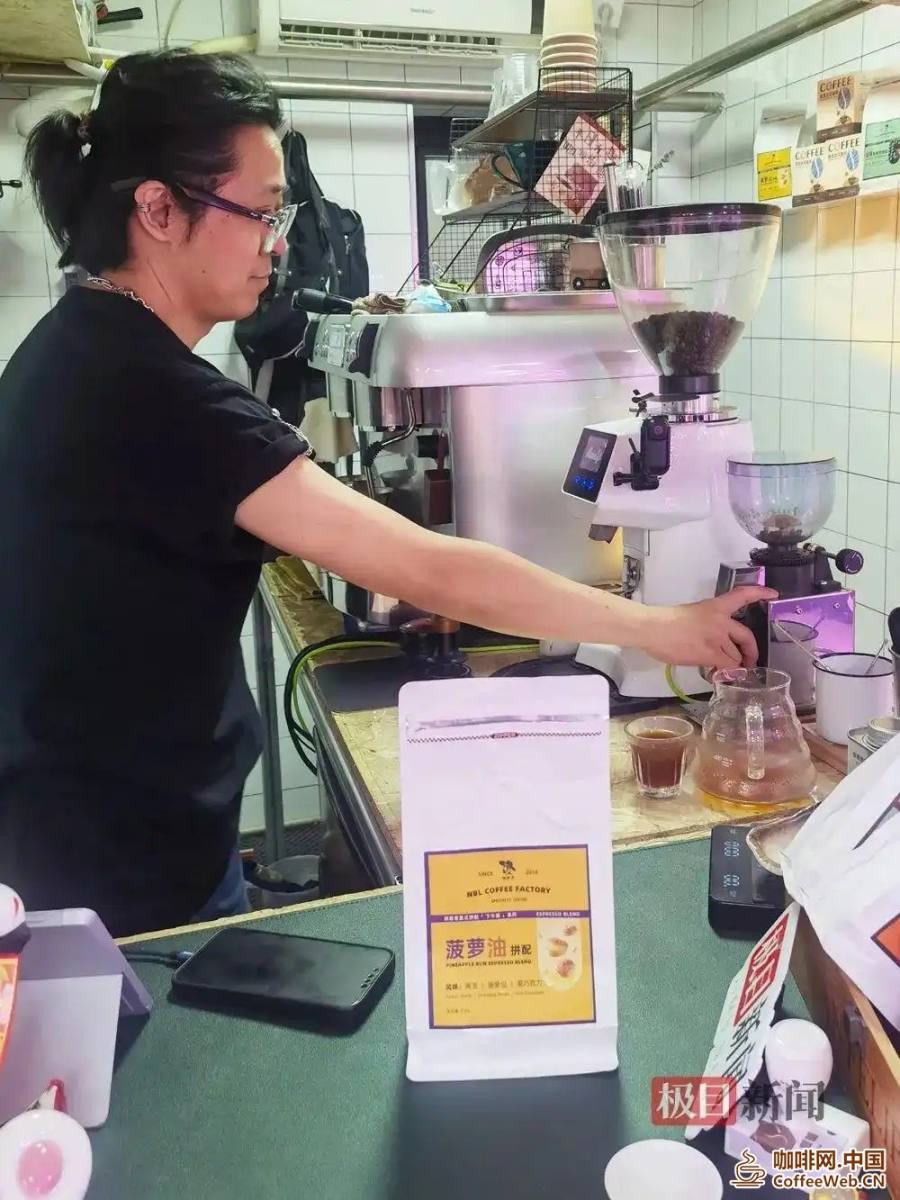
This sudden inspiration did not drive Yu Yi to start a business blindly. When preparing to open the shop in February this year, he first searched online and studied cases of market coffee shops in places such as Yunnan and Chengdu. He then spent two months visiting major wet markets across Wuhan’s three towns for in-depth research.
“People in Wuhan and Chengdu have very similar temperaments: easygoing and down-to-earth in how they work and live, without too much fuss,” Yu Yi said, gaining confidence after his rounds. Hanqiao Fresh Market is a large, high-traffic market serving the Qilimiao and Meigui Street area; long-time elderly residents, young families, and office workers from nearby buildings all shop here, so the customer base is comprehensive and opening a shop here had a real chance of working.
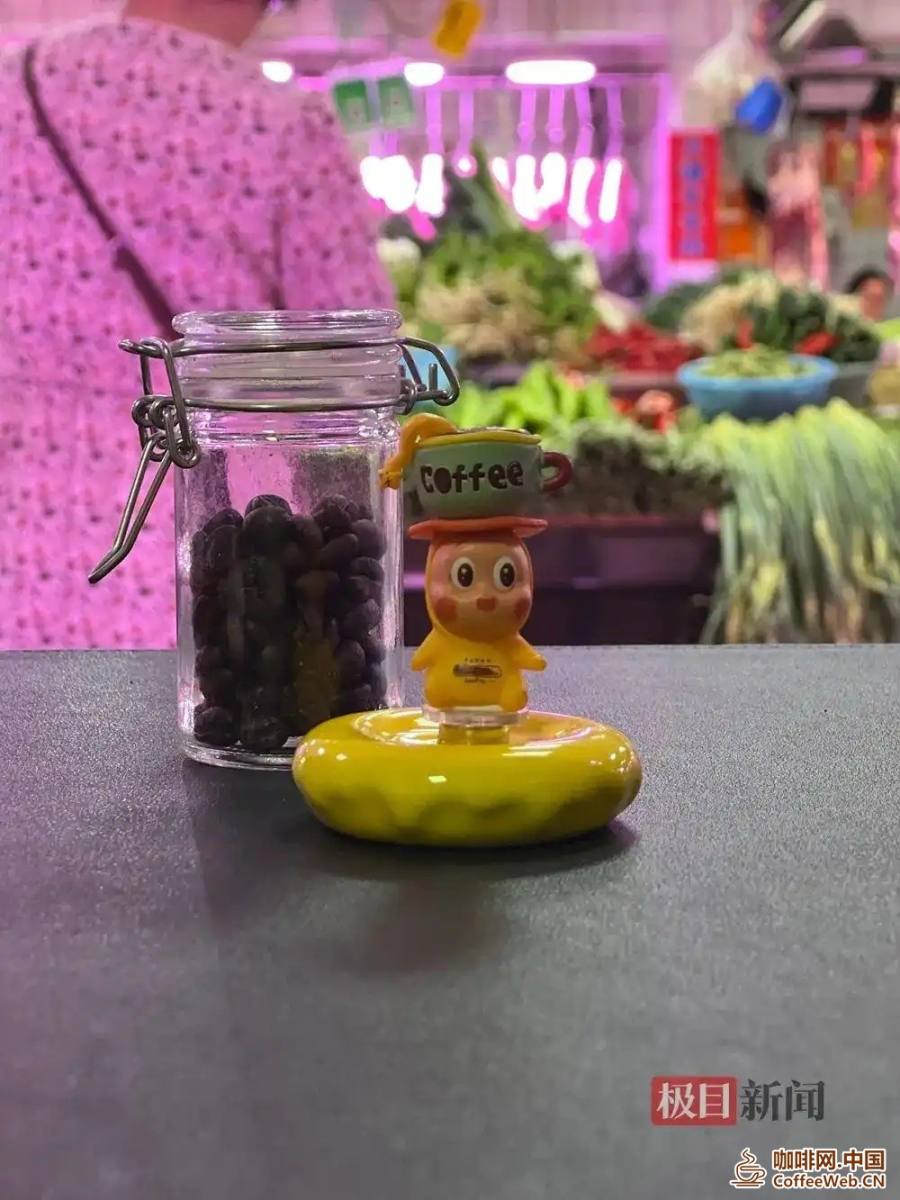
The distinctive name “Liuyi Bean Shop” hides a small personal touch from Yu Yi. His ragdoll cat is named “Liuyi,” a warm companion in his life, and the shop deliberately opened on June 1, Children’s Day. In a corner of the bar sits a little “Star Person” figurine with a coffee cup on its head, quietly revealing the childlike wonder the owner has never lost. As for the words “Bean Shop,” they are the source of the shop’s value-for-money confidence: Yu Yi holds a stake in a friend’s coffee bean factory in Chongqing, cutting out middleman markups and making affordable, high-quality specialty coffee possible. Customers can either drink in the shop or pick a bag of beans they like to grind and brew at home.
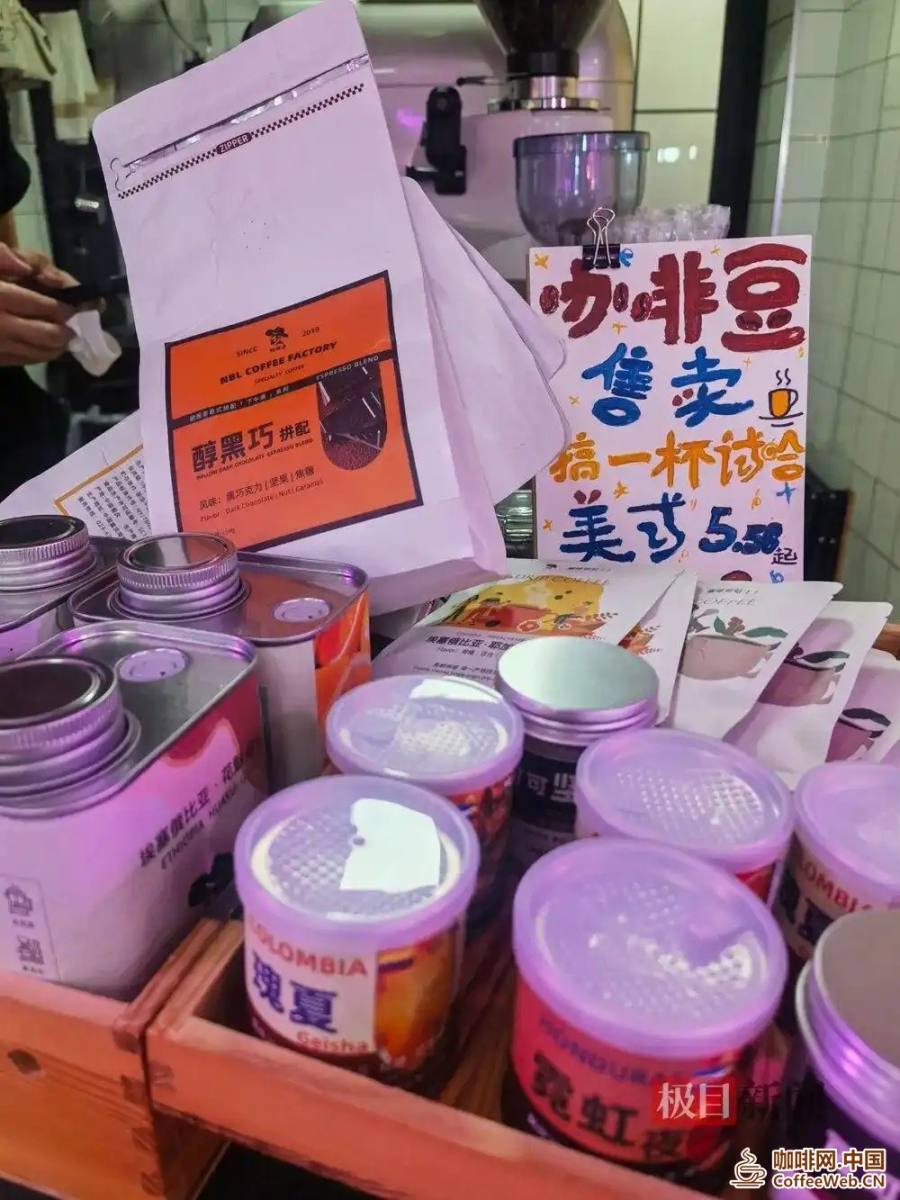
Affordable pricing is also key to the shop’s appeal. Regular coffees cost 10 to 12 yuan a cup, and new customers scanning a QR code for a coupon pay less than 6 yuan; niche specialty coffees that sell for 50 or 60 yuan elsewhere can be tasted here for 20 or 30. Fair prices and consistent quality keep foot traffic climbing, with average daily sales of 70 to 80 cups and over 100 cups on peak days. “I open at 8 a.m. and close up at 4:30 p.m., so I’m a clock-in-on-time kind of worker too,” Yu Yi laughed.
A promotional strategy perfectly fitted to the market atmosphere adds a touch of humor to the coffee stall. Yu Yi set a special perk for the shop: with a coffee receipt, customers can get a free bunch of scallions from the vegetable stall opposite. Yu Yi says he is a “heavy scallion lover,” so he thought of using the most familiar neighborhood way to close the distance. At the end of each month he settles the scallion bill with the stall owner based on the receipts collected, a simple, unspoken understanding between neighbors.
This tiny shop draws all kinds of customers. Before 9 a.m., the regulars are mostly office workers from nearby buildings and stay-at-home moms who have just dropped off their kids. Xiao Hu, who works nearby, comes every day around 8 to take away a signature Blueberry Brownie, hurrying to the office cup in hand; she says it’s the best value-for-money coffee shop in the area.
After 10 a.m., young people drawn by its fame arrive one after another, many crossing districts from places like Guanggu and Caidian. Mr. Gao, a post-90s, saw the coffee stall on Douyin and made a special trip to check it out a couple of days ago; a small citrus coffee had him declaring the quality genuinely good. He also unexpectedly discovered Hanqiao Fresh Market as a “hidden gem.” “It’s clean, the ingredients are complete, and there’s more choice than the little vegetable shop downstairs from my place,” he said. On the day of the Jimu News interview, Mr. Gao came again while on a day off, sipping coffee and picking up some fresh produce: “Life feels pretty good.”
The shop’s fame has broken down age barriers, attracting both trend-following young people and middle-aged and elderly neighbors trying something new. Aunt Jian, who lives in Shilipu, found the shop on her daughter’s recommendation. She said she often walks to Hanqiao Fresh Market for groceries but hadn’t noticed the new coffee stall before. “I do drink coffee normally, but this is my first time having it in a wet market. Today I ordered an americano, quite novel,” Aunt Jian said with a smile.
Many stall owners in the market have also become loyal fans of “Liuyi Bean Shop.” According to Yu Yi, most of these vendors didn’t used to drink coffee; curious after seeing people queuing at the shop, they bought a cup to try and only then became regulars. “Coffee isn’t the petty-bourgeois symbol people thought it was years ago; it fits right into everyday market life,” Yu Yi said.
Boss Tan of the halal yellow-beef shop opposite the coffee stall praises the coffee as down-to-earth and tasty. The crayfish vendor at the market entrance orders a cup on the mini-program every day, and when he’s too busy to leave his stall, Yu Yi takes it over to him. When a reporter asked whether he worried about theft with no one minding the shop, Yu Yi said lightly: “Everyone in the market is good; we keep an eye out for each other, so there’s nothing to worry about.”
For a long time, coffee has been labeled “refined and artsy,” while wet markets are deeply tied to the everyday atmosphere of daily necessities; the two seem to have nothing in common. But at Hanqiao Market, a small coffee stall has broken that stereotype. With no fancy decor and no hype-driven traffic, relying on fair prices, consistent quality, plus the detail-oriented “empowerment” of free scallions, it has let poetic coffee land firmly in a market full of everyday life.
For Yu Yi, opening this little shop is not just a business; he wants to blend two ways of life. Wuhan people are inherently inclusive: they can enjoy an elegant afternoon tea in a high-end shopping district and happily accept an affordable, aromatic coffee beside a market butcher stall. Daily necessities and life’s romance were never an either-or choice.
Source: Jimu News (Reporters: Yin Jie, Liu Yang)
Editor: Chen Xizi, Huang Lin
Reviewed by: Zhang Xin
Intern: Joanna
Jimu News reporters Yin Jie and Liu Yang
Source: Jimu News (Reporter: Yin Jie, Liu Yang)
Editor: Chen Xizi, Huang Lin
Reviewed by: Zhang Xin
Intern: Joanna
Reprint Notice & Disclaimer
- This article has been edited and compiled by China Coffee Network. The information and images therein come from public sources and the copyright belongs to the original author. This reprint is intended solely for information sharing within the coffee industry and does not represent the views of this website; all data and opinions are subject to the original article. Our thanks to the original author for creating and sharing it.
- For matters concerning content licensing, attribution, copyright or otherwise, please contact us promptly and we will verify and cooperate in handling them as soon as possible. We also welcome coffee origins, brands and industry media to exchange ideas and contribute articles.
- Contact China Coffee Network: Tel 400-0000-641 (+86-18288016826) | Email 478203668@qq.com
Related Reading
 A Cup of Coffee Connecting Asia-Pacific
- Asia Pacific Connection in a Cup of Coffee
 ICE agricultural futures main contracts mostly closed higher, while coffee futures rose 1.84%
 The coffee market is experiencing two extremes! Arabica inventory drops to 27 year low, but Robusta plummets to two-week low
 Financial Observation: Why is Generation Z from the United States flocking to coffee and tea shops in China
 ‘All-Ice’ Coffee Goes Viral! Will the Next Hit Be Your Personal Favorite?


 Liaoning ICP Security No. 21122402000217