


At a Glance (China Coffee Network):The shortest distance in the world is not you sitting across from me, but that the moment I think of you, you suddenly appear.
The shortest distance in the world is not you sitting across from me, but that the moment I think of you, you suddenly appear.
Just like when you’re zoning out and want something to chew on – lo and behold, with one glance, there’s Luckin Coffee. So how did the Luckin downstairs from your office end up there?
It’s not fate, it’s AI.
In 2025, more than 70% of Luckin’s new store locations were recommended by AI. In other words, the store you pass every day is most likely the algorithm’s “understanding you” skill firing off the thought that you might want a cup.
Now that’s interesting. A brand that sells coffee has a site-selection algorithm as its secret weapon?
But as a tech media outlet, what concerns us more is: is Luckin really opening in that spot by chance? With that question, I went to the world’s top AI event – WAIC 2026, which opened in Shanghai.
More than 1,100 AI companies took part in this WAIC, with 300 latest AI products making their debut. The venue was full of hardcore technologies – large models, robots, autonomous driving, brain-computer interfaces and more.
Luckin at WAIC
Luckin was not only the “exclusive freshly made beverage partner” of WAIC 2026; it also built an exhibition area showing the whole picture of how it uses AI to understand consumer needs, manage its supply chain and choose store locations.
I walked a full lap with the coffee I picked up on site. Coming out, I had just one feeling: on the surface Luckin sells coffee, but its AI skill tree was actually maxed out long ago.
The first area inside the hall was about ordering coffee.
What was ordering from Luckin like before? You open the app, face a screen full of drinks, get choice paralysis, scroll back and forth for five minutes, and still have no idea what to order.
Luckin says: let AI handle that.
It built an agent called AI Lucky, powered underneath by the DeepSeek and Doubao large models. You don’t need to browse the menu – just talk to it, and anything related to coffee, it can handle.
A staff member on site guided the experience hands-on. I pulled out my phone and gave it a fairly abstract request: “It’s too hot today; order me 10 iced teas for an afternoon meeting.”
After saying that, I waited to see it fail.
Instead, AI Lucky first located the nearest store, then selected products, then added them one by one to the cart – 10 iced teas in 5 different flavors. If I’d done this myself, I’d probably have gotten annoyed by the third cup. It was more attentive than I was.
The more thoughtful part came next. When I said “place the order,” it jumped straight to the payment screen and automatically found the best discount combination for me. Order 10 cups and it works out the cheapest way to bundle them – this is no longer an AI assistant, it’s an unofficial accountant who saves you money without asking for credit.
At the pop-up store on site, other visitors’ experiences were just as interesting. One customer told AI Lucky, “I’m trying to lose weight lately; recommend me an americano,” and it directly suggested the standard americano with the lowest calories. It didn’t push some “low-cal light series” and then hand you an oat latte that’s actually not low in calories; it genuinely picked the cleanest cup for you.
It isn’t “analyzing” you. It truly understands you – you state a vague need, and it thinks of the layer you hadn’t thought of yourself. And this isn’t a demo put on for show at the booth. Open the Luckin app on your phone and it’s right there in the lower-right corner; WeChat and Alipay can launch it too.
Beyond helping users, inside Luckin they also use AI to produce large volumes of promotional materials – posters, key visuals, communication assets – so that a flood of ideas can be put in place quickly and stay closer to consumers.
But that is only the AI visible on the surface.
Go further in and one area is devoted to a deeper question: why does Luckin keep producing hit products?
According to the data gathered – the Coconut Latte has sold 2.1 billion cups, the Orange C Americano 550 million cups, and so far 22 single products have each surpassed 100 million in sales. Anyone in consumer goods knows: one hit is luck, two is skill, but 22 in a row – that’s not being blessed by the gacha gods, that’s turning card draws into a science.
The hall laid the new-product screening logic right out in the open: user feedback, market analysis, launch timing and flavor trends, cross-validated across four dimensions to precisely filter out the cup with the greatest hit potential. And launch is not the finish line – data is tracked continuously and adjustments and iterations happen at any time.
When you think “this cup tastes good,” behind it is a whole system understanding trends and understanding you. Before you even realize what you want to drink, the right cup is already ready.
Further in lies the supply chain exhibition area.
This was the part I found most striking, because it answered a question I’d never seriously thought about: why does the Coconut Latte I buy at every Luckin taste equally good? With 35,000 stores across the country, are their coffee beans simply copy-pasted?
The answer: AI keeps every link of this chain under control.
First, bean selection. Luckin sources its beans from quality producing regions worldwide, including Yunnan in China, Brazil and Ethiopia; which region, which lot and when to harvest are all driven by digital-intelligence technology behind the scenes. It isn’t a purchasing manager flying over and deciding on a whim – it’s AI making data-driven comparisons and decisions.
Then warehousing and distribution. The staff member explained this part clearly – AI handles warehouse network planning, product-warehouse layout and route optimization, ensuring that every leg from bean to store arrives fresh, on time and reliably.
At the store end it goes even further. Ordering used to be a store manager’s experience-based guess – tomorrow’s the weekend, stock a bit more; rainy day, order a bit less. Now AI forecasting drives intelligent ordering across the whole chain, and experience has been distilled into a complete digital capability.
You’ve surely seen a story going around lately – a couple in Tai’an, Shandong, ran a meat-filled pastry shop that was about to fail; then a Luckin opened next door, and instead of taking their customers away, it brought a large flow of young people, bringing the pastry shop back to life. A 4-second short video got over 150,000 likes, and Luckin’s official account even went to film a visit video.
It’s a heartwarming story. But has anyone wondered why Luckin opened precisely at that spot?
The “Ten-Thousand-Store Smart Brain” area in the hall answers this question. The staff member explained that among new stores from last year to now, more than 70% of locations were recommended by AI. It doesn’t just pick any place with heavy foot traffic – AI understands a community’s needs and how people move through it, so Luckin always appears exactly where it’s most convenient for you.
Once the site is chosen, building the store also runs on a standardized system. Behind the 4 store styles are a unified materials library, computer-generated drawings, standardized construction and AI-based automatic acceptance, with an average of 18 days from approval to opening. More than 9,000 stores delivered in a year – efficiency maxed out.
What’s the deeper support underneath? More than 700,000 IoT devices connected to the network, with a 99% online rate. It is precisely these devices that feed AI the freshest, most accurate data, ensuring consistent quality in every cup across 35,000 stores.
Whether you’re in Shanghai or Tai’an, in Beijing or a county town, the cup you get is the same.
One more thing worth mentioning at the end of the tour – a wall in the hall, Luckin’s first public reveal of its “Smart Extraction Ecosystem.”
Alibaba Cloud, Baidu AI Cloud, Feishu, Huawei Cloud, Volcano Engine, Tencent Cloud, Iluvatar CoreX, Amazon Web Services. The deluxe full lineup of China’s leading cloud providers was almost all present.
This isn’t the kind of partnership where “a row of logos is lined up at a press conference and everyone goes home.” They’re genuinely working together – letting AI technology blend into consumers’ daily lives across more scenarios.
When most companies go digital, the mindset is “I want to use AI.” Luckin has reached the point where it has become “I package the model I’ve proven out so the whole consumer industry can use it.”
Another Luckin Hidden in Coffee
After touring Luckin’s pavilion at WAIC 2026, I suddenly felt I barely recognized the Luckin I drink from every day.
I’m a long-time Luckin user, basically one cup a day, at least several hundred cups by now. But before today, my entire understanding of Luckin was: open the app, order a cup, pay, wait three minutes, pick it up. That routine had become so smooth I never once wondered what lay behind it.
Only after today’s tour did I realize that “smoothness” is itself proof of technical capability.
You don’t feel AI selecting the beans, yet every sip you take is consistent. You don’t feel AI choosing the location, yet Luckin is always where it’s most convenient for you. You don’t feel AI picking flavors for you, yet you increasingly feel that “Luckin really gets me.”
The most impressive technology never makes you think “wow, amazing”; it makes you not feel its existence at all – yet without it, you’d sense something was off.
Luckin’s AI is exactly that kind. You can’t say where it is, but it’s in every cup.
So back to where we started – is Luckin a tech giant held back by selling coffee?
After this lap, I’d say it hasn’t been held back at all.
Selling coffee is precisely its best way of proving it. Others use PowerPoint slides to talk about what AI can do; it uses 4.1 billion cups of coffee to tell you AI is already doing it.
It’s not fate, it’s AI.
Luckin on WAIC
Luckin said: AI will handle this matter.
After speaking, I waited to see if it went wrong.
But this is only the visible AI on the surface.
Another Luckin Hidden in Coffee
Reprint Notice & Disclaimer
- This article has been edited and compiled by China Coffee Network. The information and images therein come from public sources and the copyright belongs to the original author. This reprint is intended solely for information sharing within the coffee industry and does not represent the views of this website; all data and opinions are subject to the original article. Our thanks to the original author for creating and sharing it.
- For matters concerning content licensing, attribution, copyright or otherwise, please contact us promptly and we will verify and cooperate in handling them as soon as possible. We also welcome coffee origins, brands and industry media to exchange ideas and contribute articles.
- Contact China Coffee Network: Tel 400-0000-641 (+86-18288016826) | Email 478203668@qq.com
Related Reading
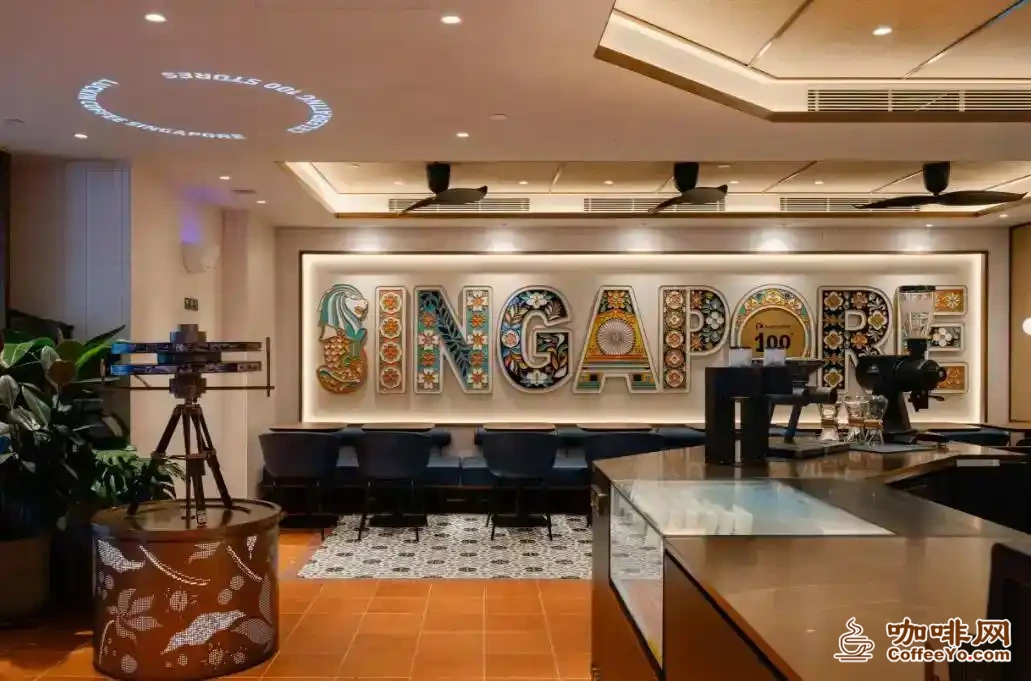 Asia Pacific Connection in a Cup of Coffee
- A Cup of Coffee Connecting Asia-Pacific
 ICE agricultural futures main contracts mostly closed higher, while coffee futures rose 1.84%
 The coffee market is experiencing two extremes! Arabica inventory drops to 27 year low, but Robusta plummets to two-week low
 Financial Observation: Why is Generation Z from the United States flocking to coffee and tea shops in China
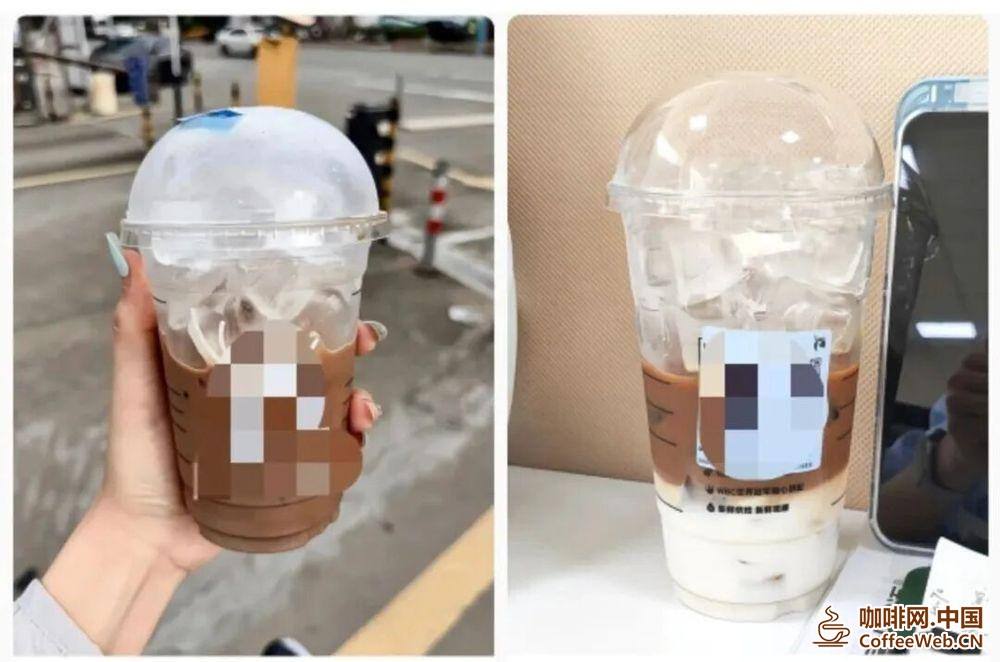 ‘All-Ice’ Coffee Goes Viral! Will the Next Hit Be Your Personal Favorite?


 Liaoning ICP Security No. 21122402000217