
Brief (coffeeyo.com): Recently, at a UNCTAD event in Geneva, an article by People’s Daily Online titled “Serving the People in a Cup of Coffee” was promoted and distributed on site, drawing international attention. Kiyoshi Adachi, head of UNCTAD’s Intellectual Property Unit, posed for a photo with the article and Menglian coffee from Yunnan — marking another appearance of Menglian coffee at the United Nations and telling the story of border-area development for the people.
Recently, at the United Nations Conference on Trade and Development (UNCTAD) event in Geneva, an article written by People’s Daily Online titled “Serving the People in a Cup of Coffee” was promoted; its content and a printed version of the People’s Daily Online web page were distributed on site to attendees for reading, drawing international attention. Kiyoshi Adachi, head of UNCTAD’s Intellectual Property Unit and currently an official at the Bangladesh office, specially posed for a photo with the People’s Daily Online article and Menglian coffee from Yunnan.

These tiny coffee beans have long been bound to the United Nations. In May 2021, then China’s Permanent Representative to the UN, Ambassador Zhang Jun, presented coffee beans grown in the Menglian Dai, Lahu and Wa Autonomous County as a special gift to representatives of Security Council member states. These beans, carefully cultivated by coffee farmers of various ethnic groups led by poverty-alleviation pioneer Ye Ping, symbolized the fruitful achievements of China’s poverty alleviation and were a vivid microcosm of rural revitalization.
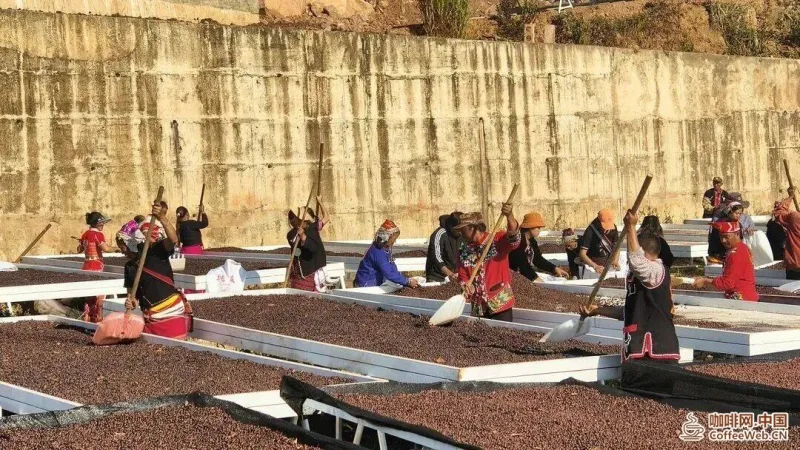
Today, as the “first county of specialty coffee in China,” Menglian relies on its unique geographical and climatic conditions to deepen its distinctive coffee industry, and through technical support and industrial cultivation turns deep-mountain coffee beans into “golden beans” that increase local people’s incomes. The transformation of its coffee plantations across the hills is the most vivid real-life portrait of “serving the people” — industrial development benefits thousands of ordinary people and tangibly improves the livelihoods of border-area residents.
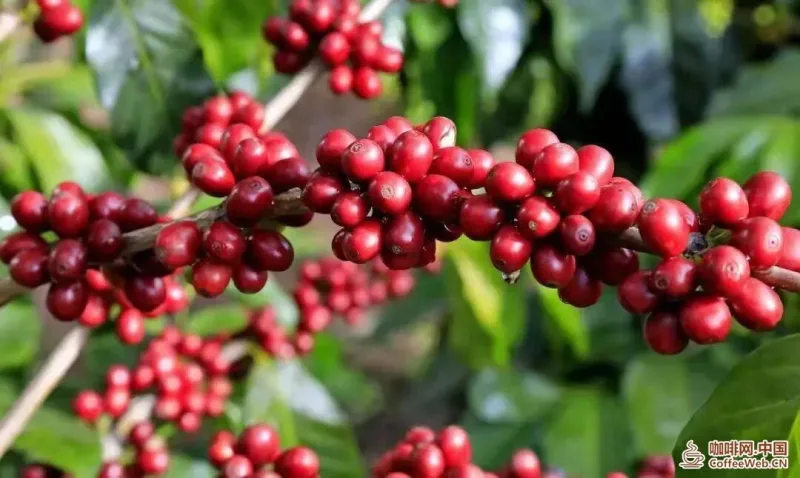
From a diplomatic gift at the Security Council to sharing the frame with People’s Daily Online’s “serving the people” article at the UNCTAD meeting in Geneva, Menglian coffee both continues the warm friendship from China’s border and demonstrates the sustained dissemination and deep expression of China’s grassroots development story on the international stage.
Original article:
Serving the People in a Cup of Coffee
Morning light falls into a coffee shop in Menglian county town, Yunnan. Wa girl Zhao Hua stands behind the bar, carefully making a pour-over coffee.
Zhao Hua’s parents were among the earliest local coffee growers. “My dad grew coffee all his life but was reluctant to drink it himself. He didn’t know where these bitter beans ended up — only that someone came to buy them, and they could be exchanged for money.”
Zhao Hua’s coffee shop is now one of the most popular on Menglian’s specialty-coffee street. The short videos she shoots have let more and more people learn about this border town and its coffee, and the beans are exported through suppliers to overseas markets such as Japan and Australia. “It’s different now. Our generation is the one that has truly tasted the sweetness of coffee,” she says with a smile.
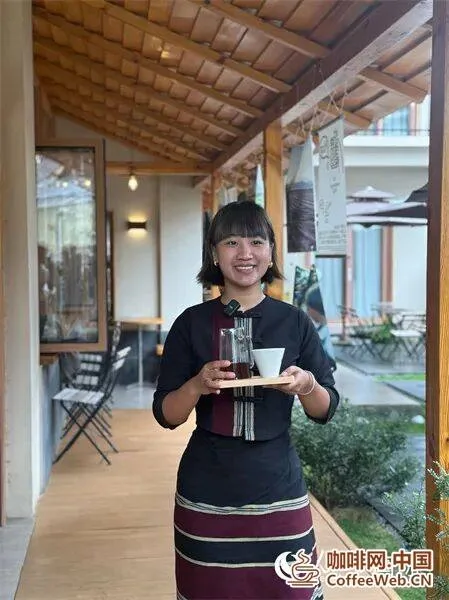
Behind the change from “bitter coffee beans” to “a sweet cup of coffee” lies the changed fate of a border town.
Menglian, meaning “a good place that was found” in the Dai language, is a small border town in southwest China whose bond with coffee began in 1958, with scaled promotion starting in the 1980s. Li Meiying, director of the Menglian County Tea and Specialty Biologic Industry Development Center, still remembers her childhood walks to school, when officials and villagers worked the fields together, hacking out long terraces with hoes and planting coffee seedlings one by one. Today, looking out, the hills are covered with coffee plantations.
Zhao Hua’s father was one of the coffee farmers who, back then, opened terraces alongside the officials. Decades later, his daughter returned to Menglian to start a business, and the ones who lent a hand were the successors of those officials — Li Meiying.
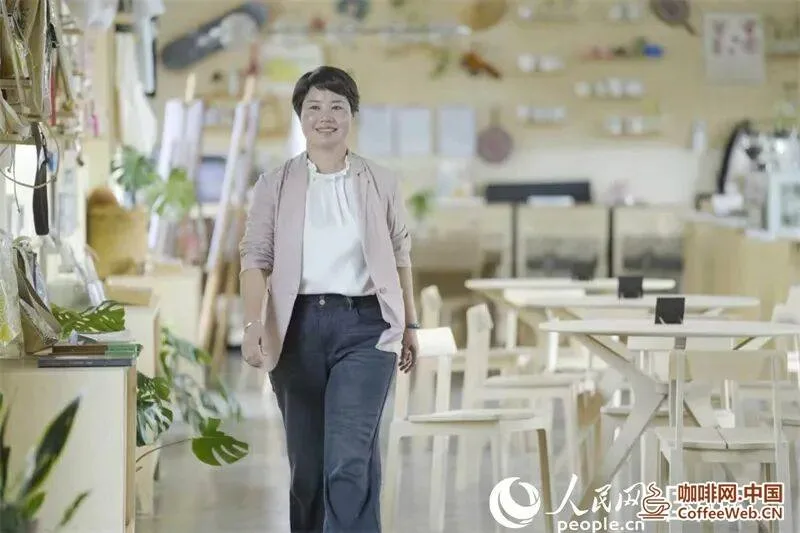
“As a child I watched the older generation of officials lead everyone to plant coffee in the fields; now I lead the hometown’s coffee out into the world — this is a kind of inheritance,” says Li Meiying. From the ridge to the exhibition, from leading villagers to plant coffee to helping young people sell it, the two generations do different work with their hands but carry the same thing in their hearts.
When Menglian’s specialty-coffee street first opened in April 2023, the farmers and shop owners were unsure. Li Meiying and her colleagues would go help mind the stores and receive guests after work. Business was still slow then, yet Zhao Hua and her sister handed the shop key to Li Meiying, saying, “I trust you with the key.” To this day, Li Meiying still carries that key.
Later, Zhao Hua and her sister opened a reservoir cafe in the mountains; business had just started, and Li Meiying and her colleagues often went to lend a hand. Zhao Hua recalls: “Those few months, government leaders came every day to coordinate work — from roads and water-power lines down to every brick and tile, government staff personally guided us to build it from scratch.”
A key entrusted the farmers’ trust in the officials. That trust grew from the evenings after work spent helping mind the store, and from the promise “whatever you need, I’ll find a way” being honored again and again.
Later, when the county organized trips to exhibitions elsewhere, Li Meiying thought of Zhao Hua first. “These young people are great at telling the story of local coffee. For Menglian coffee to go global, it needs the young people’s good ideas and fresh creativity.” To attract more young people back home, Menglian built a “digital nomad community.”
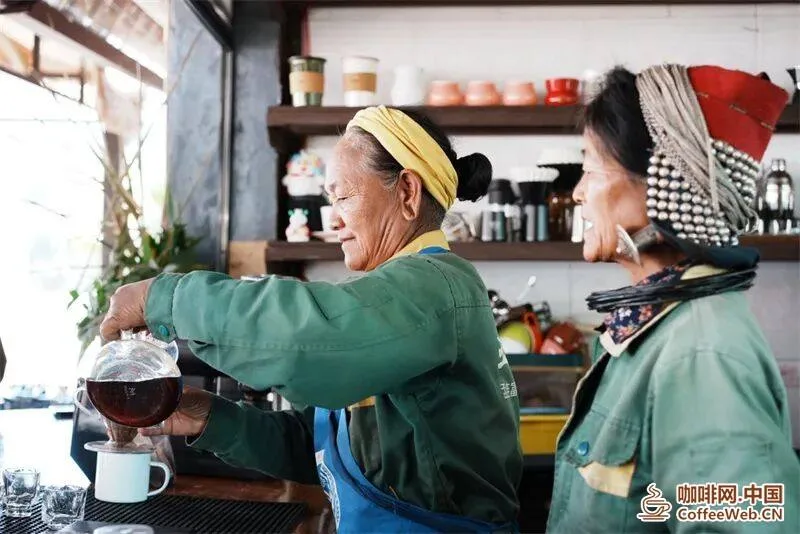
The development of Menglian’s coffee industry has also driven employment for Wa women. More and more Wa women have fallen for the taste of coffee and increased their incomes through it. (Photo provided by Zhao Hua.)
Today, Zhao Hua’s coffee business is growing steadily. Her coffee farm has more than 20 employees; many Wa aunts who had grown coffee for decades had rarely left home. Last year, Zhao Hua took them to Shangri-La, Lijiang and Dali, and they were overjoyed.
If Zhao Hua moved from the growing end to the market, then Menglian native Guan Yong moved from the market back to the growing end. Starting from the market, he tells the land what to plant and what flavors to grow. After first tasting freshly ground specialty coffee while working in Kunming, he returned home in 2017 and took a reverse entrepreneurial path of “first open a store, then build a roastery, then do primary processing, and finally lay out planting.”
“From opening my first cafe, I kept wondering how coffee flavors are created, and later studied primary processing and roasting, and finally planting.”
When Guan Yong was looking for a processing site, he found an abandoned village primary school in the mountains. As it was renovated, the basketball court became a drying yard, classrooms became processing workshops, and the school buildings became a resort. Throughout, Li Meiying and her colleagues helped greatly — bringing water, power and roads, watching the mountain paths and network cables get built.
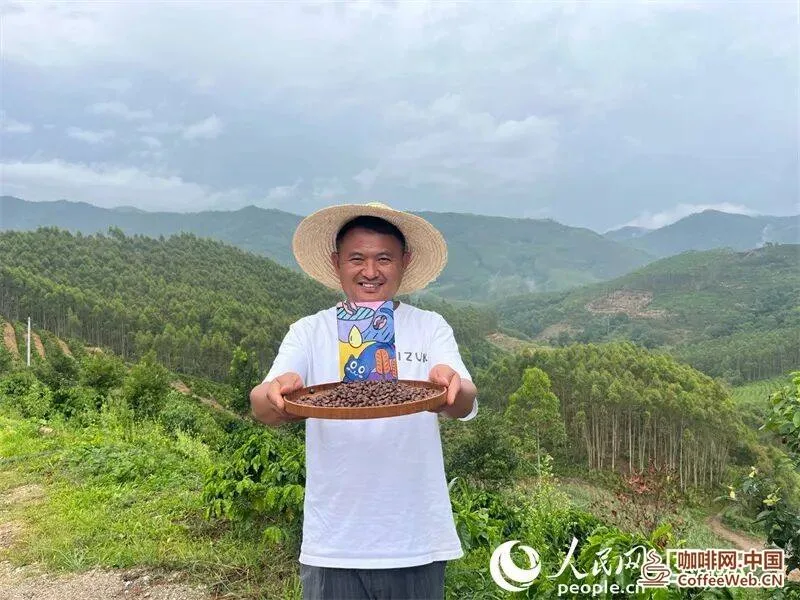
From infrastructure to technical training, from project funding to market matchmaking, the services and help provided by the local government ran through the entire process of Guan Yong’s entrepreneurship. Guan Yong said: “The government gave us a hand when we were developing; when we develop well in the future we can give back to our hometown.” His coffee manor paid 6.5 million yuan for fresh cherries in the 2022–2023 season, boosting incomes for 86 households and 286 people, with an average household increase of 75,600 yuan.
His wife handles livestreaming, his sister handles manor operations — the family each does their part. From one person’s passion, to a family’s business, to the livelihood of a region’s people — this manor converted from an abandoned school connects personal dreams with rural revitalization.
From the older generation of officials leading the masses to open terraces and plant coffee, to Li Meiying’s generation of officials running exhibitions, doing promotion and building platforms, to the younger generation of Guan Yong and Zhao Hua returning home to start businesses and build brands — this is a relay across time.
“Doing every small thing solidly and well is the best interpretation,” says Li Meiying of the weight of the phrase “serving the people.” No grand words — just the electric wires pulled in during renovations, the evenings after work spent helping mind the store, the journeys hither and yon promoting coffee, ordinary specific people putting real effort into concrete things. These efforts gathered together changed this small coffee town.
Source: People’s Daily Online (people.cn), via the “Menglian Release” WeChat official account. Editor: Chen Sitong; Secondary review: Chen Wu Aoqi; Final review: Ma Yongrui.
Reprint Note & Disclaimer
- This article is reprinted from Chinese media for information and cultural exchange. The views expressed are those of the original author and do not necessarily reflect the position of coffeeyo.com.
- All trademarks, brand names and logos mentioned belong to their respective owners.
- For cooperation, reprint or correction requests, please contact coffeeyo.com.
Reprint Notice & Disclaimer
- This article has been edited and compiled by China Coffee Network. The information and images therein come from public sources and the copyright belongs to the original author. This reprint is intended solely for information sharing within the coffee industry and does not represent the views of this website; all data and opinions are subject to the original article. Our thanks to the original author for creating and sharing it.
- For matters concerning content licensing, attribution, copyright or otherwise, please contact us promptly and we will verify and cooperate in handling them as soon as possible. We also welcome coffee origins, brands and industry media to exchange ideas and contribute articles.
- Contact China Coffee Network: Tel 400-0000-641 (+86-18288016826) | Email 405854472@qq.com | Address: Jinghong, Xishuangbanna, Yunnan Province / Tieling, Liaoning Province
Related Reading
 How ‘Sea-Flavored’ Coffee Blooms Across Dongtou
- Health Guide: How to Enjoy Your Coffee the Healthy Way
 Study: Regular Coffee and Tea May Lower Dementia Risk, but More Is Not Better
 Frontline Story: A ‘Mobile City Coffee Bar’ Arrives by the Grand Canal
 Yantai’s Wind Tastes of Coffee
 In Zhenyuan, a Cup of Coffee and a Waiting Train







 Liaoning ICP Security No. 21122402000217