
Brief (coffeeyo.com): Eight kilometers out of Chengwu County along G518, a 3,000-year-old village hides a hit coffee shop—Gaoding Coffee—run by a post-00s returnee, blending specialty coffee with local heritage and rural-revitalization policy.
In Chengwu County, Heze, driving 8 kilometers out of town along G518 National Highway, an ancient village with more than 3,000 years of history—Gaoding Ancient Village—comes into view. An old bridge lies quietly at the village entrance, and earthen old houses with southwestern-Shandong character are scattered in good order. Yet stepping into the alleys, what hits you is not only the historical everyday warmth, but also waves of rich coffee aroma.
This small shop named “Gaoding Coffee” sells more than 300 drinks a day on average, with holiday peaks above 400 orders. Its manager, Li Ruoshi—a post-00s youth who returned home to start a business—has used a single cup of coffee to break the stereotype that “coffee is an urban-exclusive trend,” and has blazed a sustainable path of coexistence between a millennial-old village and new county-consumption formats.
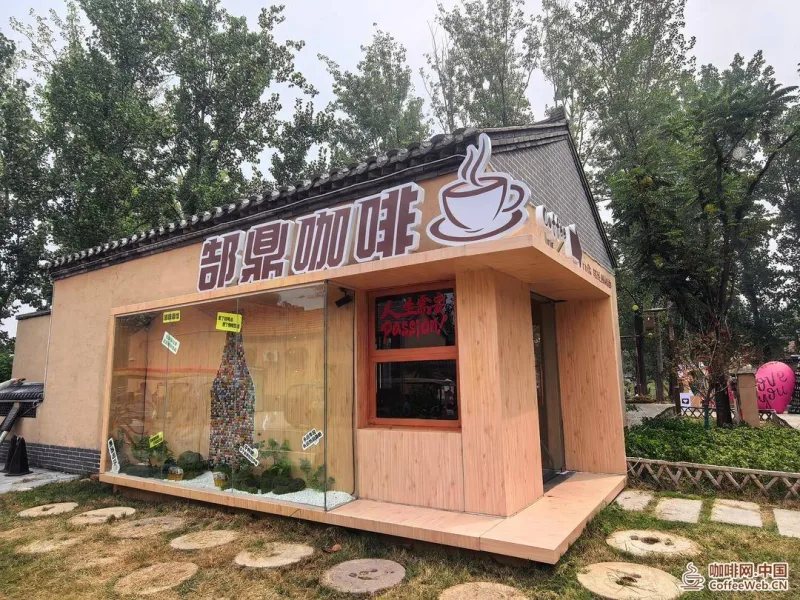
The “ancient-village confidence” behind a cup of coffee
Stepping into the Gaoding coffee house, the old house’s earthen walls and wooden beams are preserved as they were, and the minimalist coffee bar plays off the antique furnishings. It does not copy the business style of urban cafes, but recreates a unique “ancient-modern fusion” scene.
“Many people say no one in the countryside drinks coffee, but I think the countryside lacks not potential but new, youth-friendly formats that fit,” Li Ruoshi told the reporter. She had long worked in the coffee industry outside, and was moved by Gaoding Ancient Village’s deep historical heritage and solid entrepreneurship-support policies, resolutely choosing to return home.
That the “village cafe” could take root, policy was the reassurance. Relying on the “Rural Revitalization Partner” mechanism launched by the Gaoding Rural Revitalization Demonstration Zone, Li Ruoshi enjoyed tangible benefits such as shop-rent reductions. Rent 7,000 yuan cheaper a year is, for a small shop in its startup phase, the first cornerstone prying open a dream.
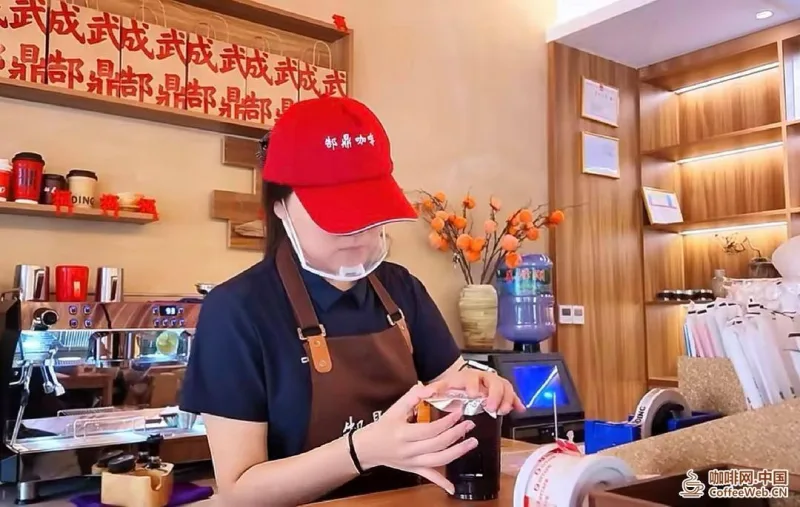
“When we first opened, the village’s elderly uncles and aunts said this ‘foreign gadget tastes bitter as anything’—would anyone buy it?” Li Ruoshi said with a laugh. “Now quite a few uncles and aunts have become regulars, coming to buy a latte when idle and sitting in the yard in the sun.” Today this small shop not only attracts young people from the county seat and surrounding towns to make a special trip, but has also become a resting spot for fellow villagers.
Not just a transaction: from “viral traffic” to “lasting stay”
Many new rural formats start out lively but struggle to sustain once the heat fades. Gaoding Coffee faces exactly this problem. Li Ruoshi admits the opening-period traffic peak was no surprise; the real test is whether, after the heat passes, there is something to keep people. On this point, she and the overall plan of the Gaoding Rural Revitalization Demonstration Zone happen to be on the same rhythm. Gaoding Coffee is not only a new consumption scenario, but also a “traffic entrance” that revitalizes the village’s idle resources and links the whole industry chain.
Behind Gaoding Ancient Village lies the Gaoding Rural Revitalization Demonstration Zone, built by Chengwu County to high standards. Breaking administrative-village boundaries, the zone strings ancient dwellings, intangible-heritage workshops and modern agricultural parks across 22 square kilometers into a chain. Li Ruoshi’s coffee shop is a key link on this chain.
“The zone’s existing festival activities bring customers to the cafe; the cafe’s popularity also brings crowds to the zone,” Li Ruoshi said—a kind of “mutual achievement.” Visitors drawn by the coffee aroma tour the ancient village, see the intangible-heritage black pottery and paper-cutting, and taste farmhouse meals, driving sales of surrounding farmhouses and agricultural specialties. According to statistics, the Gaoding zone has received more than 300,000 visitor-trips this year, and the collective economic income of all 10 villages is expected to exceed 200,000 yuan.
Gaoding Coffee has not fallen into “check-in dependence”; its core monetization logic is not simply selling coffee, but deeply integrating with local industry. As industry analysis points out, the vitality of village cafes lies in complementing and coexisting with local resources, rather than mechanically copying the urban model. Here, coffee is the medium; behind it connect intangible-heritage experiences, homestay formats and agricultural-product sales, forming a healthy closed loop of “culture-tourism + formats + livelihoods.”
The symbiotic logic of local IP
The enduring heat of Gaoding Coffee comes from its deep binding to local IP. Unlike those viral shops relying on “filter premiums,” everywhere here bears the “Gaoding imprint.” The shop displays “Gaoding” cultural products and old objects, letting customers touch the cultural vein of a Western Zhou ancient state while savoring coffee.
This “village cafe + local culture” model effectively avoids the trap of product homogenization. Observations note that shallow development models leave over 60% of village cafes struggling, rooted in emphasizing scenery-building over product and lacking a local core. Gaoding Coffee does the opposite, treating 3,000 years of history as an irreplicable brand moat.
“I used to feel rural revitalization was far from me; only doing it did I realize everyone can contribute,” Li Ruoshi reflected. Now she is planning to link up with young entrepreneurs to expand supporting formats such as desserts and cultural products, upgrading “single-spot tours” into “zone tours.”
In Gaoding Ancient Village, this cup of coffee has long transcended the category of a beverage. It is both a window displaying rural character and a fulcrum attracting youth to return and achieving multi-party win-win. This is not a fleeting viral business, but a new rural-consumption practice backed by historical depth, supported by policy mechanisms and closed by industrial logic.
Source: Popular News, reporter Zhao Niandong.
Reprint Note & Disclaimer
- This article is reprinted from Chinese media for information and cultural exchange. The views expressed are those of the original author and do not necessarily reflect the position of coffeeyo.com.
- All trademarks, brand names and logos mentioned belong to their respective owners.
- For cooperation, reprint or correction requests, please contact coffeeyo.com.
Reprint Notice & Disclaimer
- This article has been edited and compiled by China Coffee Network. The information and images therein come from public sources and the copyright belongs to the original author. This reprint is intended solely for information sharing within the coffee industry and does not represent the views of this website; all data and opinions are subject to the original article. Our thanks to the original author for creating and sharing it.
- For matters concerning content licensing, attribution, copyright or otherwise, please contact us promptly and we will verify and cooperate in handling them as soon as possible. We also welcome coffee origins, brands and industry media to exchange ideas and contribute articles.
- Contact China Coffee Network: Tel 400-0000-641 (+86-18288016826) | Email 405854472@qq.com | Address: Jinghong, Xishuangbanna, Yunnan Province / Tieling, Liaoning Province
Related Reading
 How ‘Sea-Flavored’ Coffee Blooms Across Dongtou
- Health Guide: How to Enjoy Your Coffee the Healthy Way
 Study: Regular Coffee and Tea May Lower Dementia Risk, but More Is Not Better
 Frontline Story: A ‘Mobile City Coffee Bar’ Arrives by the Grand Canal
 Yantai’s Wind Tastes of Coffee
 In Zhenyuan, a Cup of Coffee and a Waiting Train






 Liaoning ICP Security No. 21122402000217