
Brief (coffeeyo.com): In summer 2026, a public debate over “sugar reduction” pushed the household-name company Want Want onto social media’s front lines, as consumers called for more low- and sugar-free products. Yet behind the trending topic, a health-oriented transformation led by Want Want Group general manager and Bond Coffee founder Cai Wangting has been advancing inside the company for years.
In the summer of 2026, a public debate over “sugar reduction” pushed the old household-name company Want Want onto the front lines of social media, with consumers openly calling for more low- and sugar-free products. Yet behind the trending topic, a health-oriented transformation led by Want Want Group general manager and Bond Coffee founder Cai Wangting has been advancing inside the company for years.
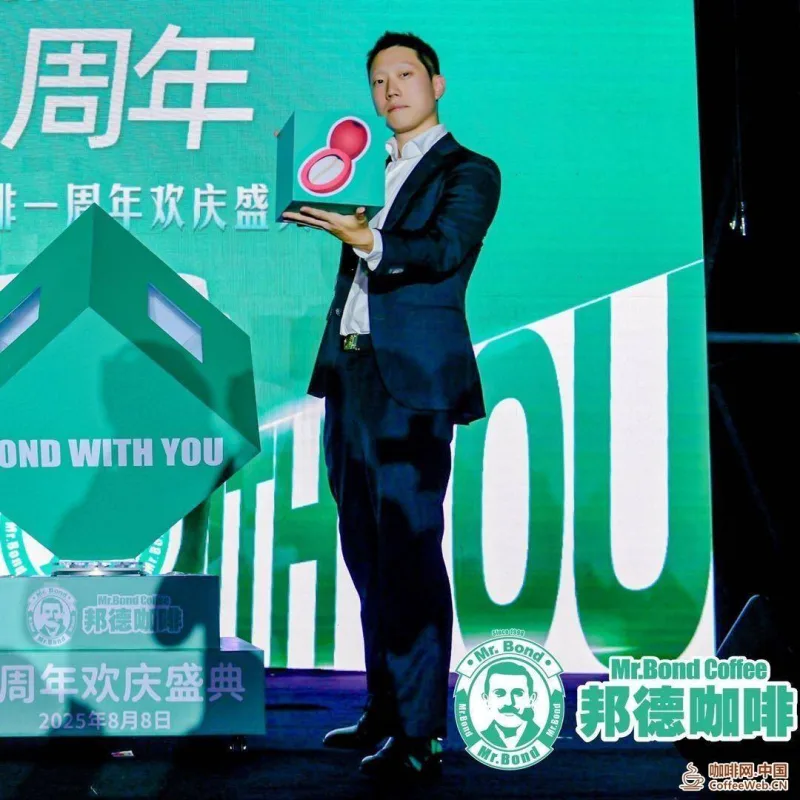
As a post-90s second-generation entrepreneur, Cai Wangting is trying, beyond Want Want’s traditional snacks and sweet drinks, to find a second growth curve aimed at young consumers for this old fast-moving-consumer-goods giant.
The “sugar-reduction” hard battle: mature hits versus the sugar-free trend
China’s sugar-free beverage track has kept expanding in recent years. iiMedia Research data shows the market grew from 2.26 billion yuan in 2015 to 57.05 billion yuan in 2024, and is projected to top 80 billion yuan by 2028. Over 70% of young consumers now take the ingredient list as a core decision factor when buying food and drinks. Yet for Want Want, with classic sweet items such as Want Want Milk and O-Pao fruit milk, a health-oriented transformation is no easy task.
Directly changing a mature hit’s formula easily triggers backlash from old users; yet relying entirely on new brands means extremely high R&D investment and channel-development costs. In response, Cai Wangting adopted a dual-track transitional strategy: on one hand, since 2022 he has built a matrix of sugar-free and functional beverages, launching Bond sugar-free black coffee, Huidong electrolyte water and Mingxiang sugar-free tea to enter the sugar-free drinks segment; on the other, he has made lower-sugar revisions of traditional core hits, launching lower-sugar O-Pao fruit milk and lower-sugar iced black tea, reducing sugar content while preserving the brand’s flavor memory as much as possible.
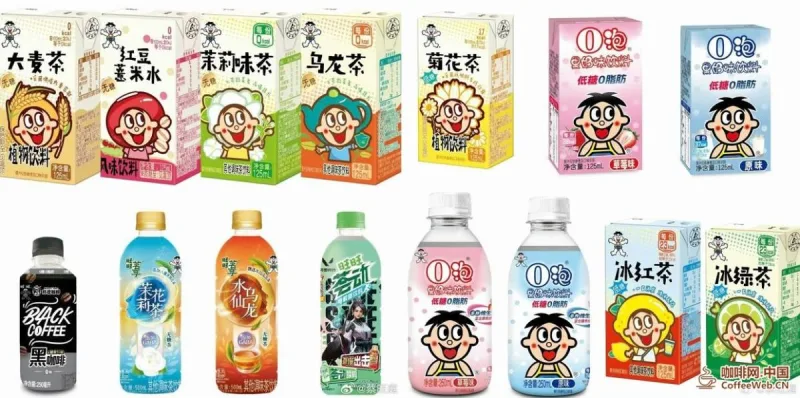
Financial data reflects the phased results of this strategy: in fiscal 2025 Want Want’s beverage business grew 40% year on year; and in the first quarter of fiscal 2026, that business continued with a 6.6% year-on-year increase on a high base.
A differentiated breakthrough: commercializing the “waste” coffee peel
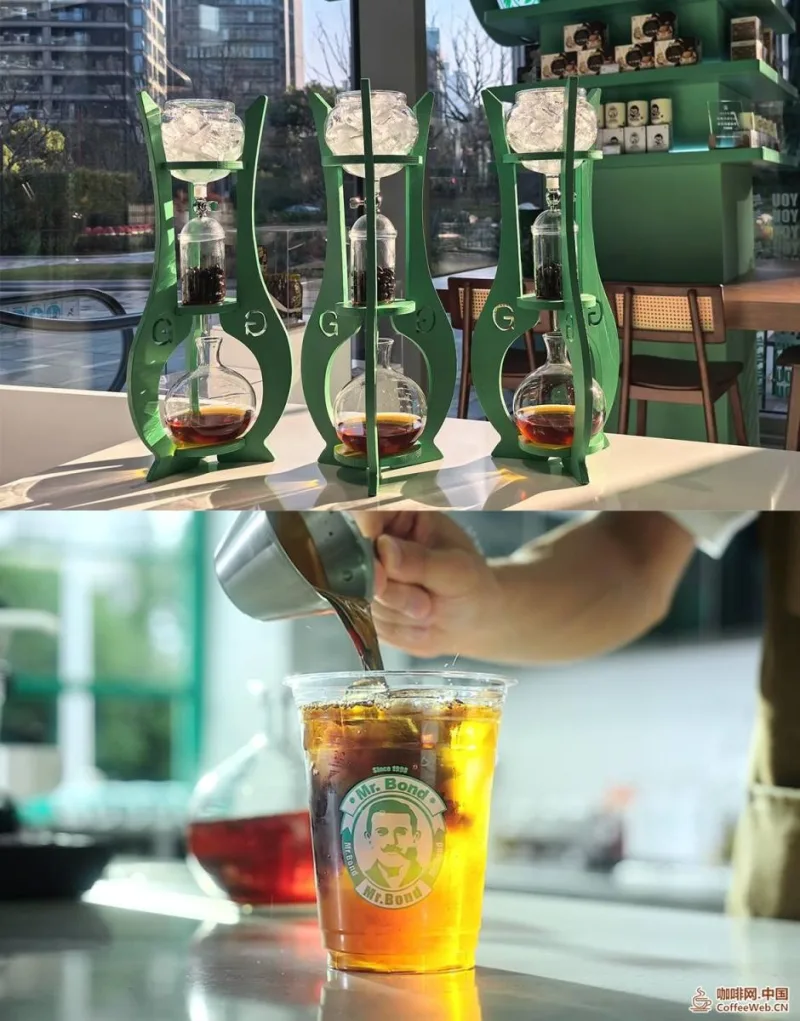
If lower-sugar reform follows the industry’s mass trend, then Cai Wangting’s commercial development of coffee peel is an attempt to build a differentiated moat in the intensely contested beverage track. In the traditional coffee industry chain, the peel wrapping the coffee bean is usually discarded directly as a processing by-product. But in nutritional terms, coffee peel is rich in chlorogenic acid and antioxidants, and its caffeine content is far lower than that of the bean. Based on this property, Cai Wangting’s team combined Yunnan coffee peel with tea-brewing extraction craft, pioneering China’s freshly brewed coffee-peel coffee — using peel extract as the tea base and blending it with freshly brewed coffee, creating a low-burden drink that combines fruity aroma and tea sensation.
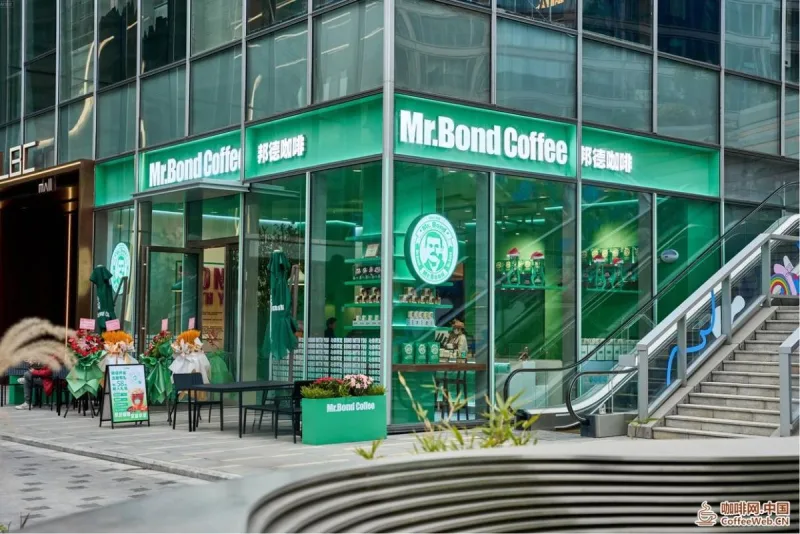
Riding on coffee-peel coffee as a feature distinct from traditional coffee brands, Bond Cafe’s first store opened in Shanghai in August 2024, then expanded to landmarks such as Shanghai World Financial Center and Legoland; public data show its offline stores’ compound annual growth rate reached 273% and repurchase rate 47%. By August 2026, Bond Coffee began gradually entering central-state-enterprise channels such as petroleum, and nearly 100 stores have been secured so far.
From ready-to-drink packaged tea drinks to offline freshly made coffee, Want Want’s exploration shows the typical logic of a traditional FMCG brand’s transformation: rather than blindly applying a one-size-fits-all cut to traditional hits, it maintains the old users’ base while seizing new crowds’ mindshare through new independent brands and innovative categories. Still, this health- and youth-oriented transformation faces no small market challenges. For Cai Wangting, who leads this business, how to turn sugar-free and low-sugar drinks from new-product trials into steadily growing category pillars, and push coffee peel from a niche novelty toward mainstream everyday consumption, will be the tough questions he must answer next.
Source: coffeeyo.com.
Reprint Note & Disclaimer
- This article is reprinted from Chinese media for information and cultural exchange. The views expressed are those of the original author and do not necessarily reflect the position of coffeeyo.com.
- All trademarks, brand names and logos mentioned belong to their respective owners.
- For cooperation, reprint or correction requests, please contact coffeeyo.com.
Reprint Notice & Disclaimer
- This article has been edited and compiled by China Coffee Network. The information and images therein come from public sources and the copyright belongs to the original author. This reprint is intended solely for information sharing within the coffee industry and does not represent the views of this website; all data and opinions are subject to the original article. Our thanks to the original author for creating and sharing it.
- For matters concerning content licensing, attribution, copyright or otherwise, please contact us promptly and we will verify and cooperate in handling them as soon as possible. We also welcome coffee origins, brands and industry media to exchange ideas and contribute articles.
- Contact China Coffee Network: Tel 400-0000-641 (+86-18288016826) | Email 405854472@qq.com | Address: Jinghong, Xishuangbanna, Yunnan Province / Tieling, Liaoning Province
Related Reading
 A ‘Travel Pack’ Reveals Another Possibility for Pu’er Baristas
 Cangyuan: Yanshuai Town Delivers ‘Tech Nourishment’ to Coffee Fields
- 9.9-Yuan Coffee but a 50,000-Yuan Bike: Jiang Nanchun Fears Not Price but Lack of Soul
- After Just 19 Months in Coffee, He Was Called to Save Heineken
 Guangzhou Haizhu Uses Coffee to Engage Delivery Riders in Party Education
- Laishan Police Safeguard the Coffee Festival with Dedicated Patrols


 Liaoning ICP Security No. 21122402000217