
Brief (coffeeyo.com): Two hours from Changsha, a white-walled, black-tiled courtyard in a Hunan mountain village has become a hit “village cafe”—Jiayou Coffee—reviving a hollowed-out village and giving city dwellers back their “slow time.”
Chinanews, Changsha, August 20 — Headline: A Cup of Coffee Awakens China’s Rural “Slow Time”
Reporter: Tang Xiaoqing
Driving two hours from Changsha, you reach Shanghong Village, Zhangfang Town, Liuyang City, deep in Dawei Mountain on the Hunan-Jiangxi border. By the ridge of a field stands a small courtyard of white walls and black tiles, converted from an idle old house and a henhouse, with a wooden post at the door bearing the four characters “Jiayou Coffee.” Push the door and a coffee aroma greets you.
The manager, Yang Jing, is 52 this year. In 2006, she opened her first specialty coffee shop in Changsha, and over more than a decade expanded to more than twenty stores across multiple cities. In 2020, affected by market volatility, all offline stores closed, and the coffee career she had cultivated for years hit rock bottom.
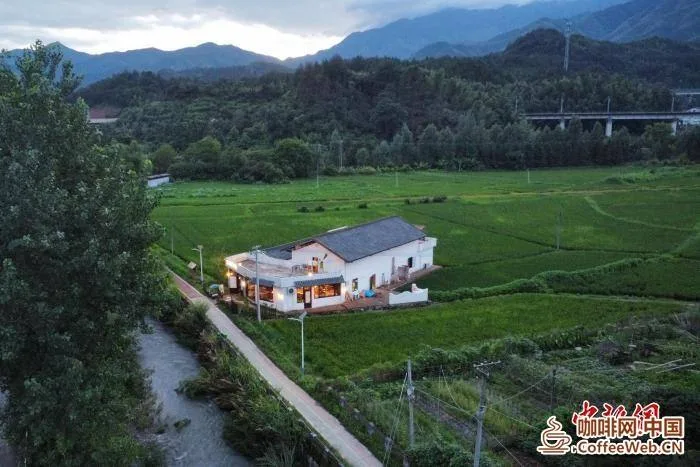
The turning point began in the countryside. “When I looked at this stretch of emerald rice waves, a thought suddenly came to mind: how nice it would be to sit by the fields and drink a cup of coffee.” Immediately, Yang Jing rented an idle farmhouse in Shanghong Village and renovated it into a “paddy-field coffee shop,” preserving the rustic quality of traditional rural architecture while blending in modern design aesthetics.
“We don’t just sell coffee; we also ‘sell’ the pastoral scenery,” Yang Jing told Chinanews. The shop name “Jiayou” is a homophone for “keep going (jiayou),” symbolizing setting out from the rice fields and rooting downward.
This “village cafe” insists on manual ordering; baristas tell guests the story behind each drink, and creatively blend local ingredients with coffee and baking, pioneering “paddy-field coffee” and developing innovative lattes such as “coffee + rice” and “coffee + rice milk.” Yang Jing introduced that the shop also offers creative items like fermented-bean curd pizza and black-goat snacks, bringing customers a different kind of surprise.
A signature “paddy-field latte” paired with a few handmade pastries lets city people recover a long-missed sense of ease. Shortly after opening, the cafe became a popular check-in spot and went viral on social platforms. “On the best day we sold more than 300 cups, with daily revenue exceeding 10,000 yuan,” Yang Jing said. People drive here not just to drink coffee, but to encounter the fragrance of rice, the breeze and the cicada song, and enjoy the pleasure of slowing down.
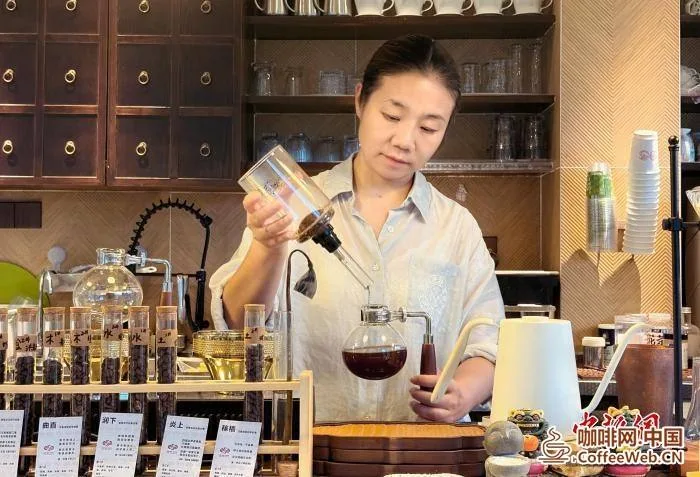
Inside the cafe, visitors either sit quietly by the paddy field savoring the rich aroma, or pause to photograph the mountain-and-wild scenery, gazing at the dark-green hills and rolling rice waves in the distance. “The plain, peaceful, everyday warmth of the countryside relaxes body and mind. Here you can enjoy pastoral views and also experience rural fun; it’s very pleasant,” said Liu Shanshan, who came from downtown Changsha with a friend and, after finishing her coffee, also tried making coffee hand-soap and painting an oil-paper umbrella.
The “village cafe” not only draws visitors, but also attracts young faces. Yang Jing said more than ten staff at the shop are all post-90s and post-00s. Relying on the cafe, they promote the village’s character and local culture through short videos and new media.
A single cup of coffee has energized a whole village. “Shanghong Village was once famous for ancient papermaking, then declined into a ‘hollow village.’ The cafe not only lets villagers find employment ‘at their doorstep,’ but also drives intangible-heritage study tours, homestays, farmhouses and the sale of agricultural specialties,” Yang Jing said. The “village cafe” has stepped out of the single-sightseeing model of traditional rural tourism and is using a cup of coffee to reconstruct the rural leisure scenario.
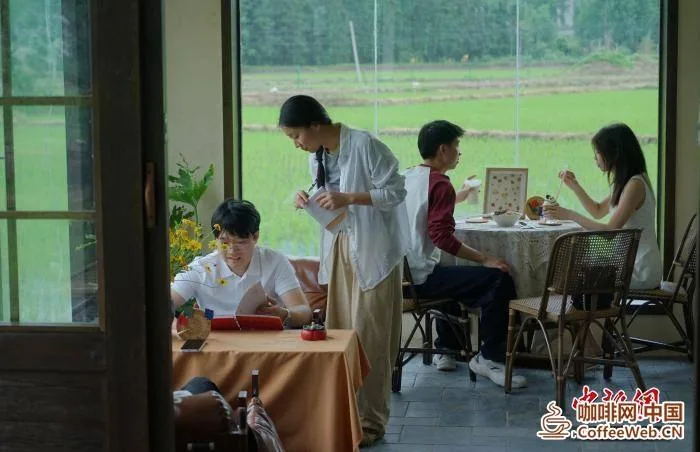
The rice waves grow layer upon layer, and the coffee aroma drifts farther on the mountain wind. With more than twenty years of coffee-making experience, Yang Jing said she hopes to rely on the new rural-coffee format to attract young people working away to return home to develop, systematically cultivate local young coffee practitioners, support newcomers to enter industry competitions, and build a localized young barista team. “The cafe will also add a bread kiln and develop specialty new products such as pumpkin sourdough, injecting vitality into the countryside with a refined, niche new format.” (End)
Source: China News Service (Chinanews), reporter Tang Xiaoqing.
Reprint Note & Disclaimer
- This article is reprinted from Chinese media for information and cultural exchange. The views expressed are those of the original author and do not necessarily reflect the position of coffeeyo.com.
- All trademarks, brand names and logos mentioned belong to their respective owners.
- For cooperation, reprint or correction requests, please contact coffeeyo.com.
Reprint Notice & Disclaimer
- This article has been edited and compiled by China Coffee Network. The information and images therein come from public sources and the copyright belongs to the original author. This reprint is intended solely for information sharing within the coffee industry and does not represent the views of this website; all data and opinions are subject to the original article. Our thanks to the original author for creating and sharing it.
- For matters concerning content licensing, attribution, copyright or otherwise, please contact us promptly and we will verify and cooperate in handling them as soon as possible. We also welcome coffee origins, brands and industry media to exchange ideas and contribute articles.
- Contact China Coffee Network: Tel 400-0000-641 (+86-18288016826) | Email 405854472@qq.com | Address: Jinghong, Xishuangbanna, Yunnan Province / Tieling, Liaoning Province
Related Reading
 How ‘Sea-Flavored’ Coffee Blooms Across Dongtou
- Health Guide: How to Enjoy Your Coffee the Healthy Way
 Study: Regular Coffee and Tea May Lower Dementia Risk, but More Is Not Better
 Frontline Story: A ‘Mobile City Coffee Bar’ Arrives by the Grand Canal
 Yantai’s Wind Tastes of Coffee
 In Zhenyuan, a Cup of Coffee and a Waiting Train






 Liaoning ICP Security No. 21122402000217