


Brief (coffeeyo.com): A new industry report finds China’s ready-made coffee sector is expanding across channels and scenarios, with market size projected to reach 159 billion yuan in 2026 and packaging emerging as a new competitive battleground.
Reprinted from China Food News
In recent years, as consumer education in China’s coffee market has deepened and product localization and everyday-use trends have advanced, consumer acceptance of and willingness to buy coffee have risen significantly. Data shows that from the 2018–2024 coffee crop years, domestic coffee consumption grew at a compound annual rate of 12.4%. The “Coffee Drink Category Development Report 2026” (hereinafter the “Report”), recently released by the Hongcan Industry Research Institute together with Xintianli, shows that ready-made coffee is favored for its stronger sense of quality and consumption experience; its consumer base is gradually penetrating students, blue-collar workers and the elderly, evolving from a niche pick-me-up into a mass daily beverage suited to multiple scenarios such as work, socializing and leisure. The expansion of the consumer base also opens wider space for innovation and development in the coffee industry.
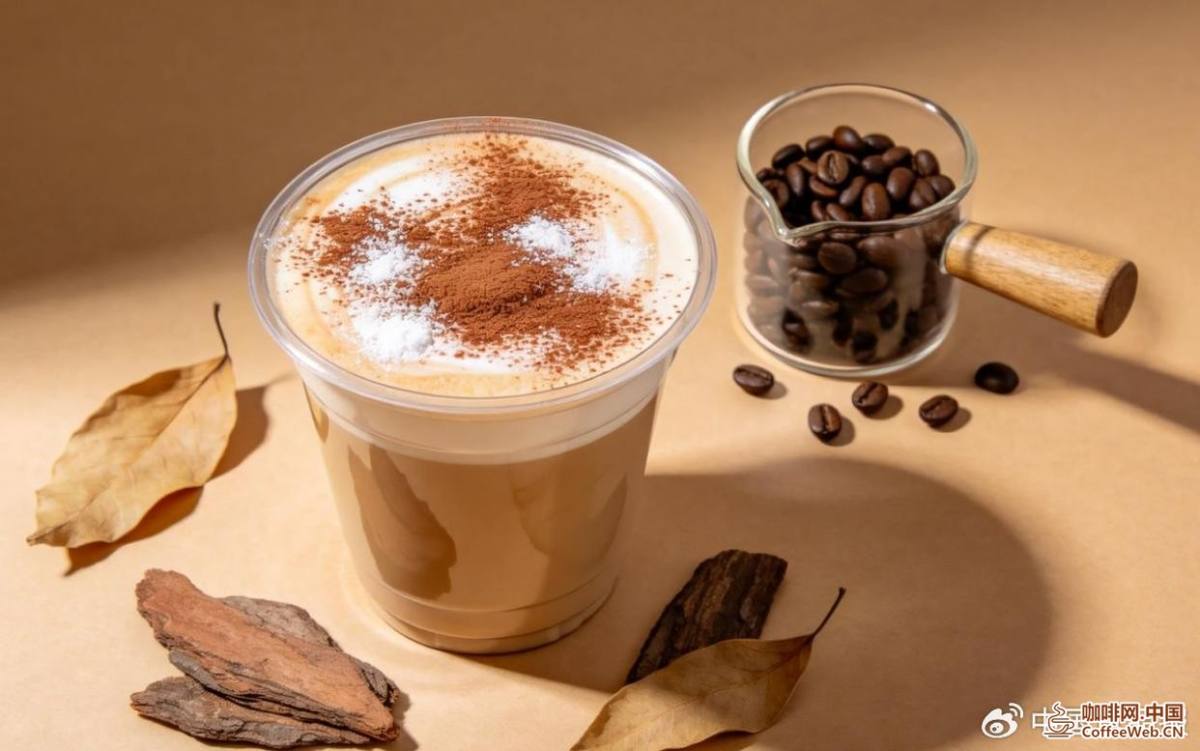
Ready-Made Coffee Is Rapidly Blending Into Daily Life
At present, ready-made coffee continues to iterate in flavor innovation, function expansion and sales format, becoming more convenient to consume and lowering the purchase threshold, while the industry chain grows more complete. Driven by multiple factors, ready-made coffee is accelerating its penetration into diverse consumption scenarios and fully integrating into the public’s daily life.
Continuous deepening of product innovation is pushing ready-made coffee to keep broadening the boundaries of consumption scenarios. In recent years, ready-made beverage brands have continuously enriched their coffee product matrices around different consumer needs and scenarios. Report data shows that in the first half of 2026, 117 ready-made beverage brands (75 tea-drink brands and 42 coffee-drink brands) launched a total of 660 coffee products, of which 15.6% came from tea-drink brands and 84.4% from coffee-drink brands.
Current coffee new-product innovation focuses on three dimensions: flavor, function and sales format. On flavor, elements such as fruit, floral and tea aromas blended with coffee have greatly enriched the taste system; on function, products break the single “refreshing” attribute and upgrade toward diversified health directions such as low-calorie, fat-reducing, grease-cutting and wellness; on sales, the industry has popularized the “coffee+” combo model, linking with baking, desserts and snacks to unlock all-day consumption scenarios.
Improved consumption convenience is driving ready-made coffee toward daily, around-the-clock consumption. Relying on the maturity of delivery platforms and brands’ own delivery systems, ready-made coffee stores keep sinking into lower-tier markets and the number of operators keeps growing, greatly reducing consumers’ time-and-space consumption costs. Ready-made coffee has thus broken away from the traditional store-exclusive consumption model and transformed into an everyday drink that can be bought anytime, anywhere, achieving multi-scenario, all-day consumption penetration.
Continuously falling prices further lower the consumption decision threshold, pushing ready-made coffee from light-luxury trial to mass high-frequency consumption. Report data shows that from 2024 to 2026, per-capita spending at coffee-drink stores declined year by year, stabilizing at around 25 yuan in the first half of 2026. At the same time, new-product prices became more affordable: coffee new products priced at 10–15 yuan per cup rose to 9.9% of the total, and those under 10 yuan rose to 11.7%, while mid-to-high-end products also stabilized in the 30–35 yuan range, matching mass purchasing power.
A complete industry chain provides the foundation for the expansion of the ready-made coffee format and omni-channel development. At present, ready-made coffee has formed a complete chain of raw-material supply, store operations and product delivery, with coordinated development at each link effectively lowering the industry’s operating-entry threshold. On the supply side, various coffee raw materials are abundantly available, and many brands launch raw-material products suited to ready-made coffee, guaranteeing new-product R&D. On the operations side, the spread of AI tools, automated equipment and digital management systems improves store output efficiency and standardization while simplifying operations. On the delivery side, packaging companies keep optimizing heat-retention and leak-proof performance, combined with a mature instant-retail delivery network, continuously expanding ready-made coffee’s consumption scenarios.
A Variety of Business Players Are Thriving
The Report’s analysis points out that the ready-made coffee track has formed a development pattern led by coffee-drink brands, with tea-drink, food-and-beverage, convenience-store and unmanned self-service coffee-machine players participating together. Each type of operator leverages its own resources and scenario advantages to build differentiated business models and continuously expand consumption scenarios.
In recent years, dedicated coffee shops have developed especially fast, with market scale continuously expanding. Report data shows that in 2025, the national coffee-drink market scale maintained growth, reaching 140.5 billion yuan, up 19.4% year on year. In 2026, the coffee-drink market scale will maintain its growth and is expected to reach 159 billion yuan, with growth likely to stay above 10% over the next three years. As of June 2026, the number of national coffee-drink stores reached 284,000, up 20.1% year on year, with a chain-store rate of 47.3%.
In addition, entrepreneurial enthusiasm in the coffee-drink track remains high, and the stock of coffee-drink-related enterprises keeps climbing. Leading brands are accelerating store expansion — Luckin Coffee and Cotti Coffee have each surpassed 10,000 stores nationwide; brands such as Lucky Cup and NOWWA have doubled their store counts, and some mid-tier brands are also expanding rapidly.
Some foreign chain coffee-drink brands are introducing Chinese capital to push their localization in the China market to a more professional stage. In November 2025, Boyu Capital acquired a 60% stake in Starbucks China for $4 billion, and the two sides formed a joint venture to jointly operate the China market retail business. In March 2026, Centurium Capital and Nestlé officially signed an agreement to acquire Blue Bottle Coffee’s global store business.
Beyond continuously expanding store networks, some coffee-drink brands are actively laying out retail business, launching bottled coffee and other products, extending consumption scenarios from stores further into supermarkets, convenience stores, e-commerce platforms and home consumption, constantly enriching their business models.
Tea-drink brands also regard coffee as a new growth curve. The Report shows that among the top-100 tea-drink brands by store scale, 69% have already entered the ready-made coffee track. At the same time, the number of coffee new products launched by sampled tea-drink brands also shows an overall growth trend, reflecting that tea-drink brands are increasing investment in the ready-made coffee business and clearly accelerating their pace. At present, tea-drink brands exploring the ready-made coffee business have mainly evolved four layout models, of which product extension and independent-brand self-operation are the most mainstream paths today.
The Report points out that China’s convenience-store coffee is still in the stage of exploring its model; after several rounds of iteration it has turned to a light-asset scenario-supplement model, and coffee-drink brands have also entered convenience-store channels in a shop-in-shop format.
The cross-border “coffee+” fusion model has become a common trend in the food-and-beverage industry. Among the two categories of Western fast food and bakery, most brands have formed relatively stable ready-made coffee business models, while other food-and-beverage categories remain mainly in the exploration stage. Among them, Western fast-food brands are more flexible in laying out ready-made coffee; bakery brands mostly add coffee services by leveraging existing stores.
Unmanned self-service coffee machines have become a promising track, pushing the ready-made coffee business from the traditional store-space-dependent model toward refined point-of-sale layout. In terms of equipment form, cabinet-style machines land in offices, transport hubs and other venues; AI robotic-arm equipment creates a brand-new consumption experience through intelligent interaction.
Packaging Upgrades from “Container” to “Competitiveness”
In recent years, ready-made coffee consumption scenarios and needs have continued to evolve, moving from early social experience and mass affordable consumption into a new stage of multi-scenario integrated development. As various players accelerate their entry, ready-made coffee consumption has broken through the traditional café scenario, fully covering daily scenarios such as breakfast, work, commuting, leisure and home. Industry competition is no longer limited to product R&D, but has turned to a contest of differentiated consumption experiences adapted to diverse scenarios and efficient operating capabilities.
Against this backdrop, the value of packaging has greatly upgraded, from a mere holding container to a core competitiveness affecting consumption experience, store efficiency and brand image. Modern coffee packaging must meet the leak-proof, heat-retaining and stable-transport needs of delivery and self-pickup scenarios, adapt to the standardized, high-efficiency cup-output operational requirements of chain stores, and at the same time undertake brand visual display and deepen consumer memory — traditional universal packaging can no longer meet segmented scenario needs.
Packaging companies are thus transforming and upgrading, shifting from single-supplier supply to providing scenario-based overall solutions. Companies represented by Xintianli optimize packaging structures for coffee dine-in, takeaway and delivery scenarios, launch leak-proof cup products, and build integrated packaging services. They have built a complete packaging system covering industry, agriculture and services, with a multi-material, full-category packaging product matrix that can adapt to multiple tracks such as coffee, tea drinks, prepared dishes and fresh food, supporting brands’ personalized customization.
The Report believes that ready-made coffee consumption scenarios will further broaden and consumer demand will become increasingly diversified, pushing coffee products toward functional, localized and segmented development. Industry competition will also shift from store expansion to a comprehensive contest of back-end strengths such as supply chain, packaging and digitalization; enterprises with industry-chain integration and continuous innovation capabilities will gain greater advantages in future market competition.
Source: China Food News — Wei Qiuyuan.
Reprint Note & Disclaimer
- This article is reprinted from Chinese media for information and cultural exchange. The views expressed are those of the original author and do not necessarily reflect the position of coffeeyo.com.
- All trademarks, brand names and logos mentioned belong to their respective owners.
- For cooperation, reprint or correction requests, please contact coffeeyo.com.
Reprint Notice & Disclaimer
- This article has been edited and compiled by China Coffee Network. The information and images therein come from public sources and the copyright belongs to the original author. This reprint is intended solely for information sharing within the coffee industry and does not represent the views of this website; all data and opinions are subject to the original article. Our thanks to the original author for creating and sharing it.
- For matters concerning content licensing, attribution, copyright or otherwise, please contact us promptly and we will verify and cooperate in handling them as soon as possible. We also welcome coffee origins, brands and industry media to exchange ideas and contribute articles.
- Contact China Coffee Network: Tel 400-0000-641 (+86-18288016826) | Email 478203668@qq.com | Address: Jinghong, Xishuangbanna, Yunnan Province / Tieling, Liaoning Province
Related Reading
 Asia Pacific Connection in a Cup of Coffee
- A Cup of Coffee Connecting Asia-Pacific
 ICE agricultural futures main contracts mostly closed higher, while coffee futures rose 1.84%
 The coffee market is experiencing two extremes! Arabica inventory drops to 27 year low, but Robusta plummets to two-week low
 Financial Observation: Why is Generation Z from the United States flocking to coffee and tea shops in China
 ‘All-Ice’ Coffee Goes Viral! Will the Next Hit Be Your Personal Favorite?


 Liaoning ICP Security No. 21122402000217