
Brief (coffeeyo.com): On Shanghai’s Wuyuan Road, the “Circular Space” gives a cup of coffee a second life—sorting cups and grounds, teaching kids to craft with them, and keeping the city’s coffee waste off the ground.
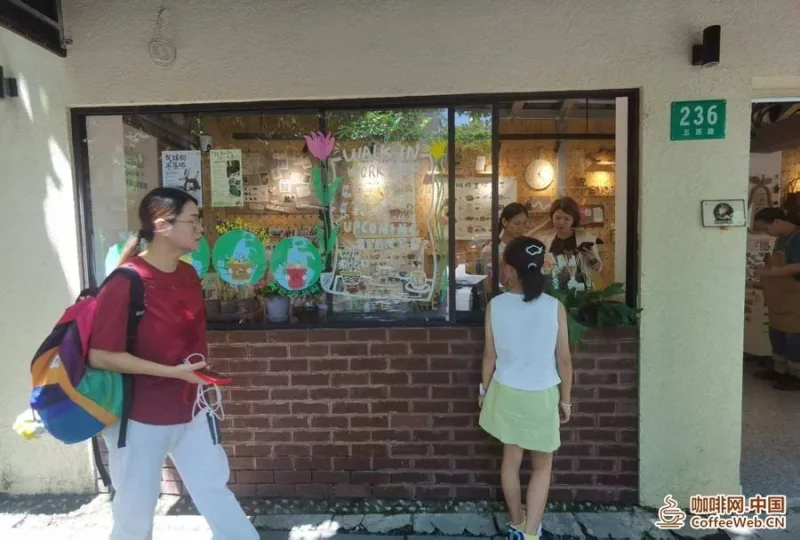
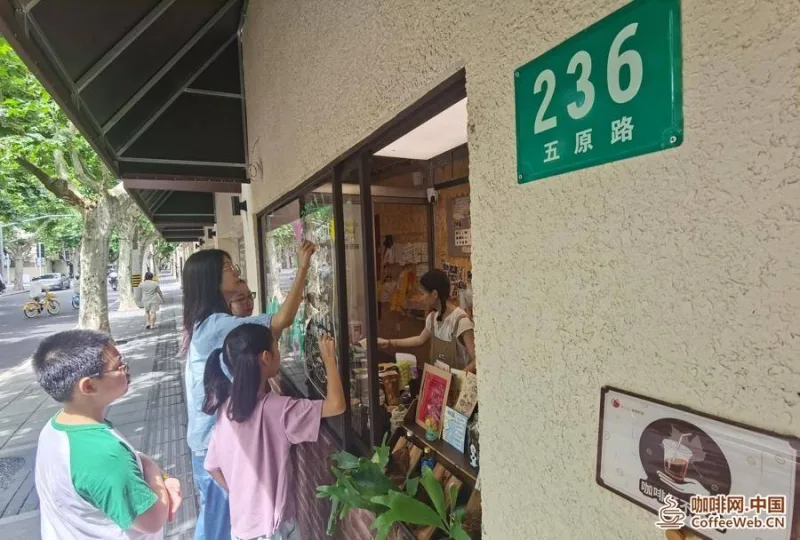
From Shangguan News. The Wukang–Anfu Historic District’s efforts to keep every coffee cup “off the ground” are “condensed” into the “Circular Space” at 236 Wuyuan Road.
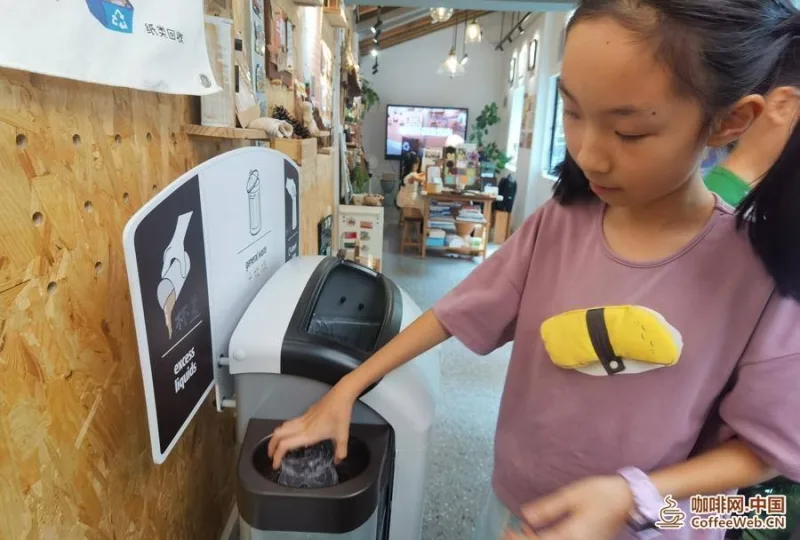
Guided by staff, passersby holding coffee cups step into the “Circular Space,” pour the remaining coffee down the drain, rinse the cup clean, then drop the plastic lid into the collector on the left side of a dedicated collection bin, place the cup body—with its inner waterproof lining—into the collector on the right, and finally toss the napkins used to wipe mouths and hands and the bag that held the cup into the dry-waste bin in the middle. The recyclables on either side of the dedicated bin enter appropriate channels for reuse, while the dry waste is sent to an incineration plant for harmless treatment.
A waste-collection point turns into a community space
Also “reborn” at the Circular Space are the coffee grounds and expired coffee beans generated by nearby residents and coffee shops.
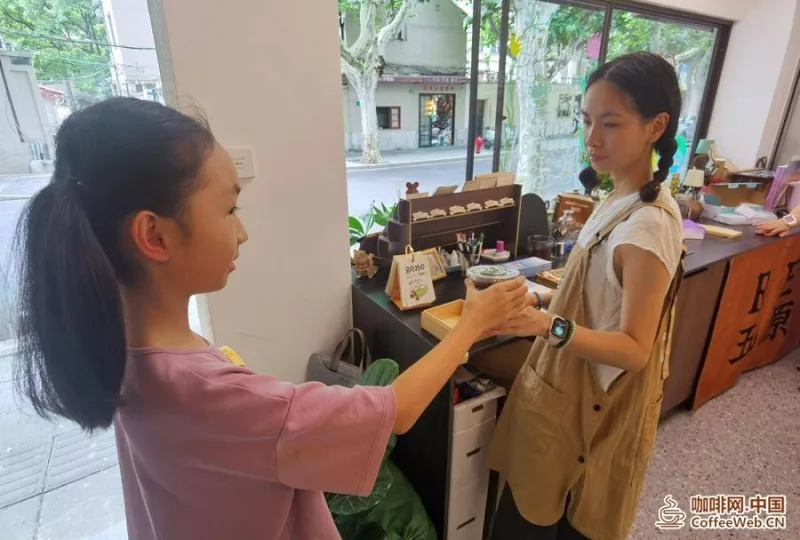
This morning (Aug. 25), Dong Yueran specially asked a nearby café for a cup of warm coffee grounds and handed it to Chen Jiamin, the person in charge of operating the Circular Space.
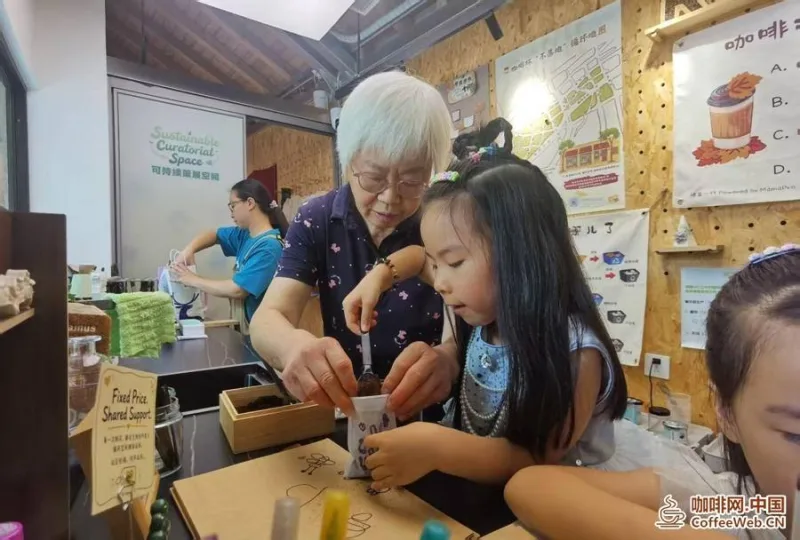
“My mom happened to bring me here for a drink nearby, so I brought over today’s coffee grounds from the shop,” said Dong. Yueran loves the lingering coffee aroma on her hands. She said the grounds are very clean and, once dried, can be used for painting and to make sachets, fertilizer, soap, clay, fridge magnets, diffuser stones and small handbags; coffee beans can be made into bracelets and necklaces, which she finds fascinating.
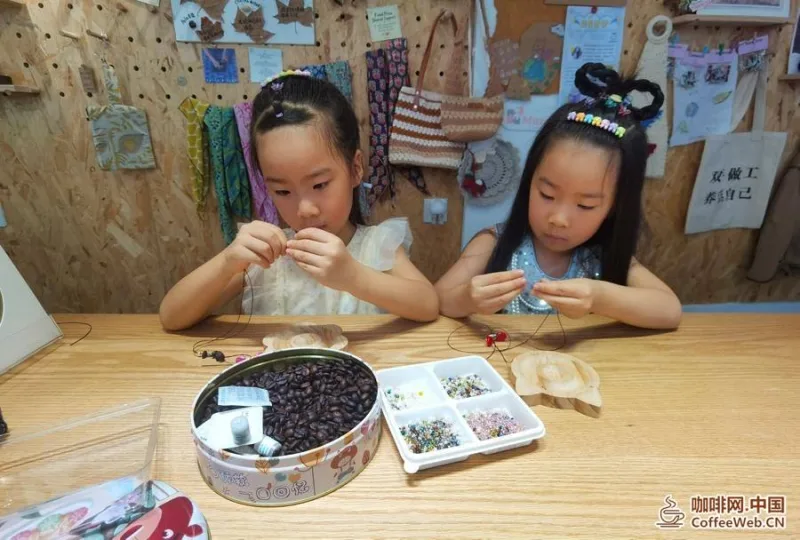
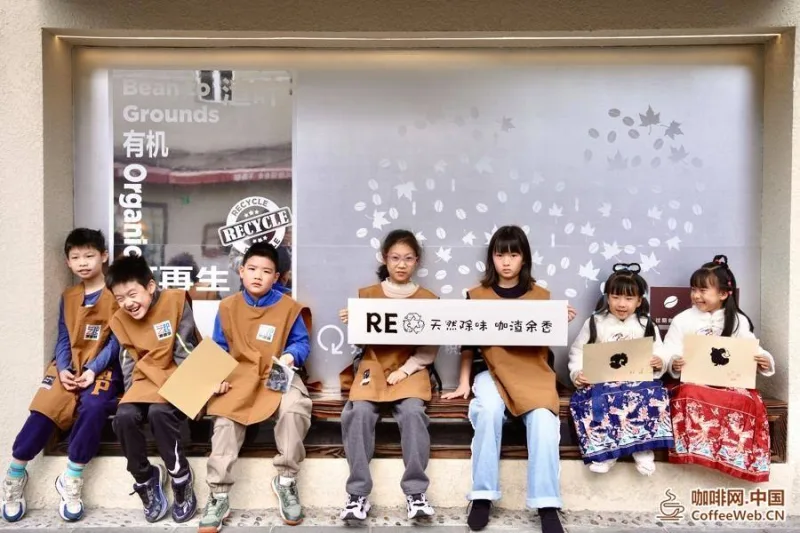
Following little Yueran’s gesture, one sees the craft table inside the Circular Space, where Liu Dongdong, a resident of West Fuxing Road, is making coffee-bean bracelets and coffee-ground sachets with his 5-year-old twins, Xinxin and Niannian. “This used to be a scrap-collection spot. I wandered by at the end of last year and found it newly renovated into a more functional community space,” Liu said. It’s close to home, and since the children love art-related activities and can also learn about environmental protection here, they come often.
Residents and coffee shops alike love it
The motivation behind transforming the waste-collection point into a community space came from a long-standing problem in the district: with so many nearby coffee shops, many visitors would set their cups down on windowsills, flower beds, shared-bike baskets, or even toss them directly on the street after finishing their drinks.
“This is not simply a matter of tourist civility,” said Cao Danjun, deputy director of the Xuhui District Greening and City Appearance Bureau. Behind this phenomenon, sanitation departments also need to reflect on whether their work is up to standard—especially whether public waste bins are reasonably placed, whether overflowing bins are cleared promptly, and whether nearby residents, businesses and visitors fully recognize the value of “keeping coffee cups off the ground.”
Since last year, the Wukang–Anfu Historic District has adopted more refined management of public waste bins. On one hand, overflow sensors have been installed; once a bin reaches two-thirds capacity, the system issues an early warning prompting sanitation crews to clear it promptly. On the other hand, in response to the tidal ebb and flow of visitor numbers near the Wukang Building, sanitation departments flexibly add mobile bins from 9 a.m. to 9 p.m. daily to boost collection capacity during peak hours.
Making it convenient to discard cups effectively eased the peak-hour problem of “cups hitting the ground,” but achieving a truly cup-free street comes down to the “heart”—that is, getting the public to fully embrace the value of “keeping coffee cups off the ground,” ensuring cups reach the right channel and thus get the chance to be turned from waste into treasure. That is how the Circular Space came into being.
“The volume of coffee-related waste is actually quite substantial, and there is a real need for refined sorting and separate collection and disposal,” Chen Jiamin told the reporter, citing figures from a sanitation company: among the more than one ton of daily waste generated in the Wukang–Anfu Historic District, there are over a thousand coffee cups, plus a good deal of coffee grounds hidden in wet waste that cannot be separately tallied. When such waste hits the ground it harms the urban environment, so the Circular Space showcases—or invites the public to experience—how various coffee-related wastes are turned into treasure, making it feel fresh and fun, and thereby helping people understand and embrace the value of finely sorting coffee-related waste.
Over the past half year or more, the Circular Space has collected over a hundred kilograms of coffee grounds alone. Some mothers have formed the habit of “stockpiling coffee grounds,” regularly bringing in bags of dried, dehydrated grounds from home. More than ten nearby coffee shops have also voluntarily joined the “Keep Cups Off the Ground Alliance.” Visitors no longer need to hunt for a bin—they simply return their empty cup to any participating merchant displaying the unified logo; once enough accumulate, they submit a collection request via a WeChat mini-program, and a sanitation vehicle arrives at the shop within 20 minutes of receiving the instruction.
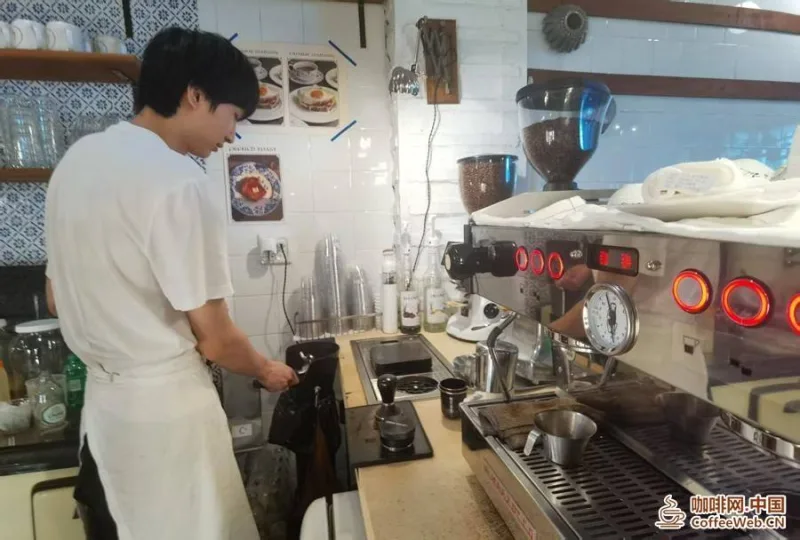
The reporter visited two coffee shops, and both managers expressed motivation to keep it going. The store manager of the Jiya Wuyuan Road branch said the shop pays a fee each year for transporting and disposing of coffee grounds and cups, so if the district can form a stable, nonprofit closed-loop for on-site collection and disposal, it would genuinely save the shop money. Cai, the store manager of the Da’e (“Big Goose”) Coffee Shop on Yongfu Road, told the reporter that the shop produces two to three jin of coffee grounds daily and, after closing each night, must haul a collection bag for six or seven minutes to a designated wet-waste drop-off point. “If volunteers come to collect them regularly and make sure they’re put to good use, we’d welcome that very much,” he said.
Shanghai has 699 “zero-waste cells”
Across all of Shanghai, while the coffee-consumption culture thrives, the collection, transport and disposal of coffee-related waste remains a relatively niche topic.
Zhou Beier, head of Yisijian Technology—a company with a long-standing focus on sustainability—estimated Shanghai’s coffee-ground output: according to the “2025 China Urban Coffee Development Report,” per-capita annual coffee consumption in China rose to 22.24 cups in 2024; assuming Shanghai’s per-capita figure is double that, and that all coffee beans convert into wet coffee grounds, a conservative estimate puts Shanghai’s daily coffee-ground output at 40 to 50 tons. If all of it were put to use on-site, it could replace over 10,000 tons of raw materials a year and significantly cut the carbon emissions from procuring, transporting and processing those materials.
The potential of coffee-related waste is enormous; the key lies in forming a sustainable, nearby closed-loop that turns waste into treasure. “We know that the finer the waste sorting, the greater the value of turning waste into treasure—but refined sorting and collection require substantial investment to keep the system running effectively over the long term. We hope more forces across society will join in, so coffee-related waste can be put to its best use,” Chen Jiamin said.
The reporter learned that the Wuyuan Road “Circular Space” has become one of Shanghai’s 699 “zero-waste city cells.” A “zero-waste city cell” is a social living unit that implements the concept of building a “zero-waste city,” adopts effective technical and managerial measures, promotes green production and lifestyle, and pursues the reduction, reuse and harmless treatment of solid waste. The vision of a “zero-waste city” is taking root amid the aroma of coffee, through these small-scale innovations and acts of persistence. And every cup kept “off the ground” is a solid step this city takes toward a green future.
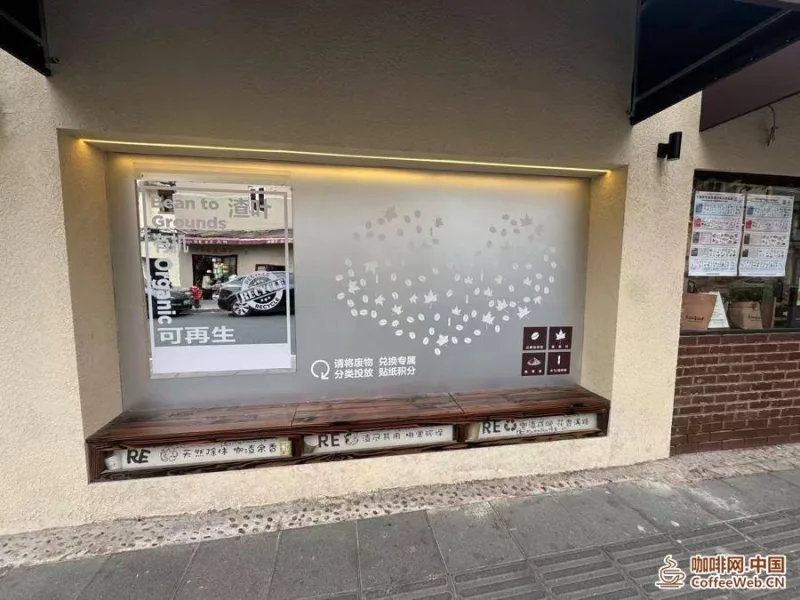
Original Chinese title: “The ‘Afterlife’ of a Cup of Coffee, Settled on Wuyuan Road in Shanghai.” Source: Shangguan News. Photos by Chen Xihan.
Reprint Note & Disclaimer
- This article is reprinted from Chinese media for information and cultural exchange. The views expressed are those of the original author and do not necessarily reflect the position of coffeeyo.com.
- All trademarks, brand names and logos mentioned belong to their respective owners.
- For cooperation, reprint or correction requests, please contact coffeeyo.com.
Reprint Notice & Disclaimer
- This article has been edited and compiled by China Coffee Network. The information and images therein come from public sources and the copyright belongs to the original author. This reprint is intended solely for information sharing within the coffee industry and does not represent the views of this website; all data and opinions are subject to the original article. Our thanks to the original author for creating and sharing it.
- For matters concerning content licensing, attribution, copyright or otherwise, please contact us promptly and we will verify and cooperate in handling them as soon as possible. We also welcome coffee origins, brands and industry media to exchange ideas and contribute articles.
- Contact China Coffee Network: Tel 400-0000-641 (+86-18288016826) | Email 405854472@qq.com | Address: Jinghong, Xishuangbanna, Yunnan Province / Tieling, Liaoning Province
Related Reading
 How ‘Sea-Flavored’ Coffee Blooms Across Dongtou
- Health Guide: How to Enjoy Your Coffee the Healthy Way
 Study: Regular Coffee and Tea May Lower Dementia Risk, but More Is Not Better
 Frontline Story: A ‘Mobile City Coffee Bar’ Arrives by the Grand Canal
 Yantai’s Wind Tastes of Coffee
 In Zhenyuan, a Cup of Coffee and a Waiting Train





 Liaoning ICP Security No. 21122402000217